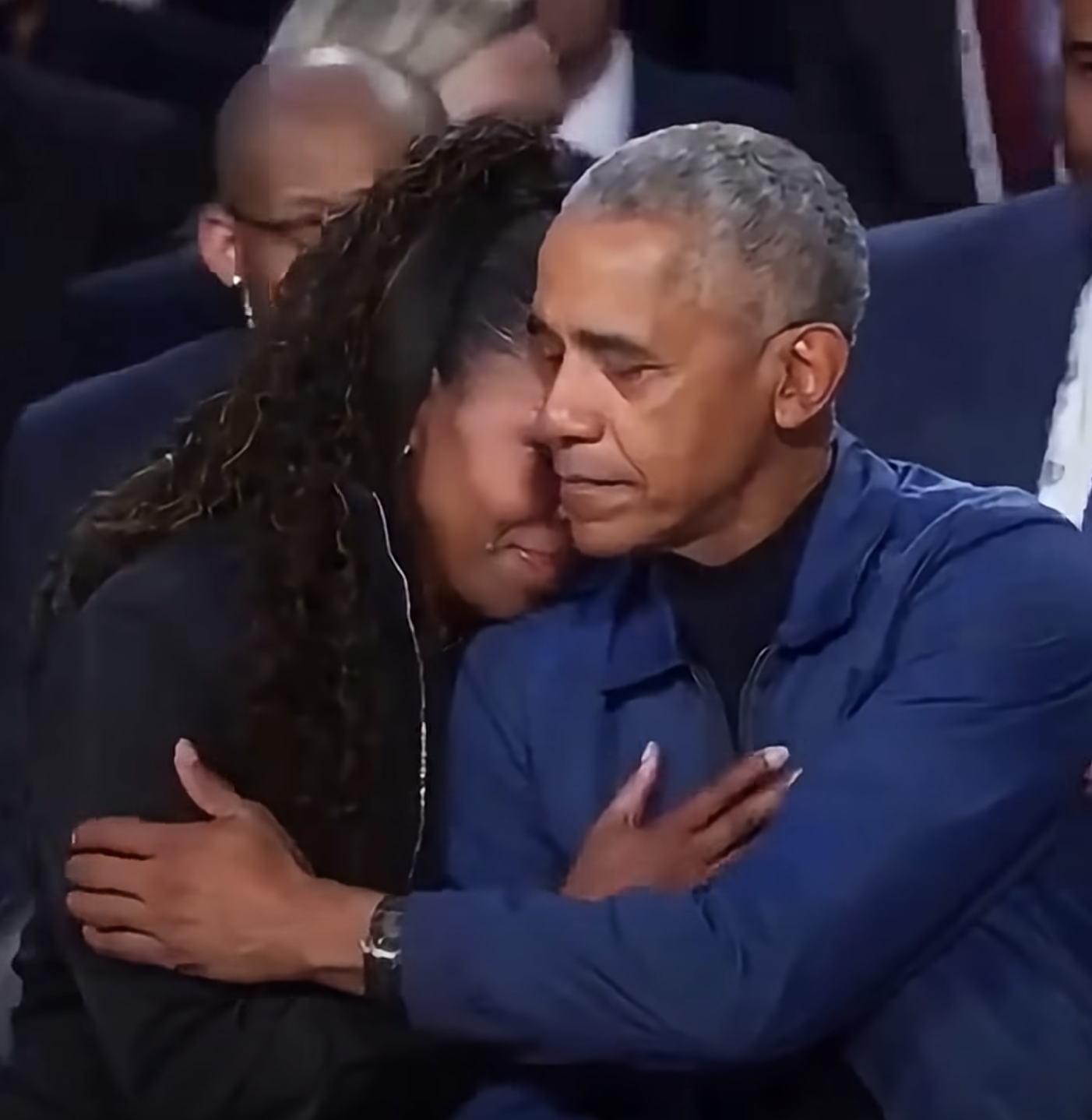
Marian Robinson never held elected office, delivered major political speeches, or sought the spotlight that surrounded her famous family.
Yet during one of the most extraordinary chapters in American political history, she played a deeply important role behind the scenes.
As the mother of Michelle Obama and mother-in-law of Barack Obama, Marian became part of a family watched constantly by the public. However, she remained remarkably private. When the Obamas entered the White House in 2009, she moved from Chicago to Washington to help care for her granddaughters, Malia and Sasha, providing continuity and stability as their daily lives changed dramatically.
Her influence did not come from public recognition.
It came from consistency.
Family members remembered her as practical, independent, humorous, and deeply grounded. Even while living in one of the most famous residences in the world, she continued emphasizing ordinary family life over status.
Marian Robinson died on May 31, 2024, at age 86. In announcing her death, Barack and Michelle Obama, Craig and Kelly Robinson, and their children described her as an essential source of strength in their family.
A Life Built Far From Political Celebrity
Marian raised her family in Chicago
Before presidential campaigns, Secret Service agents, and White House ceremonies entered the picture, Marian Shields Robinson built her life around family in Chicago.
She and her husband, Fraser Robinson III, raised Michelle and her older brother, Craig, in a modest home on Chicago’s South Side. The Obama White House biography of Michelle Obama describes the Robinson family as living in a brick bungalow while emphasizing the central role Marian and Fraser played in their children’s upbringing.
Their household placed strong value on education, independence, and personal responsibility.
Marian did not raise her children to expect life to be easy. Instead, she encouraged them to think for themselves and handle challenges directly.
Michelle Obama has repeatedly described her mother as one of the foundational influences in her life.
That influence became especially visible decades later, when Michelle entered a world of extraordinary attention as First Lady.
Her approach emphasized independence
Marian’s parenting philosophy was notably practical.
She believed children needed room to develop judgment rather than having adults solve every problem for them.
That perspective shaped Michelle and Craig as they grew older and pursued demanding educational and professional paths.
Michelle later carried many of those same ideas into her own parenting.
The family’s public success did not change Marian’s basic view of what mattered.
Achievements were meaningful.
Education mattered.
But character mattered more.
The family members closest to her repeatedly emphasized that she did not treat fame as a measure of personal worth.
Why Marian Robinson Moved Into the White House
The transition changed everything for Malia and Sasha
When Barack Obama won the 2008 presidential election, the entire Obama family faced an enormous transition.
The move from Chicago to Washington meant more than changing homes.
Malia and Sasha would suddenly live behind extensive security, attend school under intense public attention, and experience childhood inside an institution filled with political history.
Michelle Obama wanted her daughters to have as much stability as possible.
Marian became a crucial part of that plan.
She moved into the White House in 2009 and helped care for her granddaughters while Barack and Michelle managed the demands of the presidency and First Lady responsibilities.
Her presence offered something no staff member could provide.
She was Grandma.
That familiar relationship mattered in an environment where almost everything else had changed.
She reportedly did not rush toward Washington
Marian did not appear eager to transform herself into a public figure.
According to accounts published after her death, she was initially reluctant to leave Chicago permanently. Her family eventually persuaded her that her presence would help Malia and Sasha during the transition.
That detail captures much of her personality.
Living in the White House might sound glamorous to outsiders.
Marian seemed to view it primarily as a family responsibility.
She went because her grandchildren needed her.
That motivation separated her from the celebrity culture surrounding political families.
The historic residence was extraordinary.
The responsibility of helping raise children remained familiar.
Creating Ordinary Childhood Moments in an Extraordinary House
Routine became a form of stability
Children thrive on predictability.
That can become difficult when their father is President of the United States.
The Obama daughters lived with security protocols, official events, travel, press attention, and constant public curiosity.
Marian helped preserve ordinary family rhythms inside that unusual environment. Accounts of her White House years consistently describe her as an important stabilizing presence for Malia and Sasha.
Family meals, school schedules, conversations, homework, and everyday expectations still mattered.
Her role did not require dramatic gestures.
That was precisely why it worked.
Children surrounded by extraordinary circumstances still need adults who remind them to complete ordinary responsibilities.
She helped separate family life from public life
The presidency can turn nearly every moment into an official event.
Marian represented the opposite.
She helped maintain a distinction between the Obama family’s public responsibilities and their private relationships.
To millions of Americans, Barack Obama was the president.
To Marian, he was her son-in-law.
Michelle was First Lady to the country.
She was still Marian’s daughter.
Malia and Sasha were photographed at historic ceremonies.
They were still her grandchildren.
That ability to preserve ordinary relationships inside extraordinary circumstances became one of Marian’s most important contributions.
A Grandmother Who Avoided Becoming a Celebrity
She valued privacy
Marian lived in the White House for much of Barack Obama’s presidency, yet she rarely sought interviews or public attention.
That was unusual.
Many people connected to presidents eventually become recognizable public personalities themselves.
Marian largely resisted that path.
Reports about her life consistently describe a woman who preferred independence and privacy over celebrity.
She attended certain public and family events, traveled, and participated in some historic experiences.
However, she never appeared interested in turning proximity to power into a personal platform.
Her quiet presence became part of what people admired about her.
The White House did not become her identity
The most powerful address in the United States could have changed the way Marian viewed herself.
Apparently, it did not.
She remained connected to the habits and relationships that existed before Washington.
That groundedness likely benefited the entire family.
Political life constantly creates incentives for people to measure themselves through influence, attention, polling, press coverage, or status.
Marian operated by a different set of standards.
Family.
Integrity.
Independence.
Ordinary pleasures.
Those values did not require national recognition.
Michelle Obama’s Relationship With Her Mother
Marian remained a source of guidance
Michelle Obama has spoken frequently about her mother’s influence.
The Obama Presidential Center has published Michelle’s reflections describing childhood memories with Marian, including library visits, family outings, and celebrations at home.
These recollections reveal something important.
Michelle’s memories do not center on prestige.
They center on experiences.
Books.
Family gatherings.
Shared meals.
Trips.
Conversation.
Those ordinary experiences helped form the values Michelle later carried into adulthood.
Her mother represented emotional steadiness
Public life creates constant criticism.
Political families experience scrutiny that most people never encounter.
Appearance, parenting, speeches, relationships, and personal choices can all become subjects of public debate.
Having someone inside the family who remains unimpressed by fame can provide valuable perspective.
Marian offered that kind of steadiness.
She knew Michelle before any political title existed.
That history mattered.
A parent can often remind an adult child of who they were before public expectations began accumulating.
For Michelle, Marian represented that continuity.
The Relationship Between Marian and Her Granddaughters
She helped give them another layer of family life
Grandparents often play a distinctive role.
They provide guidance without occupying exactly the same position as parents.
For Malia and Sasha, that relationship became especially valuable during their White House years.
Their parents carried demanding public responsibilities.
Marian could offer something different.
Her presence provided another trusted adult who belonged completely to the family rather than to the political institution surrounding them.
She helped make the White House feel more like a home.
That distinction may sound small.
For children living under constant observation, it likely mattered enormously.
She could treat them like ordinary grandchildren
One of the challenges of raising children in famous families is preventing public attention from becoming their entire identity.
Marian knew Malia and Sasha first as grandchildren.
Not symbols.
Not political figures.
Not celebrity children.
That relationship offered a form of normalcy.
They still had expectations.
They still had family responsibilities.
They still had a grandmother who could talk to them without treating every interaction as historically important.
Sometimes normalcy is created not by changing the environment, but by surrounding children with people who refuse to treat them differently because of it.
Marian’s Reluctant Introduction to a Larger World
White House life brought unexpected experiences
Although Marian valued privacy, living with the First Family exposed her to experiences far beyond her earlier routine.
She traveled internationally and attended major public events during Barack Obama’s presidency. Reporting after her death noted that her White House years brought opportunities she had not necessarily imagined seeking for herself.
Yet the extraordinary experiences never seemed to become the center of how her family described her.
That says something.
Many people would define themselves by access to presidents, foreign leaders, historic ceremonies, or global travel.
Marian’s family defined her primarily through relationships.
Mother.
Grandmother.
Sister.
Friend.
That contrast captures her legacy.
The Family’s Announcement of Her Death
Marian Robinson died in 2024
Marian Robinson died on May 31, 2024, at the age of 86.
Her family announced the news in a joint statement signed by Barack and Michelle Obama, Craig and Kelly Robinson, and their children.
The statement focused not on politics but on Marian’s role within the family.
That emphasis felt appropriate.
Although history placed her inside the White House, her importance to those closest to her had never depended on politics.
Her loss was personal before it was public.
Michelle described her mother as her rock
Michelle Obama publicly described Marian as her “rock” when announcing her death, emphasizing the depth of their relationship.
The phrase fits the larger picture painted over decades.
Marian’s strength was not loud.
She offered stability.
Advice.
Continuity.
Perspective.
Those qualities can become especially important when everyone else around a family focuses on extraordinary achievements.
Why Her Story Resonated Beyond Politics
She represented a kind of influence people recognize
Not all influential people become famous.
Many families have someone similar to Marian.
A grandmother who quietly keeps everyone connected.
A mother who offers practical advice instead of dramatic speeches.
A relative who shows up during difficult transitions.
A person who never asks for credit but whose absence reveals how much they held together.
Marian’s connection to the Obama family made her nationally recognizable.
However, the role she played felt deeply familiar.
That is one reason her story resonated.
Her life challenged the idea that visibility equals importance
Modern culture often treats attention as evidence of significance.
Follower counts, headlines, television appearances, and public recognition can create the impression that visibility and influence mean the same thing.
Marian represented a different model.
She influenced people through proximity and consistency.
Her impact occurred primarily in private.
She helped raise children.
She supported grandchildren.
She strengthened family routines.
She offered perspective.
None of those contributions required public applause.
What Marian Robinson’s Life Can Teach About Family
Stability often comes from repetition
Families do not usually become strong because of one dramatic moment.
They become strong through repeated actions.
Showing up.
Listening.
Keeping promises.
Sharing meals.
Maintaining traditions.
Correcting children when necessary.
Giving them space when appropriate.
Marian’s story illustrates how those ordinary behaviors can become especially powerful during extraordinary circumstances.
The White House amplified the contrast.
Presidential life changed by the hour.
Family routines created continuity.
Strong support does not require control
Marian’s influence also reflected an important distinction.
Supporting adult children does not require controlling them.
Her reputation was built partly on independence—both her own and the independence she encouraged in others.
That approach can strengthen relationships.
People often need support most when they know they will still be allowed to make their own decisions.
A stable family member provides a foundation without becoming a cage.
The Problem With Misleading Headlines
The original headline does not reflect the article
The headline attached to the supplied story suggests breaking political news involving Barack Obama.
However, the article itself discusses Marian Robinson and her family legacy.
There is no substantive discussion in the supplied text of Barack Obama “flip-flopping” on a policy or political issue.
That mismatch matters.
Readers often share headlines without reading the article.
A sensational title can therefore spread an inaccurate impression even when the article beneath it contains relatively ordinary information.
Read beyond the first line
A simple media habit can prevent considerable misinformation:
Read the article before sharing it.
Then ask:
Does the headline accurately summarize the story?
Does the article identify sources?
Does it provide dates?
Does it distinguish fact from opinion?
Does another reliable publication confirm the claim?
These questions matter especially when a headline uses phrases such as “20 minutes ago,” “sad news,” “breaking,” or “see more” to create urgency.
Real information remains important even without manufactured suspense.
Marian Robinson’s actual story needs no misleading political hook.
Frequently Asked Questions
Who was Marian Robinson?
Marian Shields Robinson was the mother of Michelle Obama, mother-in-law of Barack Obama, and grandmother of Malia and Sasha Obama.
Did Marian Robinson live in the White House?
Yes. She moved into the White House in 2009 and helped care for Malia and Sasha during Barack Obama’s presidency.
Why did she move to Washington?
Her move helped provide stability and family support for her granddaughters as the Obamas adjusted to presidential life.
Did Marian Robinson enjoy being a public figure?
Available accounts indicate that she preferred privacy and maintained a low public profile despite living in the White House.
When did Marian Robinson die?
She died on May 31, 2024, at age 86. Her family announced her death that day.
What did Michelle Obama say about her mother?
Michelle described Marian as a foundational influence in her life and publicly called her her “rock” when announcing her death.
Conclusion
Marian Robinson lived close to extraordinary power without allowing power to become the center of her identity.
She entered the White House not because she sought national attention, but because her family needed her.
She helped Malia and Sasha maintain a sense of normal childhood while their father served as president.
She remained an important source of perspective for Michelle Obama.
And she demonstrated that a person can stand near history without becoming consumed by it.
When Marian died in May 2024, her family remembered the woman behind the famous connections.
A mother.
A grandmother.
A steady presence.
That may ultimately explain why so many people found her story meaningful.
Her influence did not depend on speeches, elections, or headlines.
It came from being present.
And sometimes the people who quietly keep a family grounded leave the deepest legacy of all.
More News
- Elder Abuse: Warning Signs You Should Never Ignore and What to Do
- Pfizer COVID-19 Vaccine for Children: What the 2021 Trial Actually Found and What Happened Next
- When a Public Disturbance Goes Viral: What One Shopping Center Incident Reveals About Privacy, Behavior, and Online Judgment
- Home Electrical Safety: Simple Steps Every Family Can Take to Prevent Hidden Dangers