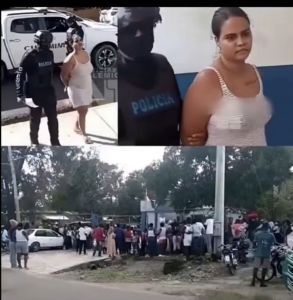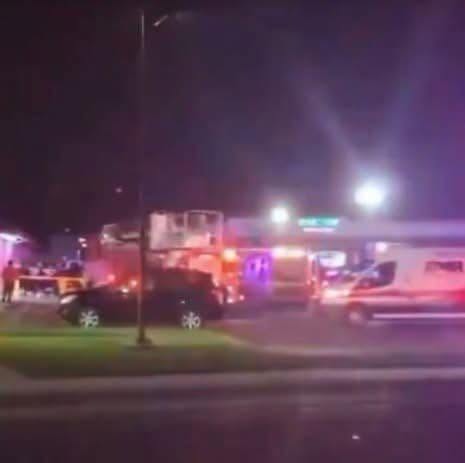
A disturbance in a crowded public place may last only a few minutes, yet a handful of smartphone videos can keep it alive online for days. People record from different angles, upload short clips, and add captions that shape how viewers interpret the event. Before officials release a complete account, thousands of strangers may already feel certain that they understand exactly what happened.
This pattern has become increasingly common. A disagreement in a store, an arrest outside a restaurant, a confrontation on public transportation, or a disruption at a community event can quickly move from a local concern to a national conversation.
The speed of social media can help expose wrongdoing, preserve evidence, and alert the public. However, it can also remove context, encourage speculation, and permanently affect people who may never have expected their most difficult moment to become entertainment.
The central issue is not whether people should record public events. In many situations, recording can serve an important purpose. The deeper question is how viewers, witnesses, publishers, and social media users should respond once those recordings begin to spread.
How an Ordinary Disturbance Becomes a Viral Story
Smartphones turn witnesses into instant publishers
In the past, most people who witnessed a public disturbance could only describe it afterward. Today, nearly everyone carries a camera and a direct connection to a global audience.
When shouting begins or authorities arrive, witnesses often reach for their phones. Some record because they feel concerned. Others want to document police conduct, protect someone involved, or preserve evidence. Many simply react to the unusual activity around them.
Within minutes, a clip can appear on several platforms. Other users download it, repost it, shorten it, add music, write dramatic captions, and place it beside unrelated commentary.
At that point, the original witness may lose all control over the recording. A twenty-second clip can travel far beyond the neighborhood where the incident occurred, reaching people who know nothing about the individuals, setting, or events that came before it.
The technology itself remains neutral. A phone can preserve valuable evidence or spread a misleading fragment. The result depends on how people record, describe, edit, and share what they capture.
Short clips often begin in the middle
Most viral videos do not show an event from the beginning.
A witness usually starts recording only after noticing raised voices, sudden movement, security personnel, or police activity. Therefore, the recording may begin after the key disagreement, warning, threat, or misunderstanding has already taken place.
It may also end before authorities explain their actions or before the people involved calm down.
This missing context creates a serious limitation. Viewers see a visible reaction but may not know what triggered it. They hear one person speaking but may not hear what another person said moments earlier. They see an officer restraining someone but may not know whether that person attempted to leave, threatened someone, requested help, or followed prior instructions.
None of this means viewers should automatically accept an official version. It simply means that a short recording rarely provides enough information for complete certainty.
Why Online Audiences Reach Conclusions So Quickly
Emotion moves faster than verification
Content spreads most rapidly when it triggers a strong emotional response.
Anger, shock, fear, sympathy, and outrage motivate people to comment and share. A calm request to wait for more information rarely travels as widely as a caption claiming that a clip proves injustice, danger, cruelty, or social decline.
Algorithms often reward engagement rather than accuracy. The more people react, the more prominently the platform may display the post. As a result, emotional interpretations can dominate before anyone verifies the central facts.
This environment encourages immediate judgment. Users may feel pressure to choose a side, condemn someone, defend someone, or explain the event while it is still unfolding.
However, certainty does not become reliable merely because many people repeat it.
A responsible viewer can acknowledge that a clip appears concerning while also recognizing that the full sequence remains unclear. Those two positions do not conflict. Concern can remain open to evidence.
Captions influence what viewers believe they see
A video rarely arrives without framing.
The person posting it may write that someone was attacked without reason, arrested unfairly, behaving dangerously, or creating a public scene. That description can influence how every later viewer understands the footage.
Two accounts can post the same clip with opposing captions and create entirely different reactions.
One might describe an individual as frightened and misunderstood. Another might call the same person aggressive and disruptive. Viewers who encounter only one version may accept that label before watching carefully.
This effect becomes stronger when reposting separates the clip from its original source. A video may circulate with a new date, location, or explanation. Eventually, millions of views can accumulate around a story that no longer resembles the original incident.
For this reason, viewers should treat the caption as a claim, not as proof.
What Official Information Can and Cannot Tell Us
Authorities may confirm basic facts
After a public disturbance, local officials may release information about the response.
They may confirm:
- When and where the incident occurred
- Whether officers or emergency personnel responded
- Whether anyone was detained or arrested
- Whether injuries were reported
- Whether the area reopened
- Whether an investigation remains active
These details can correct false claims circulating online. For example, social media may describe a violent attack when authorities report no injuries. A clip may suggest a permanent arrest when the person was briefly detained and released.
Official statements therefore provide useful context.
However, early statements may remain incomplete. Authorities may still be reviewing video, interviewing witnesses, or determining whether anyone committed an offense.
A cautious public should avoid treating the first social media caption or the first official statement as the final account.
Recorded footage can still hold institutions accountable
Waiting for verified information does not mean dismissing citizen recordings.
Public videos have exposed misconduct, contradicted inaccurate statements, identified witnesses, and encouraged investigations that might otherwise never have occurred.
Multiple recordings from different angles can reveal important details. Store surveillance, body-camera footage, witness video, emergency calls, and official reports may together create a clearer timeline.
The responsible approach is not to distrust every unofficial recording or automatically defend every authority. It is to compare evidence and avoid claims that exceed what the available material supports.
Accountability requires evidence. So does fairness.
The Human Cost of Becoming Viral
A difficult moment can become permanent
The people visible in a viral video may experience consequences long after the public disturbance ends.
Their names, faces, workplaces, and social media profiles may become targets of attention. Strangers may contact family members, leave threatening messages, post negative reviews, or attempt to identify employers.
Even when later information changes the story, the original accusation often remains more memorable than the correction.
A person who was never charged with a crime may still appear in search results beside words such as “attack,” “arrest,” or “meltdown.” A misunderstanding can become part of someone’s permanent digital identity.
This imbalance should make users cautious. Sharing a clip may require only one tap, but the person shown in it may live with the effects for years.
Children and vulnerable individuals need additional protection
Extra care is necessary when videos show children, people experiencing mental-health crises, injured individuals, or people in medical distress.
Public curiosity does not erase personal dignity.
A person may behave unpredictably because of panic, disability, confusion, medication, trauma, or illness. Viewers usually cannot determine those circumstances from a short recording.
Uploading a close view of someone’s distress can turn suffering into entertainment. It may also expose private medical information or encourage cruel commentary.
When possible, witnesses should avoid showing identifiable faces of children and vulnerable people. Publishers can blur faces, remove names, and focus on the public issue rather than the person’s humiliation.
The fact that something happened in public does not automatically make every detail ethically appropriate to distribute.
Responsible Ways to Record an Incident
Prioritize safety before documentation
Recording should never place the witness or others in additional danger.
A person should maintain a safe distance, avoid interfering with emergency personnel, and follow lawful instructions from officials managing the scene.
Moving closer for a more dramatic angle may block exits, complicate crowd control, or place the recorder near violence.
When someone needs immediate medical assistance, calling emergency services may matter more than filming. When several people are already recording, another camera may add little value.
Witnesses should ask a simple question: does recording help document an important event, or does it merely turn someone’s crisis into content?
Preserve the original footage
Anyone who records a potentially important incident should keep the original file.
Editing, cropping, or adding filters may remove useful details such as time, sound, distance, and surrounding activity. The full recording may help investigators or journalists understand the sequence more accurately.
The witness should note the approximate time, location, and what they personally observed before and after the recording.
They should distinguish direct observation from assumptions. Saying “I heard shouting and then began recording” provides more reliable information than claiming to know why the argument began.
When appropriate, the witness can provide the unedited footage to investigators, legal representatives, or reputable journalists rather than immediately posting it for public consumption.
Responsible Ways to Share and Discuss Viral Content
Verify before reposting
Before sharing a dramatic clip, look for basic confirmation.
Check whether the post identifies the correct location and date. Search for reporting from local news organizations or a statement from the relevant public agency. Determine whether the account uploading the video witnessed the incident or merely copied it.
Consider whether the caption makes claims the footage cannot prove.
Warning signs include:
- No clear location or date
- A cropped or heavily edited video
- A caption that identifies motives without evidence
- Claims that “the media will not show this”
- Requests to identify or punish someone immediately
- Old footage presented as a new event
- Several accounts using conflicting descriptions
When verification remains impossible, do not add certainty. A person can discuss the limitations of the clip without presenting rumors as fact.
Avoid identifying people unnecessarily
Naming an individual can sharply increase the harm caused by a viral post.
Unless authorities have publicly identified someone in connection with a matter of legitimate public interest, users should resist crowdsourced attempts to expose private information.
Online communities sometimes identify the wrong person. Similar appearances, outdated profiles, and incomplete details can send harassment toward an innocent individual.
Even an accurate identity does not justify publishing home addresses, phone numbers, family information, or unrelated employment details.
Criticism of public behavior should not become a campaign of intimidation.
Correct misinformation visibly
People who share an inaccurate claim should correct it with the same visibility they gave the original post.
Deleting a false statement can reduce further spread, but a correction helps people who already saw it understand what changed.
A useful correction might say that officials reported no injuries, the person was detained rather than arrested, the footage came from an earlier year, or the original description could not be verified.
Quietly changing a caption without acknowledging the mistake can leave previous viewers with the wrong impression.
Responsible sharing includes responsibility for repair.
What Journalists and Publishers Should Do Differently
Headlines should not exaggerate uncertainty
Publishers often compete for attention, but dramatic headlines can distort minor incidents.
A title that says a community was “left terrified” or that a video “reveals the truth” may go beyond the known facts. It can also encourage readers to interpret uncertainty as scandal.
A responsible headline should describe what is confirmed.
For example, it might state that a brief disturbance prompted a police response and drew online attention. That wording informs readers without inventing motives, injuries, or consequences.
Publishers should clearly label what comes from witness accounts, official statements, video analysis, and unverified social posts.
Updates should remain part of the story
Initial reports often receive the largest audience, while later corrections attract far fewer readers.
Publishers should update articles prominently when new facts emerge. They should note whether charges were filed, injuries confirmed, footage authenticated, or earlier claims disproved.
Corrections should appear near the top rather than hiding at the bottom.
This practice protects readers from outdated information and helps prevent an incomplete first impression from becoming permanent.
How Communities Can Respond Constructively
Focus on the underlying issue
A viral disturbance can reveal broader concerns about public safety, mental-health support, policing, crowd behavior, or conflict resolution.
Communities gain little from treating the incident only as entertainment.
Instead, the conversation can ask whether the location had adequate security, whether responders handled the situation appropriately, whether bystanders received clear instructions, and what might prevent similar disruptions.
That approach moves the discussion from humiliation toward improvement.
Allow time for evidence to develop
Patience does not prevent accountability. It strengthens it.
When people wait for reliable information, they reduce the chance of accusing the wrong individual, spreading false claims, or distracting attention from genuine misconduct.
A balanced response can remain alert, compassionate, and critical at the same time.
Viewers do not need to decide instantly who deserves blame. They can preserve uncertainty until the evidence supports a conclusion.
Frequently Asked Questions
Is it legal to record an incident in public?
Laws vary by location and circumstance. Recording in a public space is often permitted, but restrictions may involve privacy, audio recording, interference with police activity, private property, courtrooms, schools, and medical settings. People should follow local law and lawful safety instructions.
Does a viral video prove what happened?
Not necessarily. A recording can provide valuable evidence, but it may show only one angle or a small part of the event. Additional footage, witness statements, and official records may change the interpretation.
Should I share a video to help identify someone?
Public identification campaigns can target the wrong person and cause serious harm. Provide relevant footage to authorities when a genuine safety concern exists rather than encouraging online harassment.
What should I do when a post seems misleading?
Check the date, location, original uploader, local reporting, and official information. Avoid sharing the post until the central details can be confirmed.
Is deleting an inaccurate post enough?
Deleting it can stop additional spread, but a visible correction provides greater accountability when many people already saw or shared the misinformation.
Conclusion
A public incident can end in minutes while its online version continues to grow for weeks. Smartphones allow ordinary witnesses to preserve important evidence, but they also make incomplete and emotional narratives easier to spread.
The most responsible response begins with context.
Record safely when documentation serves a legitimate purpose. Preserve original footage. Verify dates, locations, and claims before reposting. Avoid exposing children, vulnerable individuals, and uninvolved family members. Most importantly, distinguish what the video clearly shows from what viewers merely assume.
Responsible sharing does not require silence. It requires care.
When users slow down, protect privacy, and wait for reliable information, they help create a digital culture that values accuracy over outrage and fairness over instant judgment.
More News
- Elder Abuse: Warning Signs You Should Never Ignore and What to Do
- Pfizer COVID-19 Vaccine for Children: What the 2021 Trial Actually Found and What Happened Next
- Marian Robinson’s Quiet Legacy: The Woman Who Helped Keep the Obama Family Grounded
- When a Public Disturbance Goes Viral: What One Shopping Center Incident Reveals About Privacy, Behavior, and Online Judgment