Found a Snake in Your House? Here’s What to Do Without Panicking can feel like advice you will never need until the moment you notice scales moving beside a cabinet, behind a box, or across the floor. Your first instinct may tell you to grab a broom, chase the snake, or get close enough to identify it. However, those reactions can increase the chance of a bite.
The safest response usually starts with distance. Keep children and pets away, avoid touching or cornering the snake, and contact an appropriate wildlife or animal-control professional when you cannot safely resolve the situation. Snakes typically bite when they feel threatened or trapped, so giving them space reduces unnecessary confrontation.
If a bite occurs, treat it seriously. Move away from the snake, seek medical attention promptly, and do not attempt outdated remedies such as cutting the wound, sucking out venom, applying ice, or using a tourniquet.
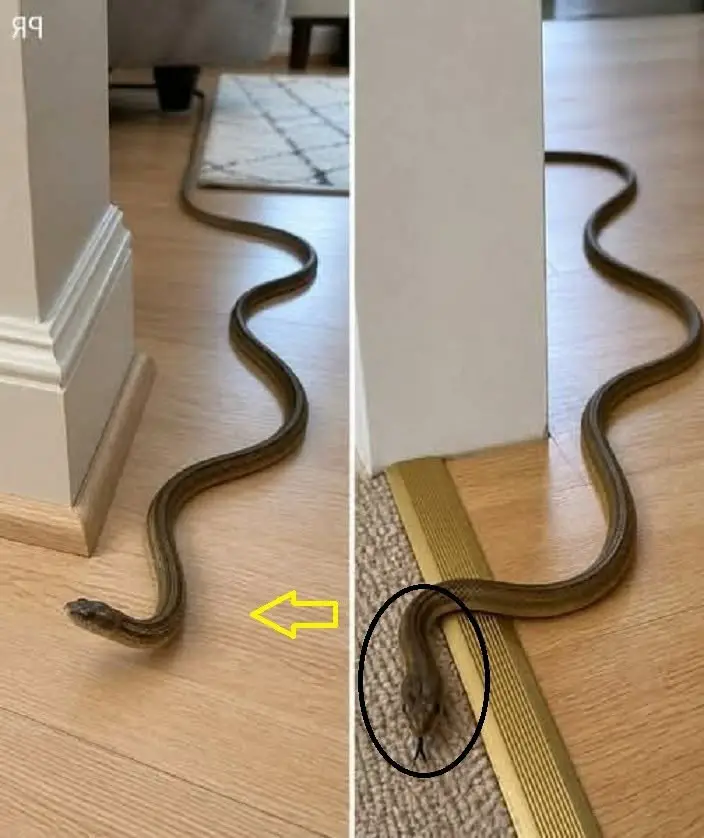
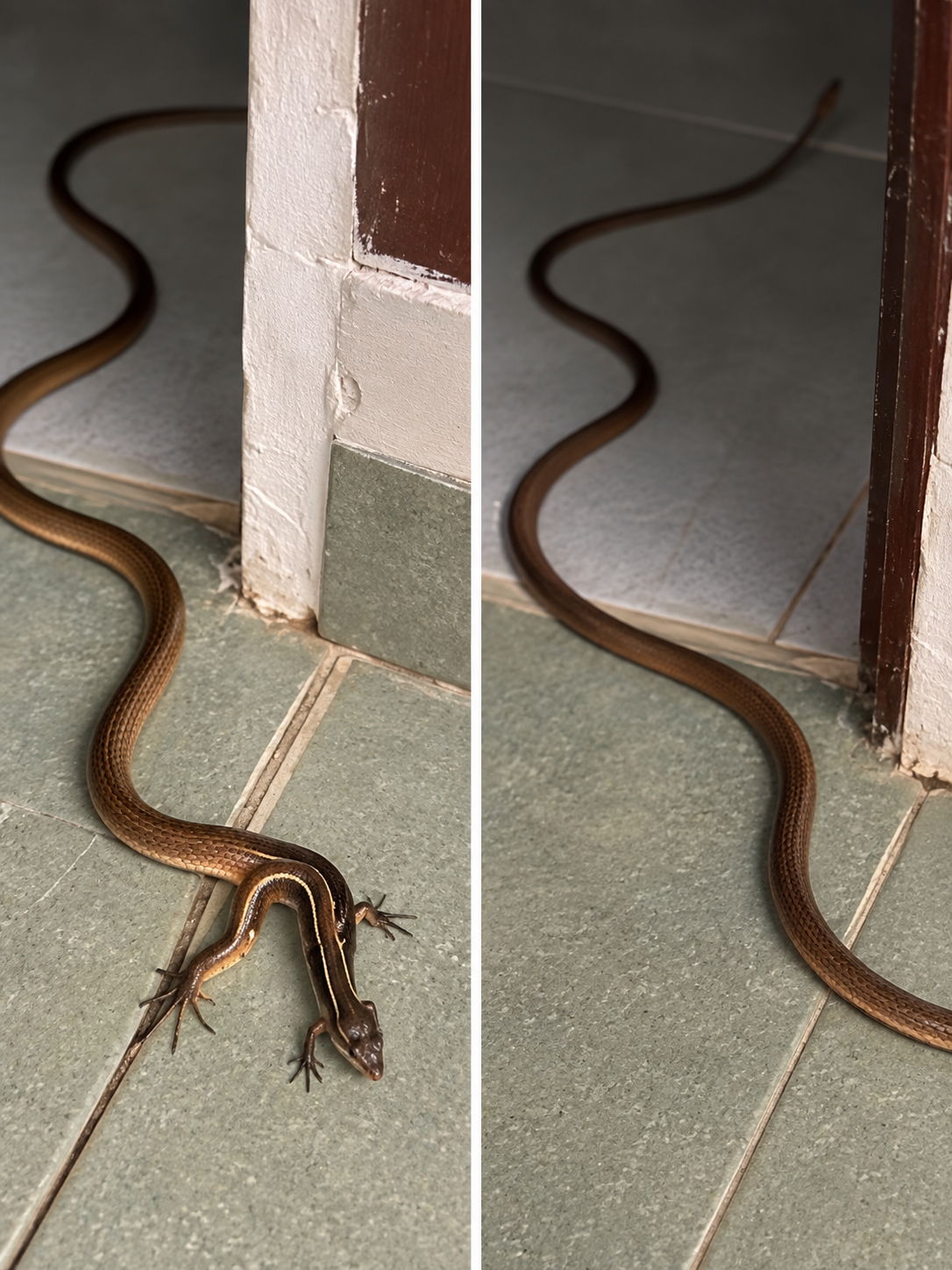
I once heard scratching near a stack of storage boxes and expected to find a mouse. Instead, a small snake slid partly into view. My first impulse was to move the boxes and force it outside, but reaching into a dark space suddenly seemed like the worst possible idea. I backed away, closed off the area, and kept everyone else out. That experience changed the way I think about unexpected wildlife indoors. The safest response did not require bravery or speed. It required patience, distance, and resisting the urge to handle something I could not confidently identify.
What to Do Immediately When You Find a Snake Indoors
Stay Back and Avoid Trying to Catch It
When you first see a snake, stop moving toward it.
You do not need to solve the problem in the next five seconds. Instead, create enough distance that the snake does not feel cornered.
Keep children away immediately.
Likewise, move dogs and cats into another room. Pets may bark, sniff, paw, or attempt to bite a snake, which can turn a quiet encounter into a dangerous one. The CDC advises keeping pets away from snakes and giving the animal plenty of space.
Do not grab the snake.
Do not pin it with a broom.
Do not attempt to pick it up with a towel, bucket, stick, shovel, or other household object unless you have professional training and know exactly what you are handling.
Likewise, do not try to kill it.
Trying to capture or kill a snake can bring you much closer to its striking range. Both the CDC and Poison Control specifically advise against chasing, trapping, or attempting to kill a snake because doing so can result in another bite.
If you can safely leave the room, do so.
Close the door if that can be done without approaching the snake. Then block access by children and pets.
If the snake remains visible, observe it from a safe distance.
A photograph taken without moving closer may help a wildlife professional or medical team identify the animal. However, identification never justifies putting yourself at risk.
The most useful rule in Found a Snake in Your House? Here’s What to Do Without Panicking is simple: distance first, identification second.
Do Not Corner the Snake or Search Blindly for It
A frightened snake usually wants an escape route rather than a confrontation.
Therefore, avoid surrounding it or blocking every direction with furniture, people, pets, or household tools.
If an exterior door is already nearby and can be opened without approaching the snake, an unobstructed exit may sometimes allow the animal to leave. However, do not cross the snake’s path or move close enough to provoke defensive behavior.
If the snake disappears, the situation becomes more difficult.
Do not reach under cabinets.
Do not put your hands behind furniture.
Do not rummage through boxes, laundry, firewood, stored tools, or dark corners.
Snakes can fit into surprisingly narrow spaces, so an area that looks empty may still provide shelter.
Instead, isolate the room if possible.
Keep everyone out and contact a qualified wildlife-removal service, animal-control agency, or other local authority familiar with snakes.
This advice becomes especially important in garages, sheds, crawl spaces, basements, and storage rooms.
These areas often contain clutter and hidden spaces where you cannot see where your hands or feet are going.
Wear closed shoes when moving through areas where a snake may be present, and never deliberately search hidden gaps with bare hands.
Found a Snake in Your House? Here’s What to Do Without Panicking becomes much easier once you stop thinking of the situation as a contest between you and the snake.
Your job is not to overpower it.
Your job is to reduce contact until someone qualified can manage the situation safely.
How to Handle Snakes in Bedrooms, Bathrooms, Garages, and Around Pets
Different Rooms Create Different Risks
A snake in a bedroom can cause immediate panic, especially if you discover it near the bed.
Still, the same basic rule applies.
Create distance.
If you can safely leave the room, leave. Then close the door without approaching the snake.
Do not get on the floor and look underneath furniture with your hands.
Likewise, do not assume the snake has left simply because you can no longer see it.
In bathrooms, avoid reaching behind the toilet, under cabinets, or around plumbing openings.
Moisture, gaps around pipes, and secluded spaces can provide temporary shelter for wildlife. Therefore, once the snake has been removed, inspect possible openings and seal them appropriately.
Garages create another common problem.
Boxes, stored equipment, firewood, tools, gaps beneath doors, and rodents can make garages attractive hiding places.
If you find a snake there, avoid pulling apart storage piles while the animal may still be present.
Instead, keep the garage clear of people and pets and contact local assistance when necessary.
Afterward, inspect the space for gaps along garage doors, walls, foundations, vents, and utility penetrations.
Found a Snake in Your House? Here’s What to Do Without Panicking also means accepting that you may not know whether an unfamiliar snake is venomous.
Do not rely on one visual feature, such as head shape, color, or pupil shape, to make a risky decision.
Snake identification varies considerably by region and species.
When uncertain, treat the animal cautiously and keep your distance.
Children and Pets Need Immediate Protection
Children can become curious when they see wildlife indoors.
Unfortunately, curiosity can override caution.
Give children one simple instruction: if they see a snake, they should move away and tell an adult.
Do not encourage them to approach for a photograph.
Do not ask them to identify the snake.
And do not assume they understand how quickly an animal may move when frightened.
Pets can face even greater risk because they may actively investigate the snake.
A dog may bark, lunge, or sniff.
A cat may stalk or pounce.
Therefore, move pets into another secure room as soon as possible.
If a pet receives a suspected snake bite, seek veterinary care promptly. The CDC advises moving the pet away from the snake, keeping it calm, and getting veterinary attention right away.
Do not attempt to catch the snake for the veterinarian.
Instead, remember its appearance or take a photograph only if you can do so from a safe distance.
Likewise, do not attempt home treatments unless a veterinarian or veterinary poison expert specifically directs you.
A bite from an unknown snake deserves professional evaluation because symptoms may develop after the encounter.
These precautions may sound excessive when the snake turns out to be harmless.
However, Found a Snake in Your House? Here’s What to Do Without Panicking focuses on managing uncertainty safely.
You can always relax after a professional identifies a harmless species.
You cannot undo an unnecessary close encounter.
What to Do If a Snake Bites You
Seek Medical Care and Avoid Dangerous Home Remedies
A snake bite should receive prompt medical attention, particularly when you cannot confidently identify the species or when venomous snakes live in your area.
First, move away from the snake.
Do not chase it.
Do not try to capture it.
Do not attempt to kill it and bring it to the hospital.
The CDC advises seeking emergency medical attention as soon as possible and specifically warns against handling or trapping the snake.
Remain as calm and still as possible while help is arranged.
Remove rings, watches, or tight items near the bite because swelling may develop. Wash the wound gently with soap and water if appropriate, and cover it with a clean, dry dressing.
Do not apply ice.
Do not cut the wound.
Do not attempt to suck out venom.
Do not use an electric shock treatment.
Do not apply a tourniquet.
These outdated measures can worsen tissue damage or interfere with appropriate treatment.
Do not drive yourself to the hospital after a suspected venomous bite. A snake bite can cause dizziness, weakness, or fainting, so another person or emergency medical services should transport you.
In the United States, Poison Control can provide additional guidance at 1-800-222-1222, but emergency symptoms still require emergency medical care.
Do Not Wait for Severe Symptoms to Appear
Some people hesitate after a bite because the wound looks small.
That can be a mistake.
The CDC specifically advises against waiting for symptoms before seeking help after a suspected venomous snake bite.
Symptoms can vary according to species, bite location, venom dose, and individual health.
Possible signs can include pain, swelling, bruising, weakness, nausea, dizziness, numbness, vision changes, or breathing difficulty.
However, the absence of dramatic symptoms immediately after the bite does not prove that everything is fine.
If you can safely remember the snake’s general color, size, markings, or body shape, that information may help medical professionals.
A photograph from a safe distance can also be useful.
Still, never delay medical care while trying to identify the snake.
Found a Snake in Your House? Here’s What to Do Without Panicking becomes particularly important after a bite because panic often leads to unnecessary actions.
People may run after the snake.
They may search online for home remedies.
They may apply an improvised tourniquet.
They may attempt to cut the bite.
Instead, focus on the steps that matter.
Move away.
Stay still.
Remove constricting items.
Seek medical help.
Follow professional instructions.
The goal is not to treat the venom yourself.
The goal is to reach appropriate medical care as quickly and safely as possible.
How to Reduce the Chances of Snakes Entering Your Home Again
Remove Food Sources, Hiding Places, and Entry Gaps
Once the immediate situation has ended, prevention becomes the next priority.
Snakes often appear where food and shelter exist.
Rodents can provide an important food source, so recurring mouse or rat activity deserves attention.
Keep pet food stored securely.
Clean spilled birdseed and animal feed.
Close trash containers.
Address persistent rodent problems appropriately.
Next, reduce hiding places around the property.
Keep grass reasonably maintained.
Remove unnecessary piles of leaves, lumber, construction material, debris, and unused equipment.
Store firewood neatly and, where practical, away from the home’s foundation.
Then inspect your building.
Look for openings around doors, pipes, utility lines, crawl-space vents, foundations, garage doors, windows, and other penetrations.
Use appropriate weather stripping, screens, or building materials to close gaps once you are certain no animal remains trapped inside.
Garages deserve particular attention because the gap beneath a door can become an easy entry point.
Found a Snake in Your House? Here’s What to Do Without Panicking does not promise a completely snake-proof property.
No realistic home-maintenance plan can guarantee that wildlife will never appear.
Instead, prevention reduces the opportunities that attract snakes close to living spaces.
Understand That Snakes Usually Want to Avoid You
Snakes generally do not view humans as prey.
When they strike, they often respond defensively because they feel threatened, trapped, or handled.
The CDC notes that snakes bite when they feel threatened or trapped and recommends leaving them alone and giving them space.
Understanding that behavior can help you respond more calmly.
A snake may freeze.
It may try to hide.
It may retreat.
Some snakes may coil, hiss, or strike when they feel increasingly threatened.
Those behaviors do not mean you should test how tolerant the animal is.
Instead, increase your distance.
Likewise, killing every snake near your property is neither necessary nor always appropriate. Wildlife laws differ by location, and some species receive legal protection.
When removal is necessary, trained wildlife professionals can usually provide safer guidance.
Repeated snake sightings deserve a broader property inspection.
Look for rodent activity, dense vegetation, open crawl spaces, damaged screens, gaps near foundations, standing water, and accessible storage areas.
Correcting those conditions can help more than repeatedly removing individual animals.
Ultimately, the most useful mindset combines caution with perspective.
You do not need to panic every time a snake appears.
However, you should respect the animal enough not to handle it casually.
Frequently Asked Questions
Why would a snake come inside my house?
A snake may enter while searching for shelter, prey, water, or suitable temperatures. Gaps around doors, foundations, garages, vents, pipes, and crawl spaces can provide access. Rodent activity may also make a property more attractive.
Should I try to catch a snake in my home?
No. Unless you have appropriate training, catching an unfamiliar snake creates unnecessary bite risk. Keep your distance and contact a wildlife or animal-control professional when needed.
What should I do if the snake disappears?
Do not search dark gaps with your hands. Keep children and pets away, isolate the room if possible, and seek professional assistance. Assume the snake may still be present until the area has been safely checked.
Should I kill a snake that enters my house?
Usually, you do not need to. Trying to kill a snake may increase the likelihood of a bite. Local wildlife professionals can advise on safe removal and any laws that apply to the species.
What should I do after a snake bite?
Move away from the snake and seek medical attention promptly. Do not cut the wound, suck out venom, apply ice, or use a tourniquet. Remove rings or tight items near the bite and follow emergency medical instructions.
Conclusion
Found a Snake in Your House? Here’s What to Do Without Panicking becomes much less frightening when you remember that you do not need to capture, chase, or fight the animal yourself.
Start with distance.
Move children and pets away.
Do not handle the snake.
Do not corner it.
If you can safely leave the room, do so and isolate the area.
Then contact qualified wildlife assistance when you cannot safely resolve the situation.
If the snake disappears, resist the temptation to reach beneath furniture or into dark storage areas.
Likewise, if a bite occurs, forget the old movie-style remedies.
Do not cut the wound.
Do not suck out venom.
Do not apply ice.
Do not use a tourniquet.
Instead, seek medical attention promptly and follow professional guidance.
After the snake has left or been removed, focus on prevention.
Reduce rodent activity.
Remove unnecessary hiding places.
Inspect gaps around doors, foundations, vents, pipes, garages, and crawl spaces.
Maintain outdoor areas so snakes have fewer sheltered places immediately beside the home.
Still, remember that no property can become completely wildlife-proof.
If snakes naturally live in your region, occasional encounters can happen.
The goal is not to eliminate every possibility.
The goal is to respond intelligently when one appears.
That is the most important lesson behind Found a Snake in Your House? Here’s What to Do Without Panicking.
The safest person in the room does not need to be the bravest.
They need to be the one who keeps their distance, protects everyone else, and chooses calm, practical action over panic.
More Home Remedies
- Wrinkled Fingers After Water Exposure: What Your Skin May Be Telling You
- Skin Rash With Breathing Trouble? It Could Be a Life-Threatening Allergic Reaction
- I Thought It Was a Piece of Trash on the Bathroom Floor—Until It Moved
- If You Are Getting White Pimples on Your Lips or Intimate Area, Here’s What They Could Mean