What Is That Strange Thing Hanging on Your Wall?
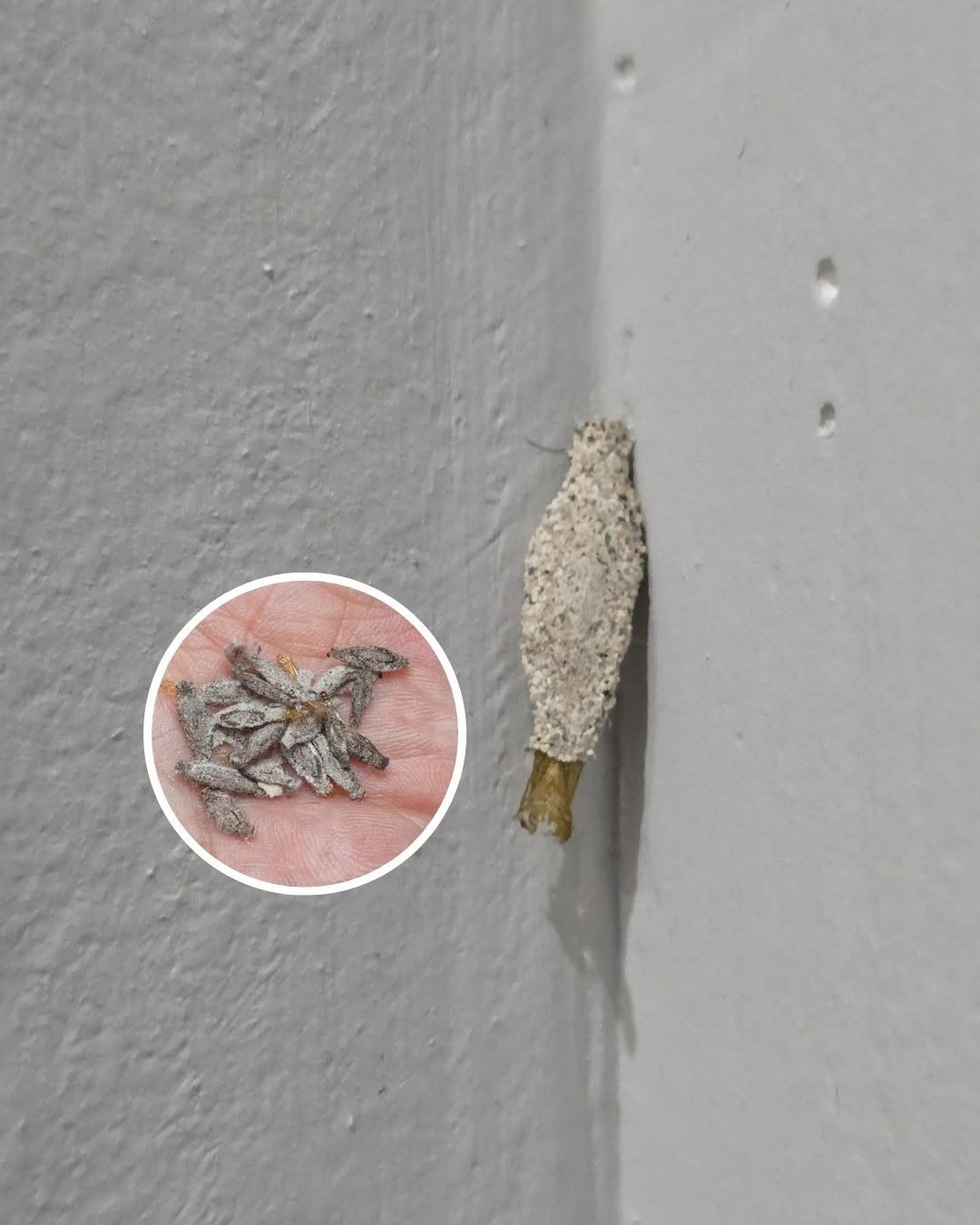
You glance up at the wall and notice a tiny gray object clinging to the paint.
At first, it looks like a seed, a piece of lint, or a small clump of dirt. It doesn’t move. It doesn’t make noise. It simply hangs there, blending into the background.
Then you touch it.
And it twitches.
Suddenly, what looked like harmless debris becomes something much more interesting.
That little wall-dweller is commonly known as a plaster bagworm, household casebearer, or in some regions, the Kamitetep. While its appearance may seem unsettling, this tiny creature is usually more of a household nuisance than a serious pest.
Let’s explore what it is, why it appears inside homes, and what you should do if you find one.
What Exactly Is a Kamitetep?
The Kamitetep isn’t actually a moth—at least not yet.
What you’re seeing is the larval stage of a small moth species known scientifically as Phereoeca uterella, a member of the moth family that includes many household case-bearing moths.
The larva creates a protective case from silk and covers it with whatever materials are available nearby, including:
- Dust
- Hair
- Sand
- Spider webs
- Dead insects
- Lint
- Organic debris
The result is a portable shelter that acts as both camouflage and protection.
Appearance
Typical characteristics include:
- Gray or brown coloration
- Flattened, oval shape
- Length of approximately 8–14 millimeters
- Texture resembling a tiny seed or grain of rice
When disturbed, the larva retreats completely inside the case.
When moving, it extends its head and legs from one end and drags the case along behind it.
Why Are They Found Indoors?
Unlike many insects that enter homes searching for food scraps, plaster bagworms are attracted to materials commonly found in quiet, undisturbed areas.
Their Favorite Foods
These larvae feed on:
- Spider webs
- Shed insect parts
- Hair
- Lint
- Natural fibers
- Feathers
- Dead insects
Because modern homes provide plenty of these materials, they can thrive indoors under the right conditions.
Preferred Environment
Kamitetep typically prefer:
- Warm temperatures
- High humidity
- Limited airflow
- Dark corners
They’re often found in:
- Bathrooms
- Basements
- Closets
- Garages
- Laundry rooms
- Attics
- Storage spaces
If you frequently notice spider webs or dust buildup in corners, you may unintentionally be creating an ideal habitat.
Are They Dangerous?
Fortunately, the answer is generally no.
Plaster bagworms:
- Do not bite
- Do not sting
- Do not spread disease
- Do not attack people
- Do not infest food supplies
For most households, they are primarily a cosmetic annoyance rather than a health threat.
Possible Irritation
Some people may experience mild irritation from contact with larval hairs or accumulated debris associated with the cases.
Individuals with allergies or asthma may also find heavy infestations aggravating due to airborne dust and organic particles.
However, serious health concerns are uncommon.
Can They Damage Your Home?
In small numbers, damage is usually minimal.
However, larger populations may feed on materials containing natural fibers, including:
- Wool
- Silk
- Stored textiles
- Animal-based fabrics
While they are generally less destructive than traditional clothes moths, infestations should not be ignored.
How to Get Rid of Kamitetep
The most effective solution involves removing both the insects and the conditions they prefer.
1. Reduce Humidity
Moist environments encourage their survival.
Consider:
- Running a dehumidifier
- Improving ventilation
- Using exhaust fans
- Repairing leaks
Bathrooms and basements are often the most important areas to address.
2. Vacuum Thoroughly
Regular cleaning removes both the insects and their food sources.
Focus on:
- Ceiling corners
- Baseboards
- Closets
- Behind furniture
- Under appliances
- Window frames
Removing spider webs is particularly important.
3. Remove Visible Cases
When you spot a case:
- Vacuum it up
- Gently scrape it off
- Dispose of it immediately
Avoid simply brushing it onto the floor.
4. Store Natural Fibers Properly
Protect valuable textiles by storing them in:
- Airtight containers
- Sealed garment bags
- Proper storage bins
This also helps prevent clothes moth problems.
5. Maintain Regular Cleaning
Consistency is the best prevention strategy.
Homes with lower dust levels and fewer cobwebs are much less attractive to these insects.
How Long Do They Live?
The larval stage can last several months depending on environmental conditions.
Eventually, the insect pupates inside its case and emerges as a small gray moth.
Adult moths are short-lived and often go unnoticed.
Most people encounter only the case-bearing larval stage.
Why Do They Blend In So Well?
One of the most fascinating features of the Kamitetep is its camouflage.
Because each larva incorporates local debris into its case, no two cases look exactly alike.
A bagworm living on a dusty wall may resemble dirt.
One living near carpeting may resemble lint.
Another near wooden surfaces may appear almost invisible.
This adaptation helps protect them from predators and explains why they often go unnoticed for long periods.
Friend or Foe?
The answer lies somewhere in between.
Kamitetep aren’t dangerous household invaders, but they aren’t ideal houseguests either.
They help recycle organic debris by consuming dead insects, spider webs, and other materials. Yet their presence often signals that certain areas of the home need cleaning or moisture control.
Think of them as tiny custodians that show up when conditions become favorable.
Final Thoughts
Finding a Kamitetep on your wall can be surprising, especially if you’ve never encountered one before.
Fortunately, these strange little case-bearing larvae are usually harmless.
They don’t bite, sting, or spread disease. Most often, they’re simply taking advantage of dust, humidity, and organic debris available in quiet corners of the home.
Regular cleaning, moisture control, and prompt removal of visible cases are usually all that’s needed to keep their numbers under control.
So the next time you spot one hanging quietly on a wall, you don’t need to panic.
Just grab the vacuum, tidy up the area, and remember: sometimes the creepiest-looking creatures are among the least threatening.
More Home Remedies
- Wrinkled Fingers After Water Exposure: What Your Skin May Be Telling You
- Skin Rash With Breathing Trouble? It Could Be a Life-Threatening Allergic Reaction
- I Thought It Was a Piece of Trash on the Bathroom Floor—Until It Moved
- If You Are Getting White Pimples on Your Lips or Intimate Area, Here’s What They Could Mean