At first glance, it looks like a mistake.
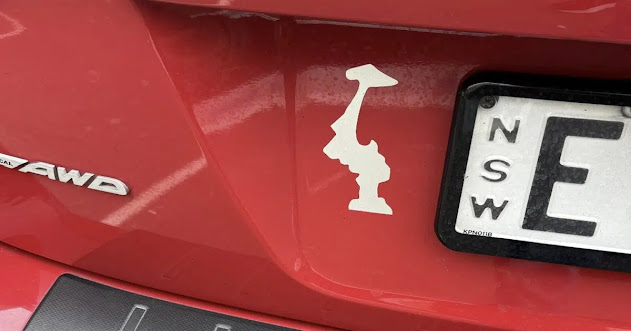
You’re walking through a parking lot, sitting in traffic, or grabbing groceries when you notice a familiar shape on the back of a vehicle. It’s clearly the outline of Washington State—but something seems off.
Then it hits you.
The sticker is upside down.
Your first instinct might be to assume the owner accidentally applied it incorrectly. After all, state outline decals are usually displayed exactly as they appear on a map.
But if you’ve spent any time in the Pacific Northwest, you’ve probably noticed that the upside-down Washington sticker isn’t an accident at all.
In fact, it’s become a surprisingly popular symbol among Washington residents, former residents, outdoor enthusiasts, artists, environmentalists, and people who simply appreciate the unique culture of the Pacific Northwest.
So why are people intentionally flipping Washington upside down?
The answer is part local pride, part humor, part cultural identity, and part mystery.
Let’s explore the fascinating story behind one of the Pacific Northwest’s most recognizable unofficial symbols.
The Rise of State Outline Stickers
Before understanding the upside-down version, it helps to understand how state outline decals became popular in the first place.
Over the past two decades, simple state-shaped stickers have exploded in popularity across the United States.
Unlike flashy bumper stickers covered with slogans and messages, state outlines are subtle.
They communicate identity without saying much.
A simple silhouette can instantly tell others:
- Where you’re from
- Where you live
- Where your heart belongs
- Where your favorite adventures happen
You can find these decals on:
- Cars
- Water bottles
- Laptops
- Coolers
- Campers
- Kayaks
- Notebooks
- Travel trailers
People love them because they’re clean, simple, and instantly recognizable.
For Washington residents, the state outline became especially meaningful because of the region’s strong sense of identity.
Why Washington’s Shape Is So Recognizable
Not every state outline works well as a sticker.
Some states are difficult to recognize without labels.
Washington is different.
Its shape is surprisingly distinctive.
The rugged Pacific coastline.
The Olympic Peninsula.
The straight Canadian border.
The unique northwest corner.
Together, these features create a silhouette that stands out immediately.
Even people who have never visited Washington can often identify it.
That recognizable shape helped turn the decal into a regional symbol.
Then someone had the idea to flip it upside down.
And everything changed.
The Curious Birth of the Upside-Down Trend
No one can point to a single person who started the movement.
Like many cultural trends, it seems to have emerged organically.
Somewhere along the way, Washington residents began placing the state outline upside down on vehicles and gear.
Others noticed.
The design spread.
Soon it became a recognizable inside joke among locals.
What made the trend unique was that nobody could fully agree on what it meant.
And that uncertainty became part of its appeal.
Unlike symbols that come with strict definitions, the upside-down Washington sticker allows people to create their own interpretation.
That’s one reason it continues to resonate with so many different groups.
A Symbol of Pacific Northwest Individuality
The Pacific Northwest has long embraced independent thinking.
People in Washington are often known for:
- Creativity
- Environmental awareness
- Outdoor adventure
- Artistic expression
- Nonconformity
- Self-reliance
The upside-down sticker reflects these values perfectly.
It takes something familiar and intentionally changes it.
Not dramatically.
Not aggressively.
Just enough to make people pause and think.
That subtle rebellion feels very Pacific Northwest.
Instead of shouting for attention, it quietly challenges expectations.
Humor Plays a Major Role
For many people, the upside-down sticker is simply funny.
That’s it.
No political statement.
No deep philosophy.
No hidden agenda.
Just humor.
The sticker often sparks conversations like:
“Your sticker is upside down.”
“I know.”
“Why?”
“Why not?”
That playful exchange captures much of the sticker’s charm.
Many owners enjoy the confusion it creates.
The upside-down shape invites curiosity without demanding explanation.
In a world filled with loud opinions and constant messaging, that kind of lighthearted mystery feels refreshing.
The Adventure Connection
Washington is famous for outdoor recreation.
The state attracts:
- Hikers
- Campers
- Climbers
- Skiers
- Kayakers
- Mountain bikers
- Van-lifers
- Road trippers
For many outdoor enthusiasts, flipping the state symbolizes adventure.
Maps help us navigate.
Turning the map upside down represents stepping outside conventional paths.
It suggests exploration.
Discovery.
Wandering.
Choosing the scenic route instead of the fastest one.
Many people who spend weekends exploring forests, mountains, coastlines, and backroads find this interpretation especially appealing.
The flipped sticker becomes a reminder that some of life’s best experiences happen when you stop following the obvious path.
A Quiet Celebration of Washington Pride
Interestingly, the upside-down sticker often expresses pride more effectively than traditional state symbols.
Why?
Because it requires recognition.
Someone unfamiliar with Washington may not even understand what they’re seeing.
But locals instantly recognize it.
That creates a sense of community.
It’s a signal that says:
“If you know, you know.”
Unlike giant slogans or oversized flags, the upside-down outline feels personal.
It’s less about broadcasting identity and more about sharing it with people who understand.
Environmental Interpretations
For some people, the flipped state carries environmental meaning.
Washington residents often feel deeply connected to nature.
The state’s landscapes include:
- Rainforests
- Mountains
- Rivers
- Islands
- Coastlines
- Lakes
- Volcanoes
Environmental awareness is woven into many communities throughout the region.
Some individuals interpret the upside-down sticker as a reminder that the world feels increasingly out of balance.
Climate change.
Habitat loss.
Environmental degradation.
In this context, the flipped state becomes a subtle symbol encouraging reflection.
Importantly, this interpretation is personal.
There is no official environmental message attached to the sticker.
But the flexibility of its meaning allows people to connect with it in different ways.
The Pacific Northwest Loves Symbols Like This
The upside-down sticker fits into a broader regional tradition.
The Pacific Northwest has always celebrated unconventional ideas.
Consider the region’s cultural influence:
- Independent music scenes
- Craft brewing
- Alternative lifestyles
- Environmental movements
- Tech innovation
- Outdoor culture
Many beloved regional symbols began as small local quirks before becoming widely recognized.
The upside-down Washington outline follows the same pattern.
It’s simple.
Unpretentious.
Slightly odd.
And completely authentic.
Why People Outside Washington Display It
You don’t have to live in Washington to appreciate the sticker.
Many people display it because they:
- Grew up there
- Went to college there
- Visited frequently
- Have family there
- Fell in love with the scenery
- Miss living in the Pacific Northwest
For former residents, the sticker often becomes a symbol of nostalgia.
A small reminder of rainy mornings, evergreen forests, ferry rides, coffee shops, mountain views, and favorite hiking trails.
Home isn’t always where you currently live.
Sometimes it’s where a piece of your heart remains.
Social Media Helped Fuel the Trend
Platforms like Instagram, TikTok, Pinterest, and Facebook have played a major role in expanding awareness of the sticker.
People frequently post photos featuring:
- Road trips
- Hiking adventures
- National parks
- Campgrounds
- Mountain summits
- Coastal sunsets
The upside-down Washington decal often appears in the background of these images.
As photos spread online, more people became curious.
Questions followed.
Then more stickers appeared.
The cycle repeated.
Today, the design has become recognizable far beyond Washington’s borders.
Frequently Asked Questions
Is the sticker offensive?
No.
Most people view it as playful and affectionate rather than disrespectful.
Do all Washington residents understand it?
Not necessarily.
Some people see it and simply think it’s upside down.
Others immediately recognize the cultural reference.
Is there one official meaning?
No.
That’s part of its appeal.
Different people interpret it differently.
Can people from other states use it?
Absolutely.
Many former residents and Pacific Northwest enthusiasts display it proudly.
Is the trend still growing?
Yes.
The sticker continues to gain popularity through social media, outdoor communities, and regional pride movements.
More Than Just a Sticker
What makes the upside-down Washington sticker fascinating isn’t the design itself.
It’s the conversation it creates.
A simple outline becomes a symbol of:
- Adventure
- Home
- Humor
- Identity
- Community
- Independence
- Curiosity
The best symbols often work this way.
They don’t force meaning onto people.
They invite people to discover meaning for themselves.
That’s exactly what the flipped Washington outline does.
The Bottom Line
The upside-down Washington State sticker isn’t a mistake.
It’s a uniquely Pacific Northwest symbol that blends humor, individuality, adventure, and regional pride into one simple design.
For some people, it’s a playful inside joke.
For others, it’s a celebration of Washington’s culture and landscapes.
Some see environmental meaning.
Others simply think it looks cool.
And perhaps that’s why the trend continues to grow.
The sticker doesn’t tell you what to think.
It simply invites you to look twice.
In a world where so many messages compete for attention, that tiny upside-down state outline accomplishes something remarkable.
It sparks curiosity.
It starts conversations.
And it reminds people that sometimes the most meaningful symbols are the ones that don’t need much explanation at all.
So the next time you spot an upside-down Washington sticker on a car, laptop, water bottle, or camper, you’ll know it isn’t a mistake.
It’s a quiet celebration of one of America’s most distinctive places—and the wonderfully unconventional people who love it.