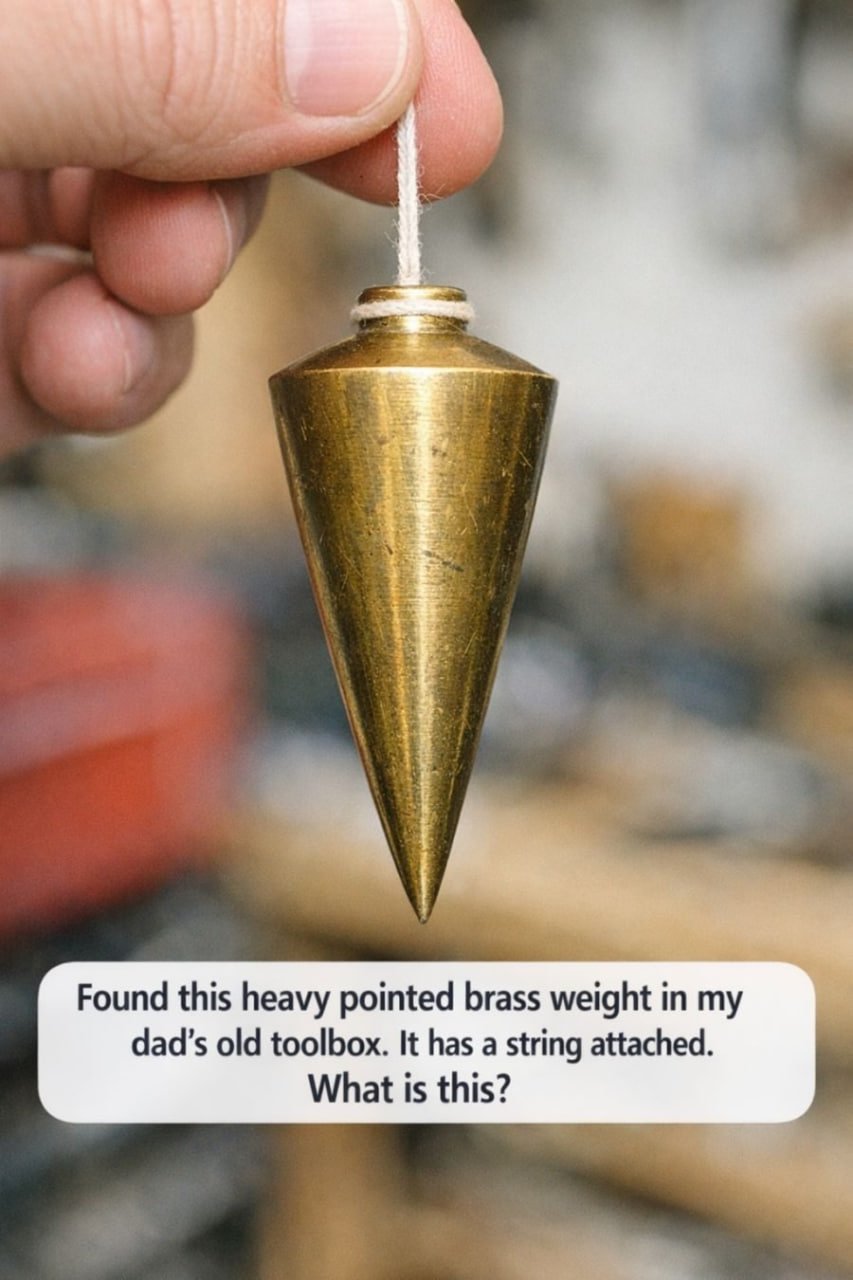
At first glance, a heavy pointed brass object hanging from a string may look mysterious or even decorative. Many people discover one tucked away inside an old toolbox, workshop drawer, or garage shelf and wonder what purpose it once served.
The answer is surprisingly simple: it is called a plumb bob.
This small but incredibly important tool has helped builders, carpenters, masons, and craftsmen create straight vertical lines for thousands of years. Long before lasers, digital levels, and electronic measuring devices existed, workers relied on the simple force of gravity to achieve remarkable precision.
Although modern construction technology has changed dramatically, the plumb bob remains one of the oldest and most reliable tools ever created. Its design is elegant because it depends on a universal force that never changes.
For many families, finding a plumb bob among a parent’s or grandparent’s tools also carries emotional meaning. Old tools often preserve memories of hard work, craftsmanship, and projects built by hand over decades.
A man once found a brass plumb bob while cleaning out his late grandfather’s workshop. At first, he almost tossed it into a box of random metal scraps because he did not recognize it. Later, an older neighbor explained how craftsmen once used plumb bobs to frame walls, align doors, and construct barns long before modern laser levels existed. Suddenly, the small brass weight felt different to him. It was no longer just an old tool — it was a quiet reminder of his grandfather’s skill and patience.
What Exactly Is a Plumb Bob?
A Simple Tool Based on Gravity
A plumb bob is a pointed weight suspended from a string or cord.
When hanging freely, gravity naturally pulls the weight straight downward, creating a perfectly vertical reference line called a plumb line.
Builders use this line to determine whether structures stand truly upright.
The concept is incredibly old but extremely accurate.
Why the Shape Matters
Most plumb bobs feature:
- A pointed tip
- A symmetrical shape
- Heavy metal construction
The pointed tip allows workers to mark exact vertical alignment points precisely.
The weight helps stabilize movement so the string hangs steadily rather than swinging excessively.
Common materials include:
- Brass
- Steel
- Bronze
- Lead
Brass became especially popular because it resists rust while remaining durable.
The History of the Plumb Bob
One of Humanity’s Oldest Construction Tools
The plumb bob dates back thousands of years.
Ancient civilizations including:
- Egyptians
- Greeks
- Romans
used plumb lines while constructing temples, pyramids, roads, and aqueducts.
Even without modern technology, these builders achieved astonishing precision using simple tools and geometry.
The Word “Plumb” Comes From Lead
The word “plumb” originates from the Latin word plumbum, meaning lead.
Early plumb bobs were often made from lead because of its weight and density.
Over time, other metals became more common for durability and craftsmanship.
How a Plumb Bob Works
Gravity Creates a True Vertical Line
The science behind a plumb bob is beautifully simple.
When suspended freely:
- Gravity pulls the weight downward
- The string aligns vertically
- The line becomes perfectly straight
Because gravity remains constant, the plumb line provides highly reliable accuracy.
This makes the tool effective even today.
Builders Use It for Alignment
Carpenters and builders traditionally used plumb bobs for tasks such as:
- Framing walls
- Aligning doorways
- Positioning beams
- Setting fence posts
- Checking vertical surfaces
Masons also used plumb lines while constructing stone walls and chimneys.
Even tiny alignment errors could create major structural problems over time, so accuracy mattered greatly.
Why Plumb Bobs Were So Important
Precision Without Electricity
Modern laser levels depend on batteries and electronics.
A plumb bob requires only:
- Gravity
- String
- Steady hands
This simplicity made it reliable in virtually any environment.
Builders trusted it because it rarely failed.
Construction Before Modern Tools
Before digital equipment, craftsmen relied heavily on manual measuring techniques.
Tools like:
- Plumb bobs
- Spirit levels
- Chalk lines
- Squares
formed the foundation of accurate construction work for centuries.
Many historic buildings still standing today were built using these simple methods.
Different Types of Plumb Bobs
Brass Plumb Bobs
Brass models remain especially collectible because they:
- Resist corrosion
- Develop attractive patina
- Feel substantial and balanced
Vintage brass plumb bobs often appear beautifully aged after decades of use.
Steel and Lead Versions
Steel plumb bobs are durable and affordable.
Lead versions were historically common because of their density, although safety concerns reduced their popularity over time.
Decorative and Specialized Designs
Some antique plumb bobs include:
- Engravings
- Wooden caps
- Replaceable tips
- Intricate craftsmanship
Collectors often value unique or handmade examples highly.
How Craftsmen Used Plumb Bobs
Establishing Vertical Walls
One classic use involved checking whether walls leaned inward or outward.
Builders would suspend the plumb line near the wall surface.
If the wall aligned evenly with the string, it was considered plumb — meaning perfectly vertical.
Aligning Multi-Story Structures
Plumb bobs were especially valuable during large-scale construction projects.
Workers used them to align:
- Staircases
- Columns
- Window frames
- Structural beams
Even small alignment errors could compound dramatically across multiple floors.
Why Many People Still Keep Them
Tools Carry Personal History
Old tools often outlive the people who used them.
A worn plumb bob may reflect:
- Decades of labor
- Family projects
- Skilled craftsmanship
- Personal pride
For many families, preserving such tools feels deeply meaningful.
Vintage Tools Have Character
Unlike many modern plastic tools, vintage brass tools often display:
- Hand craftsmanship
- Weight and balance
- Durable materials
- Patina from years of use
Many collectors appreciate these qualities even if the tools are no longer actively used.
Cleaning and Preserving an Old Plumb Bob
Gentle Cleaning Works Best
Vintage brass develops natural patina over time.
Many collectors actually prefer this aged appearance because it reflects authenticity and history.
For light cleaning:
- Use a soft microfiber cloth
- Remove dust gently
- Avoid abrasive scrubbing
Avoid Harsh Chemicals
Strong cleaners may damage both value and appearance.
Avoid:
- Steel wool
- Acidic soaks
- Aggressive polishing compounds
If tarnish removal is desired, mild mixtures like baking soda and lemon juice may help when used carefully.
Always dry the tool thoroughly afterward.
Are Vintage Plumb Bobs Valuable?
Most Have Modest Financial Value
Many antique plumb bobs sell for:
- $10 to $50
depending on condition and material.
Some Features Increase Value
Collectors often look for:
- Maker’s marks
- Unusual designs
- Brass construction
- Original strings or reels
- Historical engravings
Rare examples or highly decorative models may become significantly more valuable.
Sentimental Value Often Matters More
For many families, emotional value outweighs financial worth completely.
A tool connected to a parent or grandparent may become a treasured heirloom regardless of market price.
Creative Ways to Reuse a Vintage Plumb Bob
Decorative Display
Many people display old plumb bobs in:
- Workshops
- Offices
- Shadow boxes
- Rustic home décor
The brass and aged metal often create visually striking decoration.
Functional Repurposing
Some people repurpose them as:
- Paperweights
- Hanging ornaments
- Garden decorations
- Conversation pieces
Their weight and shape make them surprisingly versatile.
Family Keepsakes
Passing down old tools can preserve family stories and craftsmanship traditions across generations.
Sometimes a simple object becomes a symbol of shared history.
Common Myths About Plumb Bobs
Myth: They Are Weapons or Fishing Weights
Their pointed shape sometimes confuses people, but plumb bobs are construction alignment tools.
Myth: Modern Technology Made Them Obsolete
Laser levels dominate modern construction, but plumb bobs still work perfectly and remain useful in some situations.
Myth: Tarnish Reduces Value
Natural patina often increases collector appeal rather than reducing it.
Myth: They Were Only Used by Carpenters
Masons, surveyors, builders, and many trades relied on plumb bobs historically.
Frequently Asked Questions
What is a plumb bob used for?
It creates a true vertical reference line using gravity.
Why is the tip pointed?
The pointed tip allows highly precise alignment and marking.
Are old brass plumb bobs collectible?
Yes. Many collectors appreciate vintage craftsmanship and historical tools.
Should you polish antique brass tools?
Gentle cleaning is fine, but excessive polishing may remove desirable patina.
Do builders still use plumb bobs today?
Yes, although laser levels have replaced them in many situations.
Conclusion
A plumb bob may appear simple, but it represents one of humanity’s oldest and most dependable precision tools. With nothing more than gravity, string, and careful craftsmanship, builders used plumb bobs to create homes, barns, cathedrals, bridges, and countless structures that still stand today.
Finding one inside an old toolbox often reveals more than forgotten hardware. It opens a small window into another generation’s working life — a time when skill, patience, and precision mattered deeply in every project.
Whether polished carefully, displayed proudly, or simply kept in a drawer as a family keepsake, an old plumb bob carries something surprisingly meaningful: a quiet connection to the hands that once built with it.
More Home Remedies
- California Mom Issues Urgent Fireworks Warning After Teen Suffers Devastating Hand Injuries
- This Is the Silent Disease That Can Strike Without Warning
- The Midnight Ache: Understanding Nighttime Leg Cramps and How to Find Relief
- My 8-Year-Old Has Been Experiencing This for Two Months—Understanding Hives in Children