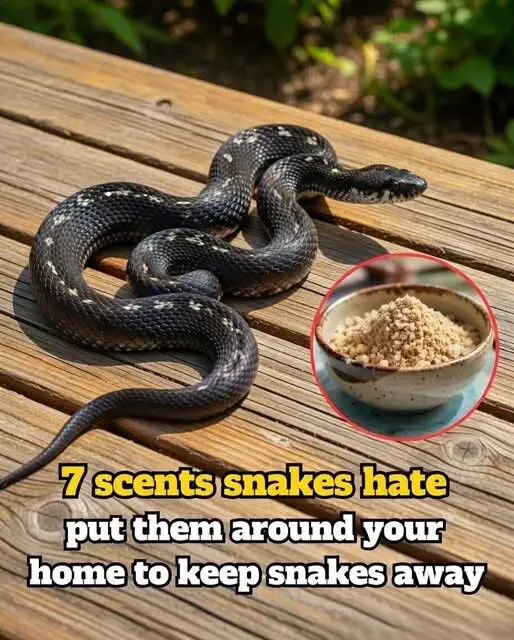
Every spring and summer, homeowners start searching for easy ways to keep snakes away from porches, patios, garages, gardens, and decks. One of the most common ideas involves using strong smells that snakes supposedly hate. Social media posts often claim that ingredients like cinnamon, vinegar, garlic, peppermint oil, or sulfur can force snakes to leave your property immediately. While some strong scents may irritate snakes temporarily, the truth is more complicated than many viral posts suggest.
Snakes do not smell the same way humans do. Instead, they use a specialized sensory system called the Jacobson’s organ, which helps them “taste” tiny particles in the air using their tongues. Because of this, powerful odors may sometimes make an area less appealing to them. However, scents alone rarely solve a snake problem completely. Food, shelter, water, and hiding places matter far more to snakes than smells.
One summer afternoon, a long black snake appeared near a backyard woodpile after several weeks of heavy rain. Like many people, the first reaction was to search online for natural snake repellents. Cinnamon oil, vinegar, garlic, and cedar mulch all appeared on countless lists claiming to keep snakes away instantly. After trying several of them, it became obvious that yard cleanup and removing hiding spots worked far better than any scent alone. Once tall grass was trimmed and clutter removed, the snakes stopped visiting entirely. That experience made it clear that prevention matters much more than miracle repellents.
How Snakes Actually Detect Smells
Understanding how snakes sense their environment helps explain why certain odors may affect them differently than humans.
Snakes Use Their Tongues to “Taste” the Air
Snakes constantly flick their tongues because they collect microscopic scent particles from the air.
Those particles travel to:
- The Jacobson’s organ
- Specialized sensory tissue inside the mouth
This system helps snakes:
- Find food
- Detect predators
- Locate mates
- Navigate surroundings
Because their sensory system is extremely sensitive, very strong odors may overwhelm or irritate them temporarily.
Smells Alone Rarely Stop Snakes Permanently
Even if a scent makes an area unpleasant, snakes may still remain if your property provides:
- Food
- Shelter
- Warmth
- Moisture
- Hiding places
That is why professional snake prevention focuses more on habitat control than scent repellents.
Clove and Cinnamon Oil
Clove and cinnamon oils appear on many natural snake repellent lists.
Why People Use Them
Both oils contain strong compounds that produce intense spicy aromas.
Some homeowners spray diluted mixtures:
- Near doors
- Around patios
- Along foundations
The strong scent may temporarily discourage snakes from lingering nearby.
Important Safety Concerns
These oils are extremely concentrated.
Undiluted oils may:
- Irritate skin
- Harm pets
- Damage surfaces
- Cause breathing irritation
Always dilute essential oils carefully and avoid applying them heavily around animals or children.
Sulfur
Sulfur has been used as a traditional snake deterrent for generations.
Why Sulfur Is Thought to Work
Sulfur produces a powerful odor many people find unpleasant. Some believe snakes avoid sulfur because the smell overwhelms their sensitive sensory system.
People commonly sprinkle sulfur:
- Around decks
- Along property lines
- Near sheds
Downsides of Sulfur
Sulfur creates several problems:
- Strong unpleasant smell
- Potential plant damage
- Soil imbalance
- Irritation for humans and pets
Many homeowners eventually decide the smell is worse than the snakes themselves.
White Vinegar
White vinegar often appears as a natural solution for damp areas where snakes may hide.
Why Vinegar Gets Recommended
Vinegar’s strong acidic smell may interfere with a snake’s ability to process scent particles.
People sometimes spray vinegar:
- Around pools
- Near crawl spaces
- Along patios
Vinegar Has Limitations
Although vinegar may provide temporary irritation, it also:
- Damages some plants
- Alters soil pH
- Washes away quickly
- Requires constant reapplication
Heavy outdoor use usually becomes impractical over time.
Garlic and Onions
Garlic and onions are another common DIY snake repellent suggestion.
Their Strong Sulfur Smell
Once chopped or crushed, garlic and onions release powerful sulfur compounds.
Some people:
- Scatter chopped garlic
- Make homemade sprays
- Place onions near entryways
The strong smell supposedly discourages snakes from staying nearby.
Why This Method Often Fails
Rotting food can actually attract:
- Insects
- Rodents
- Small animals
Since snakes hunt many of those creatures, the method may accidentally attract prey instead of repelling snakes.
Additionally:
- Garlic and onions are toxic to pets
- The scientific evidence remains very weak
Citrus, Lemongrass, and Citronella
Many homeowners prefer plant-based approaches for pest control.
Why Citrus Smells May Help
Strong citrus scents may irritate some snakes temporarily.
Popular options include:
- Lemon peels
- Orange peels
- Lemongrass oil
- Citronella oil
Lemongrass also helps reduce insects, which may indirectly reduce snake activity.
Frequent Reapplication Is Necessary
Outdoor weather quickly weakens these scents.
Rain, heat, and sunlight cause:
- Oils to fade
- Citrus peels to dry out
- Smells to disappear rapidly
As a result, frequent reapplication becomes necessary.
Cedar Mulch and Cedar Oil
Cedar products often appear in natural pest-control discussions.
Cedar Helps Create Dry Conditions
Cedar mulch may help reduce:
- Moisture
- Insects
- Damp hiding areas
Snakes generally prefer environments with:
- Cover
- Humidity
- Food sources
Dry landscaping sometimes becomes less attractive to them.
Cedar Is Not a Guaranteed Repellent
Although cedar may contribute to a less snake-friendly environment, it does not fully prevent snakes from entering a property.
However, many homeowners still prefer cedar because it:
- Smells pleasant
- Looks attractive
- Reduces some insects
Peppermint Oil
Peppermint oil is another commonly suggested natural snake deterrent.
Strong Menthol Aroma
Peppermint produces an intense cooling scent that may overwhelm sensitive reptiles temporarily.
Some people spray diluted peppermint oil:
- Around foundations
- Near doors
- Along walkways
Pet Safety Matters
Peppermint oil can be dangerous for:
- Cats
- Dogs
- Small pets
Concentrated oils may cause:
- Breathing problems
- Skin irritation
- Toxic reactions
Use extreme caution around animals.
The Real Secret to Keeping Snakes Away
Although scent repellents may occasionally help temporarily, physical prevention works far better long-term.
Remove Food Sources
Snakes stay where food exists.
Reducing:
- Rodents
- Insects
- Birdseed spills
- Pet food outdoors
helps make your property less attractive.
Eliminate Hiding Places
Snakes love shelter and protection.
Remove:
- Tall grass
- Wood piles
- Debris
- Thick ground cover
- Unused materials
Clean, open spaces discourage snakes significantly.
Seal Entry Points
Check around:
- Garages
- Foundations
- Crawl spaces
- Sheds
Seal gaps and cracks where snakes may enter.
Common Myths About Snake Repellents
Many online snake repellent claims exaggerate effectiveness.
Myth: One Smell Keeps All Snakes Away
Different snake species respond differently to environmental conditions.
No single scent guarantees protection.
Myth: Essential Oils Solve Snake Problems Permanently
Even strong scents fade quickly outdoors.
Without habitat changes, snakes often return.
Myth: Snakes Attack Humans Aggressively
Most snakes avoid humans whenever possible and only become defensive if threatened.
Frequently Asked Questions
Do snakes really hate certain smells?
Some strong odors may irritate snakes temporarily, but evidence remains limited.
What works best for snake prevention?
Removing food sources and hiding spots works far better than scent repellents.
Is vinegar safe to use around gardens?
Excessive vinegar can damage plants and alter soil conditions.
Can peppermint oil harm pets?
Yes. Peppermint oil may be toxic to cats and irritating for dogs.
Should I call a professional for venomous snakes?
Absolutely. Venomous snake encounters should always be handled by trained professionals.
Conclusion
The idea of using strong smells to keep snakes away sounds appealing because it seems simple and inexpensive. While scents like cinnamon, clove oil, peppermint, sulfur, vinegar, garlic, and cedar may sometimes discourage snakes temporarily, none of them offer guaranteed protection on their own.
The most effective way to prevent snakes is by making your property less attractive to them in the first place. Removing hiding places, controlling rodents, trimming tall grass, sealing entry points, and maintaining a clean yard consistently produce far better results than relying entirely on sprays or powders. Although natural scents may offer a small extra layer of deterrence, true snake prevention comes from reducing the food, shelter, and safety that snakes look for when choosing a place to stay.
More Home Remedies
- Wrinkled Fingers After Water Exposure: What Your Skin May Be Telling You
- Skin Rash With Breathing Trouble? It Could Be a Life-Threatening Allergic Reaction
- I Thought It Was a Piece of Trash on the Bathroom Floor—Until It Moved
- If You Are Getting White Pimples on Your Lips or Intimate Area, Here’s What They Could Mean