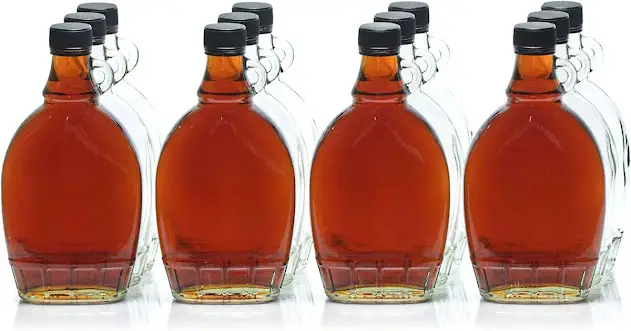
Why Do Maple Syrup Bottles Have Tiny Handles? The Surprising History Behind That Useless Loop is one of those oddly satisfying questions most people never think to ask. Nearly everyone has seen that tiny loop on the neck of a maple syrup bottle, yet very few people know why it exists.
At first glance, the handle seems completely impractical. It is too small for most fingers, too delicate to carry a full bottle, and almost impossible to use comfortably while pouring. Still, manufacturers continue adding it decade after decade.
The answer turns out to be far more interesting than simple decoration. That tiny loop is actually a surviving piece of history — a reminder of how maple syrup was once stored, carried, and sold long before modern packaging existed.
I remember asking my grandmother about those miniature handles during breakfast one snowy winter morning. She laughed and told me her parents used to buy syrup in heavy stoneware jugs with thick handles large enough to grip with mittens. Suddenly, that little loop on modern bottles stopped looking useless. It became a tiny echo of another era — one quietly preserved through design.
The Original Purpose Behind Maple Syrup Handles
Modern syrup bottles may look decorative, but their ancestors were built for hard work.
Early Maple Syrup Containers Were Heavy
In the 1800s and early 1900s, maple syrup was commonly stored in:
- Ceramic crocks
- Stoneware jugs
- Large tin containers
- Thick glass bottles
These containers often held large quantities of syrup and became extremely heavy when full.
A strong handle was essential for:
- Carrying
- Pouring
- Transporting
- Storage
Without sturdy handles, lifting sticky, heavy syrup containers would have been difficult and messy.
Farmers Needed Practical Packaging
Maple syrup production originally happened on small farms and family sugarhouses.
Producers carried syrup:
- Across snowy fields
- Into wagons
- Through markets
- Into kitchens
Large loop handles made daily work easier during long winters and busy harvest seasons.
How Modern Bottles Changed the Design
Technology eventually transformed syrup packaging.
Glass Manufacturing Became More Efficient
By the mid-20th century:
- Glass bottles became lighter
- Production costs dropped
- Shipping became easier
- Packaging became more standardized
Manufacturers no longer needed oversized handles because bottles were smaller and easier to lift.
Yet surprisingly, the handle never disappeared entirely.
The Handle Became Symbolic
Instead of removing the handle completely, designers reduced it into the tiny decorative loop many bottles still use today.
The modern version serves more as:
- A visual tradition
- A nostalgic detail
- A branding element
- A connection to heritage
This is where the story becomes especially fascinating.
The Design Principle Called Skeuomorphism
The tiny syrup handle is an example of a design concept called a skeuomorph.
What Is a Skeuomorph?
A skeuomorph is a decorative feature that imitates an older functional design element, even after the original purpose disappears.
In simple terms:
- Something old inspired something modern
- The appearance stayed
- The practical need vanished
The maple syrup handle perfectly fits this idea.
Other Common Skeuomorph Examples
You probably encounter skeuomorphs every day without noticing.
Examples include:
- Camera shutter sounds on smartphones
- Fake stitching on dashboards
- Digital notepad apps that resemble paper
- Vintage-style radio knobs on modern speakers
People often find these familiar details comforting because they preserve emotional connections to older objects.
Why Manufacturers Keep the Tiny Handle
If the handle barely works, why keep it at all?
Tradition Helps Products Feel Authentic
Food packaging strongly influences how people feel about products.
That tiny syrup handle subtly suggests:
- Homemade quality
- Farm traditions
- Old-fashioned craftsmanship
- Authentic maple heritage
Even if consumers do not consciously notice it, the detail shapes perception.
Recognition Matters in Marketing
Classic syrup bottles have become instantly recognizable.
Changing the shape too drastically could make the product:
- Feel generic
- Look unfamiliar
- Lose nostalgic appeal
Many brands preserve traditional visual cues because customers associate them with trust and comfort.
Why the Handle Is No Longer Functional
Modern bottle design focuses on efficiency more than practicality for carrying.
Large Handles Would Create Problems
A bigger handle would:
- Make bottles bulkier
- Increase shipping costs
- Waste shelf space
- Create awkward pouring angles
The tiny loop survives because it provides visual identity without sacrificing modern convenience.
Modern Bottles Are Already Easy to Hold
Unlike old ceramic jugs, today’s syrup containers are:
- Lightweight
- Slim
- Easier to grip
Most people naturally hold the body of the bottle rather than the neck anyway.
The Emotional Side of Everyday Design
Sometimes the smallest details carry the deepest meaning.
Familiar Objects Create Comfort
Design is not always about pure efficiency.
Certain features remain because they:
- Trigger memories
- Suggest warmth
- Feel comforting
- Preserve cultural traditions
The tiny syrup handle reminds people of:
- Family breakfasts
- Cozy kitchens
- Winter mornings
- Homemade meals
Tiny Details Connect Generations
Many modern products quietly preserve traces of earlier generations.
Even something as simple as a syrup bottle can tell a story about:
- Farming history
- Packaging evolution
- Cultural memory
- Traditional craftsmanship
That little loop becomes a bridge between past and present.
Fun Facts About Maple Syrup Packaging
Maple syrup containers have changed dramatically over time.
Syrup Was Once Stored in Metal Tins
Before decorative bottles became common, syrup was often sold in:
- Tin cans
- Buckets
- Stone crocks
Glass packaging later became popular because consumers could see the syrup quality directly.
Specialty Producers Still Use Large Handles
Some artisan maple syrup makers still sell syrup in:
- Ceramic jugs
- Traditional handled containers
- Decorative collectible bottles
These designs intentionally celebrate maple syrup’s historical roots.
Frequently Asked Questions
Are maple syrup bottle handles supposed to work?
Not really. Modern tiny handles are mostly decorative rather than functional.
What is a skeuomorph?
A skeuomorph is a design feature copied from an older object even after its original purpose disappears.
Did old syrup bottles really use large handles?
Yes. Older ceramic and stoneware syrup containers needed sturdy handles because they were heavy.
Why do companies keep outdated design features?
Traditional details help products feel familiar, authentic, and emotionally comforting.
Are all maple syrup bottles designed this way?
No. Some specialty producers use different shapes, but many classic brands still preserve the tiny loop design.
Conclusion
Why Do Maple Syrup Bottles Have Tiny Handles? The Surprising History Behind That Useless Loop has less to do with practicality and more to do with memory, tradition, and design history.
What looks like a pointless decoration today was once a genuinely useful feature on large, heavy syrup jugs used generations ago. Over time, packaging evolved, but the symbolic handle remained.
That tiny loop survives because people connect emotionally with familiar designs. It quietly reminds us of farm kitchens, winter mornings, maple harvests, and traditions passed down through generations.
The next time you pour syrup onto pancakes or waffles, take another look at that little handle. It may not carry the bottle anymore — but it still carries history.