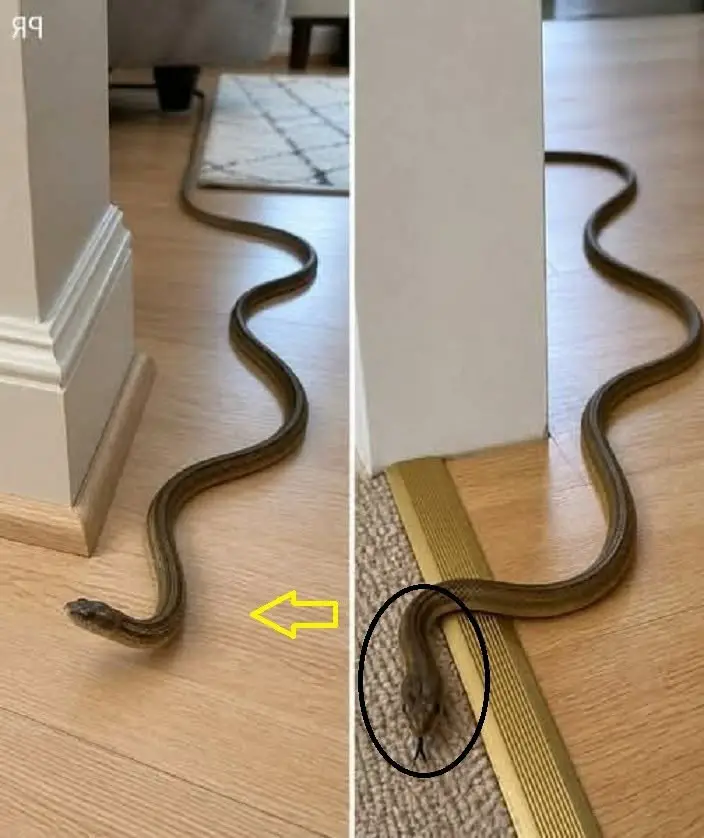
Few household surprises generate as much fear, curiosity, and fascination as discovering a snake inside your home.
For some people, it’s a terrifying moment. For others, it’s an intriguing encounter with nature. And for many cultures around the world, a snake entering a house is believed to carry symbolic meaning that goes far beyond the practical reality of finding a reptile in your living room.
I still remember the first snake I encountered indoors.
It was a warm summer evening, and I walked into the kitchen for a glass of water. Near the refrigerator, a small snake lay quietly curled against the baseboard.
For a moment, I froze.
My heart raced as I stared at the unexpected visitor.
After taking a deep breath, I carefully guided the snake into a bucket and released it outside in the garden.
Later, when I told my grandmother what had happened, she smiled knowingly.
“A snake in the house means change is coming,” she said. “It’s bringing a message.”
Whether you view snakes through a spiritual lens or a scientific one, their appearance often leaves a lasting impression.
Let’s explore both perspectives and learn what to do if you ever find one inside your home.
The Symbolic Meaning of a Snake in the House
Throughout history, snakes have appeared in myths, religions, folklore, and cultural traditions across the world.
Because snakes shed their skin and emerge renewed, they are frequently associated with transformation, growth, and rebirth.
Transformation and Renewal
Perhaps the most common symbolic interpretation is personal transformation.
A snake’s ability to shed its skin has long been viewed as a metaphor for letting go of the old and embracing the new.
Many traditions suggest that a snake entering your home symbolizes:
- Major life changes
- Personal growth
- New opportunities
- The end of an old chapter
- Emotional renewal
For those who enjoy symbolic interpretations, the appearance of a snake may serve as a reminder that change is often necessary for growth.
Healing and Recovery
Snakes have been connected to healing for thousands of years.
The famous medical symbol featuring a serpent wrapped around a staff traces its origins to ancient healing traditions.
As a result, some cultures interpret a snake’s appearance as a sign that healing is needed or already underway.
This healing may be:
- Physical
- Emotional
- Mental
- Spiritual
Whether literal or symbolic, the message often centers on self-care and recovery.
Wisdom and Intuition
Because snakes move quietly and often appear unexpectedly, they are frequently associated with hidden knowledge and intuition.
Many traditions view snakes as reminders to:
- Trust your instincts
- Pay attention to subtle signals
- Listen to your inner voice
- Notice what you’ve been ignoring
The symbolism encourages reflection rather than fear.
Protection and Good Fortune
In certain regions of Asia, Eastern Europe, and other parts of the world, snakes have historically been viewed as protectors of the home.
Some traditions believe a snake’s presence may represent:
- Protection
- Prosperity
- Household blessings
- Positive energy
While not everyone subscribes to these beliefs, they remain an important part of cultural folklore.
Ancestral Connections
Certain Indigenous and African traditions associate snakes with ancestral guidance or spiritual messages.
In these beliefs, a snake’s appearance may encourage reflection, remembrance, or connection with family history.
These interpretations vary widely among cultures and should always be understood within their specific historical and cultural contexts.
The Scientific Explanation
While symbolism can be meaningful, science offers a straightforward explanation for why snakes enter homes.
Simply put:
They’re usually searching for survival necessities.
Warmth
Snakes are cold-blooded animals.
They rely on external heat sources to regulate body temperature.
Homes provide:
- Warm floors
- Insulated walls
- Heated basements
- Protected crawl spaces
During cooler weather, indoor environments become attractive shelter.
Food Sources
Where food exists, predators follow.
If your home has:
- Mice
- Rats
- Insects
- Other small prey
a snake may simply be following its next meal.
Shelter
Snakes seek safe, quiet locations where they can hide from predators and harsh weather.
Common hiding spots include:
- Basements
- Garages
- Attics
- Storage areas
- Crawl spaces
Accidental Entry
Many homeowners underestimate how small an opening a snake can use.
Snakes may enter through:
- Foundation cracks
- Gaps beneath doors
- Utility openings
- Damaged vents
- Torn screens
In many cases, the snake enters unintentionally and becomes trapped inside.
Common Snakes Found Around Homes
The specific species depends on your location, but many snakes encountered around homes are harmless.
Common Non-Venomous Snakes
Garter Snake
Small and often striped, garter snakes are generally harmless and frequently found in gardens.
Corn Snake
Corn snakes are non-venomous and commonly enter buildings while searching for rodents.
Rat Snake
Rat snakes are excellent climbers and help control rodent populations.
Kingsnake
Kingsnakes are beneficial predators that often eat other snakes.
Venomous Species
Depending on your region, venomous snakes may include:
Rattlesnake
Copperhead
Cottonmouth
Coral Snake
If you cannot confidently identify the snake, maintain a safe distance and treat it cautiously.
What To Do If You Find a Snake Indoors
Finding a snake can be alarming, but remaining calm is essential.
Step 1: Keep Your Distance
Most snake bites occur when people attempt to handle or kill the animal.
Observe from a safe location.
Step 2: Protect Children and Pets
Move children and animals away from the area immediately.
Step 3: Monitor the Snake
Keep track of its location if possible.
Knowing where it is will help professionals remove it safely.
Step 4: Remove Only If Safe
If you’re absolutely certain the snake is harmless and small, you may be able to guide it outside using a broom and container.
If there is any doubt about identification, seek professional assistance.
Step 5: Call Professionals
Animal control officers or wildlife removal specialists have the equipment and training needed for safe removal.
What If the Snake Is in a Bedroom?
A bedroom encounter requires extra caution.
If you discover a snake in your sleeping area:
- Leave the room calmly.
- Close the door.
- Place a towel along the bottom gap if possible.
- Keep pets and family members away.
- Contact wildlife professionals.
Attempting to remove an unidentified snake yourself is not recommended.
Preventing Future Snake Visits
Reducing the likelihood of future encounters often involves making your property less attractive to snakes.
Seal Entry Points
Inspect for:
- Foundation cracks
- Door gaps
- Utility penetrations
- Damaged screens
Control Rodents
Snakes frequently enter properties because prey animals are present.
Reducing rodent populations removes a major attraction.
Maintain Your Yard
Keep grass trimmed and remove:
- Wood piles
- Debris
- Dense vegetation
- Unused materials
Store Firewood Properly
Keep stacked wood elevated and away from your home’s exterior.
A Balanced Perspective
A snake entering your home can certainly be startling.
From a scientific perspective, it’s usually an animal searching for warmth, food, or shelter.
From a symbolic perspective, many cultures associate snakes with transformation, healing, wisdom, and renewal.
These viewpoints don’t necessarily have to compete.
You can appreciate the cultural symbolism while also understanding the biological reasons behind the encounter.
Most importantly, remember that snakes play valuable roles in ecosystems by helping control rodent populations and maintaining natural balance.
Final Thoughts
Whether you interpret a snake’s appearance as a meaningful sign or simply a natural event, the experience often encourages us to pay closer attention—to our surroundings, our homes, and sometimes even ourselves.
If a snake enters your house:
- Stay calm.
- Keep a safe distance.
- Identify it if possible.
- Contact professionals when necessary.
- Seal potential entry points afterward.
And if you choose to reflect on the symbolic meaning, perhaps consider the qualities snakes have represented throughout history: resilience, renewal, adaptation, and growth.
Sometimes a snake is simply a snake.
But sometimes an unexpected encounter reminds us to pause, observe, and appreciate the surprising ways nature intersects with our lives.
More Home Remedies
- Wrinkled Fingers After Water Exposure: What Your Skin May Be Telling You
- Skin Rash With Breathing Trouble? It Could Be a Life-Threatening Allergic Reaction
- I Thought It Was a Piece of Trash on the Bathroom Floor—Until It Moved
- If You Are Getting White Pimples on Your Lips or Intimate Area, Here’s What They Could Mean