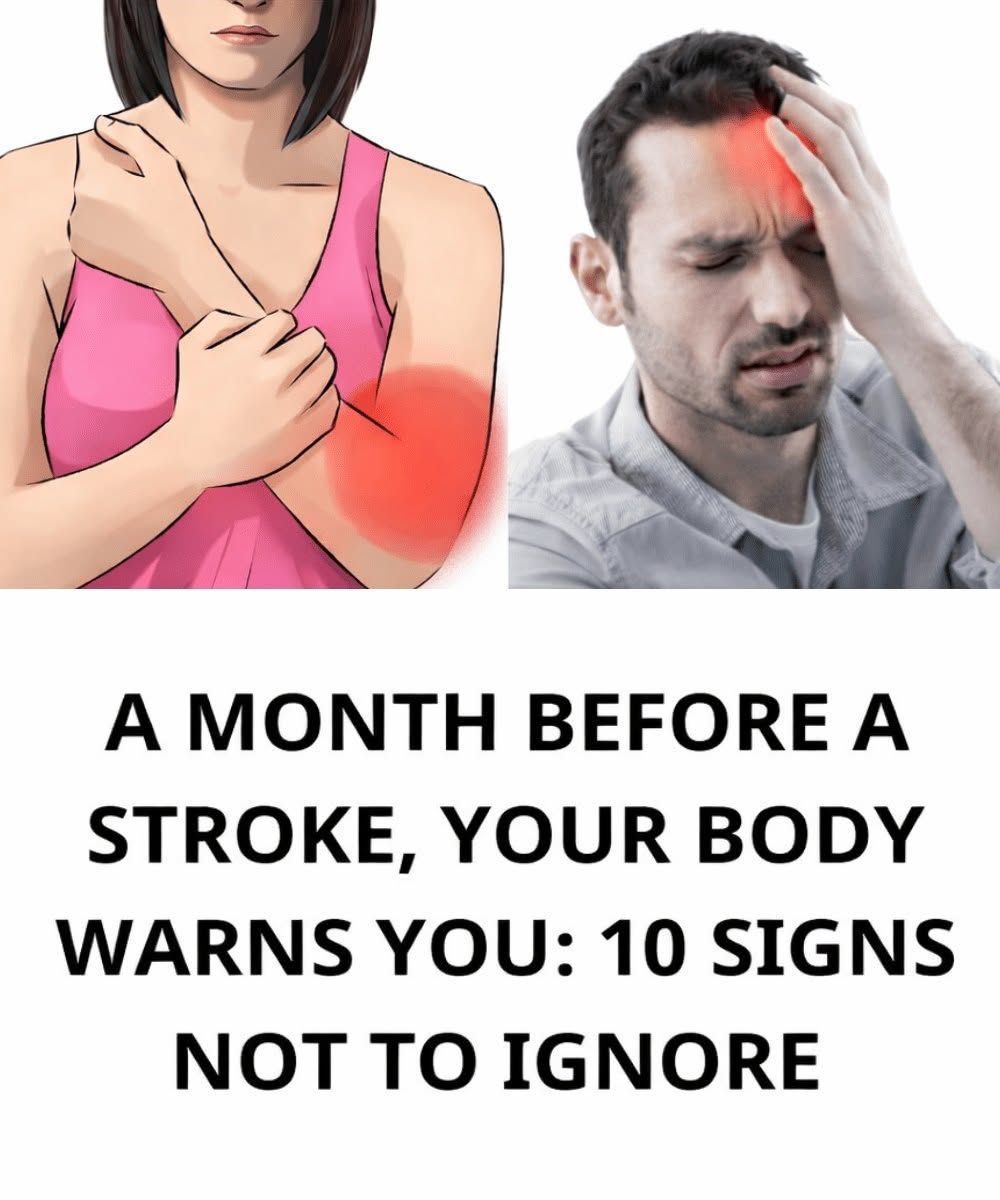
It often begins with something small.
A dropped coffee cup.
A smile that suddenly looks uneven.
A sentence that comes out slurred.
A strange feeling of weakness that seems easy to dismiss.
Many stroke survivors describe the moment the same way: they didn’t realize what was happening.
They thought they were tired.
They assumed they needed rest.
They blamed stress, dehydration, or a long day.
Unfortunately, a stroke doesn’t wait for certainty.
Every minute matters.
Every second counts.
And recognizing the warning signs quickly can mean the difference between a full recovery and permanent disability—or even life and death.
Understanding stroke symptoms is one of the most important pieces of health knowledge anyone can have. Whether you’re concerned about your own health or the well-being of a loved one, learning what to look for could one day save a life.
What Exactly Is a Stroke?
A stroke occurs when blood flow to part of the brain is interrupted.
The brain depends on a constant supply of oxygen-rich blood. When that supply is disrupted, brain cells begin to die rapidly.
Unlike many other organs, the brain cannot tolerate long periods without oxygen.
That’s why stroke treatment is considered a race against time.
Doctors often use a simple phrase:
“Time is brain.”
The longer treatment is delayed, the greater the potential damage.
The Two Main Types of Stroke
Ischemic Stroke
This is the most common type of stroke.
It occurs when a blood clot blocks an artery supplying the brain.
Approximately 87% of strokes fall into this category.
Hemorrhagic Stroke
This type occurs when a blood vessel ruptures and bleeds into the brain.
Although less common, hemorrhagic strokes can be especially serious.
Both forms require immediate emergency care.
Why Every Minute Matters
Many people underestimate how quickly stroke damage develops.
Research suggests that millions of brain cells may die each minute during an untreated stroke.
The consequences can include:
- Difficulty speaking
- Paralysis
- Memory problems
- Vision loss
- Balance issues
- Cognitive impairment
The good news is that rapid treatment can dramatically improve outcomes.
Some therapies are most effective within the first few hours after symptoms begin.
That means recognizing warning signs early isn’t just helpful—it can be lifesaving.
The FAST Test Everyone Should Know
Health professionals around the world promote a simple memory tool called FAST.
It helps identify the most common stroke symptoms quickly.
F — Face Drooping
Ask the person to smile.
Does one side of the face droop?
Is the smile uneven?
Does one side appear numb?
An asymmetrical smile can be a major warning sign.
A — Arm Weakness
Ask the person to raise both arms.
Does one arm drift downward?
Do they struggle to lift one side?
Sudden weakness or numbness affecting one side of the body is a common symptom.
S — Speech Difficulty
Ask them to repeat a simple phrase.
Listen carefully.
Is the speech slurred?
Are words difficult to understand?
Do they seem confused?
Speech changes often occur early during a stroke.
T — Time to Call Emergency Services
If any of these signs are present, call emergency services immediately.
Do not wait.
Do not “sleep it off.”
Do not assume it will improve on its own.
Immediate medical evaluation is essential.
Additional Stroke Warning Signs
Although FAST covers the most common symptoms, strokes can present in many different ways.
Some people experience symptoms that don’t fit neatly into the acronym.
Other warning signs include:
Sudden Vision Problems
A stroke can affect visual processing centers in the brain.
Symptoms may include:
- Blurred vision
- Double vision
- Partial vision loss
- Sudden blindness in one eye
Any abrupt visual change deserves prompt medical attention.
Sudden Severe Headache
A particularly severe headache may signal a hemorrhagic stroke.
Many patients describe it as:
“The worst headache of my life.”
The headache may appear suddenly and may be accompanied by nausea or vomiting.
Dizziness and Balance Problems
Strokes affecting the cerebellum or brainstem often produce:
- Loss of coordination
- Difficulty walking
- Severe dizziness
- Unexpected falls
These symptoms can easily be mistaken for inner-ear problems, which is why evaluation is important.
Sudden Confusion
A person may suddenly struggle to:
- Understand language
- Follow conversations
- Recognize familiar people
- Process information
Confusion that appears abruptly should never be ignored.
The “Mini-Stroke” That Isn’t So Mini
One of the most dangerous misconceptions involves transient ischemic attacks, often called TIAs.
Many people refer to TIAs as “mini-strokes.”
The name can be misleading.
Although symptoms may disappear within minutes or hours, a TIA is still a medical emergency.
A TIA occurs when blood flow to the brain is temporarily blocked.
Symptoms often mimic those of a full stroke but resolve quickly.
That temporary recovery can create a false sense of security.
In reality, a TIA serves as a major warning sign.
Many individuals who experience a TIA later suffer a full stroke.
Medical evaluation after a TIA can identify risk factors and potentially prevent a future emergency.
Who Is Most at Risk?
Stroke can happen to anyone.
However, certain factors increase risk significantly.
Age
Risk increases steadily with age.
Although strokes can occur in younger adults and even children, they become more common after age 55.
High Blood Pressure
High blood pressure remains the leading controllable risk factor.
Over time, elevated pressure damages blood vessels and increases stroke risk dramatically.
Smoking
Smoking contributes to:
- Blood vessel damage
- Increased clot formation
- Reduced oxygen delivery
Quitting smoking substantially lowers risk.
Diabetes
Poorly controlled blood sugar damages blood vessels throughout the body, including those supplying the brain.
High Cholesterol
Excess cholesterol contributes to plaque buildup within arteries, increasing the likelihood of blockages.
Heart Rhythm Disorders
Conditions such as atrial fibrillation increase the risk of clot formation that can travel to the brain.
The Good News: Many Strokes Are Preventable
Experts estimate that a large percentage of strokes could be prevented through lifestyle modifications and medical management.
Preventive steps include:
Monitor Blood Pressure
Regular blood pressure checks remain one of the most powerful preventive tools available.
Stay Physically Active
Exercise supports:
- Healthy circulation
- Blood pressure control
- Weight management
- Blood sugar regulation
Even walking can provide meaningful benefits.
Eat a Heart-Healthy Diet
Focus on:
- Fruits
- Vegetables
- Whole grains
- Lean proteins
- Healthy fats
Reducing excess sodium can also help manage blood pressure.
Manage Chronic Conditions
Work closely with healthcare providers to control:
- Hypertension
- Diabetes
- High cholesterol
- Heart disease
Prioritize Sleep
Poor sleep and untreated sleep apnea may contribute to stroke risk.
Quality sleep is an important part of long-term brain health.
What To Do If You Suspect a Stroke
Many people hesitate during emergencies.
They don’t want to overreact.
With stroke, hesitation can be dangerous.
If symptoms appear:
Step 1: Call Emergency Services Immediately
Do not wait for symptoms to improve.
Do not schedule an appointment for later.
Call immediately.
Step 2: Note the Time
Try to determine exactly when symptoms began.
Doctors use this information when deciding treatment options.
Step 3: Stay With the Person
Keep them safe and comfortable.
Avoid giving food, drinks, or medications unless instructed by medical professionals.
Step 4: Gather Medical Information
If possible, collect:
- Current medications
- Medical conditions
- Emergency contacts
- Allergies
This information can help hospital teams act quickly.
What Happens at the Hospital?
Stroke centers follow highly organized protocols designed to minimize delays.
Upon arrival, medical teams often perform:
- Neurological examinations
- Brain imaging (CT or MRI)
- Blood testing
- Heart monitoring
These tests help determine:
- Whether a stroke has occurred
- What type of stroke it is
- Which treatments may be appropriate
For ischemic strokes, clot-busting medications or mechanical clot removal procedures may be considered.
The earlier treatment begins, the greater the chance of preserving brain function.
Life After Stroke
A stroke diagnosis can feel overwhelming.
Yet many survivors make remarkable recoveries.
Modern rehabilitation programs help individuals regain independence and improve quality of life.
Recovery may involve:
Physical Therapy
Improves strength, mobility, and balance.
Occupational Therapy
Helps patients relearn daily activities.
Speech Therapy
Addresses communication and swallowing difficulties.
Emotional Support
Depression and anxiety are common after stroke.
Mental health support plays an important role in recovery.
Many survivors continue improving for months or even years after the initial event.
Progress may be gradual, but meaningful recovery is possible.
A Simple Conversation Could Save a Life
Perhaps the most important lesson about stroke is this:
Ordinary people save lives every day simply by recognizing symptoms.
A spouse notices unusual speech.
A coworker sees facial drooping.
A friend observes sudden confusion.
These observations matter.
Medical professionals can provide treatment only after someone decides to act.
That decision often begins with a family member, friend, neighbor, or bystander who recognizes that something isn’t right.
Final Thoughts
Stroke remains one of the leading causes of disability and death worldwide.
Yet awareness remains one of our most powerful tools.
Remember FAST:
- Face drooping
- Arm weakness
- Speech difficulty
- Time to call emergency services
Don’t wait for symptoms to worsen.
Don’t assume the problem will disappear.
And don’t worry about overreacting.
When it comes to stroke, acting quickly can preserve brain function, independence, and life itself.
Knowledge alone may not prevent every stroke.
But knowledge combined with action can make all the difference.
One conversation.
One observation.
One phone call.
Sometimes that’s all it takes to save a life.
More Home Remedies
- Wrinkled Fingers After Water Exposure: What Your Skin May Be Telling You
- Skin Rash With Breathing Trouble? It Could Be a Life-Threatening Allergic Reaction
- I Thought It Was a Piece of Trash on the Bathroom Floor—Until It Moved
- If You Are Getting White Pimples on Your Lips or Intimate Area, Here’s What They Could Mean