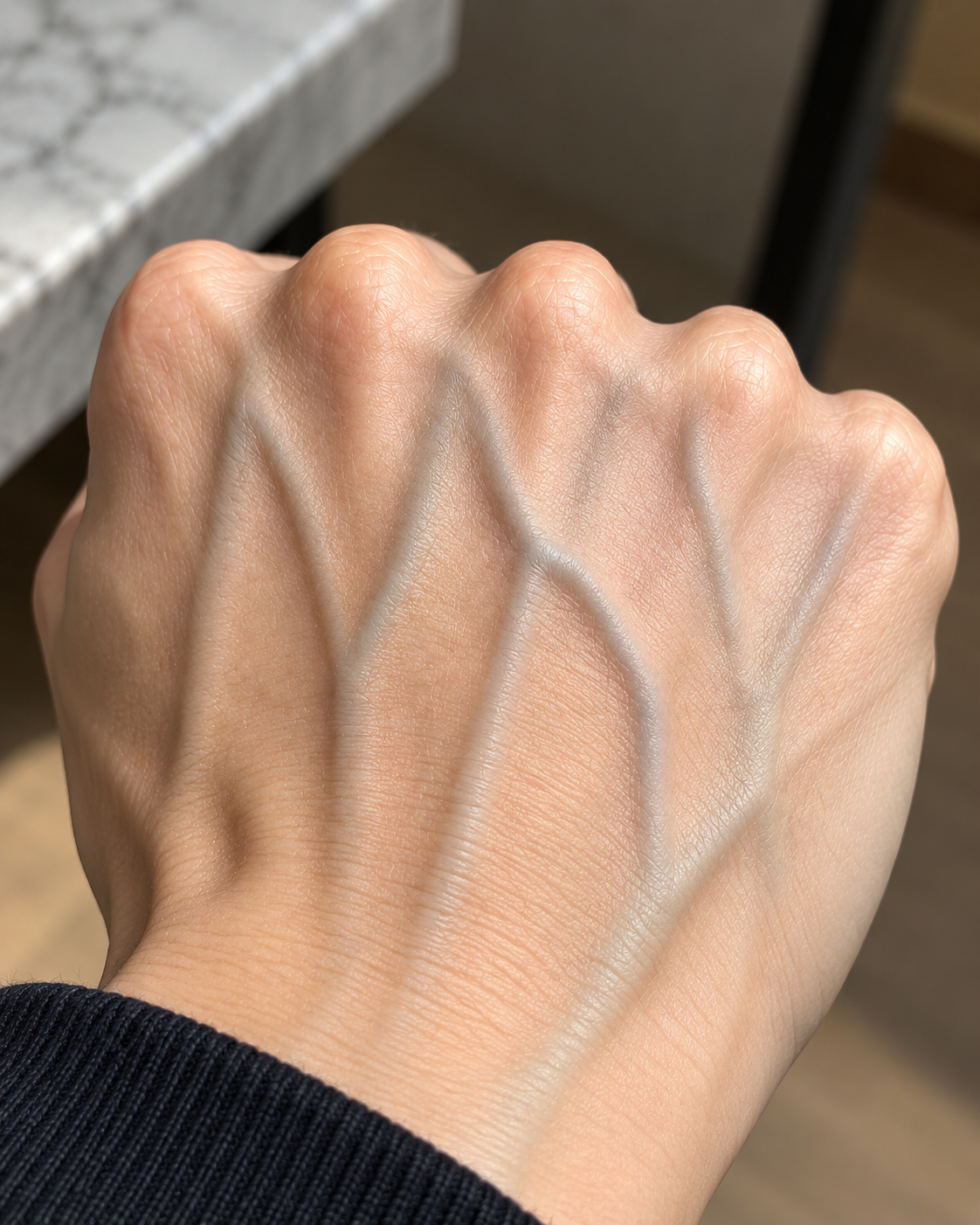
Visible Veins on Your Hands? Here’s What They Could Mean for Your Health is a question that often sounds more alarming than the answer. In many cases, hand veins become easier to see because of normal anatomy, aging, exercise, low body fat, genetics, or temporary changes in blood flow. They do not automatically signal poor circulation or a serious medical problem.
Your hands naturally contain superficial veins close to the skin. Therefore, anything that makes the skin thinner, reduces the tissue covering those veins, or increases blood flow can make them appear more prominent. Aging can thin the skin and reduce elasticity, while exercise can temporarily increase blood flow and make veins stand out more clearly.
However, symptoms matter. A vein that suddenly becomes painful, warm, red, swollen, or hard deserves medical attention because those findings can occur with inflammation or blood clots in superficial veins.
I remember noticing the veins on my hands one summer and wondering why they suddenly looked much darker than usual. At first, I assumed something had changed with my circulation. Then I noticed the pattern. They stood out most after exercise, during hot afternoons, and when my hands felt warm. Later, they looked much less noticeable again. That experience reminded me how easy it is to interpret a normal physical change as a warning sign before looking at the whole picture. Since then, I have paid more attention to accompanying symptoms instead of appearance alone. A visible vein can be perfectly ordinary, while pain, swelling, warmth, or sudden change tells a very different story.
Why Visible Veins on Your Hands Often Have a Normal Explanation
Aging, Body Composition, and Genetics Can Make Veins Stand Out
Visible Veins on Your Hands? Here’s What They Could Mean for Your Health often starts with completely normal anatomy.
Some people simply have veins that sit closer to the skin.
Others have naturally thinner skin.
Likewise, people with lower levels of body fat may see their veins more clearly because less tissue covers them.
Aging can make this effect more noticeable. As skin becomes thinner and less elastic, the superficial veins beneath it may become easier to see. Cleveland Clinic specifically notes that aging can make veins more visible because of these changes in the skin.
Therefore, a person may notice more prominent hand veins in their 50s, 60s, or 70s even without developing a circulation problem.
Genetics also influence appearance.
If close relatives have prominent veins on their hands and arms, you may notice a similar pattern.
Body composition matters as well.
Someone who is naturally slim or who loses body fat may notice veins that previously remained less obvious.
Athletic people often notice this too.
Importantly, visible veins alone do not provide enough information to diagnose a vascular condition.
The overall pattern matters more.
If your veins have gradually become more noticeable over years and you have no pain, swelling, warmth, redness, weakness, or other new symptoms, a normal explanation becomes more likely.
However, any major change that appears suddenly deserves closer attention.
Exercise and Increased Blood Flow Can Make Veins Temporarily Larger
Exercise provides another common reason for visible veins.
During physical activity, your muscles require more blood flow.
As circulation increases and muscles work harder, superficial veins in the hands and arms may become more prominent.
Weightlifting often makes this effect especially noticeable.
Cleveland Clinic notes that intense exercise can produce bulging veins because exercise increases blood flow and muscle size, making superficial veins easier to see.
Therefore, someone may finish a workout and suddenly notice raised veins across the back of the hands or forearms.
The appearance can look dramatic.
However, if the veins return toward their usual appearance after resting and you have no concerning symptoms, the change may simply reflect normal exercise physiology.
Warm conditions can create a similar visual effect because blood vessels near the skin can widen as the body manages heat.
That explains why some people notice their hand veins more after a hot shower, a warm day outdoors, or exercise in a hot environment.
Again, the pattern matters.
A temporary change that follows exercise or heat and fades afterward differs from a vein that becomes persistently painful, firm, red, or swollen.
Visible Veins on Your Hands? Here’s What They Could Mean for Your Health therefore requires more than looking at how noticeable the veins appear.
You also need to consider when the change occurs, how long it lasts, and whether anything else feels wrong.
When Visible Hand Veins May Deserve More Attention
Pain, Warmth, Redness, and Hardness Are Important Warning Signs
Appearance alone often causes less concern than symptoms.
If a visible vein becomes tender, painful, warm, red, or unusually firm, you should pay attention.
Superficial thrombophlebitis involves inflammation in a vein close to the skin, often related to a clot. MedlinePlus lists pain, tenderness, redness, warmth, and hardening of the vein among the common symptoms.
That does not mean every sore hand vein represents a blood clot.
However, these symptoms justify evaluation rather than simple observation.
A healthcare professional can examine the area and decide whether additional testing, such as an ultrasound, makes sense.
Sudden swelling also deserves attention.
MedlinePlus notes that blood clots affecting an arm or leg can cause swelling, pain, tenderness, warmth, and redness.
Therefore, a vein that looks more visible because your hand suddenly became swollen represents a different situation from veins that have gradually become more noticeable over several years.
Watch for change.
If the appearance differs dramatically from your usual baseline, especially when one hand or arm changes more than the other, contact a healthcare professional.
Likewise, seek medical attention if symptoms worsen rather than improve.
The most useful distinction remains simple.
Prominent veins without symptoms often have benign explanations.
Prominent veins combined with pain, warmth, tenderness, redness, hardness, or swelling require more caution.
Sudden Swelling or Other New Symptoms Should Not Be Ignored
Visible Veins on Your Hands? Here’s What They Could Mean for Your Health becomes more important when several symptoms appear together.
Suppose the veins in one hand suddenly look different.
The hand also swells.
The skin feels warm.
Perhaps the arm feels tender.
That combination deserves more attention than appearance alone.
Deep vein thrombosis most commonly affects the legs, but blood clots can also occur in the arms. MedlinePlus lists arm or leg swelling, pain, tenderness, warmth, and redness among possible blood-clot symptoms.
If you develop symptoms such as sudden shortness of breath, pain with breathing, rapid breathing, or a fast heart rate in combination with possible blood-clot symptoms, seek emergency medical care because those symptoms can occur with a pulmonary embolism.
Fortunately, most people who simply notice visible hand veins do not have these symptoms.
That distinction can prevent unnecessary fear.
Do not assume that every prominent vein signals danger.
At the same time, do not dismiss obvious changes simply because visible veins are often normal.
Look at the full picture.
Ask whether the change appeared suddenly.
Notice whether you have pain.
Check for redness or warmth.
Consider whether swelling affects one hand or arm.
These details provide far more useful information than vein visibility by itself.
What Visible Veins Do and Do Not Say About Circulation
Prominent Veins Do Not Automatically Mean Poor Circulation
One of the most common assumptions involves circulation.
People often see prominent blue or green veins on their hands and immediately worry that their blood is not circulating correctly.
However, visible veins alone do not diagnose poor circulation.
In fact, superficial veins can look prominent precisely because they sit close to the skin and carry blood normally.
Changes in skin thickness, body composition, exercise, and age may simply make those veins easier to see.
Cleveland Clinic lists aging, intense exercise, and low body fat among reasons veins may become more prominent.
Therefore, judging circulation from appearance alone can mislead you.
Vascular disorders usually involve a broader set of signs and symptoms.
Depending on the condition, those may include pain, swelling, skin changes, tenderness, or other abnormalities.
Moreover, symptoms can vary greatly depending on whether the problem involves arteries, superficial veins, or deeper veins.
That complexity explains why self-diagnosing a circulation disorder from hand veins alone rarely works.
Instead, observe the complete pattern.
If your hands feel normal and function normally, and the veins have looked similar for years, the appearance may simply represent your normal anatomy.
However, if new symptoms appear, bring them to a healthcare professional.
Visible Veins on Your Hands? Here’s What They Could Mean for Your Health should therefore encourage observation rather than panic.
The veins themselves provide only one piece of information.
Lifestyle Factors Can Change How Noticeable Your Veins Look
Daily habits and environmental conditions may influence how noticeable hand veins appear.
Exercise provides one obvious example.
Blood flow rises during activity, which can make superficial veins stand out.
Muscle development can also make them more prominent over time.
Temperature can affect appearance too.
Warm conditions often make superficial blood vessels more noticeable, while cooler temperatures may make them look less prominent.
Body composition also changes the amount of tissue covering the veins.
Therefore, weight loss can sometimes make veins look more visible without creating a new vein problem.
People also commonly notice changes throughout the day.
Hands may look different after exercise, after spending time outside in hot weather, or after a warm shower.
That variation often reflects normal changes in blood flow and vessel size.
However, avoid using hydration, supplements, or home remedies as a substitute for evaluation when concerning symptoms appear.
If a vein becomes painful or hard, or if one hand suddenly swells, professional assessment matters more than trying to make the veins look less noticeable.
The goal should not be hiding normal veins.
Instead, the goal should involve recognizing when appearance reflects ordinary variation and when symptoms suggest something deserves medical attention.
How to Respond When Your Hand Veins Suddenly Look Different
Start by Looking at the Pattern and Timing
When you first notice more visible veins, avoid assuming the worst.
Start by asking practical questions.
Have your veins always looked this way?
Did you just exercise?
Is the weather hot?
Did you take a warm shower?
Have you recently lost weight?
Do both hands look similar?
Do the veins become less obvious after resting or cooling down?
These questions can reveal a normal pattern.
For example, veins that stand out after a workout and settle afterward differ greatly from a single vein that suddenly becomes red and painful.
Next, check for symptoms.
Is there swelling?
Does the skin feel warm?
Does touching the vein cause tenderness?
Does the vein feel hard?
Has one hand changed while the other looks normal?
These observations can help you decide whether simple monitoring or medical evaluation makes more sense.
MedlinePlus recommends contacting a healthcare professional when symptoms of superficial thrombophlebitis develop, particularly pain, tenderness, redness, warmth, or hardening along a vein.
Therefore, do not rely on photographs or online comparisons when you have significant symptoms.
An image can show color and shape, but it cannot reliably assess tenderness, temperature, blood flow, or the deeper tissues beneath the skin.
Know When Professional Evaluation Makes Sense
Visible Veins on Your Hands? Here’s What They Could Mean for Your Health does not have one universal answer because symptoms and medical history differ from person to person.
If your hand veins have always been prominent and nothing else has changed, you may simply be seeing your normal anatomy.
If they become more noticeable gradually with aging, exercise, or changes in body composition, that pattern can also have a normal explanation.
However, contact a healthcare professional when a new vein problem causes pain, warmth, redness, tenderness, unusual hardness, or swelling.
Seek more urgent medical attention when major swelling develops suddenly, particularly when combined with significant pain or other concerning symptoms.
And if possible blood-clot symptoms occur along with sudden shortness of breath, chest discomfort with breathing, rapid breathing, or a fast heartbeat, seek emergency care.
These recommendations should not make normal visible veins frightening.
Instead, they provide a useful boundary.
Appearance alone often means little.
Appearance plus symptoms means more.
That difference allows you to remain calm without ignoring meaningful warning signs.
Frequently Asked Questions
Are visible veins on the hands usually normal?
Yes. In many people, visible hand veins reflect normal anatomy, aging, low body fat, exercise, or naturally superficial veins. Aging can thin the skin and make veins easier to see.
Why do my hand veins become more visible after exercise?
Exercise increases blood flow and can make superficial veins in the hands and arms appear larger. Increased muscle size can also make them easier to see over time.
Do visible hand veins mean I have poor circulation?
Not necessarily. Vein visibility alone cannot diagnose poor circulation. Other symptoms and a medical evaluation provide much more useful information.
When should I worry about a visible vein?
Seek medical advice if a vein becomes painful, tender, red, warm, swollen, or hard, particularly when these symptoms appear suddenly.
Can a blood clot cause visible changes in the hand or arm?
Yes. Blood clots can sometimes affect an arm and may cause swelling, pain, tenderness, warmth, or redness. Seek prompt medical evaluation for these symptoms.
Conclusion
Visible Veins on Your Hands? Here’s What They Could Mean for Your Health usually has a reassuring answer.
Many visible hand veins simply reflect the way your body is built.
Your veins may sit close to the skin.
Your skin may become thinner with age.
Exercise may temporarily increase blood flow.
Lower body fat may make the veins easier to see.
Cleveland Clinic recognizes aging, intense exercise, and lower body fat among factors that can make veins more prominent.
Therefore, visible veins without pain or other symptoms often do not indicate a medical emergency.
However, symptoms change the picture.
A vein that becomes painful, tender, warm, red, swollen, or hard deserves medical evaluation because those symptoms can occur with superficial thrombophlebitis and other vascular problems.
Likewise, sudden swelling of a hand or arm, particularly with pain and warmth, should not be ignored.
The best approach involves paying attention to change rather than appearance alone.
Ask whether the veins have always looked similar.
Notice whether exercise or heat explains the change.
Look for swelling, redness, tenderness, and warmth.
Then seek medical advice when the pattern feels new, persistent, or symptomatic.
Visible Veins on Your Hands? Here’s What They Could Mean for Your Health ultimately comes down to context.
Most prominent veins represent normal variation.
Yet your body also provides useful warning signs when something needs attention.
Knowing the difference can help you stay informed without becoming unnecessarily alarmed.
More Home Remedies
- Wrinkled Fingers After Water Exposure: What Your Skin May Be Telling You
- Skin Rash With Breathing Trouble? It Could Be a Life-Threatening Allergic Reaction
- I Thought It Was a Piece of Trash on the Bathroom Floor—Until It Moved
- If You Are Getting White Pimples on Your Lips or Intimate Area, Here’s What They Could Mean