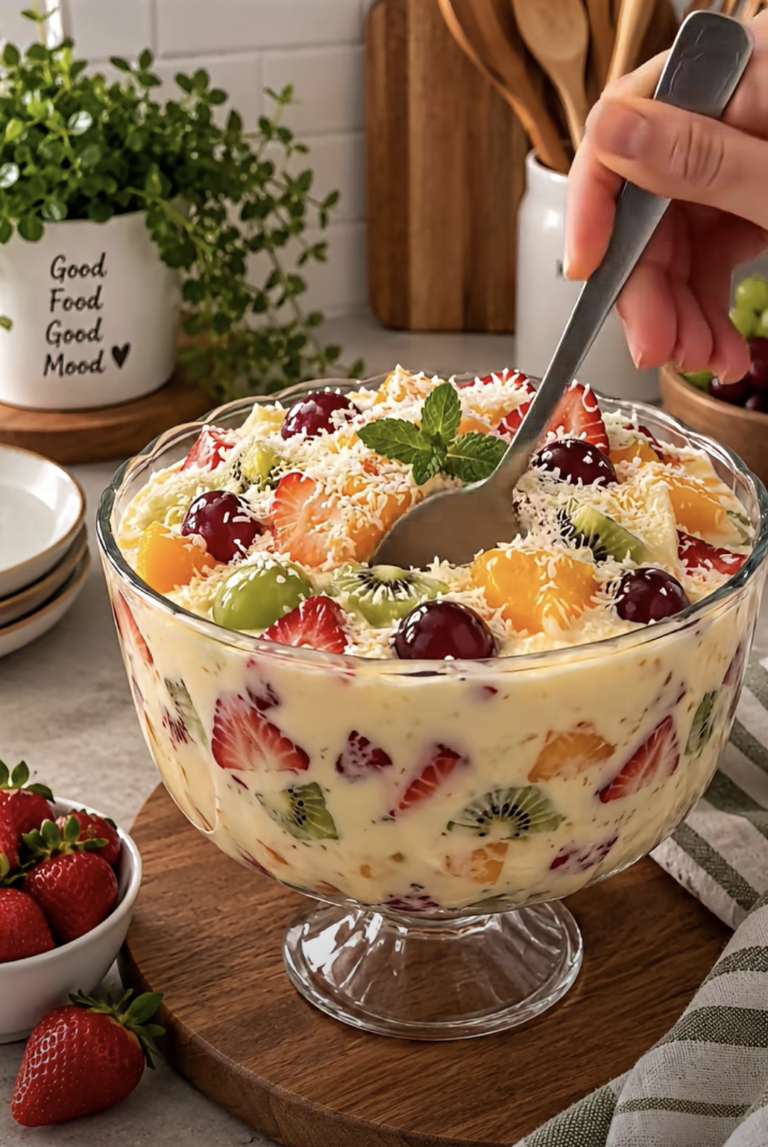
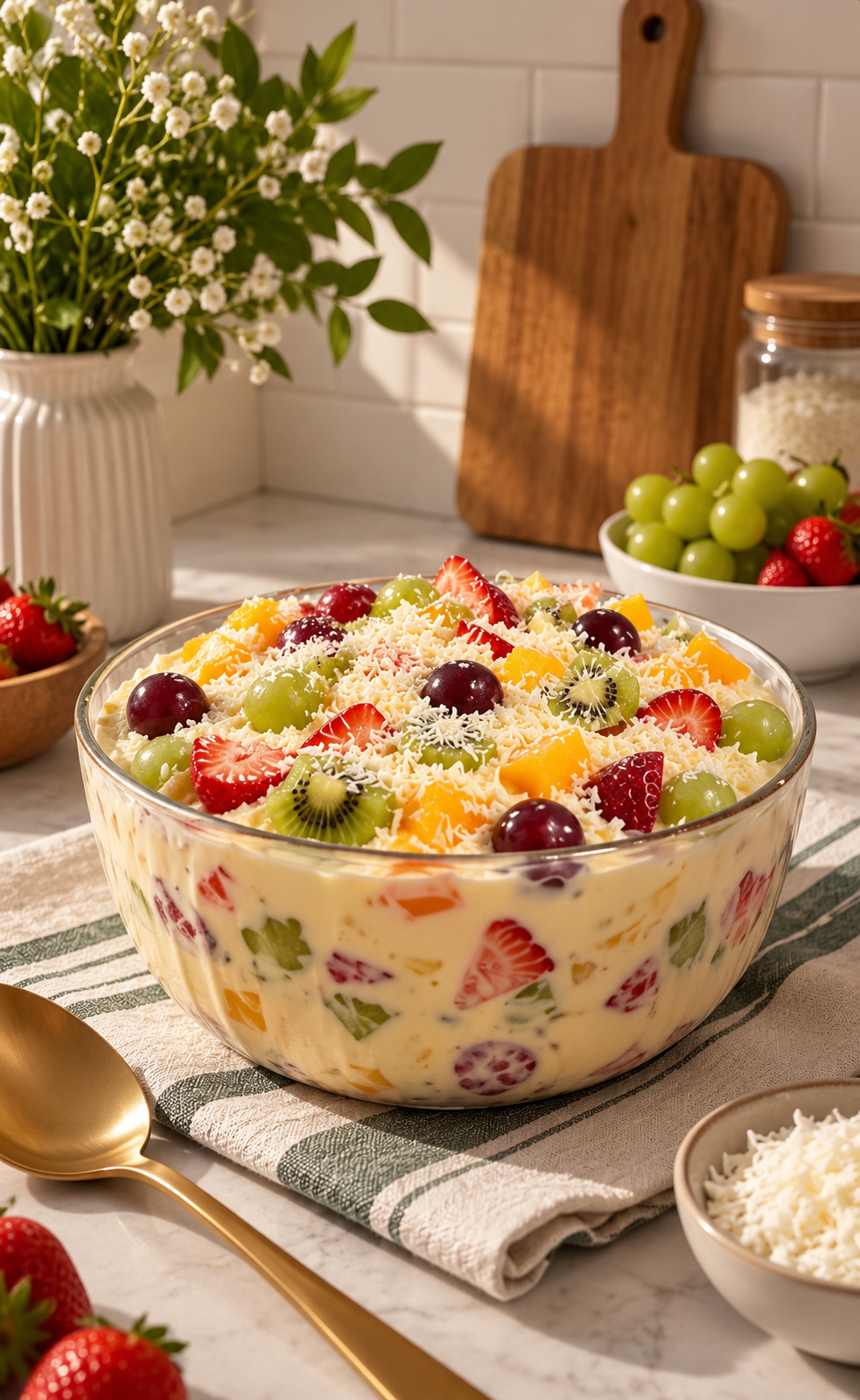
Tropical Dessert brings together juicy pineapple, sweet mango, bright kiwi, and a soft whipped cream mixture for a refreshing treat that takes very little effort. The colorful fruit and creamy base create beautiful layers, while lime juice adds enough acidity to keep every spoonful lively.
Because this Tropical Dessert requires no baking, it makes an excellent choice for summer dinners, cookouts, potlucks, brunches, and casual family gatherings. You simply whip the creamy base, prepare the fruit, layer everything in glasses, and refrigerate before serving.
The recipe also gives you plenty of flexibility. You can change the fruit according to the season, make individual parfaits, or assemble everything in one large serving bowl. Although the ingredient list stays short, the combination of fresh fruit, vanilla, condensed milk, cream, and lime creates a dessert that tastes surprisingly luxurious.
I first made a Tropical Dessert when I had several pieces of ripe fruit that needed to be used before a weekend gathering. Mango, pineapple, and kiwi looked too colorful to hide inside a baked dessert, so I layered them with a simple whipped cream mixture instead. The lime juice made the fruit taste even brighter, while the condensed milk gave the cream just enough sweetness. I prepared the glasses early and left them chilling until after dinner. When I brought them out, the bright layers looked far more elaborate than the preparation had been. That combination of easy preparation and beautiful presentation immediately made the dessert worth repeating.
Building a Creamy Tropical Dessert Base
Whip the Cream to the Right Consistency
The creamy portion of Tropical Dessert starts with 1 cup cold heavy cream.
Keep the cream refrigerated until you are ready to use it. Cold heavy cream whips more easily and holds its shape better than cream that has become warm.
For even better results, chill your mixing bowl and beaters for about 10 minutes.
Pour the cream into the bowl and begin whipping at medium speed.
Once it starts thickening, add ½ cup sweetened condensed milk, 1 teaspoon vanilla extract, and 1 tablespoon lime juice.
Continue whipping until the mixture reaches soft peaks.
Soft peaks should gently hold their shape when you lift the beaters, but the tips should still curl slightly.
Avoid overwhipping.
The goal is a light, spoonable cream rather than a stiff filling.
Sweetened condensed milk provides both sweetness and richness. Therefore, you do not need additional granulated sugar.
Meanwhile, vanilla rounds out the flavor.
The lime juice adds an important contrast. Its acidity cuts through the richness of the cream and condensed milk while complementing the tropical fruit.
Once the cream reaches the correct texture, stop mixing.
If you will not assemble the Tropical Dessert immediately, place the cream mixture in the refrigerator.
Keeping everything cold helps preserve its fluffy consistency.
Balance Sweetness With Fresh Citrus
Although condensed milk provides the sweetness, lime plays an equally important role in this Tropical Dessert.
Without acidity, heavy cream and condensed milk can taste very rich together.
A tablespoon of lime juice changes that balance.
The citrus brightens the mixture without making it aggressively tart.
Freshly squeezed lime juice works particularly well because it contributes both acidity and fresh aroma.
If you want stronger citrus flavor, add a small amount of finely grated lime zest rather than dramatically increasing the juice.
Extra liquid can loosen the whipped cream mixture.
Lemon juice can also work when lime is unavailable, although lime complements mango, pineapple, and kiwi particularly well.
Taste the cream before assembling the dessert.
The flavor should seem slightly sweet when eaten alone because the fresh fruit will dilute some of that sweetness in each spoonful.
If your fruit tastes exceptionally sweet, you can reduce the condensed milk slightly.
Conversely, naturally tart fruit may benefit from the full amount.
That flexibility makes Tropical Dessert easy to adapt throughout the year.
The important point is balance.
Rich cream, sweet condensed milk, aromatic vanilla, and tart citrus should support the fruit rather than overwhelm it.
Equipment
- Large mixing bowl A chilled bowl helps the heavy cream whip efficiently.
- Electric hand mixer or stand mixer For whipping the cream mixture.
- Cutting board
- Sharp knife For preparing the tropical fruit.
- Four serving glasses Clear glasses show off the colorful layers.
- Rubber spatula
Ingredients
- 2 cups mixed tropical fruits, such as pineapple, mango, and kiwi
- 1 cup heavy cream, cold
- 1/2 cup sweetened condensed milk
- 1 tsp vanilla extract
- 1 tbsp fresh lime juice
Instructions
- Peel and cut the pineapple, mango, and kiwi into small, evenly sized pieces. Drain away excess juice.
- Pour the cold heavy cream into a large mixing bowl and begin whipping on medium speed.
- Add the sweetened condensed milk, vanilla extract, and fresh lime juice.
- Continue whipping until the mixture becomes fluffy and forms soft peaks. Avoid overwhipping.
- Spoon a layer of the whipped cream mixture into the bottom of four serving glasses.
- Add a layer of mixed tropical fruit over the cream.
- Repeat the cream and fruit layers until the serving glasses are full.
- Cover and refrigerate the desserts for at least 30 minutes before serving.
- Serve chilled, optionally garnished with fresh lime zest, toasted coconut, or additional tropical fruit.
Notes
Nutrition
Choosing and Preparing Fresh Tropical Fruit
Pick Ripe Mango, Pineapple, and Kiwi
The original Tropical Dessert uses 2 cups mixed tropical fruit, particularly pineapple, mango, and kiwi.
Since the fruit receives very little additional preparation, choose ripe pieces with plenty of natural flavor.
A ripe mango should give slightly when gently pressed.
Its flesh should taste sweet and aromatic rather than hard or bland.
Peel the mango and cut the flesh into small cubes.
Next, prepare the pineapple.
Remove the tough skin and core before cutting the flesh into bite-sized pieces.
Fresh pineapple adds juicy acidity that contrasts nicely with the creamy mixture.
Finally, peel the kiwi and cut it into small pieces or thin slices.
Kiwi contributes both tartness and vibrant green color.
Try to cut all the fruit into reasonably similar sizes.
Even pieces make the Tropical Dessert easier to eat and help distribute the flavors evenly.
After cutting the fruit, drain away any large amount of accumulated juice.
You want juicy fruit, but excessive liquid can thin the cream as the dessert chills.
If possible, prepare the fruit shortly before assembly.
Freshly cut pieces maintain the best texture and appearance.
Customize the Fruit Combination
You do not need to limit Tropical Dessert to mango, pineapple, and kiwi.
Many other fruits fit naturally into the recipe.
Banana adds soft sweetness and creamy texture. However, because cut bananas brown relatively quickly, add them close to serving time.
Passion fruit provides intense tartness and an unmistakably tropical aroma.
Papaya offers soft texture and gentle sweetness.
Dragon fruit contributes dramatic color without dominating the other flavors.
You can also add strawberries, blueberries, or raspberries even though they are not traditionally considered tropical fruits.
Their bright acidity works beautifully with the cream.
For additional texture, sprinkle toasted coconut over each serving.
Chopped macadamia nuts can also provide crunch.
However, avoid adding too many different ingredients at once.
The appeal of Tropical Dessert comes partly from its simplicity.
Choose three or four fruits that complement each other, then let the creamy base bring everything together.
For the best appearance, include fruits with contrasting colors.
Golden mango, yellow pineapple, green kiwi, and red berries create a particularly attractive combination.
Layering and Chilling Tropical Dessert
Build Beautiful Individual Parfaits
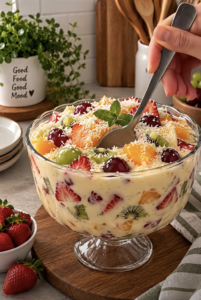
Clear glasses make an ideal serving container because they display the colorful layers.
Start by adding a spoonful of the whipped cream mixture to the bottom of each glass.
Then add a layer of mixed tropical fruit.
Follow with another spoonful of cream.
Continue alternating the layers until the glasses are full.
For four servings, divide the fruit and cream as evenly as possible.
Finish with either cream or colorful fruit, depending on the presentation you prefer.
A fruit-topped Tropical Dessert looks especially fresh.
Meanwhile, a final cream layer gives you a smooth surface for garnishes such as toasted coconut, lime zest, or a small piece of mango.
Do not press the layers down.
Keeping them loose preserves the airy texture of the cream.
If you do not have individual glasses, assemble the recipe in one medium serving bowl.
Layer the ingredients in exactly the same way.
You can also use small jars for portable portions.
Clear containers work best because the fruit colors become part of the presentation.
Once assembled, cover the desserts before refrigerating them.
Chill Before Serving for Better Flavor
Refrigerate Tropical Dessert for at least 30 minutes before serving.
This short resting period cools every layer and gives the flavors time to blend.
You can also prepare the dessert a few hours in advance.
However, fresh fruit gradually releases liquid, so you do not need to chill it overnight unless convenience requires it.
If you plan to make the dessert well ahead, prepare the cream and fruit separately.
Then assemble the glasses a few hours before serving.
This approach preserves the freshest fruit texture.
Keep the finished Tropical Dessert refrigerated until you are ready to bring it to the table.
The cream tastes best cold, while chilled pineapple, mango, and kiwi provide an especially refreshing contrast after a warm meal.
Before serving, add any garnishes you have reserved.
Fresh lime zest provides color and fragrance.
Toasted coconut contributes texture.
A small mint leaf adds an attractive green accent.
You can also place a thin slice of kiwi or mango along the rim of each glass.
Because the layers already look colorful, keep the garnish simple.
Serving, Storing, and Customizing Tropical Dessert
Turn a Simple Dessert Into a Special Presentation
Tropical Dessert can look elegant without requiring complicated decorating skills.
Individual clear glasses offer the easiest presentation.
However, you can also use stemmed dessert dishes, small glass jars, or a large trifle bowl.
For summer gatherings, sprinkle toasted coconut across the top.
The nutty flavor complements both the fruit and the cream.
For extra crunch, add granola immediately before serving.
Do not add it too early because it will soften in the cream.
Crushed vanilla cookies or ladyfingers can also turn the recipe into a more substantial layered dessert.
Place cookie pieces between the cream and fruit layers.
As the Tropical Dessert chills, the cookies absorb a little moisture and become soft while still providing structure.
For an even lighter version, alternate some of the cream with plain or vanilla yogurt.
Meanwhile, a drizzle of passion fruit pulp creates a striking finish and provides extra tartness.
You can also serve the dessert alongside coconut cookies or crisp wafer biscuits.
Whatever presentation you choose, keep the fruit visible.
Its natural color gives this simple dessert most of its visual appeal.
Store Leftovers and Make Easy Variations
Store leftover Tropical Dessert in covered containers in the refrigerator.
Because the recipe contains fresh cream and cut fruit, enjoy it while the ingredients remain fresh.
The fruit will gradually release moisture during storage.
Therefore, the cream may become softer over time.
For that reason, this dessert tastes best shortly after preparation.
If you want to make components ahead, whip the cream mixture and refrigerate it separately.
Prepare sturdy fruits such as pineapple and mango in advance, but consider cutting kiwi or banana closer to serving.
You can also turn the basic recipe into several different desserts.
Layer it with ladyfingers for a tropical trifle.
Add granola for a dessert parfait.
Fold all the fruit directly into the cream for a simple fruit-and-cream bowl.
You can even spoon the mixture into small cups for an easy party dessert.
The same basic combination remains delicious in every version.
Most importantly, Tropical Dessert lets ripe fruit remain the star while the creamy condensed milk mixture adds just enough indulgence.
Frequently Asked Questions
What fruits work best in Tropical Dessert?
Mango, pineapple, and kiwi make an excellent combination. You can also use passion fruit, papaya, banana, dragon fruit, strawberries, raspberries, or blueberries according to availability and preference.
Can I make Tropical Dessert ahead of time?
Yes. You can prepare it several hours before serving and keep it covered in the refrigerator. For the freshest texture, avoid assembling it too far in advance because cut fruit gradually releases moisture.
Can I use canned pineapple?
Yes. Drain canned pineapple thoroughly before adding it. Extra syrup or juice can thin the whipped cream mixture.
Can I make the dessert without sweetened condensed milk?
You can replace it with another sweetened creamy ingredient, although the flavor and consistency will change. The condensed milk provides both sweetness and richness in the original recipe.
Can I add coconut to Tropical Dessert?
Yes. Toasted shredded coconut makes an excellent topping. You can also add a small amount between the layers for extra tropical flavor and texture.
Conclusion
Tropical Dessert turns a short ingredient list into a colorful, refreshing treat that works especially well when you want something easy and no-bake.
Fresh mango, pineapple, and kiwi provide sweetness, acidity, and vibrant color.
Heavy cream creates the soft, airy base.
Meanwhile, sweetened condensed milk adds richness, vanilla rounds out the flavor, and fresh lime juice keeps the dessert bright.
Assembly takes only a few minutes.
Simply whip the cream mixture, prepare the fruit, and alternate the ingredients in serving glasses.
Then chill the Tropical Dessert for at least 30 minutes.
From there, you can serve it exactly as it is or finish each glass with lime zest, toasted coconut, fresh berries, or another simple garnish.
The recipe also adapts easily.
Use passion fruit for extra tartness, banana for sweetness, or berries for additional color.
Add ladyfingers for a more substantial layered dessert, or sprinkle granola on top for crunch.
Whether you prepare it for a summer gathering, family dinner, brunch, or an easy afternoon treat, Tropical Dessert delivers cool creaminess and fresh fruit flavor without requiring an oven or complicated techniques.