If you’ve ever woken yourself up with snoring, or had someone gently nudge you in the middle of the night because your breathing sounded louder than usual, you’re not alone. Millions of people struggle with snoring, and one of the most common questions sleep experts hear is surprisingly simple:
Does sleeping on your right side help or worsen snoring?
The answer is more interesting than most people expect. In many cases, side sleeping — whether right or left — can significantly reduce snoring compared to sleeping flat on your back. However, the exact side you choose may affect not only your breathing, but also digestion, acid reflux, circulation, and overall sleep quality.
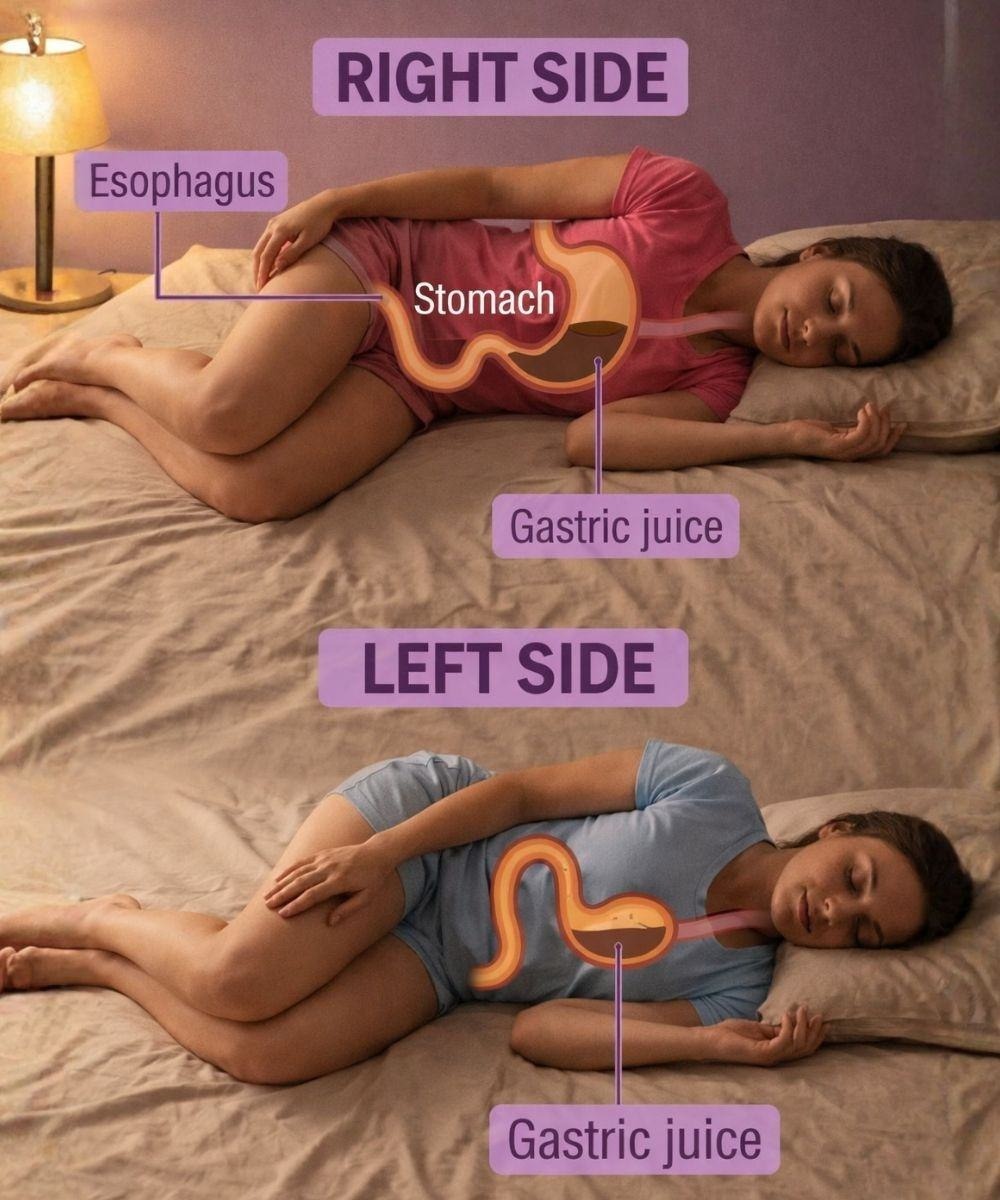
That’s why the image comparing right-side and left-side sleeping has become so popular online. It highlights how stomach acid and body positioning interact while you sleep. While the image simplifies a complex topic, there is some truth behind the idea that sleeping posture can influence nighttime breathing and comfort.
Understanding how sleep position affects your airway can help you rest more peacefully, reduce snoring naturally, and possibly improve your health at the same time.
Why Sleep Position Matters So Much
Many people think snoring happens only because someone is “sleeping too deeply.” In reality, snoring occurs when airflow becomes partially blocked while you breathe during sleep.
As air squeezes through a narrowed airway, tissues inside the throat vibrate. That vibration creates the familiar snoring sound.
Several things can narrow the airway:
- sleeping on your back
- nasal congestion
- excess throat tissue
- alcohol before bed
- obesity
- enlarged tonsils
- sleep apnea
- acid reflux
However, gravity also plays a major role.
When you sleep flat on your back, your:
- tongue
- soft palate
- throat muscles
all relax backward toward the airway. This creates more resistance during breathing.
Side sleeping changes that entire dynamic.
Instead of collapsing backward, the airway stays more open, making breathing smoother and quieter for many people.
Does Sleeping on the Right Side Reduce Snoring?
For many individuals, yes — sleeping on the right side may help reduce snoring compared to back sleeping.
Some sleep studies suggest that side sleeping generally improves airflow and reduces airway obstruction. Certain researchers have even found subtle differences between right-side and left-side sleeping.
Possible benefits of right-side sleeping include:
- slightly improved airway stability
- reduced tongue collapse
- easier breathing for some body types
- better comfort for habitual right-side sleepers
However, these benefits are often modest.
The biggest improvement usually comes simply from avoiding back sleeping altogether.
Why Side Sleeping Helps the Airway Stay Open
When you sleep on your side:
- gravity no longer pulls the tongue directly backward
- throat tissues compress less
- breathing passages stay more open
- airflow becomes steadier
This reduces tissue vibration and decreases snoring intensity.
Think of it like a partially pinched straw.
Back sleeping “pinches” the airway more easily, while side sleeping helps keep the breathing passage more open and stable.
Why Some Experts Prefer Left-Side Sleeping
Even though right-side sleeping may help certain people snore less, left-side sleeping also offers important advantages.
In fact, left-side sleeping is often recommended for:
- acid reflux
- heartburn
- pregnancy
- digestion support
This is where the image you shared becomes important.
The stomach naturally curves toward the left side of the body. When you sleep on your left side, gravity helps keep stomach acid lower than the esophagus.
When you sleep on your right side, stomach contents may sometimes move closer to the lower esophageal opening, potentially increasing reflux symptoms in sensitive individuals.
The Connection Between Acid Reflux and Snoring
Many people do not realize that nighttime acid reflux can actually worsen snoring.
When stomach acid irritates the throat:
- tissues become inflamed
- swelling increases
- airway passages narrow
This makes snoring more likely.
Some people who snore heavily at night actually experience silent acid reflux while sleeping.
Signs may include:
- morning sore throat
- dry mouth
- coughing at night
- bitter taste upon waking
- frequent throat clearing
For these individuals, left-side sleeping may improve both reflux and snoring simultaneously.
Is Right-Side Sleeping Bad for Digestion?
Not necessarily.
Many people sleep comfortably on their right side with no issues at all.
However, some research suggests that left-side sleeping may allow:
- slower acid movement
- improved stomach positioning
- reduced reflux episodes
This does not mean right-side sleeping is dangerous.
It simply means that people with GERD or chronic heartburn may benefit more from sleeping on the left side.
Why Back Sleeping Usually Makes Snoring Worse
Back sleeping is widely considered the worst position for snoring.
When lying flat:
- the jaw relaxes downward
- the tongue falls backward
- throat muscles collapse inward
This narrows the airway dramatically.
People who rarely snore while side sleeping may suddenly snore loudly when rolling onto their backs.
In fact, some people experience “positional snoring,” meaning their snoring depends almost entirely on body position.
The Link Between Snoring and Sleep Apnea
Snoring is common, but sometimes it signals something more serious.
Obstructive Sleep Apnea (OSA) occurs when breathing repeatedly stops during sleep because the airway becomes blocked.
Warning signs include:
- loud chronic snoring
- gasping during sleep
- choking sensations
- excessive daytime fatigue
- morning headaches
- poor concentration
Sleep position can strongly influence sleep apnea severity.
Many people with mild positional sleep apnea improve significantly simply by avoiding back sleeping.
How Pregnancy Changes Sleep Position Recommendations
Pregnant individuals are usually advised to sleep on their left side, especially during later pregnancy.
Left-side sleeping may:
- improve circulation
- reduce pressure on major blood vessels
- support kidney function
- improve blood flow to the baby
Right-side sleeping is not automatically unsafe, but prolonged back sleeping during pregnancy may reduce circulation.
Why People Naturally Prefer Certain Sleep Sides
Some people consistently sleep better on one side because of:
- sinus anatomy
- shoulder comfort
- spinal alignment
- breathing patterns
- digestive issues
- personal habit
Your body often gravitates toward the position that feels most comfortable for your breathing and joints.
That’s why there is no single perfect sleep side for everyone.
How to Train Yourself to Side Sleep
Many people want to stop back sleeping but struggle to stay on their side overnight.
Fortunately, simple techniques can help.
Use a Body Pillow
A body pillow provides:
- spinal support
- hip comfort
- rolling resistance
It makes side sleeping feel more natural and stable.
Place a Pillow Behind Your Back
This prevents unconscious rolling during sleep.
Some people also use:
- wedge pillows
- pregnancy pillows
- positional sleep aids
Try the Tennis Ball Method
This classic sleep trick works surprisingly well.
Place a tennis ball inside the back of a shirt or pajama top. If you roll onto your back during sleep, the discomfort encourages repositioning without fully waking you.
Elevate Your Head Slightly
Raising the head of the bed may:
- reduce airway collapse
- improve reflux
- decrease snoring intensity
A wedge pillow can help.
Other Causes of Snoring That Position Alone Cannot Fix
Sometimes changing sides helps only partially because snoring has multiple causes.
These may include:
- allergies
- nasal blockage
- enlarged tonsils
- obesity
- alcohol consumption
- smoking
- jaw structure
- sleep apnea
If snoring remains severe despite side sleeping, further evaluation may help.
How Alcohol Affects Snoring
Alcohol relaxes throat muscles significantly.
Even people who rarely snore may snore heavily after drinking.
Alcohol:
- weakens airway muscles
- increases tissue collapse
- worsens sleep apnea
- disrupts sleep quality
Avoiding alcohol close to bedtime often improves snoring quickly.
Weight and Snoring
Extra tissue around the neck can narrow breathing passages during sleep.
Even modest weight reduction sometimes improves:
- airflow
- sleep quality
- snoring severity
However, thin individuals can snore too, especially if anatomy or nasal blockage contributes.
Nasal Congestion and Mouth Breathing
Blocked nasal passages force many people to breathe through the mouth during sleep.
This increases:
- throat vibration
- dry mouth
- snoring intensity
Common causes include:
- allergies
- sinus infections
- deviated septum
- dry indoor air
Managing congestion may reduce snoring dramatically.
Can Sleep Position Improve Acid Reflux Too?
Yes.
The stomach-esophagus relationship changes depending on body position.
Many reflux sufferers notice:
- fewer symptoms
- less nighttime burning
- improved comfort
when sleeping on the left side.
This may indirectly reduce snoring caused by throat irritation.
When Snoring Should Not Be Ignored
Occasional light snoring is common.
However, medical evaluation may be important if snoring includes:
- choking
- pauses in breathing
- severe fatigue
- chest pain
- morning headaches
- high blood pressure
These symptoms may indicate sleep apnea or other health conditions.
Simple Habits That May Reduce Snoring Naturally
Helpful lifestyle changes include:
- side sleeping
- hydration
- weight management
- avoiding alcohol before bed
- treating allergies
- improving sleep schedule
- quitting smoking
Sometimes combining several small changes creates major improvement.
Why Sleep Quality Matters Beyond Snoring
Sleep affects nearly every system in the body:
- heart health
- mood
- memory
- immune function
- metabolism
- hormone balance
Improving breathing during sleep often improves energy, focus, and emotional well-being too.
Final Thoughts
So, does sleeping on your right side help or worsen snoring?
For many people, sleeping on either side is far better than sleeping on the back. Right-side sleeping may slightly improve airflow for some individuals, while left-side sleeping may better support digestion and reduce acid reflux.
The truth is that the “best” side depends on your body, your health conditions, and your comfort.
If:
- reflux bothers you
- throat irritation worsens at night
- heartburn affects sleep
then left-side sleeping may offer additional benefits.
If:
- right-side sleeping feels more natural
- breathing feels easier
- you stay asleep longer
then your right side may work perfectly well for you.
The most important goal is simple:
keep the airway as open and relaxed as possible while sleeping comfortably.
Small changes in sleep posture can sometimes make a surprisingly big difference — not only for snoring, but for overall rest, breathing, and long-term health.
And sometimes, the path to quieter nights begins with nothing more complicated than turning gently onto your side.