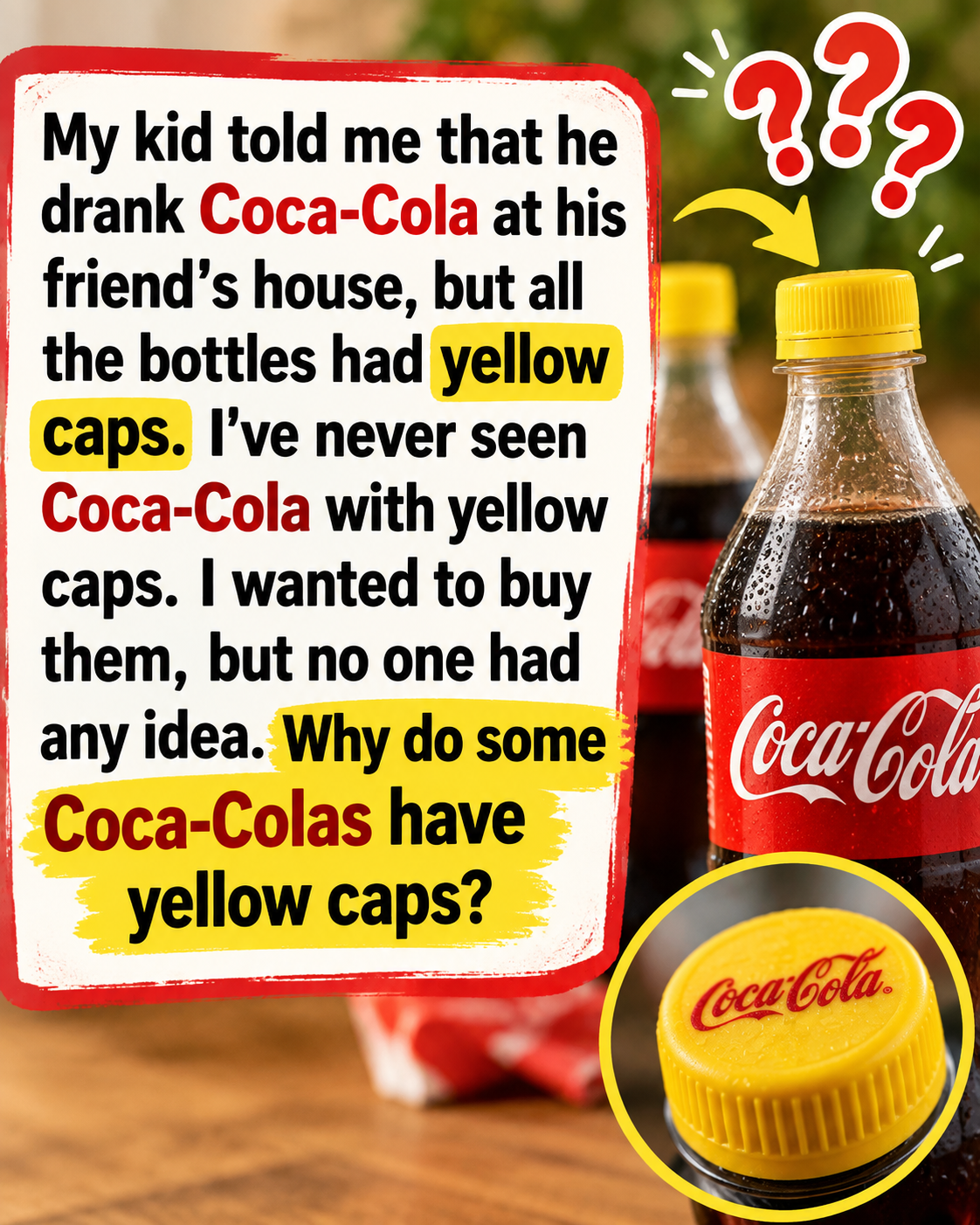
The Secret Behind Coca-Cola’s Yellow Bottle Caps has surprised countless shoppers who suddenly notice a bright yellow cap where Coca-Cola’s familiar red cap normally appears. At first, the change can look like a seasonal promotion, packaging redesign, or limited-edition flavor. However, that little yellow cap carries a much more specific meaning.
Yellow-cap Coca-Cola appears around Passover and helps identify bottles produced with a different sweetener for consumers who follow particular kosher-for-Passover dietary practices. Instead of the high-fructose corn syrup commonly used in standard U.S. Coca-Cola, this special formulation uses sugar.
The first time I noticed one of these bottles, I assumed Coca-Cola had simply changed the packaging for spring. The label looked familiar, the dark soda inside looked exactly the same, and nothing about the bottle immediately suggested a dramatic difference. Then I noticed several bottles with matching yellow caps sitting together on the shelf. That small detail made me curious enough to look closer. As it turns out, the cap isn’t there simply to attract attention. It helps shoppers identify a product connected to religious tradition, dietary observance, and a seasonal change in Coca-Cola’s formulation.
For people who specifically look for it, spotting the yellow cap can become an annual tradition. Meanwhile, other shoppers seek it out because they prefer Coca-Cola made with sugar. Understanding The Secret Behind Coca-Cola’s Yellow Bottle Caps therefore reveals an interesting connection between one of the world’s most recognizable drinks and a centuries-old religious observance.
Why Some Coca-Cola Bottles Have Yellow Caps
The Yellow Cap Is Connected to Passover
The most important fact behind The Secret Behind Coca-Cola’s Yellow Bottle Caps is their connection to Passover. Passover, or Pesach, is a major Jewish holiday commemorating the biblical Exodus from Egypt. Food plays an important role in its observance, and special dietary rules apply throughout the holiday.
During Passover, observant Jews avoid chametz, which generally involves leavened products derived from wheat, barley, rye, oats, and spelt. In addition, many Ashkenazi Jewish communities traditionally avoid a separate category called kitniyot. That category commonly includes foods such as corn, rice, beans, lentils, and certain other legumes and seeds.
That second tradition creates an issue for standard Coca-Cola sold in much of the United States. Regular U.S. Coca-Cola commonly uses high-fructose corn syrup as its sweetener. Because corn falls within the traditional kitniyot restrictions followed by many Ashkenazi Jews during Passover, the standard formulation does not meet their particular Passover dietary practice.
Coca-Cola therefore produces a special seasonal formulation for this market. The recognizable yellow cap helps distinguish qualifying bottles from ordinary bottles on crowded supermarket shelves. As a result, shoppers can identify the seasonal version quickly without studying every bottle in detail.
The Cap Works as a Simple Visual Signal
Coca-Cola’s usual packaging relies heavily on red, so a yellow cap stands out immediately. However, the color change serves a practical purpose rather than simply creating a decorative springtime variation. It allows shoppers seeking the special formulation to spot it quickly.
The bottle otherwise looks remarkably familiar. Coca-Cola does not need to transform the entire package or create an entirely different product identity. Instead, that single contrasting detail provides an easy visual clue that shoppers have learned to recognize.
However, anyone buying Coca-Cola specifically for religious observance should look beyond cap color alone. Packaging practices and availability can vary by location and year. Therefore, consumers should check the bottle for the appropriate kosher-for-Passover certification rather than treating any yellow cap as a universal guarantee.
That distinction matters because the cap itself does not create the religious status of the beverage. The ingredients, production process, and appropriate certification do. The yellow cap simply makes the special bottles easier to recognize.
What Makes Yellow-Cap Coca-Cola Different
The Biggest Difference Is the Sweetener
For American shoppers, the most noticeable formulation difference involves the sweetener. Standard U.S. Coca-Cola commonly contains high-fructose corn syrup, while the seasonal Passover formulation replaces the corn-based sweetener with sugar.
That substitution might sound small, but it matters to consumers who follow Passover traditions that restrict kitniyot. By eliminating the corn-derived sweetener from the relevant formulation, Coca-Cola can produce a version intended to meet those particular dietary requirements when properly certified.
The change also attracts people who have no religious reason for purchasing it. Some soda enthusiasts actively look for Coca-Cola made with sugar because they believe it tastes different from the standard high-fructose corn syrup version. Consequently, bottles intended for a relatively specific seasonal purpose can attract a broader audience.
Still, yellow-cap Coca-Cola remains Coca-Cola rather than a separate flavor. It does not suddenly become cherry, vanilla, lemon, or another variation. Instead, the recognizable flavor formula uses a different source of sweetness.
Sugar Can Create a Subtle Taste Difference
Taste remains subjective, so not everyone will notice a dramatic difference between the two formulations. Some people describe sugar-sweetened Coca-Cola as having a cleaner sweetness or a slightly different finish. Others find the difference minimal, especially when drinking the soda very cold or over ice.
The distinction comes from the sweetener rather than a completely redesigned flavor profile. High-fructose corn syrup and sugar both provide sweetness, but their composition differs. Therefore, people with sensitive palates may perceive changes in sweetness, mouthfeel, or aftertaste.
This taste discussion explains why The Secret Behind Coca-Cola’s Yellow Bottle Caps interests more than consumers observing Passover. Soda enthusiasts sometimes watch for the yellow caps simply because the seasonal release provides another opportunity to try sugar-sweetened Coca-Cola.
However, personal preference remains the deciding factor. One person may strongly favor the yellow-cap version, while another may struggle to distinguish it from ordinary Coke. A simple side-by-side taste comparison offers the easiest way to decide which one you prefer.
The Religious Tradition Behind Yellow-Cap Coke
Kosher and Kosher for Passover Are Not Identical
One source of confusion comes from the word “kosher.” A product can meet ordinary kosher requirements throughout the year without necessarily meeting the additional requirements associated with Passover. Therefore, seeing a general kosher symbol does not automatically tell an observant consumer that a product suits Passover.
Passover introduces additional restrictions, particularly involving chametz. Furthermore, different Jewish communities follow somewhat different traditions regarding kitniyot. Many Ashkenazi communities historically avoid corn, rice, legumes, and related foods during the holiday, while many Sephardic Jewish traditions permit various forms of kitniyot.
Because of those differences, consumers who observe Passover generally look for appropriate certification rather than making assumptions from an ingredient list alone. Food production can involve processing aids, shared equipment, flavorings, and other considerations that may not be obvious simply from reading the front label.
The yellow-cap tradition makes this otherwise complicated distinction visible to everyday shoppers. A tiny packaging change can signal that a familiar beverage has been adapted for a particular religious season. That makes the bottle an interesting example of how modern food manufacturing responds to long-established cultural traditions.
Why Corn Syrup Became Important in the United States
The yellow-cap story makes the most sense in the context of American Coca-Cola. Coca-Cola formulations vary internationally, and many consumers outside the United States already encounter versions sweetened with sugar rather than high-fructose corn syrup.
In the United States, however, high-fructose corn syrup became widely used as a sweetener in soft drinks. That creates the seasonal Passover issue for consumers who follow traditions against eating corn-derived ingredients during the holiday.
Replacing the corn-based sweetener with sugar provides a practical solution. Coca-Cola can preserve the familiar beverage while adapting the formulation for the relevant market. Meanwhile, the yellow cap distinguishes those bottles from standard inventory.
Therefore, The Secret Behind Coca-Cola’s Yellow Bottle Caps depends partly on where you live. Someone accustomed to sugar-sweetened Coca-Cola in another country may find the sweetener change less unusual. In the American market, though, it gives the seasonal bottles a distinctive identity.
How to Find and Identify Yellow-Cap Coca-Cola
Look Around the Passover Shopping Season
Yellow-cap Coca-Cola is a seasonal product rather than something shoppers should expect to find throughout the year. Because the formulation relates to Passover, stores generally stock qualifying bottles around the weeks leading up to and during the holiday.
Availability can depend heavily on location. Stores serving communities with larger populations of observant Jewish shoppers may carry more of the product. Other supermarkets may receive limited quantities or none at all.
Therefore, timing matters if you specifically want to try it. Waiting until long after Passover may make the bottles considerably harder to find. Enthusiasts sometimes begin checking supermarket soda aisles before the holiday starts because supplies can vary.
When you find a bottle, inspect the package instead of relying entirely on the cap. Look for the relevant certification and read the ingredient information. That approach provides better confirmation than assuming every unusual cap color always means exactly the same thing.
Check the Label and Certification Carefully
Packaging gives consumers useful clues, but the label remains important. If your reason for buying yellow-cap Coca-Cola involves religious observance, check for the appropriate kosher-for-Passover marking required for your practice.
The ingredient list can provide another clue. In the United States, the special formulation should indicate sugar rather than the high-fructose corn syrup associated with standard Coca-Cola. However, ingredient lists and production details can change, so checking the bottle you actually plan to purchase remains the safest approach.
Consumers who simply want to compare flavors can also use the ingredient panel to confirm that they found the sugar-sweetened version. Buying one regular bottle and one appropriately labeled seasonal bottle creates an easy home taste comparison.
Ultimately, the yellow cap serves as the beginning of the identification process rather than the only thing worth checking. That simple habit becomes especially important when religious dietary requirements matter. It also helps curious shoppers understand exactly what they are purchasing.
Frequently Asked Questions
Why does Coca-Cola use yellow bottle caps?
Yellow caps are associated with a special Coca-Cola formulation produced around Passover. In the United States, the seasonal version uses sugar rather than the high-fructose corn syrup found in standard Coca-Cola. The cap helps shoppers distinguish the bottles quickly.
Does yellow-cap Coca-Cola taste different?
Some consumers say they notice a difference because the Passover formulation uses sugar rather than high-fructose corn syrup. People may describe differences in sweetness, mouthfeel, or aftertaste. However, taste remains subjective, and some people notice very little difference.
Is yellow-cap Coca-Cola a new flavor?
No. Yellow-cap Coca-Cola is not a separate flavor such as Cherry Coke or Vanilla Coke. The important difference lies in the formulation, particularly the sweetener used in the U.S. Passover version.
Can I buy yellow-cap Coca-Cola all year?
Usually not. The bottles appear seasonally around Passover, and availability depends on local retailers and regional demand. Stores serving larger Jewish communities may be more likely to stock them.
Does every yellow Coca-Cola cap automatically mean kosher for Passover?
Consumers should not rely solely on cap color when religious observance matters. Check the bottle for the appropriate kosher-for-Passover certification and review the current packaging. Product designs and formulations can change, so the certification provides the more important confirmation.
Conclusion
The Secret Behind Coca-Cola’s Yellow Bottle Caps turns out to be much more interesting than a simple packaging experiment. The yellow cap is closely associated with a seasonal Coca-Cola formulation produced around Passover for consumers following particular Jewish dietary traditions.
For many Ashkenazi Jews, avoiding kitniyot during Passover means avoiding corn and corn-derived ingredients. Because standard Coca-Cola in the United States commonly uses high-fructose corn syrup, Coca-Cola produces a special version using sugar instead. The yellow cap helps shoppers recognize that seasonal product.
The tradition has also gained attention outside the community it was designed to serve. Some Coca-Cola fans deliberately search for yellow-cap bottles because they prefer the taste of Coke sweetened with sugar. As a result, a practical packaging signal has become something of an annual curiosity for soda enthusiasts.
So, the next time a bright yellow cap appears among rows of familiar red ones, you will know there is a reason behind it. That little piece of plastic represents far more than a color change. It reflects the intersection of food manufacturing, religious observance, consumer preference, and a tradition that turns an ordinary bottle of Coca-Cola into something shoppers specifically watch for each year.