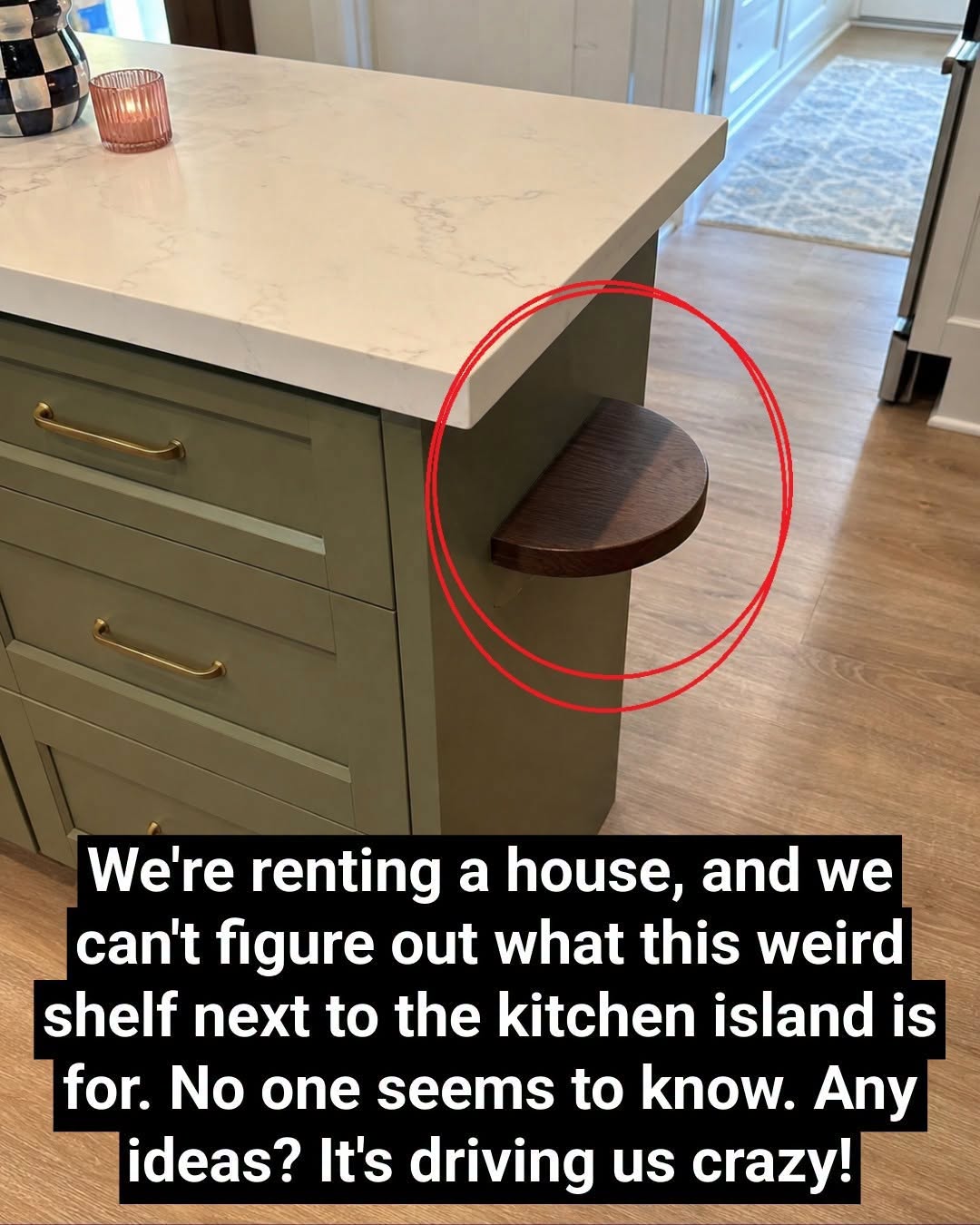
Have you ever walked into a beautifully designed kitchen and noticed a small rounded shelf attached to the end of the kitchen island? It’s too small to be a countertop extension, too high to function as a seat, and too narrow to hold large appliances. At first glance, it almost seems like an unnecessary detail.
Yet architects and kitchen designers continue to include these little ledges in homes of every style—from cozy farmhouses to sleek modern kitchens. They aren’t accidents or decorative afterthoughts. In fact, these modest shelves serve several practical and aesthetic purposes that many homeowners don’t discover until they’ve lived with one for a while.
What appears to be a simple piece of stone or wood often becomes one of the most useful features in the room. Whether it’s holding your morning coffee, displaying fresh flowers, or simply softening the appearance of the island, this small addition quietly improves everyday life.
Let’s take a closer look at why this mysterious little shelf exists and how you can make the most of it.
Why Kitchen Islands Continue to Evolve
Kitchen islands have changed dramatically over the past several decades.
Years ago, kitchens were largely hidden workspaces. Meals were prepared behind closed doors, and guests rarely entered while someone was cooking. Islands, if they existed at all, served one purpose: providing extra workspace.
Today’s kitchens tell a different story.
Modern kitchens have become the heart of the home. Families gather around them for breakfast before school. Friends lean against the island while chatting during dinner parties. Children finish homework while parents prepare meals.
Because the kitchen now functions as both a workspace and a social hub, designers look for ways to make it feel warmer, softer, and more inviting.
That’s where features like the small side shelf come in.
Rather than ending the island with a large, flat wall of cabinetry, designers often introduce subtle architectural details that create visual interest while adding practical function.
What Is the Small Shelf Actually Called?
There isn’t one universal name for this feature.
Depending on the manufacturer or designer, it may be described as:
- End shelf
- Display ledge
- Floating shelf
- Decorative side shelf
- Cantilever shelf
- Curved island ledge
- Accent shelf
Although the names differ, the purpose remains largely the same.
It provides a convenient location for lightweight items while helping the island look less bulky and more refined.
The Perfect Landing Spot
Perhaps the most common purpose of this little ledge is something surprisingly simple.
It’s a landing zone.
Think about how many objects pass through your hands during the day.
Your coffee mug.
Your phone.
Car keys.
Mail.
Reading glasses.
Recipe cards.
A grocery list.
Most of these items only need somewhere to rest for a few minutes.
Without a dedicated place, they quickly migrate onto valuable food-preparation space.
A small shelf solves this problem beautifully.
Instead of cluttering your primary countertop, it creates a separate area where temporary items naturally belong.
Many homeowners discover they use this space dozens of times each day without even realizing it.
A Convenient Coffee Corner
Morning routines often revolve around coffee or tea.
That little shelf can become the perfect miniature beverage station.
Imagine placing:
- Your favorite ceramic mug
- A small container of sugar
- Honey
- Stirring spoons
- Tea bags
- A tiny milk pitcher
Everything remains organized without taking over the entire island.
It creates a peaceful little ritual that makes mornings feel less rushed.
Some homeowners even add a small tray to keep everything neatly contained.
Keeping Your Main Counter Clear
Professional chefs understand an important principle:
A clean workspace improves efficiency.
The same idea applies at home.
When chopping vegetables, rolling dough, or assembling meals, every inch of counter space becomes valuable.
If your phone, drink, cookbook, and mail are scattered everywhere, cooking immediately feels more stressful.
The side shelf acts like an overflow space.
Instead of constantly moving objects around, you simply place them on the ledge until you’re finished cooking.
This small habit keeps the kitchen feeling organized and spacious.
A Beautiful Display Area
Not every feature in a home has to serve a strictly practical purpose.
Sometimes beauty alone has value.
The side shelf offers an ideal location for tasteful decoration.
Popular choices include:
Fresh Flowers
A small vase instantly brightens the kitchen.
Fresh greenery introduces color while making the room feel alive.
Potted Herbs
Fresh basil
Rosemary
Mint
Thyme
Not only do herbs smell wonderful, but they’re also ready whenever you’re cooking.
Seasonal Decorations
One reason many homeowners love these shelves is their flexibility.
Decorations can change throughout the year.
Spring:
Fresh tulips
Pastel ceramics
Bird figurines
Summer:
Lemons
Hydrangeas
Small coastal decorations
Autumn:
Mini pumpkins
Colorful leaves
Candles
Winter:
Evergreen branches
Lanterns
Holiday ornaments
Because the shelf is relatively small, changing decorations takes only a few minutes.
Softening Hard Lines
Kitchen islands are often large rectangles.
Without thoughtful detailing, they can appear heavy or box-like.
Rounded shelves help solve this design challenge.
The gentle curve introduces softness into a room already filled with straight lines.
Cabinets.
Countertops.
Windows.
Appliances.
Together they create a visual balance that feels more welcoming.
Interior designers often refer to this as “breaking up visual weight.”
It’s a subtle improvement, but one your eyes naturally appreciate.
A More Custom Appearance
Homes built by large developers sometimes include standard cabinet layouts.
Small architectural details help those kitchens feel more unique.
A curved shelf immediately suggests custom craftsmanship.
Visitors often assume the island was specially designed because details like this aren’t commonly found in basic cabinetry.
It adds personality without dramatically increasing construction costs.
Practical Ways to Use Your Kitchen Island Shelf Every Day
Once you begin paying attention to that little shelf, you’ll probably notice yourself using it far more often than you expected. While it may seem like a minor design feature, its versatility is what makes it so valuable. Unlike drawers or cabinets that have a single purpose, this small ledge can adapt to whatever your household needs most.
Whether you’re preparing dinner, entertaining friends, or simply enjoying a quiet morning at home, this modest extension of your kitchen island can become one of the hardest-working spots in the room.
The Perfect Spot for Casual Entertaining
Modern kitchens are designed for gathering. Instead of separating the cook from family and guests, today’s open-concept layouts encourage conversation while meals are prepared.
A small island shelf helps support that lifestyle.
Imagine hosting a few friends for coffee or appetizers.
Instead of placing drinks directly in the middle of your cooking area, guests can comfortably set down:
- Coffee mugs
- Wine glasses
- Small appetizer plates
- Dessert bowls
- Cocktail napkins
- Small serving dishes
This creates a natural overflow area without interfering with food preparation.
It’s especially useful during holidays when every inch of countertop space matters.
A Safe Place for Your Phone and Tablet
Many people now use digital recipes instead of printed cookbooks.
Whether you’re following a YouTube recipe, checking measurements online, or video chatting with family while cooking, electronics have become common kitchen companions.
The island shelf provides a convenient place for:
- Smartphones
- Tablets
- Smart displays
- Portable speakers
Keeping electronics slightly away from the main prep area reduces the chances of spills, splashes, and food stains.
Create a Mini Charging Station
If an electrical outlet is nearby, some homeowners turn the shelf into a discreet charging station.
A small charging dock can power:
- Phones
- Smartwatches
- Wireless earbuds
- Tablets
This keeps devices organized instead of scattered across the kitchen.
Simple cable organizers can also hide charging cords and maintain a clean appearance.
Display Family Memories
Not every decorative object has to be expensive.
A single framed family photo can make a kitchen feel much more personal.
Some homeowners display:
- Vacation photos
- Children’s artwork
- Small family portraits
- Inspirational quotes
- Handmade pottery
These small touches remind us that the kitchen isn’t simply a place to cook.
It’s where life happens.
Showcase Fresh Produce
Many designers recommend decorating with food.
Fresh fruits naturally introduce color into a kitchen while remaining practical.
A decorative bowl filled with:
- Lemons
- Limes
- Apples
- Oranges
- Pears
creates a warm, welcoming appearance.
Unlike artificial decorations, fresh produce is constantly changing, encouraging healthier snacking while adding life to the room.
A Home for Fresh Herbs
Instead of hiding herbs near the sink, consider placing them on the side shelf.
Small pots of:
- Basil
- Rosemary
- Parsley
- Mint
- Thyme
- Oregano
provide both beauty and convenience.
Their pleasant aroma also makes the kitchen feel fresher.
Display Your Favorite Cookbooks
Many passionate home cooks own beautiful cookbooks.
Rather than hiding them inside cabinets, display one on the shelf using a decorative stand.
Rotating books every few weeks adds variety while encouraging you to try new recipes.
Guests often enjoy browsing through favorite cookbooks while chatting in the kitchen.
A Temporary Food Prep Area
Although the shelf isn’t large enough for serious food preparation, it can still support cooking.
It’s perfect for temporarily holding:
- Chopped herbs
- Measuring cups
- Mixing spoons
- Ingredients waiting to be added
- Finished garnishes
- Kitchen towels
Professional kitchens often separate work zones, and this shelf naturally becomes one of those zones.
Things You Shouldn’t Put on the Shelf
Despite its usefulness, this ledge isn’t designed for heavy-duty storage.
Avoid placing:
Heavy Appliances
Stand mixers
Air fryers
Large coffee machines
Food processors
These items may exceed the shelf’s weight capacity.
Large Cookware
Avoid placing:
- Dutch ovens
- Cast iron pans
- Stock pots
- Heavy casserole dishes
Their weight can place unnecessary stress on floating or cantilevered shelves.
Children
Although some shelves resemble small benches, they are not designed for sitting.
Children climbing or sitting on the shelf could damage the countertop or create a safety hazard.
Keeping It Beautiful
Maintenance is surprisingly easy.
For everyday cleaning:
- Wipe with a microfiber cloth.
- Use the same cleaner recommended for your countertop material.
- Remove spills promptly.
- Dust underneath the shelf regularly.
If the shelf is natural wood, occasional conditioning with food-safe mineral oil helps maintain its appearance.
For stone shelves, follow the manufacturer’s recommendations regarding sealers and cleaners.
Design Ideas for Every Style
One reason designers love these shelves is their adaptability.
Modern Kitchens
Minimal decorations
Single ceramic vase
Neutral colors
Clean lines
Farmhouse Kitchens
Wooden cutting boards
Fresh herbs
Vintage crocks
Woven baskets
Traditional Kitchens
Elegant candle holders
Decorative bowls
Fresh flowers
Framed artwork
Coastal Kitchens
Coral accents
Blue glass
White ceramics
Natural driftwood
Rustic Kitchens
Handmade pottery
Wooden bowls
Copper accents
Fresh greenery
Why Less Is Often More
One common mistake is overcrowding the shelf.
Because it’s relatively small, it only needs one or two attractive objects.
Professional designers often recommend following the “rule of three.”
For example:
- Small plant
- Decorative bowl
- Candle
Or:
- Cookbook
- Ceramic mug
- Small vase
Leaving some empty space allows each object to stand out.
Sometimes the most elegant shelf is the one that isn’t completely full.
Why Designers Continue to Include Them
Kitchen design constantly evolves.
Cabinet colors change.
Countertop materials change.
Hardware styles change.
Yet small architectural details like these remain popular because they combine function with beauty.
They’re inexpensive compared to major renovations.
They improve daily usability.
They soften the appearance of large islands.
They provide subtle customization.
Most importantly, they make kitchens feel more lived-in rather than purely functional.
Final Thoughts
That mysterious little shelf may seem insignificant when you first notice it, but over time it often becomes one of the most appreciated features in the kitchen.
It welcomes your morning coffee before the day begins. It holds your recipe while dinner simmers on the stove. It displays flowers picked from the garden, catches your keys when you come home, and quietly supports the countless routines that make a house feel like home.
Good design isn’t always about dramatic features or expensive materials. Often, it’s the smallest details that make the biggest difference. A thoughtfully placed shelf can add warmth, convenience, and personality to the busiest room in your home.
The next time you pass your kitchen island, take another look at that little ledge. It isn’t just an extra piece of stone or wood—it’s a reminder that great design often reveals its value through everyday use rather than first impressions.
More Blog
- Drinking Water on an Empty Stomach — What Science Actually Supports (No Hype, Just Facts)
- Waking Up Between 3 and 5 AM? It Might Be Your Soul Trying to Talk to You
- What a “Bleach” Patch on Your Underwear Really Means — And Why It’s Actually a Good Sign
- This Drink May Weaken Your Bones From The Inside — But Everyone Drinks It Anyway