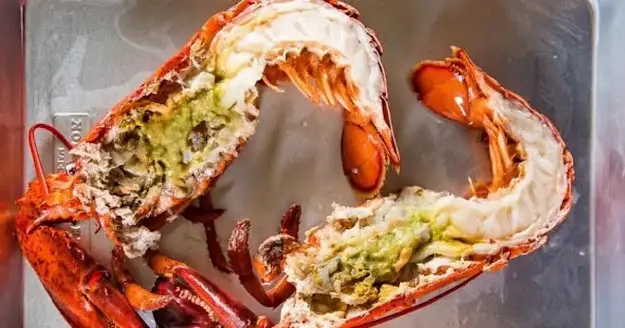
If you’ve ever cracked open a whole lobster, you may have noticed a soft green substance tucked inside the body cavity. While some diners scoop it up as a delicacy, others avoid it entirely.
So what exactly is this mysterious green material, and is it safe to eat?
The answer lies in a part of the lobster called tomalley.
What Is Tomalley?
Tomalley is the lobster’s hepatopancreas, an organ that functions much like a combined liver and pancreas. It helps the lobster digest food, store energy, and process nutrients.
Its green color comes from natural pigments in the lobster’s diet, including algae and plankton.
Tomalley has a creamy texture and an intensely rich seafood flavor that many lobster enthusiasts describe as a concentrated essence of lobster.
Quick Facts About Tomalley
| Fact | Description |
|---|---|
| What it is | The lobster’s hepatopancreas (liver-like digestive organ) |
| Color | Usually green, sometimes greenish-brown |
| Texture | Soft, creamy, and spreadable |
| Flavor | Rich, savory, and highly concentrated |
| Location | Found inside the lobster’s body cavity |
Is Tomalley Safe to Eat?
Tomalley is technically edible and has been consumed for generations in many coastal communities.
However, there is an important consideration.
Because the hepatopancreas filters and processes substances within the lobster’s body, it can sometimes accumulate environmental contaminants such as heavy metals, industrial pollutants, or naturally occurring marine toxins.
For this reason, some public health agencies recommend limiting or avoiding tomalley consumption, particularly for:
- Pregnant individuals
- Young children
- People with weakened immune systems
- Anyone in regions experiencing harmful algal blooms
For healthy adults, occasional consumption is generally considered low risk when the lobster comes from clean, well-monitored waters. Still, local seafood advisories should always be checked.
Why Some People Love It
Despite the cautions, tomalley remains a prized delicacy in many regions.
Its popularity comes from its unique flavor and versatility in cooking.
Many chefs use tomalley to:
- Enrich lobster bisque
- Create lobster butter
- Enhance seafood sauces
- Add depth to seafood stews
- Spread on toast or crackers
A small amount can dramatically increase the richness of a seafood dish.
Tomalley Around the World
Different cultures view tomalley differently.
Popular In:
- Coastal New England
- Maritime Canada
- France
- Spain
- Portugal
- Certain Japanese seafood cuisines
Commonly Discarded In:
- Many commercial restaurants
- Supermarket-prepared lobster products
- Areas with strict seafood safety recommendations
How to Tell If Tomalley Is Fresh
Fresh tomalley should have:
✅ A vibrant green color
✅ A smooth, creamy texture
✅ A mild ocean-like aroma
Avoid consuming it if it appears:
❌ Gray, black, or unusually dark
❌ Slimy or excessively watery
❌ Sour or strongly unpleasant smelling
When in doubt, throw it out.
Tomalley vs. Lobster Coral
People often confuse tomalley with another lobster delicacy called coral.
The difference is simple:
- Tomalley is green and functions as the digestive organ.
- Coral is the bright orange-red roe (eggs) found in female lobsters.
Both are edible, but they have very different flavors and textures.
Nutritional Highlights
Although typically eaten in small amounts, tomalley contains:
- Protein
- Healthy fats
- Vitamin A
- Vitamin E
- Zinc
- Selenium
- Omega-3 fatty acids
Its nutritional value is secondary to its culinary appeal, but it does provide concentrated nutrients.
Should You Eat It?
The decision ultimately comes down to personal preference and comfort level.
If you enjoy exploring traditional seafood delicacies and your lobster comes from a reputable source, you may find tomalley to be a flavorful addition to your meal.
If you’re concerned about contaminants or simply dislike the appearance or flavor, there’s absolutely nothing wrong with skipping it.
The lobster meat itself remains the star of the meal.
Final Thoughts
Tomalley is one of the most misunderstood parts of a lobster. To some people, it’s a treasured delicacy packed with rich seafood flavor. To others, it’s an organ best left untouched.
Understanding what it is allows you to make an informed choice.
Whether you savor every bite or leave it behind, the next time you spot that mysterious green substance inside a lobster, you’ll know exactly what you’re looking at—and why it has fascinated seafood lovers for generations.