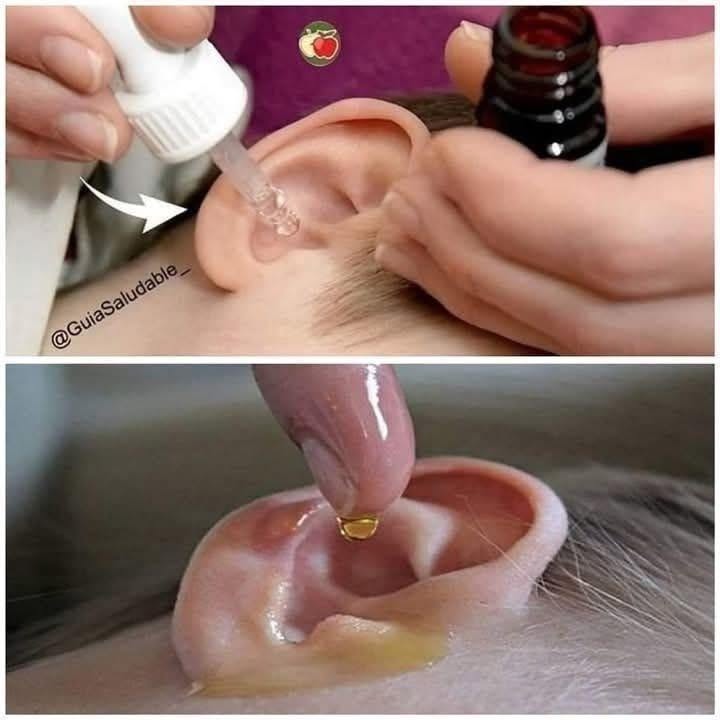
Put 2 Drops in Your Ear and You’ll Hear Like Before is the kind of viral promise that sounds especially tempting when voices suddenly seem muffled, the television volume keeps creeping higher, or conversations become harder to follow. Garlic has a long history in traditional home remedies, so a claim that a few drops of garlic oil can restore hearing may seem believable at first.
However, hearing loss has many possible causes, and garlic oil does not repair damaged inner-ear sensory cells or restore age-related or noise-related sensorineural hearing loss. The National Institute on Deafness and Other Communication Disorders explains that excessive noise can permanently damage the sensory hair-cell structures involved in hearing, and humans cannot currently replace those damaged structures naturally. (NIDCD)
That distinction matters because some hearing problems require prompt medical treatment. Sudden sensorineural hearing loss, for example, can appear rapidly and should be treated as a medical emergency rather than managed with homemade ear drops. NIDCD identifies corticosteroids as a common treatment and notes that earlier treatment offers a better opportunity for recovery. (NIDCD)
I once heard someone confidently recommend warm garlic oil for a relative who had suddenly started struggling to hear through one ear. The advice sounded harmless because garlic came from the kitchen rather than a medicine cabinet. However, the sudden timing made the situation much more important than the home remedy suggested. It became clear that hearing difficulty could come from wax, infection, pressure, inner-ear damage, or another condition that required an actual diagnosis. That experience changed how I view viral remedies. Natural ingredients can have useful properties, but they cannot tell you why hearing changed, and that unanswered question often matters most.
Why Put 2 Drops in Your Ear and You’ll Hear Like Before Is Misleading
Different Types of Hearing Loss Need Different Solutions
Put 2 Drops in Your Ear and You’ll Hear Like Before treats hearing loss as though every case comes from the same problem. In reality, hearing depends on several connected structures in the outer, middle, and inner ear, as well as the nerves that carry sound information to the brain. Problems in different parts of that system can produce similar symptoms while requiring very different treatments. (MedlinePlus)
Doctors generally distinguish between conductive and sensorineural hearing problems, although mixed forms can occur.
Conductive hearing loss happens when sound does not travel normally through the outer or middle ear. Earwax blockage, middle-ear fluid, certain structural problems, and some infections can interfere with sound transmission.
Sensorineural hearing loss, meanwhile, involves the inner ear or auditory nerve pathway. Aging and excessive noise exposure commonly contribute to this type of hearing loss. Noise can damage microscopic sensory structures in the cochlea, and NIDCD states that damaged human hair-cell bundles cannot currently be repaired or replaced naturally. (NIDCD)
Therefore, garlic oil placed in the ear canal cannot simply travel into the inner ear and regenerate damaged hearing structures.
Some hearing problems can improve when doctors treat the underlying cause. For example, professionally removing impacted earwax can improve hearing when wax physically blocks sound. Likewise, treating certain middle-ear conditions may improve conductive hearing.
However, those situations do not prove that an oil restores hearing.
Instead, they show why identifying the cause matters.
If hearing changes, an examination and hearing test can help determine whether the problem involves wax, the eardrum, middle-ear function, the inner ear, or another part of the auditory system. (NIDCD)
Garlic’s Properties Do Not Equal Proven Hearing Restoration
The Put 2 Drops in Your Ear and You’ll Hear Like Before claim often builds on a partial truth: garlic contains biologically active compounds, and researchers have studied garlic for various antimicrobial and anti-inflammatory effects.
However, evidence that a plant contains interesting compounds does not automatically prove that homemade garlic oil can safely treat hearing loss.
That leap skips several essential questions.
What type of hearing loss does the person have?
What concentration would be effective?
Can the substance safely contact the ear canal?
Is the eardrum intact?
Could the homemade oil contain irritating compounds or microorganisms?
Does it reach the structure actually causing the hearing problem?
Most importantly, has controlled clinical research shown that it restores hearing?
For common sensorineural hearing loss, the answer to that last question remains no. NIDCD continues to describe hearing aids, cochlear implants, assistive devices, and other hearing-health services as established approaches to managing hearing impairment, while research into restorative approaches such as gene therapy remains an evolving field. (NIDCD)
Therefore, a homemade oil should not replace an evidence-based hearing evaluation.
This distinction also applies to tinnitus. Ringing or buzzing in the ears sometimes accompanies hearing loss, but tinnitus has many possible associations. A viral remedy cannot reliably determine or correct its cause.
Likewise, muffled hearing does not automatically mean that something needs to be “cleaned out.”
Sometimes wax causes blockage.
Sometimes pressure affects the middle ear.
Sometimes an inner-ear problem causes the hearing change.
The symptom alone cannot tell you which explanation applies.
The Risks Behind Homemade Garlic Oil Ear Drops
A Damaged Eardrum Changes the Safety Picture
Put 2 Drops in Your Ear and You’ll Hear Like Before rarely mentions one important question: is the eardrum intact?
Most people cannot answer that question by looking at their own ear.
A perforated eardrum can develop after infection, trauma, pressure changes, or other problems. If a hole exists, substances placed in the ear canal may reach areas where they do not belong.
The American Academy of Otolaryngology–Head and Neck Surgery warns that putting ear drops or other products into an ear with an eardrum perforation can cause pain or infection. Its patient guidance recommends consulting a physician before trying over-the-counter ear remedies when perforation may be present. (ENT Health)
The same organization advises people to confirm that they do not have a perforated eardrum before using ear drops, particularly when they have a history of an injured eardrum or ear surgery. (ENT Health)
Homemade preparations create additional uncertainty.
Kitchen mixtures do not undergo the sterility testing, concentration controls, manufacturing standards, and safety evaluation expected from regulated ear medications.
Fresh garlic can also irritate tissue.
Therefore, putting concentrated garlic preparations into a sensitive ear canal can potentially cause burning, irritation, or inflammation rather than relief.
Oil can also trap moisture or debris in some situations.
Consequently, even when a viral recipe sounds mild, the anatomical condition of the ear matters.
A person with ear tubes, previous ear surgery, known perforation, active drainage, significant pain, or suspected infection should avoid experimenting with homemade drops and seek medical advice.
The goal should never involve simply getting a substance into the ear.
The goal should involve discovering why hearing changed.
Delaying Proper Treatment Can Matter More Than the Oil Itself
The greatest danger behind Put 2 Drops in Your Ear and You’ll Hear Like Before may not always come from garlic itself.
Sometimes the larger risk comes from losing valuable time.
Sudden sensorineural hearing loss can develop over several hours or days. A person may wake up with reduced hearing, notice that one ear suddenly sounds blocked, or experience new tinnitus or dizziness.
Because the ear may feel “clogged,” people sometimes assume wax or congestion caused the problem.
However, NIDCD emphasizes that sudden sensorineural hearing loss should receive immediate medical attention. Doctors commonly use corticosteroids, and treatment works best when it begins promptly. (NIDCD)
Therefore, spending several days testing garlic oil, olive oil, peroxide, or other home remedies could delay evaluation during an important treatment window.
Sudden hearing loss deserves particular attention when it affects one ear.
Likewise, hearing changes accompanied by severe dizziness, neurologic symptoms, intense pain, significant drainage, or recent head trauma need appropriate medical evaluation.
Gradual hearing loss also deserves assessment, even though it does not usually carry the same urgency.
Many people slowly adapt without realizing how much hearing they have lost.
They may begin reading lips more often, avoiding noisy restaurants, misunderstanding speech, or turning devices louder.
A professional hearing test can measure the problem rather than relying on guesswork.
Audiologists and ear specialists can then recommend options that match the type and severity of the hearing loss.
The sooner the underlying problem becomes clear, the sooner someone can stop experimenting with remedies that cannot address it.
What Actually Helps When Hearing Seems Muffled
Earwax Can Cause Hearing Changes, but Treat It Safely
Put 2 Drops in Your Ear and You’ll Hear Like Before may sound plausible because earwax really can reduce hearing when enough of it blocks the ear canal.
Earwax normally protects the ear.
However, impacted wax can produce fullness, discomfort, tinnitus, and decreased hearing. The American Academy of Otolaryngology–Head and Neck Surgery notes that people with repeated wax impaction may benefit from periodic professional evaluation and cleaning. (ENT Health)
Still, you should not assume wax caused the problem without examining the ear.
Cotton swabs can push wax deeper rather than remove it.
Likewise, inserting hairpins, keys, or other objects risks injuring the ear canal or eardrum.
If wax truly causes the hearing problem, healthcare professionals can often remove it safely or recommend an appropriate wax-softening product.
However, not everyone should use over-the-counter drops.
People with a possible eardrum perforation should first speak with a physician because fluid entering through the opening can cause complications. (ENT Health)
Previous ear surgery can also change what products are appropriate.
Therefore, the safest approach depends on medical history and the condition of the eardrum.
If professional wax removal restores hearing, the improvement happened because clinicians removed a physical blockage.
Garlic did not regenerate hearing.
Understanding that difference prevents an occasional success story from becoming a misleading universal claim.
Someone who happened to have wax might improve after almost any process that loosened it.
Meanwhile, someone with inner-ear damage could waste time repeating the same remedy with no benefit.
Diagnosis separates those situations.
Hearing Aids and Other Proven Options Can Make a Real Difference
When permanent hearing loss exists, treatment often focuses on improving access to sound rather than promising to regenerate structures that medicine cannot yet replace.
NIDCD lists hearing aids, over-the-counter hearing aids for eligible adults, cochlear implants, assistive listening devices, captions, and related services among established resources for people with hearing loss. (NIDCD)
Hearing aids amplify sound and can help many people with hearing loss communicate more effectively.
However, hearing aids do not suit every type or degree of impairment.
Some people with severe or profound hearing loss may qualify for cochlear implants, while others may benefit from different assistive technologies.
The right option depends on hearing-test results, communication needs, medical history, lifestyle, and personal preferences.
Research may eventually expand restorative treatment.
For example, NIDCD discusses gene therapy as a promising area of investigation for certain genetic forms of hearing loss. However, describing future therapeutic possibilities differs greatly from claiming that an existing kitchen remedy can regenerate hearing today. (NIDCD)
That difference between research and established treatment matters.
Medical progress often begins with promising laboratory findings, but treatments must undergo careful evaluation before clinicians can know whether they work safely in people.
For now, people who notice gradual hearing difficulty should consider getting a formal hearing test.
A baseline measurement can show which frequencies are affected and how much speech understanding has changed.
That information creates a much stronger foundation for treatment than a viral claim.
How to Protect Your Hearing Without Falling for Viral Remedies
Reduce Harmful Noise Exposure Before Damage Accumulates
Put 2 Drops in Your Ear and You’ll Hear Like Before offers the appealing idea that hearing damage can easily be undone.
Unfortunately, prevention remains much more reliable.
NIDCD explains that noise-induced hearing loss can result from one extremely intense sound or repeated exposure to loud sound over time. Loud noise damages sensory structures within the cochlea, and that damage can become permanent. (NIDCD)
Therefore, protecting your hearing before damage occurs provides far more value than searching for a miracle remedy afterward.
Lower the volume when using headphones.
Move farther away from loud speakers when possible.
Use properly fitted hearing protection around power tools, concerts, firearms, motorcycles, and loud occupational equipment.
Additionally, give your ears quieter periods after significant noise exposure.
If you frequently need to raise your voice to communicate at close range because the environment feels so loud, hearing protection may be appropriate.
Parents should also think about noise exposure for children and teenagers.
Headphones, gaming, concerts, sporting events, and recreational equipment can all contribute to cumulative exposure.
Protecting hearing does not require avoiding music or entertainment.
Instead, it requires controlling volume, exposure time, and distance from intense sound.
Likewise, workplace protection matters.
People who work in construction, manufacturing, entertainment, transportation, landscaping, or other noisy settings should follow appropriate hearing-conservation practices.
The key idea remains simple.
You cannot count on garlic oil, supplements, or other homemade remedies to reverse permanent noise damage afterward.
Protecting the sensory structures you still have remains the better strategy.
Know the Signs That Deserve Medical Attention
The safest response to Put 2 Drops in Your Ear and You’ll Hear Like Before begins by recognizing when professional care matters.
Seek urgent medical evaluation for sudden hearing loss, especially when it develops in one ear over hours or a few days. NIDCD treats sudden sensorineural hearing loss as a medical emergency because timely treatment can affect the chance of recovery. (NIDCD)
Likewise, seek prompt care for hearing changes accompanied by severe dizziness, significant ear pain, drainage, bleeding, or recent head injury.
A foreign object in the ear also deserves appropriate removal rather than probing at home.
For gradual hearing changes, schedule a hearing evaluation.
You may notice that conversations become less clear, especially in restaurants or group settings.
Perhaps people seem to mumble.
Maybe you frequently ask others to repeat themselves.
You might also increase the television volume more than other people prefer.
These changes can develop slowly.
Therefore, a formal hearing test provides useful information even when hearing loss does not feel severe.
An ear, nose, and throat specialist can investigate medical causes, while an audiologist can evaluate hearing function and discuss rehabilitation options.
Most importantly, do not feel embarrassed about getting tested.
Hearing difficulty represents a health issue, not a personal failure.
Modern hearing care provides far more options than simply accepting communication problems.
A clear diagnosis can replace uncertainty with a practical plan.
Frequently Asked Questions
Does garlic oil restore hearing loss?
No reliable evidence shows that garlic oil restores sensorineural hearing loss or regenerates damaged inner-ear hair cells. NIDCD explains that damaged human hair-cell bundles from noise exposure cannot currently be repaired or replaced naturally. (NIDCD)
Can garlic oil remove earwax?
Oil may soften wax in some situations, but homemade garlic oil is not necessary and may irritate the ear. Moreover, people with a perforated eardrum or certain ear conditions should not put drops into the ear without professional guidance. (ENT Health)
Why did my hearing suddenly become muffled in one ear?
Earwax, pressure changes, middle-ear problems, and inner-ear conditions can all cause muffled hearing. However, sudden sensorineural hearing loss can also feel like a blocked ear and requires urgent medical evaluation. (NIDCD)
Can age-related or noise-related hearing loss be reversed naturally?
No established natural remedy currently regenerates the damaged sensory structures responsible for common permanent sensorineural hearing loss. Hearing aids, assistive technologies, and cochlear implants can help appropriate patients manage hearing impairment. (NIDCD)
When should I see a doctor about hearing loss?
Seek urgent care for sudden hearing loss. You should also seek medical evaluation for significant pain, discharge, severe dizziness, trauma, or rapidly changing symptoms. Gradual hearing difficulty also warrants a hearing test so professionals can identify the type and severity of the problem. (NIDCD)
Conclusion
Put 2 Drops in Your Ear and You’ll Hear Like Before makes an appealing promise because it turns a complicated health problem into a simple kitchen remedy.
Unfortunately, hearing does not work that way.
Garlic contains biologically active compounds, but that fact does not prove that homemade garlic oil can restore damaged hearing.
Common permanent hearing loss often involves the sensory structures of the inner ear. Noise can permanently damage those structures, and NIDCD explains that humans cannot currently repair or replace the damaged hair-cell bundles responsible for that loss. (NIDCD)
Other causes of reduced hearing may be treatable.
Earwax can block sound.
Middle-ear conditions can interfere with sound transmission.
Some structural conditions can respond to surgery or other medical treatment.
However, the treatment depends on the diagnosis.
That is why putting random substances in the ear can create more confusion than benefit.
It becomes particularly risky when someone might have a perforated eardrum. ENT guidance warns that ear drops or other products can cause pain or infection when they pass through an eardrum perforation. (ENT Health)
Most importantly, never delay evaluation for sudden hearing loss while experimenting with garlic oil or another home remedy.
NIDCD identifies sudden sensorineural hearing loss as an urgent medical condition, and corticosteroid treatment commonly plays a role. (NIDCD)
For gradual hearing changes, a hearing test offers something a viral remedy cannot: information about what is actually happening.
Once you know the cause, you can discuss appropriate treatment, hearing aids, assistive technology, or other options.
The simple takeaway is worth remembering.
Put 2 Drops in Your Ear and You’ll Hear Like Before may make a compelling headline, but it does not reflect how hearing restoration works.
Protect your ears from excessive noise, avoid unproven homemade drops, and let an appropriate healthcare professional investigate unexplained hearing changes.