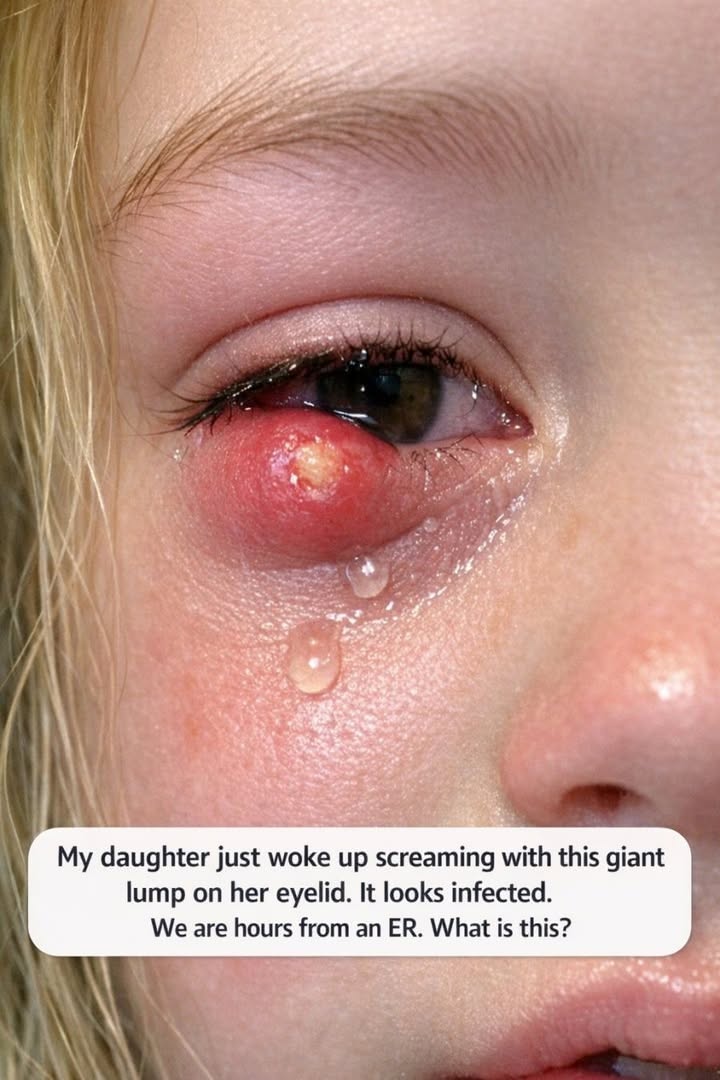
Few things can frighten a parent faster than hearing a child cry out in pain and discovering a large, red lump on the eyelid. My Child Woke Up Screaming With a Giant Eyelid Lump describes a situation that can look dramatic, especially when the swelling seems to appear overnight.
Fortunately, many painful eyelid bumps in children turn out to be relatively minor problems such as a stye. However, not every swollen eyelid is a stye. Infections around the eye can sometimes require prompt medical attention, so parents need to know which symptoms they can safely monitor and which ones should trigger a call to a healthcare professional.
This guide explains the common possibilities, safe first steps, warning signs, and practical ways to keep a child comfortable while arranging medical care.
This information provides general education and does not diagnose an individual child or replace medical care. When symptoms appear severe or rapidly worsen, seek professional medical help rather than relying on home treatment.
I remember one night when a child in our family woke up crying because one eyelid suddenly looked much larger than it had at bedtime. At first, the swelling seemed enormous under the bedroom light, and everyone immediately worried that something serious had happened. We resisted the temptation to press the lump or experiment with random remedies. Instead, we washed our hands, checked for fever and vision problems, and used a comfortably warm clean cloth while arranging professional advice. The experience taught us something valuable: staying observant matters more than guessing. A calm response makes it easier to notice the symptoms that actually determine what should happen next.
Understanding What a Sudden Eyelid Lump Could Mean
A Painful Bump May Be a Stye
A stye, medically called a hordeolum, commonly appears as a tender red bump along the eyelid. It often develops near the base of an eyelash or an eyelid oil gland. Bacteria commonly contribute to the infection.
A typical stye can resemble a small pimple. The surrounding eyelid may also become mildly swollen, and the eye may water. According to pediatric guidance from Seattle Children’s, a stye commonly causes a tender, red lump and mild eyelid swelling.
Because eyelid tissue can swell noticeably, a relatively small problem may look surprisingly large. Therefore, size alone does not always reveal how serious the condition is. Parents should consider the child’s overall condition as well.
For example, check whether your child can open the eye. Ask an older child whether vision looks normal. Notice whether redness stays around one localized bump or spreads across the eyelid and surrounding skin.
A simple stye generally stays localized. Meanwhile, significant redness, severe swelling, fever, vision changes, or a child who appears seriously ill deserves much more attention.
Most importantly, do not squeeze, pierce, or pop the lump. Dermatology guidance recommends warm compresses and specifically warns against squeezing or piercing a stye because doing so can spread infection.
It Might Not Be a Stye
Several conditions can cause eyelid swelling, so appearance alone cannot always provide an answer.
A chalazion, for example, develops when an eyelid oil gland becomes blocked. It may resemble a stye, although it often becomes less painful as it develops. Chalazia commonly improve with conservative care, including warm compresses.
Children can also develop impressive eyelid swelling after an insect bite. Because tissue around the eyes remains loose, a bite on the upper face can produce substantial puffiness, particularly in young children. Allergic swelling tends to itch more than an infection does, while infected eyelid tissue tends to feel painful and tender.
Other possibilities include irritation from rubbing the eye, conjunctivitis, a blocked or infected tear drainage system, an injury, or an infection involving tissue around the eye.
Therefore, avoid assuming that every lump is automatically a stye.
Instead, observe the complete picture: pain, redness, fever, discharge, vision, eye movement, progression, and your child’s general behavior.
What Parents Can Safely Do at Home
Start With Gentle Warm Compresses
If the bump looks like an uncomplicated stye and your child has no concerning symptoms, a warm compress offers a simple first step.
First, wash your hands thoroughly. Next, wet a clean, soft washcloth with comfortably warm water. Test the temperature carefully because children’s skin can burn more easily than an adult expects.
Then place the cloth gently over the closed eyelid. Do not press hard.
The American Academy of Dermatology recommends holding a warm compress against a stye for approximately 10 to 15 minutes, three or four times daily.
Warmth can encourage natural drainage. However, more heat does not mean faster healing. Never apply extremely hot water or heated objects to a child’s eyelid.
Additionally, use a clean cloth for each session when practical. Wash your hands before and afterward.
If discharge collects around the lashes, gently clean the outside of the eyelids rather than aggressively rubbing them.
Most importantly, allow the bump to drain naturally if it opens. Do not force drainage.
Avoid Treatments That Can Make Things Worse
When parents feel frightened, they may understandably want to do something immediately. However, aggressive treatment can turn a manageable problem into a more complicated one.
Never squeeze the lump with your fingers. Likewise, never puncture it with a needle, pin, tweezers, or another object.
Avoid putting household substances, essential oils, herbal preparations, toothpaste, vinegar, or other unapproved remedies into or around the eye. The eye and surrounding tissues remain extremely sensitive, and substances that seem harmless on ordinary skin may cause significant irritation.
Also, do not use leftover prescription eye drops or antibiotic ointments from a previous illness unless a qualified healthcare professional specifically instructs you to use them for the current problem.
Antibiotics do not automatically treat every eyelid lump. A healthcare professional should determine whether the child has an infection that requires prescription treatment.
Finally, encourage your child to avoid rubbing the eye. Keep hands clean, and temporarily avoid sharing towels or washcloths.
These simple precautions protect the irritated area while you continue monitoring symptoms.
Recognizing When Eyelid Swelling Needs Medical Attention
Watch Closely for Warning Signs
A localized stye and a spreading eyelid infection can look similar during the early stages. Therefore, parents should pay attention to changes rather than focusing only on the original bump.
Seek prompt medical evaluation when the eyelid becomes very red or very swollen, especially when the swelling progresses rapidly.
Fever also changes the situation. Seattle Children’s advises urgent medical assessment for severe eyelid swelling accompanied by fever and for a very red, swollen eyelid with fever. Loss of vision or double vision also requires urgent attention.
Parents should also seek urgent help when a child looks or behaves seriously ill.
Additional concerning symptoms include severe or increasing pain, significant difficulty opening the eye, redness spreading beyond a localized bump, or noticeable changes in vision.
If your child can communicate clearly, ask whether objects look blurry or doubled. However, younger children may not describe vision changes reliably. Instead, watch their behavior.
A child who suddenly avoids opening the eye, struggles to see familiar objects, becomes unusually lethargic, or develops rapidly worsening swelling needs professional assessment.
Furthermore, trust observable changes. A lump that looked small several hours ago but now involves much of the eyelid deserves more attention than a stable bump.
Why Spreading Infection Matters
A stye generally involves a localized eyelid gland or follicle. However, bacterial infection can sometimes involve a broader area of eyelid tissue.
Healthcare professionals may use terms such as preseptal or periorbital cellulitis when infection affects tissue around the eye. More serious infection can extend deeper into the eye socket.
Parents do not need to diagnose these conditions themselves. Instead, they need to recognize symptoms that make professional assessment important.
Seattle Children’s identifies periorbital cellulitis as a serious bacterial eyelid infection and notes that affected eyelid tissue can become very red and painful to touch.
Consequently, widespread redness and tenderness should not automatically receive the same home treatment as a tiny localized stye.
Vision changes deserve particular attention because uncomplicated eyelid bumps should not normally interfere with vision itself.
Similarly, a child who appears systemically ill needs assessment regardless of what the eyelid lump resembles.
When medical facilities remain far away, calling a pediatrician, urgent-care service, nurse advice service, or available telehealth provider can help determine the safest next step. However, severe or rapidly progressing symptoms should not wait for a routine appointment.
Helping Your Child While You Monitor the Eyelid
Make the Next Several Hours Easier
Pain and fear can make an eyelid problem feel much worse to a child. Therefore, comfort matters.
Explain simply that the eyelid looks swollen and that you will keep checking it. Avoid repeatedly touching the area because frequent examination can irritate the skin.
Meanwhile, keep the environment calm and well lit when you need to inspect the eye.
You can also take a clear photograph of the eyelid. Then, if the swelling changes several hours later, you can compare its appearance rather than relying entirely on memory. A photograph may also help a healthcare professional understand how quickly the problem has progressed.
Monitor your child’s temperature if illness seems possible. Additionally, note when symptoms started and whether pain, redness, swelling, or discharge increases.
If your child wears contact lenses, remove them and switch to glasses until a healthcare professional confirms that using contacts again is appropriate. Eye infections and contact lenses can create additional concerns.
For discomfort, parents can discuss age-appropriate pain relief with their child’s healthcare professional or pharmacist and follow the product’s dosing directions carefully.
However, comfort measures should never delay medical assessment when warning signs appear.
Reduce the Chance of Another Stye
Children naturally touch their faces frequently, so preventing every stye may prove impossible. Nevertheless, basic hygiene can reduce opportunities for irritation and bacterial transfer.
Encourage regular handwashing, particularly before touching the face. Discourage eye rubbing when possible.
Also, keep washcloths and towels clean. Avoid sharing personal items that contact the eyes.
For older children who use cosmetics, removing eye makeup before sleeping and keeping eye products clean also matters. Good eyelid hygiene can help reduce problems associated with blocked glands.
Recurrent styes deserve a conversation with a healthcare professional. Although occasional styes occur commonly, repeated lumps may justify checking for persistent eyelid inflammation or another contributing condition.
Ultimately, prevention remains simple: clean hands, minimal eye rubbing, clean personal items, and attention to recurring symptoms.
Those habits cannot guarantee that another bump will never appear. However, they provide a sensible foundation for healthier eyelids.
Frequently Asked Questions
Can a stye appear overnight?
Yes. A parent may first notice a stye in the morning even when the eyelid looked normal the previous evening. The bump can become red, tender, and noticeable relatively quickly.
However, sudden swelling does not prove that a child has a stye. Insect bites, irritation, allergies, and infections can also cause rapid eyelid swelling. Therefore, consider the entire symptom pattern.
Should I pop my child’s stye?
No. Do not squeeze, puncture, or deliberately pop a suspected stye.
A warm compress provides a safer approach because it encourages natural drainage without mechanically forcing infected material through surrounding tissue. Dermatologists specifically advise against squeezing or piercing styes.
How long should I use a warm compress?
A common recommendation involves approximately 10 to 15 minutes at a time, several times each day.
Always test the temperature before putting the cloth on a child’s eyelid. The compress should feel comfortably warm, never painfully hot.
Does my child need antibiotics?
Not necessarily. Many uncomplicated styes improve without oral antibiotics.
However, a healthcare professional may recommend medication when the examination suggests a different or more extensive bacterial infection. Because several conditions can resemble one another, avoid using leftover antibiotics or prescription eye medications without medical guidance.
When should eyelid swelling become an emergency concern?
Seek urgent medical help when your child develops significant vision changes, severe swelling with fever, a very red and swollen eyelid with fever, or appears seriously ill.
Rapid progression, severe pain, or other alarming changes also justify prompt professional assessment. If you believe your child may have a life-threatening emergency, contact your local emergency service.
Conclusion
My Child Woke Up Screaming With a Giant Eyelid Lump describes a frightening moment, but a dramatic-looking eyelid does not automatically mean a dangerous condition.
A small, localized, tender bump may represent a common stye. In that situation, clean hands, gentle warm compresses, and avoiding squeezing usually provide sensible first steps while you monitor the child.
However, parents should focus on the whole child rather than the lump alone. Fever, significant or spreading redness, severe swelling, vision changes, worsening pain, rapid progression, or a child who appears seriously ill can signal a problem that needs prompt medical assessment.
When uncertainty remains, contacting a pediatric healthcare professional can provide valuable guidance. When warning signs appear, seek urgent care rather than waiting for the lump to resolve by itself.
Calm observation, gentle care, and timely professional help provide the safest approach when an unexpected eyelid lump appears.