For decades, many people have believed pork is a white meat. After all, advertising campaigns, restaurant menus, and even everyday conversations often place pork alongside chicken and turkey rather than beef and lamb.
So when nutrition experts and health organizations classify pork as red meat, confusion naturally follows.
The truth is that both descriptions exist for different reasons. From a culinary perspective, pork can resemble white meat. From a scientific and nutritional perspective, however, pork is unquestionably red meat.
Understanding the difference helps clear up one of the most common food misconceptions.
The Scientific Answer: Pork Is Red Meat
According to nutrition scientists, government agencies, and major health organizations, pork belongs in the red meat category.
This classification has nothing to do with how the meat looks after cooking.
Instead, it is based on biology.
It Comes from a Mammal
Red meat refers to meat obtained from mammals.
This includes:
- Pork (pig)
- Beef (cow)
- Lamb (sheep)
- Veal (calf)
- Goat
White meat generally comes from poultry such as:
- Chicken
- Turkey
- Duck
Fish and seafood are classified separately.
Because pigs are mammals, pork automatically falls within the red meat category.
The Role of Myoglobin
Another important factor is a protein called myoglobin.
Myoglobin stores oxygen inside muscle tissue and contributes to meat’s color before cooking.
Generally:
- Higher myoglobin = red meat
- Lower myoglobin = white meat
Pork contains significantly more myoglobin than chicken or turkey, which places it firmly within the red meat category.
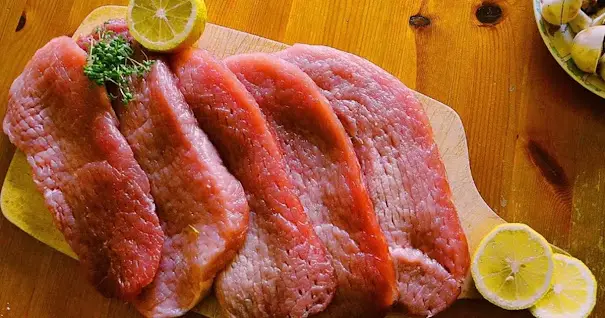
Even though pork often appears pale after cooking, its biological characteristics remain those of red meat.
A Surprising Example
Many people assume light-colored meats must be white meats.
However, veal offers a perfect example of why color alone can be misleading.
Although veal may appear lighter than beef, it still comes from a mammal and contains enough myoglobin to qualify as red meat.
Scientists focus on biology rather than appearance.
Why Pork Looks Like White Meat
This is where much of the confusion begins.
Culinary Classification
Chefs and cooks often classify meat according to appearance, flavor, texture, and cooking characteristics.
Cooked pork tends to:
- Turn pale pink or beige
- Have a mild flavor
- Appear lighter than beef
- Pair with recipes often associated with poultry
Because of these characteristics, many culinary traditions refer to pork as a white meat.
From a kitchen perspective, that description makes sense.
The Famous Marketing Campaign
The confusion grew even stronger after the highly successful advertising campaign launched in 1987.
The slogan:
“Pork. The Other White Meat.”
became one of the most recognizable food marketing campaigns in American history.
The goal was to position pork as a leaner alternative to beef by emphasizing its lighter appearance and versatility.
The campaign worked extremely well.
Decades later, many people still associate pork with white meat because of that marketing message.
Why the Classification Matters for Health
For everyday cooking, calling pork white meat is usually harmless.
However, nutritional classifications become important when discussing health recommendations.
Many medical organizations advise limiting red meat consumption for certain health reasons.
When doctors discuss red meat, they generally include:
- Beef
- Pork
- Lamb
- Veal
- Goat
This means pork counts toward total red meat intake.
Heart Health Considerations
Some pork products contain substantial amounts of:
- Saturated fat
- Sodium
- Cholesterol
Highly processed pork products such as bacon, sausage, and ham often contain even greater amounts.
Excessive consumption of processed meats has been associated with increased risks of cardiovascular disease and other chronic health conditions.
Cancer Research
Organizations including the World Health Organization have reviewed evidence linking high consumption of processed meats to increased colorectal cancer risk.
Processed pork products commonly discussed in these studies include:
- Bacon
- Ham
- Sausage
- Hot dogs
This does not mean eating pork occasionally is dangerous. Instead, experts generally recommend moderation and a balanced diet.
Not All Pork Is the Same
One important point often overlooked is that pork varies tremendously depending on the cut and preparation method.
Lean Pork Options
Some cuts are relatively lean, including:
- Pork tenderloin
- Center-cut pork loin
- Sirloin pork roast
These options can provide high-quality protein while containing less fat than many people assume.
Processed Pork Products
Other pork products are much more heavily processed.
Examples include:
- Bacon
- Breakfast sausage
- Pepperoni
- Salami
- Ham
These foods typically contain higher levels of sodium, preservatives, and saturated fats.
When health experts recommend reducing red meat intake, processed meats often generate the greatest concern.
Red Meat vs. White Meat Comparison
Red Meat
Includes:
- Pork
- Beef
- Lamb
- Veal
- Goat
Characteristics:
- Comes from mammals
- Higher myoglobin content
- Generally richer flavor
White Meat
Includes:
- Chicken
- Turkey
- Most poultry
Characteristics:
- Lower myoglobin content
- Lighter muscle tissue
- Typically leaner appearance
Fish and Seafood
Although often grouped with white meats in casual conversation, fish and seafood form their own nutritional category.
Should You Stop Eating Pork?
Not necessarily.
For many healthy individuals, lean pork can be part of a balanced diet.
Nutrition experts generally focus more on:
- Portion sizes
- Preparation methods
- Overall dietary patterns
- Frequency of consumption
A grilled pork tenderloin served with vegetables differs significantly from heavily processed bacon consumed daily.
Balance remains the key principle.
Final Thoughts
The answer to the question is surprisingly simple:
Scientifically, pork is red meat.
The confusion exists because culinary traditions and decades of advertising often describe pork as white meat based on its appearance and cooking characteristics.
When discussing nutrition, health recommendations, or dietary guidelines, pork belongs firmly in the red meat category alongside beef and lamb.
When discussing cooking styles, flavor profiles, or menu descriptions, people may still casually refer to pork as white meat.
Both perspectives exist—but only one determines how nutrition experts classify it.
So the next time someone asks whether pork is red meat, you’ll know the answer: yes, it is. Even if it doesn’t always look like it on your plate.