In today’s digital world, kids can navigate game controllers, tablets, smartphones, and streaming apps before they can even tie their shoes. They memorize game maps, master complex controls, and spend hours building virtual worlds. Yet somehow, many parents still hear the same excuse when it comes to household chores: “I’m too young.”
The truth is simple: if children are old enough to learn technology, they’re old enough to learn responsibility.
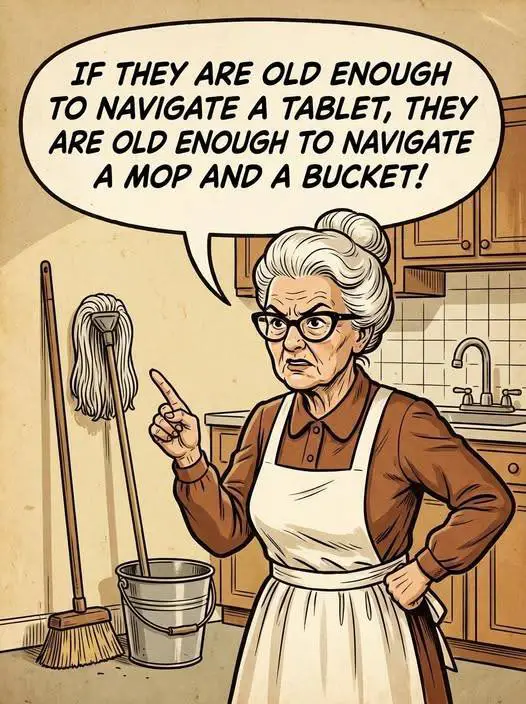
The humorous image of a stern grandmother declaring, “If they are old enough to navigate a tablet, they are old enough to navigate a mop and a bucket!” strikes a chord because it reflects a growing concern in many households. While technology skills are valuable, practical life skills matter just as much.
Why Chores Matter More Than Ever
Modern children are growing up in a world filled with convenience. Meals arrive with a few taps on a screen. Entertainment is available instantly. Smart devices handle many daily tasks automatically.
However, real life still requires effort.
Laundry doesn’t fold itself. Dishes don’t magically disappear from the sink. Floors still need cleaning. Learning these responsibilities early helps children become capable, independent adults.
Research consistently shows that children who participate in household chores develop stronger work habits, better time-management skills, and greater self-confidence. They learn that every member of a family contributes to keeping the home running smoothly.
Most importantly, chores teach a lesson that no video game can fully replicate: actions have real-world results.
The Connection Between Gaming and Responsibility
Many parents underestimate the skills children already possess.
Think about what it takes to play modern games:
- Following instructions
- Solving problems
- Managing resources
- Working toward goals
- Practicing patience
- Learning from mistakes
These are the same skills needed for household tasks.
A child who can spend an hour organizing inventory in a game can learn to organize toys. A teenager who manages an online gaming team can help manage household responsibilities. A child who remembers dozens of game controls can remember how to load a dishwasher.
The issue is rarely ability.
More often, it’s willingness.
Chores Build Life Skills
When children help around the house, they’re learning far more than how to clean.
Responsibility
Completing assigned tasks teaches accountability. Kids learn that people depend on them.
Independence
Children who know how to cook basic meals, clean up after themselves, and manage simple household tasks become more self-sufficient as they grow.
Work Ethic
Regular chores create habits of consistency and effort that often carry into school, sports, and future careers.
Appreciation
Kids who help clean bathrooms, vacuum floors, or wash dishes gain a greater appreciation for the work involved in maintaining a home.
Age-Appropriate Chores for Every Child
Ages 4–6
- Put toys away
- Match socks
- Wipe small spills
- Feed pets
- Help set the table
Ages 7–10
- Sweep floors
- Empty trash bins
- Make their bed
- Load the dishwasher
- Dust furniture
Ages 11–14
- Vacuum rooms
- Clean bathrooms
- Wash dishes
- Help prepare meals
- Fold laundry
Ages 15+
- Cook simple dinners
- Mow the lawn
- Wash family laundry
- Grocery shop with a list
- Manage regular household responsibilities
The goal isn’t perfection. The goal is participation.
Turning Complaints Into Contributions
Many parents face resistance when introducing chores. That’s normal.
Children naturally prefer activities they enjoy over tasks that require effort. However, consistency makes a huge difference.
Some helpful strategies include:
- Create a simple chore chart.
- Set clear expectations.
- Assign age-appropriate tasks.
- Praise effort rather than perfection.
- Make chores a regular part of the daily routine.
Most importantly, avoid doing everything for them.
When adults constantly step in, children miss opportunities to learn valuable life skills.
The Grandparent Perspective
Many people laugh at memes like this because they remember growing up in households where chores were simply part of life.
Previous generations often had responsibilities from an early age. They helped cook meals, cleaned homes, cared for siblings, and contributed to family life.
While times have changed, the need for responsibility hasn’t.
Technology has transformed how children spend their free time, but it hasn’t changed the importance of learning how to care for themselves and their surroundings.
Finding the Right Balance
This isn’t about banning video games or throwing tablets out the window.
Technology offers many benefits. Kids can learn, create, communicate, and develop useful skills through digital platforms.
The key is balance.
Children should have time to play, explore technology, and enjoy entertainment. They should also learn that being part of a family means contributing to the household.
A child can be both a skilled gamer and a responsible helper.
The two aren’t mutually exclusive.
Final Thoughts
The grandmother in the viral image may sound tough, but her message contains a simple truth. If children are capable of mastering game controllers, navigating tablets, and learning new apps, they are certainly capable of helping around the house.
Responsibility isn’t punishment. It’s preparation.
Today’s small tasks become tomorrow’s life skills.
So the next time a child says they’re too young to help, remember:
If they can handle a controller, they can handle a kitchen sponge.
And if they can conquer a virtual world, they can probably take out the trash too.
More Craft Innovations
- I Found a Strange Growth on My Garage Wall—What It Revealed About Hidden Moisture
- After a Decade Together, She Discovered the True Value of Her Contributions
- My Daughter Disappeared After Prom Night—Almost a Year Later, an Ordinary Beanbag Chair Revealed the Truth
- Stop Your Bed Sheets From Balling Up in the Dryer: Simple Tricks That Actually Work