I almost walked past it.
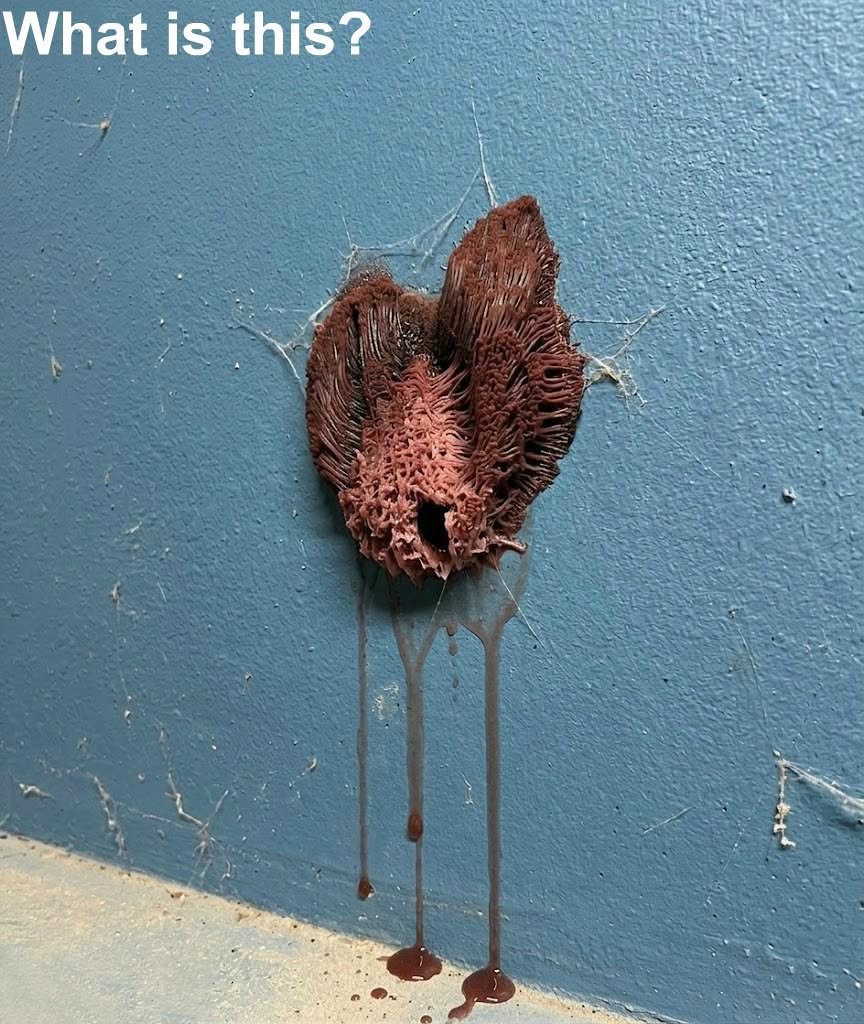
One evening, I stepped into the garage to put away a few things and noticed an unusual patch on the wall. At first, it looked like an ordinary stain—the sort of mark that appears gradually in a space where boxes, tools, and seasonal items tend to hide parts of the walls for months.
Then I looked again.
The surface did not appear completely flat. Some areas looked raised and uneven, while the color seemed darker near the center. When I moved closer, I noticed a faint earthy smell that had never caught my attention before.
Suddenly, the mark felt far less ordinary.
My imagination immediately supplied dramatic explanations, but the actual lesson proved much more practical. What appeared to be a mysterious growth was a warning sign of something homeowners encounter far more often: moisture and possible mold growth.
Mold does not appear because a house is inherently dirty. It grows when spores encounter enough moisture and a suitable material to live on. The EPA emphasizes that moisture control remains the key to controlling indoor mold. If mold appears, simply wiping away the visible patch without correcting the moisture source often allows the problem to return.
Why Mold Can Suddenly Appear on a Garage Wall
Moisture often hides long before mold becomes visible
The most important question after discovering possible mold is not simply, “How do I clean this?”
A better question is, “Where is the moisture coming from?”
Indoor mold requires moisture. Consequently, visible growth often acts as a symptom of another problem rather than the entire problem itself.
In a garage, moisture can enter or accumulate in several ways. Rainwater may seep through damaged exterior materials. Plumbing can leak inside or behind a wall. A roof problem may allow water to travel downward before the stain finally appears. Meanwhile, condensation can develop when warm, humid air meets colder walls, pipes, or concrete surfaces.
Even something as simple as repeatedly bringing a wet vehicle into a poorly ventilated garage can add moisture to the air.
Cardboard boxes, drywall paper, wood, dust, insulation, and other organic materials provide surfaces on which mold may grow when they remain damp.
That explains why a patch can seem to appear suddenly.
The moisture problem may have existed for days or weeks before the growth became noticeable.
EPA guidance recommends drying wet materials and areas within approximately 24 to 48 hours whenever possible because prompt drying makes mold growth less likely.
In other words, the visible patch may be the house finally revealing a problem that began somewhere else.
The smell can provide an important clue
Sometimes people smell a moisture problem before they see it.
A musty or earthy odor can accompany damp materials and fungal growth. However, smell alone cannot identify a mold species or reveal exactly where it is growing.
The odor may come from behind drywall, beneath flooring, inside cabinets, around insulation, or in another concealed location.
If a garage repeatedly smells musty even after cleaning, inspect areas where water could enter.
Look around:
- Exterior walls
- Windows
- Door frames
- Roof penetrations
- Plumbing lines
- Water heaters
- Washing-machine connections
- Floor-wall joints
- Stored cardboard
- Damp wood
- Areas behind shelving
Do not begin tearing open walls simply because you notice an odor. Electrical wiring, plumbing, insulation, and other hazards may sit behind them.
When the moisture source remains unclear or the affected area appears extensive, a qualified building or remediation professional may provide a safer assessment.
What to Do When You Find Possible Mold
Start by identifying and stopping the water source
People naturally focus on the visible mold because it looks unpleasant.
However, cleaning accomplishes little if water continues entering the same location.
The EPA states the principle simply: clean up the mold and eliminate the source of moisture.
Therefore, before repainting the wall or covering the patch, investigate why the material became damp.
Check for active dripping. Look for discoloration extending upward toward the ceiling or downward toward the floor. Examine the opposite side of the wall when accessible.
Also consider recent weather.
Did the stain appear after heavy rain?
Has a nearby pipe leaked?
Does condensation form on that wall during humid weather?
Is the garage poorly ventilated?
Finding the source can save considerable frustration later.
Painting directly over active mold or wet material may temporarily hide the discoloration while allowing the underlying moisture problem to continue.
A fresh coat of paint cannot repair a roof leak.
Decide whether the material can actually be cleaned
The appropriate response depends heavily on what the mold is growing on.
Hard, nonporous surfaces can often be cleaned. The EPA recommends scrubbing mold from hard surfaces with detergent and water and then drying the surface thoroughly.
Porous materials create a more difficult problem.
Mold can penetrate materials such as:
- Ceiling tiles
- Some insulation
- Carpet
- Certain wallboard
- Upholstery
- Heavily affected wood products
When porous materials become extensively moldy, complete cleaning may prove difficult or impossible. Some items may need removal and replacement.
That distinction matters in a garage.
A small patch on painted masonry may require a very different response from mold spreading through softened drywall.
If the wall material crumbles, bulges, remains wet, or has sustained substantial water damage, repairing the damaged material and the moisture source becomes more important than simply wiping its surface.
Cleaning Mold Safely Without Making the Problem Worse
Protect yourself during cleanup
Cleaning mold can release spores and fragments into the air.
For larger cleanup situations, especially following significant water damage, CDC guidance recommends protective equipment such as gloves, eye protection, protective clothing, and at least an N95 respirator.
People with asthma, severe allergies, weakened immune systems, chronic lung disease, or other medical vulnerabilities may need to avoid mold cleanup and ask someone else to perform the work.
Keep children and pets away from the affected area during cleaning.
Ventilation can also matter, depending on the cleaning product and situation.
If you use any household cleaner, follow its label exactly.
Most importantly, never mix bleach with ammonia or other household cleaners. Dangerous gases can form. CDC specifically warns against combining bleach with ammonia or another cleanser.
More chemical does not mean more effective cleaning.
Bleach is not the only option
Many people automatically reach for bleach when they see mold.
CDC guidance states that household products, soap and water, or an appropriately diluted bleach solution may be used on suitable surfaces. If bleach is used, CDC says not to exceed one cup of household laundry bleach per gallon of water.
Meanwhile, EPA guidance emphasizes physically cleaning mold from hard surfaces with detergent and water and drying them completely.
The important idea is removal and moisture control—not simply changing the color of the stain.
After cleaning, the surface needs to dry.
If it immediately becomes damp again, the underlying problem remains unresolved.
When the Problem Is Bigger Than a Small Wall Patch
Extensive water damage may require professional remediation
A small isolated patch on a washable surface may be manageable for many homeowners.
A garage wall covered extensively with growth presents a different situation.
EPA guidance notes that professional assistance may be appropriate when there has been substantial water damage or when mold covers a large area.
Professional help may also make sense when:
- Mold repeatedly returns after cleaning.
- The wall remains wet.
- Sewage contaminated the area.
- Growth extends inside wall cavities.
- HVAC equipment may be affected.
- Structural materials have deteriorated.
- The moisture source cannot be found.
- Someone in the household has significant respiratory or immune-system concerns.
A remediation professional should address both contamination and moisture.
Simply spraying a chemical and leaving damp materials in place does not solve the underlying problem.
You usually do not need to identify the species first
One of the first questions people ask is, “What kind of mold is it?”
That sounds logical, but determining the species often does not change the immediate response.
CDC guidance states that if you see or smell mold, you should remove it and correct the moisture problem; you do not need to know the type before taking action.
Similarly, NIOSH does not recommend routine air sampling for mold during building air-quality evaluations because no health-based indoor air standards exist for mold and short sampling periods may not represent actual exposure accurately.
This means expensive testing is not automatically the first step every time someone notices visible growth.
If you can see mold and find moisture, the essential actions remain clear:
Stop the moisture.
Remove the affected material appropriately.
Dry the area.
Prevent recurrence.
Specialized testing may still have uses in unusual situations, disputes, occupational investigations, or cases directed by professionals. However, a homeowner does not generally need a laboratory species name before addressing an obvious damp, moldy wall.
What Mold Can Mean for Health
People respond differently to mold exposure
Mold exposure does not affect everyone in exactly the same way.
Some people may experience irritation or allergy-related symptoms around damp or moldy environments. Others notice little or nothing.
People with asthma or certain respiratory conditions can be more sensitive.
This variability can lead to two opposite mistakes.
One person may treat every small patch as an immediate medical catastrophe. Another may ignore extensive dampness because nobody in the family currently feels ill.
Neither response addresses the building problem effectively.
Indoor mold signals unwanted moisture even when nobody develops symptoms.
The sensible response is to correct the moisture and remove the growth.
If someone develops persistent breathing problems, significant wheezing, or other concerning symptoms that seem associated with a damp environment, a healthcare professional can evaluate the medical side while the building problem receives separate attention.
Do not diagnose illness from wall color
Black, green, white, orange, brown, and gray fungal growths can all appear indoors.
Color alone does not determine how hazardous a mold is.
Therefore, avoid assuming that every dark patch represents a uniquely dangerous “toxic black mold,” just as you should avoid assuming that a pale mold is harmless.
Visual appearance cannot substitute for appropriate building assessment or medical evaluation.
The practical response to indoor mold remains remarkably consistent regardless of dramatic color:
Remove the growth appropriately and control the moisture that allowed it to grow.
Preventing Mold From Returning
Control moisture instead of repeatedly cleaning
Recurring mold provides a clue.
If you clean the same spot every few weeks and it keeps coming back, the problem probably does not involve inadequate scrubbing.
Something is keeping the location damp.
Inspect the building envelope, plumbing, ventilation, and humidity conditions.
EPA guidance emphasizes that eliminating all mold spores from indoor environments is virtually impossible. Instead, controlling moisture controls indoor mold growth.
That idea simplifies prevention considerably.
You do not need to create a sterile garage.
You need to keep building materials reasonably dry.
Give damp materials a chance to dry
Good airflow can help.
Avoid packing cardboard boxes tightly against a wall that frequently feels cold or damp. Leave enough space for inspection and air movement where practical.
Repair plumbing and roof leaks promptly.
Dry spills rather than allowing water to sit.
Investigate repeated condensation.
After storms, inspect vulnerable garage areas rather than assuming everything stayed dry.
If water enters the building, start drying affected materials as soon as possible. EPA guidance repeatedly highlights the 24-to-48-hour period as important for limiting mold development.
Rethink cardboard storage
Cardboard offers convenience, but garages can be humid places.
Boxes may absorb moisture from leaks, damp concrete, condensation, or humid air. Once damp, they can become difficult to salvage.
Where recurring moisture is a concern, sealed plastic storage bins may protect belongings better than cardboard.
Keep important papers, photographs, fabric, and sentimental items away from areas that have previously shown water damage.
The goal is not only to prevent mold on the wall.
It is also to protect everything stored around it.
Frequently Asked Questions
Why did mold suddenly appear on my garage wall?
Mold can become visible when moisture accumulates from leaks, condensation, humidity, or water intrusion. The underlying dampness may have existed before you noticed the growth.
Can I simply paint over mold?
Painting without removing mold and fixing the moisture source does not solve the underlying problem. Clean or remove affected material appropriately, correct the water issue, and let the surface dry before refinishing it.
Should I use bleach?
CDC states that soap and water, household products, or appropriately diluted bleach can be used in suitable situations. If bleach is used, follow the label, ventilate appropriately, and never mix it with ammonia or other cleaners.
Do I need a mold test?
Usually not when mold is already visible. CDC says you do not need to identify the mold type before cleaning it and fixing the moisture source, while NIOSH does not recommend routine mold air sampling for building evaluations.
Can moldy drywall be cleaned?
Small surface contamination may sometimes be manageable depending on the condition, but porous material that has become significantly moldy or water-damaged may need replacement because mold can penetrate its structure.
Why does mold keep coming back after I clean it?
Recurring growth usually means moisture remains. Look for leaks, condensation, high humidity, or another source of dampness rather than repeatedly treating only the visible surface.
When should I call a professional?
Consider professional help for extensive growth, major water damage, sewage exposure, hidden contamination, recurring mold, structural damage, HVAC involvement, or situations involving medically vulnerable occupants.
Conclusion
The strange patch on the garage wall initially felt mysterious because I did not understand what I was seeing.
Once I looked past the dramatic appearance, however, the real lesson became much simpler.
The wall was giving me information.
Something had remained damp long enough for fungal growth to develop.
Cleaning the visible patch mattered, but finding and correcting that moisture mattered even more.
That is the most important principle to remember when mold appears inside a home. The EPA puts moisture control at the center of mold prevention because mold cannot continue growing indoors without the conditions that support it.
So when an unfamiliar patch appears in the garage, basement, bathroom, or another part of the house, do not simply ignore it—and do not immediately assume the worst.
Look for water.
Check the surrounding material.
Protect yourself during cleanup.
Remove damaged porous material when necessary.
Dry the area thoroughly.
And fix whatever allowed the moisture to collect in the first place.
Sometimes a strange mark on the wall is not a mysterious threat at all.
It is the house quietly telling you where to look.
More Craft Innovations
- After a Decade Together, She Discovered the True Value of Her Contributions
- My Daughter Disappeared After Prom Night—Almost a Year Later, an Ordinary Beanbag Chair Revealed the Truth
- Stop Your Bed Sheets From Balling Up in the Dryer: Simple Tricks That Actually Work
- Woman Injured While Trying to Separate Fighting Water Buffaloes: A Powerful Reminder About Livestock Safety