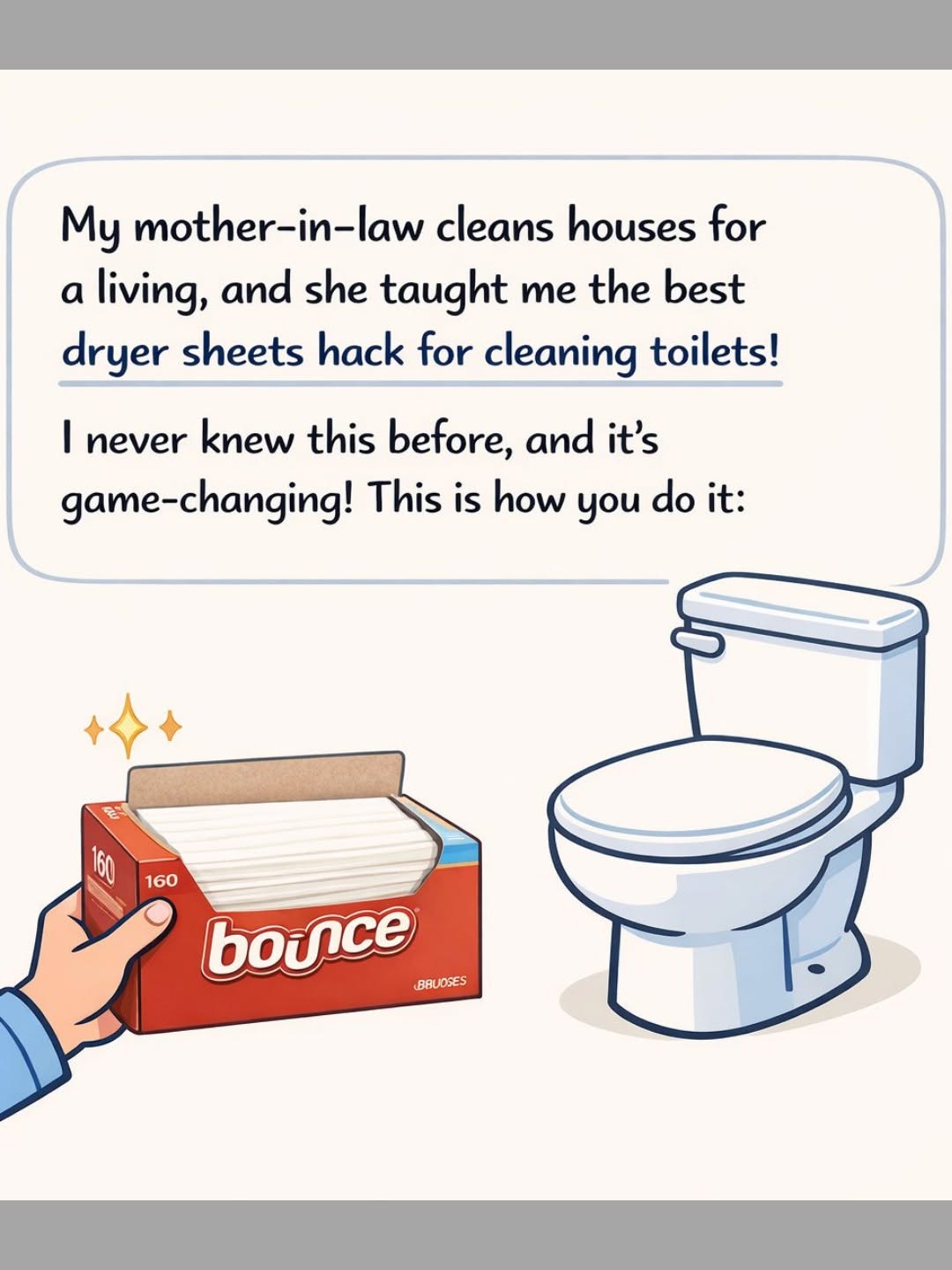
I Used a Dryer Sheet to Clean My Toilet after I ran out of my usual bathroom-cleaning supplies, and the result surprised me. The sheet picked up loose dust, hair, and light surface grime faster than I expected. However, it did not magically turn into a toilet disinfectant, and that distinction matters.
Dryer sheets contain ingredients designed to soften laundry, reduce static, and leave fragrance behind. For example, one major manufacturer’s ingredient list includes a polyester sheet substrate, a cationic softener, fatty-acid softening agents, and fragrance. The manufacturer markets the product for laundry rather than bathroom sanitation.
So, can a dryer sheet help you clean a toilet in a pinch? For certain exterior surfaces and light grime, it can work surprisingly well. Still, you should know where the trick stops being useful, when you need an actual cleaner or disinfectant, and why you should never flush the sheet afterward.
Last Tuesday, I had one of those cleaning emergencies that seems to happen only when company is already on the way. I checked under the bathroom sink and found almost nothing useful. Then I spotted a used dryer sheet stuck to a shirt near the laundry basket. I remembered seeing people use dryer sheets for household dusting, so I tried it on the outside of the toilet. The sheet grabbed hair and dusty residue around the tank and base almost immediately. I kept going, then followed with proper cleaning where hygiene mattered most. The biggest surprise was not that the sheet worked. It was discovering exactly what it worked well for.
Why I Used a Dryer Sheet to Clean My Toilet
The Texture Makes It Useful for Light Surface Grime
When I Used a Dryer Sheet to Clean My Toilet, I first tested it on the easiest areas: the tank lid, the top of the tank, the outside of the bowl, and the base.
Those areas often collect a frustrating combination of dust, hair, lint, and light residue. A damp paper towel can move that debris around rather than trapping it. Meanwhile, a dry cloth sometimes struggles with hair because static makes strands cling stubbornly to porcelain and nearby surfaces.
The dryer sheet handled those little messes better than I expected.
That result makes practical sense. Manufacturers design dryer sheets to reduce static and transfer softening ingredients during a dryer cycle. Downy, for example, identifies its sheet material as polyester and lists cationic softener and fatty-acid softening agents among the ingredients.
However, I would not describe a dryer sheet as a purpose-made bathroom cleaner. The manufacturer instructs consumers to use the product in a clothes dryer and discard the sheet after use.
Still, the sheet’s slightly textured surface can physically collect loose debris. Therefore, if you need to remove visible dust or hair from the outside of a toilet quickly, a used dryer sheet may work as an improvised wiping material.
I Used a Dryer Sheet to Clean My Toilet because I needed something immediately available, not because dryer sheets outperform products designed specifically for bathroom cleaning.
That difference became increasingly obvious as I moved closer to the seat, rim, and other high-touch areas.
It Cleaned, but It Did Not Disinfect
The biggest lesson from the experiment involved the difference between cleaning and disinfecting.
I Used a Dryer Sheet to Clean My Toilet, and the surface looked cleaner afterward. However, appearance alone cannot tell you whether you have reduced germs to the level a disinfectant can achieve.
The EPA draws a clear distinction. Cleaning removes dirt and impurities from surfaces, while disinfecting requires an appropriate antimicrobial product used according to its label directions.
Furthermore, EPA-registered disinfectants require specific application instructions. Depending on the product, the surface may need to remain visibly wet for a stated contact time.
A dryer sheet does not automatically provide that function.
Therefore, I would use the dryer-sheet trick only for light physical cleanup on suitable exterior surfaces. For areas that people frequently touch, including the flush handle and toilet seat, I would follow with an appropriate bathroom cleaner or disinfectant when needed.
That approach also prevents an easy misunderstanding.
Something can look sparkling clean without receiving meaningful disinfection.
Conversely, many everyday surfaces do not require aggressive disinfectant every time you wipe them. EPA guidance notes that routine cleaning often handles general-purpose surface care, while disinfectants make the most sense on higher-touch or contamination-prone surfaces, including bathroom fixtures.
So, when I Used a Dryer Sheet to Clean My Toilet, the experiment worked best as a quick first pass rather than a complete sanitation routine.
How I Used a Dryer Sheet to Clean My Toilet Safely
I Started With the Tank, Lid, and Exterior
I Used a Dryer Sheet to Clean My Toilet by beginning at the cleanest-looking surfaces and working downward.
First, I wiped the tank lid.
The sheet picked up a thin layer of dust almost immediately. Then I moved along the front and sides of the tank, where lint and tiny hairs had collected.
Next, I wiped the closed toilet lid.
At this point, I still treated the dryer sheet as a dusting tool rather than a disinfecting product. Therefore, I planned to follow high-touch areas with my regular bathroom-cleaning method afterward.
Then I moved to the exterior sides of the bowl.
I found the trick particularly useful near the lower edges and around the base, where dust and hair seem to hide no matter how often the bathroom gets cleaned.
The used sheet worked well enough that I did not need to wet it.
However, results can vary by dryer-sheet brand, toilet finish, and the type of soil present. In addition, dryer sheets can leave conditioning ingredients behind because manufacturers design them to transfer softening agents to fabrics.
For that reason, I would avoid treating a dryer sheet as a universal cleaner for every bathroom material.
If residue appears, wipe the surface afterward with a damp cloth compatible with the toilet manufacturer’s care instructions.
I also would not aggressively scrub decorative finishes, specialty toilet seats, electronic bidet components, painted surfaces, or sensitive plastics without checking their care instructions first.
I Used a Dryer Sheet to Clean My Toilet as a quick experiment on ordinary exterior surfaces. I did not treat it as permission to scrub every bathroom fixture with the same sheet.
I Kept the Sheet Out of the Bowl
This part matters more than the cleaning trick itself: do not flush the dryer sheet.
The manufacturer instructs users to discard a used dryer sheet after the drying cycle. A dryer sheet uses a polyester substrate, so it does not behave like ordinary toilet paper in water.
Therefore, when I Used a Dryer Sheet to Clean My Toilet, I kept the sheet away from the toilet water and placed it directly in the trash afterward.
I also avoided pushing the sheet into the rim openings or any narrow spaces where I could accidentally lose it.
That simple rule makes the hack much safer:
Use it as a disposable exterior wipe, not as something you clean inside the bowl and flush away.
For the inside of the bowl, use a product and tool intended for toilet cleaning. Follow the product label and the toilet manufacturer’s care guidance.
I also avoided mixing household chemicals during the experiment.
That remains a smart rule whenever you clean a bathroom. Do not combine cleaners unless their labels specifically direct you to do so. Instead, choose one suitable product and follow its instructions.
After I finished with the dryer sheet, I washed my hands thoroughly.
If you prefer, you can also wear household cleaning gloves, particularly when cleaning around the seat, hinges, rim, and base.
Ultimately, I Used a Dryer Sheet to Clean My Toilet because it offered a convenient way to collect light debris. I kept the experiment simple and avoided turning an improvised dusting trick into a plumbing or chemical problem.
What Worked and What Did Not
Dust and Hair Came Off Surprisingly Easily
The most impressive result appeared on dry, dusty areas.
I Used a Dryer Sheet to Clean My Toilet and found that it picked up hair around the base faster than my usual dry paper towel.
It also handled dusty buildup along the back of the tank and around the lower porcelain.
For a two-minute emergency cleanup, that benefit felt genuinely useful.
The sheet also produced very little loose lint of its own, which made the finished surface look tidy.
However, I noticed limits almost immediately.
The dryer sheet did not perform like a strong cleaner against heavier bathroom soil. It did not replace the mechanical cleaning power of a toilet brush inside the bowl. Likewise, it did not replace a product designed to remove mineral deposits or stubborn staining.
I would also avoid claiming that the sheet “repels grime” for long periods without evidence. Dryer-sheet formulas differ, and any residue left on a hard surface might behave differently from the same ingredients on laundry.
Instead, the reliable observation remains straightforward: the physical sheet can make a handy disposable wipe for light dust, lint, and hair.
That alone makes the trick useful.
When I Used a Dryer Sheet to Clean My Toilet, I also preferred a used sheet over a brand-new one for dry dusting. A used sheet had already released some of its conditioning material in the dryer, so it felt less coated in my hand.
However, that preference comes from practical experience rather than a universal cleaning rule.
If you try the method, inspect the surface afterward. If you notice a slippery or waxy-feeling residue, wipe it away with a clean damp cloth and use an appropriate cleaner as needed.
It Could Not Replace Proper Bathroom Cleaning
I Used a Dryer Sheet to Clean My Toilet, but I would never make dryer sheets my only bathroom-cleaning supply.
A toilet contains several different cleaning challenges.
Dust collects on the tank.
Hair gathers near the floor.
Hands touch the flush lever or button.
People contact the seat.
Meanwhile, the interior bowl deals with completely different soils and microorganisms.
One sheet cannot address every one of those jobs simply because it removes visible dust.
EPA guidance specifically identifies bathroom fixtures among surfaces where targeted disinfectant use can make sense. In addition, EPA explains that disinfectants must follow label requirements, including appropriate wet contact times when specified.
Therefore, I followed my dryer-sheet experiment with appropriate cleaning of the high-touch areas.
That gave me the best of both approaches.
The sheet removed loose debris quickly. Then my normal cleaning process handled the hygiene-related work.
I Used a Dryer Sheet to Clean My Toilet and discovered a shortcut, not a replacement for sanitation.
That distinction matters especially when someone in the household has been ill, when the toilet has visible contamination, or when you need actual disinfection.
In those situations, skip improvised shortcuts for the critical areas and use a suitable product exactly as its label directs.
For an ordinary rushed cleanup before guests arrive, however, a dryer sheet can still help you make the exterior look better quickly.
Better Ways to Use the Dryer-Sheet Trick
Save Used Sheets for Quick Dry Dusting
I Used a Dryer Sheet to Clean My Toilet once out of desperation, but now I understand where the idea fits into a normal cleaning routine.
Instead of throwing every dryer sheet away immediately after laundry, you could temporarily save a clean-looking used sheet for a same-day dusting task, provided you handle and dispose of it appropriately afterward.
Manufacturers themselves promote some non-laundry uses for dryer sheets, including freshening drawers, although the main intended purpose remains laundry care.
For toilet cleaning, I would keep the method focused on dry exterior areas.
Use one sheet to pick up loose hair around the base.
Wipe dust from the tank.
Catch lint that accumulates behind the lid.
Then throw the sheet in the trash.
Do not move the same dirty sheet from the toilet to your sink, countertop, or another frequently touched surface.
Bathroom cleaning tools can transfer contamination from one area to another. Research summarized by EPA has noted that cleaning activities can spread bathroom microorganisms when tools move between surfaces.
Therefore, once I Used a Dryer Sheet to Clean My Toilet, that sheet’s next destination became the trash.
You can also work from cleaner areas toward dirtier ones. Start at the tank, move to the exterior bowl, and finish near the floor.
Afterward, wash your hands.
This approach keeps the trick convenient without treating one disposable sheet as an all-purpose bathroom rag.
Follow With the Right Cleaner When Necessary
The dryer sheet worked because I had a very specific problem: visible dust and hair on the outside of the toilet.
If I had found a significant stain, visible contamination, or a hygiene concern, I would have chosen a different tool.
I Used a Dryer Sheet to Clean My Toilet successfully because I matched the tool to a light cleaning task.
That principle improves almost every household-cleaning shortcut.
Start by asking what you actually need to remove.
For loose dust, you need physical pickup.
For ordinary grime, you may need soap or a general-purpose cleaner.
For mineral deposits, you need a product compatible with the surface and intended for that type of buildup.
For disinfection, you need an appropriate disinfectant used according to its label. EPA emphasizes that registered disinfectants must meet label instructions and stay wet for their specified contact time.
Therefore, the dryer-sheet trick belongs near the beginning of a cleaning routine, not necessarily at the end.
Think of it as a quick dry wipe.
Afterward, decide whether the surface needs anything else.
That approach also prevents unnecessary chemical use. EPA notes that many low-touch general surfaces need ordinary cleaning rather than routine disinfection, although bathrooms contain higher-touch areas where targeted disinfection can make sense.
So, I Used a Dryer Sheet to Clean My Toilet and discovered something more useful than a viral hack.
I discovered that a cleaning shortcut works best when you understand exactly what it can and cannot accomplish.
Frequently Asked Questions
Can you really clean a toilet with a dryer sheet?
Yes, you can use a dryer sheet to wipe light dust, loose hair, lint, and minor surface grime from parts of a toilet’s exterior. I Used a Dryer Sheet to Clean My Toilet for exactly those jobs, and it worked surprisingly well. However, a dryer sheet does not replace appropriate toilet cleaner or disinfectant when you need deeper cleaning or germ reduction.
Do dryer sheets disinfect a toilet?
Do not assume they do. Dryer sheets serve primarily as laundry products that soften fabrics and reduce static. For example, manufacturer ingredient information identifies softening agents and a polyester substrate rather than positioning the sheet as an EPA-registered bathroom disinfectant. Use an appropriate disinfectant according to its label when you need disinfection.
Can I use a used dryer sheet instead of a new one?
For simple dry dusting, a used dryer sheet may work well. In fact, I Used a Dryer Sheet to Clean My Toilet after it had already gone through a dryer cycle. I liked it for collecting dust and hair without using a fresh sheet solely for cleaning. Still, discard it after using it around the toilet.
Can I flush a dryer sheet down the toilet?
No. Keep dryer sheets out of the toilet bowl and throw them in the trash. Manufacturer information describes the sheet substrate as polyester and instructs consumers to discard used sheets after use. Do not treat a dryer sheet like toilet paper.
Will a dryer sheet remove hard-water stains from a toilet?
A dryer sheet may provide mild physical wiping action, but do not rely on it for stubborn mineral deposits. If you have hard-water staining, use a cleaning method that your toilet manufacturer recommends for the surface and type of buildup. When I Used a Dryer Sheet to Clean My Toilet, it performed best against loose surface debris rather than heavy deposits.
Conclusion
I Used a Dryer Sheet to Clean My Toilet because I had guests coming, almost no cleaning supplies, and a used sheet sitting within reach.
To my surprise, it worked.
However, it worked for a much narrower reason than many household-hack claims suggest.
The dryer sheet picked up dry dust, loose hair, lint, and light surface grime from the exterior of the toilet. Its textured polyester sheet made a convenient disposable wiping material, while the product’s intended laundry function explains why it already contains fabric-softening ingredients.
Still, I would not call it a disinfectant.
Cleaning and disinfecting perform different jobs, and EPA guidance makes that distinction clear. When a toilet needs genuine disinfection, use an appropriate product according to its directions.
I would also never flush the sheet.
Throw it in the trash after cleaning, and avoid reusing the same sheet on other household surfaces.
So, would I do it again?
Yes, but only for the right situation.
If I needed to remove hair and dust from the outside of the toilet quickly, I would happily grab a used dryer sheet.
If I needed to sanitize high-touch areas, tackle stains, or clean the bowl properly, I would reach for the appropriate bathroom-cleaning product instead.
I Used a Dryer Sheet to Clean My Toilet and learned that the best household hacks do not need to replace everything in your cleaning cabinet.
Sometimes, they just need to solve one small problem surprisingly well.