An Unexpected Discovery Beside My Bed
After a long, exhausting day, all I wanted was a quiet evening at home. I dropped my bag by the door, changed into comfortable clothes, and headed toward my bedroom.
That’s when something caught my eye.
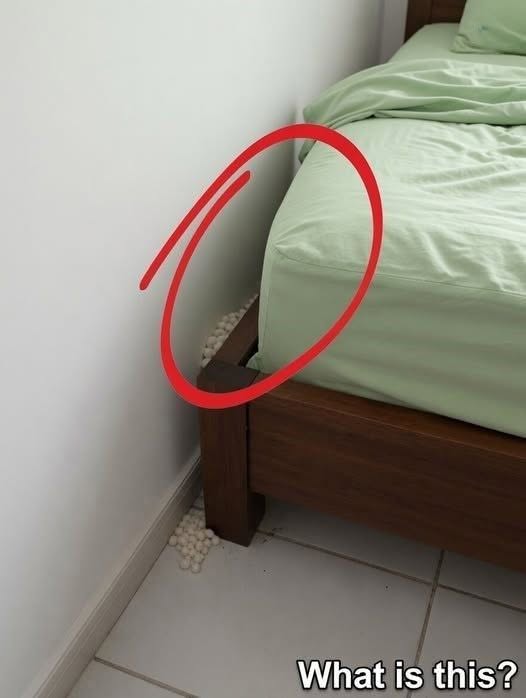
Near the leg of my bed frame sat two small white objects. They were oval-shaped, about the size of large grapes, and looked oddly out of place against the floor.
At first, I thought they might be pieces of candy or decorative beads that had somehow rolled under the bed. But as I knelt down for a closer look, I realized they were neither.
The objects were smooth, pale white, and slightly leathery. They weren’t hard like bird eggs, yet they weren’t soft either.
My curiosity quickly turned into concern.
I called my husband into the room.
“Can you tell me what these are?” I asked.
He stared at them for a moment.
“They look like eggs.”
That answer only created more questions.
The Mystery Solved
Unsure what we were looking at, we contacted a neighbor who teaches biology.
She took one glance and smiled.
“Those are lizard eggs,” she said. “Most likely from a house gecko.”
Relief washed over me.
We had occasionally seen tiny geckos around the house. They would dart across walls or disappear behind furniture before we could get a good look at them. We always assumed they were simply passing through.
Apparently, one had decided our bedroom was the perfect nursery.
Why Lizards Lay Eggs Indoors
Many small lizards look for protected locations where temperature and humidity remain stable.
Common nesting spots include:
- Behind furniture
- Inside storage areas
- Beneath appliances
- Along baseboards
- Inside garages and sheds
The narrow space between our bed frame and the wall provided warmth, protection, and minimal disturbance—ideal conditions for developing eggs.
From the gecko’s perspective, it was the perfect place to start a family.
What Should You Do If You Find Lizard Eggs?
If you discover eggs that appear to belong to a lizard, experts generally recommend caution.
1. Identify Them First
Most gecko and small lizard eggs are:
- White or cream-colored
- Oval-shaped
- Slightly flexible
- Usually found in pairs or small clusters
If you’re uncertain, contact a local wildlife expert or reptile specialist.
2. Avoid Rotating the Eggs
Developing reptile embryos can be sensitive to movement.
If an egg must be relocated, mark the top with a pencil before moving it so the original orientation remains unchanged.
3. Leave Them Alone When Possible
If the eggs aren’t in danger from pets, children, or household activity, leaving them undisturbed is often the safest option.
4. Be Patient
Depending on the species and environmental conditions, hatching can take anywhere from several weeks to a few months.
The Surprise Hatchlings
We decided to leave the eggs where they were.
To avoid disturbing them, we placed a small barrier around the area and checked occasionally.
Weeks passed.
Nothing happened.
Eventually, I stopped thinking about them altogether.
Then one Saturday morning, my husband called me into the bedroom.
“You need to see this.”
There, beside two empty eggshells, sat two tiny geckos.
They were no larger than my little finger. Their bodies were dark and delicate, and their eyes seemed enormous compared to their tiny heads.
Within seconds, they disappeared beneath the furniture.
We never saw them again.
But every time I notice a gecko on a wall or ceiling, I wonder whether it’s one of those hatchlings all grown up.
What This Experience Taught Me
The discovery reminded me that our homes are not as isolated from nature as we sometimes think.
Birds build nests nearby.
Spiders spin webs in corners.
Insects find their way through tiny openings.
And occasionally, a gecko decides your bedroom is the perfect place to raise its young.
What began as a strange and slightly unsettling discovery became a small lesson in coexistence.
Sometimes the most memorable moments arrive unexpectedly—hidden beside a bed frame, waiting quietly to be noticed.
Frequently Asked Questions
How can I identify lizard eggs?
Most lizard eggs are small, white, oval, and slightly leathery rather than hard like bird eggs.
Are lizard eggs dangerous?
No. Lizard eggs are harmless to people and pets.
Will the mother return?
Most small lizards do not provide parental care after laying eggs and typically do not return.
How long do they take to hatch?
Many species hatch within 30–90 days, although timing varies based on temperature and species.
Should I keep baby lizards as pets?
Wild reptiles generally do best in their natural environment and should be left alone whenever possible.
Final Thoughts
Finding mysterious objects in your home can be alarming, especially when you don’t know what they are.
In our case, the mystery turned out to be something surprisingly beautiful: two tiny lives quietly beginning their journey.
What started as an ordinary evening became a reminder that nature often exists much closer to us than we realize.
And sometimes, all it takes is looking down beside the bed to discover it.
More Home Remedies
- Wrinkled Fingers After Water Exposure: What Your Skin May Be Telling You
- Skin Rash With Breathing Trouble? It Could Be a Life-Threatening Allergic Reaction
- I Thought It Was a Piece of Trash on the Bathroom Floor—Until It Moved
- If You Are Getting White Pimples on Your Lips or Intimate Area, Here’s What They Could Mean