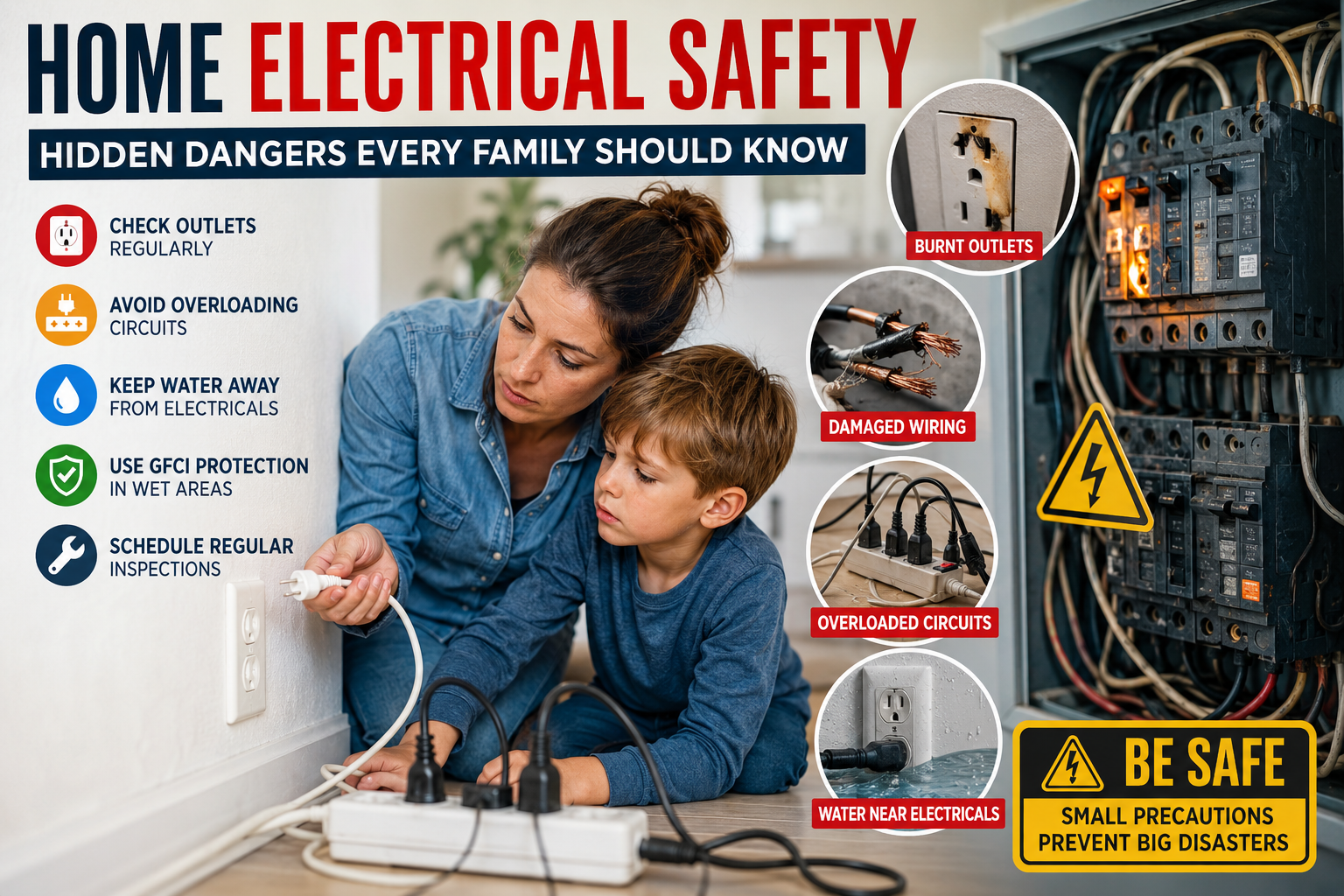
Home should be a place of comfort, security, and peace of mind. Yet many of the most serious household hazards remain hidden behind walls, inside outlets, and within electrical systems that most people rarely think about.
Electrical problems often develop gradually. A flickering light, a warm outlet, or a breaker that trips occasionally may seem like minor inconveniences. However, these small warning signs can sometimes indicate larger issues that, if ignored, may increase the risk of fires, shocks, or costly damage.
The good news is that most electrical hazards are preventable. With awareness, routine inspections, and a few smart habits, families can significantly improve the safety of their homes.
Why Electrical Safety Matters
Electricity powers nearly every aspect of modern life, including:
- Lighting
- Kitchen appliances
- Heating and cooling systems
- Computers and televisions
- Internet equipment
- Phone chargers
Because electricity is part of everyday life, it’s easy to overlook the risks associated with faulty wiring or damaged electrical components.
Unlike a leaking pipe or a broken window, electrical problems often remain hidden until they become serious.
Common Electrical Hazards in the Home
Many homes contain electrical issues that go unnoticed for months or even years.
Damaged Wiring
Electrical wiring can deteriorate due to:
- Age
- Moisture
- Rodent damage
- Overheating
- Poor installation
Warning signs may include:
- Burning odors
- Buzzing sounds
- Discolored outlets
- Frequently tripped breakers
Loose or Damaged Outlets
Outlets that feel warm, spark, wobble, or appear cracked should never be ignored.
These symptoms may indicate loose connections or internal damage that requires professional attention.
Overloaded Circuits
Modern households often place greater demands on electrical systems than older homes were designed to handle.
Common causes of overload include:
- Multiple space heaters
- Large kitchen appliances
- Gaming systems
- Home office equipment
- Power strips loaded with multiple devices
Overloaded circuits can generate excessive heat and increase fire risk.
Warning Signs You Should Never Ignore
Electrical systems often provide clues before major failures occur.
Flickering Lights
Occasional flickering may be harmless, but frequent flickering can signal:
- Loose wiring
- Failing electrical connections
- Overloaded circuits
Burning Smells
A burning or melting odor near outlets, switches, or appliances requires immediate attention.
If safe to do so:
- Turn off power to the affected area.
- Unplug devices.
- Contact a licensed electrician.
Warm or Discolored Outlets
Outlets should not feel hot to the touch.
Heat, scorch marks, or discoloration may indicate internal electrical problems.
Buzzing Sounds
Electrical systems generally operate silently.
Buzzing or crackling noises may suggest loose wiring or faulty connections.
Why Older Homes Require Extra Attention
Many older homes contain electrical systems that were designed for a different era.
Outdated Wiring
Homes built several decades ago may contain:
- Aluminum wiring
- Knob-and-tube wiring
- Limited grounding systems
While not automatically unsafe, these systems often require evaluation and upgrades to meet modern electrical demands.
Increased Power Usage
Today’s households use significantly more electricity than homes did decades ago.
Common modern power demands include:
- Air fryers
- Large televisions
- Gaming consoles
- Computers
- Smart home devices
- High-capacity kitchen appliances
Older wiring systems may struggle to safely support this increased load.
Understanding Circuit Overloads
One of the most common electrical issues involves overloaded circuits.
Signs of an Overloaded Circuit
Watch for:
- Frequently tripped breakers
- Dimming lights
- Warm outlets
- Hot power strips
- Buzzing sounds
Common Causes
Overloads often occur when:
- Multiple high-wattage appliances share one outlet
- Extension cords are used permanently
- Power strips are overloaded
- Several heaters operate on the same circuit
Distributing electrical loads more evenly can help reduce stress on the system.
The Importance of GFCI Outlets
Ground Fault Circuit Interrupters (GFCIs) are designed to protect against electrical shock.
How GFCIs Work
These outlets monitor electrical current and shut off power almost instantly if an imbalance occurs.
Where GFCIs Should Be Installed
They are especially important in areas where water may be present:
- Bathrooms
- Kitchens
- Laundry rooms
- Basements
- Garages
- Outdoor outlets
Many modern building codes require GFCI protection in these locations.
AFCIs: Another Important Layer of Protection
Arc Fault Circuit Interrupters (AFCIs) help prevent electrical fires.
What Is an Electrical Arc?
An arc occurs when electricity jumps between damaged or loose connections.
These sparks can generate significant heat and potentially ignite nearby materials.
Why AFCIs Matter
AFCIs detect dangerous arcing conditions and shut off power before a fire can start.
Many newer homes include AFCI protection, but older homes may benefit from upgrades.
Simple Electrical Safety Habits
Small actions can dramatically reduce household risk.
Inspect Cords Regularly
Replace cords that show:
- Cracks
- Fraying
- Exposed wires
- Loose plugs
Avoid using tape as a permanent repair.
Keep Water Away from Electricity
Never operate electrical devices:
- Near sinks
- Around bathtubs
- On wet surfaces
- Outdoors during rain unless designed for outdoor use
Water significantly increases shock risk.
Unplug Unused Devices
While many modern devices are safe when left plugged in, unplugging unused appliances can reduce electrical load and eliminate potential hazards.
Electrical Safety for Families With Children
Children are naturally curious and often attracted to outlets, cords, and electronic devices.
Install Outlet Protection
Consider:
- Tamper-resistant outlets
- Outlet covers
- Cord management systems
Teach Safe Habits Early
Children should understand:
- Outlets are not toys
- Objects should never be inserted into sockets
- Cords should never be pulled from the wall
Simple lessons can help prevent accidents.
Why DIY Electrical Repairs Can Be Risky
Online tutorials often make electrical repairs appear simple.
In reality, mistakes can have serious consequences.
Improper electrical work may lead to:
- Fires
- Electric shock
- Appliance damage
- Code violations
Licensed electricians are trained to identify hazards, follow safety regulations, and ensure installations meet current standards.
How Often Should Electrical Systems Be Inspected?
Regular inspections can identify problems before they become dangerous.
Recommended Schedule
For most homes:
- Perform visual checks every few months.
- Schedule a professional inspection every 3 to 5 years.
- Consider more frequent inspections for older homes.
After Severe Weather
Always inspect electrical systems after:
- Flooding
- Lightning strikes
- Major storms
- Water damage incidents
Moisture and power surges can create hidden damage.
The Role of Smoke Detectors
Even with proper electrical maintenance, smoke detectors remain one of the most important safety devices in any home.
Best Practices
- Test detectors monthly.
- Replace batteries regularly.
- Replace expired units.
- Install detectors on every level of the home.
- Place detectors near sleeping areas.
Early warning can save lives during an electrical fire.
Frequently Asked Questions
What should I do if an outlet sparks?
Stop using the outlet immediately and contact a qualified electrician.
Are warm outlets dangerous?
Yes. Warm outlets may indicate overloaded circuits, loose wiring, or faulty connections.
How can I tell if my wiring is outdated?
Frequent breaker trips, flickering lights, or an older home may indicate the need for professional evaluation.
Are extension cords safe for permanent use?
No. Extension cords are intended for temporary applications only.
Are surge protectors safer than standard power strips?
Yes. Surge protectors provide additional protection for electronics, although they can still become overloaded if misused.
Final Thoughts
Most electrical accidents do not occur without warning.
Small signs often appear first:
- Flickering lights
- Warm outlets
- Burning odors
- Tripped breakers
- Buzzing sounds
Paying attention to these warning signs and addressing them promptly can prevent serious problems before they occur.
Electrical safety is not about fear. It is about awareness.
Regular inspections, proper maintenance, safe habits, and timely professional assistance can help create a home that is not only comfortable and efficient but also safer for everyone who lives there.
The systems hidden behind your walls work hard every day. Giving them a little attention today may help protect your family tomorrow.
More The Crafty Nest
- The Mystery of Lobster’s Green Goodies: What That Green Stuff Really Is
- Which Sitting Position Matches Your Personality? What Your Posture May Reveal
- What Your Sleep Position Says About Your Personality: 6 Fascinating Sleep Styles
- What Does a Handshake Symbol on a Parking Space Mean? Here’s What You Should Know