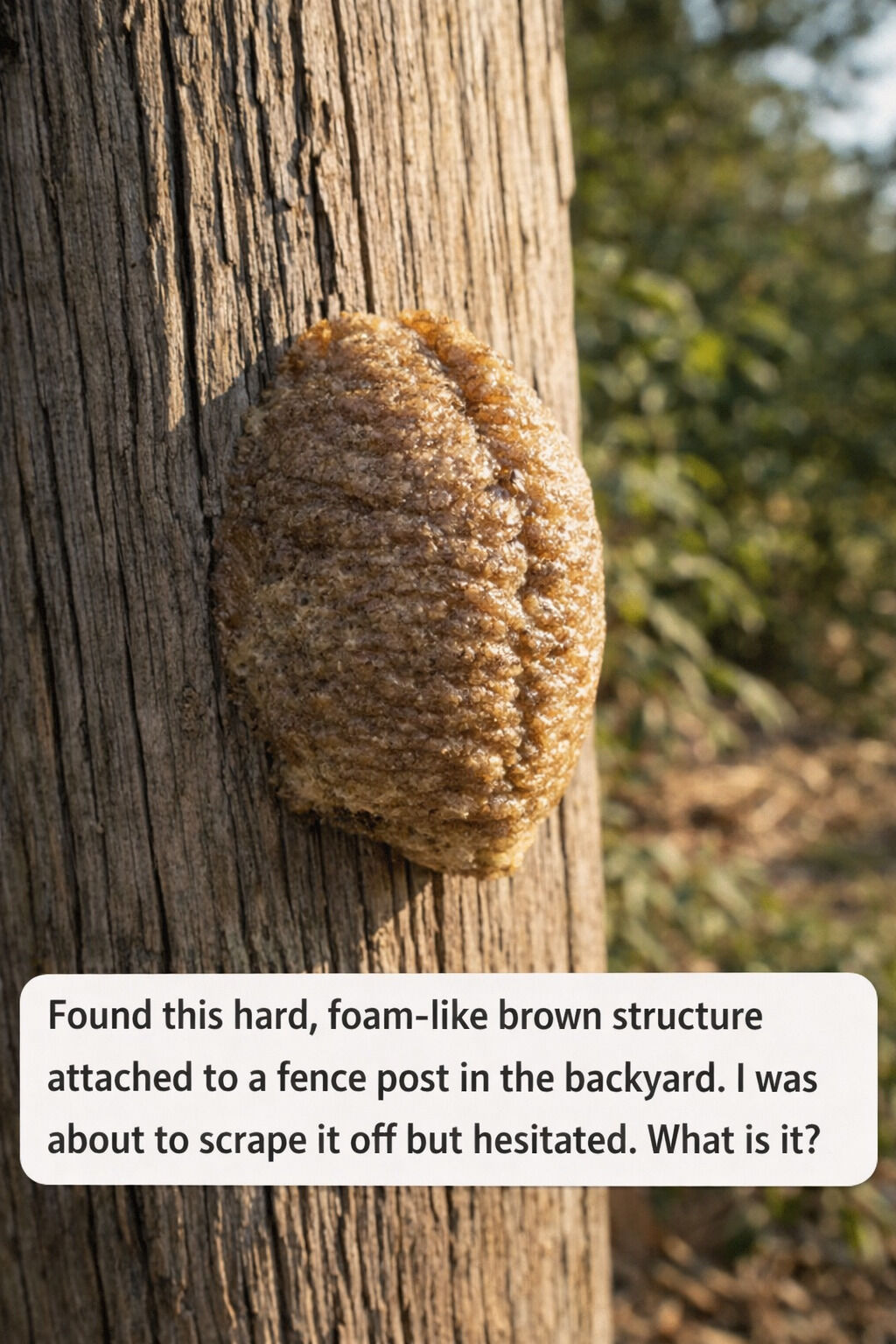
At first glance, that strange brown lump attached to a fence post might look like expanding foam, dried mud, or even some kind of fungus. Many homeowners immediately assume it is a pest nest or an unwanted growth that should be removed as quickly as possible. However, taking a closer look before scraping it away could save one of the most fascinating and beneficial insects in your backyard ecosystem.
That hard, foam-like structure is most likely a praying mantis egg case, also known as an ootheca. While it may appear odd or even slightly alarming, it is actually a protective nursery filled with dozens — and sometimes hundreds — of future praying mantises waiting for warmer weather to hatch.
Nature often hides incredible life cycles in plain sight. What seems insignificant today could become an army of natural garden protectors by springtime. Understanding what this structure is and why it matters can completely change the way you view your backyard.
One homeowner noticed a similar brown case attached to an old garden post during winter cleanup. At first, they planned to scrape it off along with dirt and debris. Fortunately, curiosity won. After researching the unusual shape, they discovered it was a praying mantis egg case preparing for spring. A few months later, dozens of tiny mantises emerged and spread throughout the garden. That summer, aphids and unwanted insects became noticeably less of a problem. Since then, every strange little foam pod has been treated with care instead of suspicion.
What Exactly Is a Praying Mantis Egg Case?
Nature’s Protective Nursery
A praying mantis egg case is a carefully designed protective structure created by a female mantis after mating. Instead of laying exposed eggs, she produces a frothy substance that quickly hardens into a durable shell.
Inside that shell are rows of tiny eggs safely protected from harsh outdoor conditions. Depending on the species, one egg case may contain anywhere from 50 to over 200 baby mantises.
The foam-like material works as natural insulation. During cold months, it shields the eggs from freezing temperatures, rain, wind, and predators. Once spring temperatures rise, the eggs hatch and miniature mantises emerge through tiny openings in the case.
Although the structure appears simple, it is actually an incredible example of natural engineering. The hardened exterior keeps moisture balanced while protecting the developing insects inside.
These egg cases are commonly attached to:
- Fence posts
- Tree branches
- Shrubs
- Deck rails
- Outdoor furniture
- Garden stakes
- Walls and sheds
Because they blend so well into natural surroundings, many people never notice them until winter removes surrounding leaves and plants.
Why It Looks Like Foam
The unusual texture often confuses people. When the female mantis first creates the egg case, the material looks soft and foamy. Within hours, it hardens into a lightweight but tough protective shell.
This texture helps absorb shocks and temperature fluctuations while remaining securely attached to surfaces outdoors. Over time, the casing darkens into tan, brown, or gray shades that resemble dried foam insulation or textured bark.
Its ridged appearance also helps camouflage it against wood and branches, reducing the chance that predators will notice it.
Although it may look artificial, every curve and groove serves a biological purpose designed to protect developing mantises throughout winter.
Why Praying Mantises Are Beneficial for Your Garden
Natural Pest Controllers
Praying mantises are among the most respected beneficial insects in gardening. They are carnivorous predators that feed on many insects commonly considered garden pests.
Once hatched, young mantises begin hunting almost immediately. As they grow, they consume insects such as:
- Aphids
- Flies
- Beetles
- Mosquitoes
- Moths
- Caterpillars
- Grasshoppers
Because of this appetite, many gardeners intentionally encourage mantises to live near vegetable gardens and flower beds.
Unlike chemical pesticides, praying mantises provide natural pest control without harming soil quality or introducing toxins into the environment.
Their hunting style is especially fascinating. Mantises remain perfectly still before striking prey with lightning-fast reflexes. Their folded front legs give them their famous “praying” appearance.
A Balanced Backyard Ecosystem
Although mantises help control pests, they are not selective hunters. They may also eat beneficial insects, including butterflies, bees, and ladybugs. However, in a balanced environment, they contribute to healthy ecological diversity.
A backyard that supports praying mantises often supports many other healthy insect populations as well. Their presence usually indicates a thriving outdoor habitat with minimal chemical interference.
Additionally, watching mantises develop from tiny hatchlings into full-grown adults can become a fascinating educational experience for children and adults alike.
Many people become surprisingly attached to these unusual insects after observing their calm movements and unique behavior throughout the warmer months.
What To Do If You Find One
Leave It Alone If Possible
The best thing to do when you discover a praying mantis egg case is usually nothing at all. Leaving it undisturbed gives the developing insects the highest chance of survival.
If the case is attached to a stable outdoor structure that will remain untouched through winter and early spring, it is safest to simply let nature take its course.
Avoid spraying pesticides nearby, since chemicals may harm the eggs or the newly hatched mantises later on.
If temperatures remain cold, the eggs will stay dormant until spring warmth triggers hatching naturally.
How To Safely Relocate It
Sometimes an egg case appears in an inconvenient location, such as:
- A gate handle
- Outdoor furniture
- Frequently used equipment
- A removable decoration
In these situations, careful relocation is possible.
If attached to a twig or small branch, snip the branch carefully and move it to a sheltered area outdoors. Dense shrubs, garden corners, and quiet fence lines work well.
If attached directly to a flat surface, gently loosen it using minimal force. Then secure it to another outdoor structure using string, wire, or non-toxic glue.
Important relocation tips include:
- Keep the egg case outdoors
- Place it several feet above ground
- Protect it from heavy rain
- Avoid direct indoor warmth
- Maintain natural winter conditions
Bringing it indoors often causes early hatching, which reduces survival chances because baby mantises need outdoor food sources immediately.
The Fascinating Life Cycle of a Praying Mantis
What Happens After Hatching
When spring temperatures rise consistently, the egg case begins to split open. Tiny mantis nymphs emerge in large numbers over several hours.
At first, the hatchlings appear pale and delicate. However, they quickly darken and begin exploring nearby plants and surfaces.
The survival rate naturally decreases because young mantises compete heavily for food. In fact, cannibalism sometimes occurs among hatchlings when food sources are limited.
Despite this, enough survivors typically remain to establish a healthy local mantis population.
As they mature, mantises molt multiple times, shedding their outer exoskeletons to grow larger.
Adult Mantis Behavior
Adult praying mantises become skilled ambush predators capable of capturing surprisingly large prey.
Some species can even catch:
- Small frogs
- Tiny lizards
- Hummingbirds
- Other mantises
Female mantises are usually larger than males and may survive into late autumn before laying egg cases for the next generation.
In colder climates, adults die once freezing weather arrives. The eggs remain protected inside the ootheca throughout winter, continuing the cycle again next year.
Because of this seasonal pattern, spotting an egg case often means future generations are already preparing quietly in your backyard.
Common Misidentifications and Myths
Is It Dangerous?
Many people worry that the strange structure belongs to wasps, spiders, or harmful insects. Fortunately, praying mantis egg cases are harmless to humans and pets.
The hardened shell contains no venom, toxins, or aggressive insects waiting to attack.
Even adult praying mantises rarely bite humans, and when they do, the bite is mild and harmless.
The appearance may look intimidating simply because it is unfamiliar.
Common Things People Mistake It For
Praying mantis egg cases are often confused with:
- Expanding insulation foam
- Mud dauber nests
- Fungus growth
- Termite structures
- Wasp nests
- Tree sap buildup
However, their ridged, hardened foam texture is usually distinctive once you know what to look for.
Learning to identify these cases can help homeowners avoid accidentally destroying beneficial insects during seasonal yard cleanup.
Frequently Asked Questions
How many mantises hatch from one egg case?
Most praying mantis egg cases contain between 50 and 200 eggs depending on the species and environmental conditions.
When do praying mantis eggs hatch?
They usually hatch during spring when temperatures consistently warm after winter dormancy.
Can I keep the egg case indoors?
It is not recommended. Indoor warmth may trigger early hatching before outdoor food becomes available.
Are praying mantises good for gardens?
Yes. They help naturally control many common garden pests without chemicals.
Should I remove the egg case from my fence?
Only relocate it if absolutely necessary. Otherwise, leaving it undisturbed provides the best survival chances.
Conclusion
That strange brown foam-like structure attached to your fence post is not trash, fungus, or insulation. It is a praying mantis egg case — a remarkable natural shelter protecting dozens of future garden predators.
Although the rough texture may look unusual at first, it represents one of nature’s most efficient survival strategies. Inside that hardened shell, tiny mantises wait patiently for spring warmth to begin their lives.
By leaving the egg case undisturbed, you are supporting a healthier backyard ecosystem filled with natural pest control and fascinating wildlife behavior. Sometimes the most ordinary-looking objects in nature hide extraordinary stories.
The next time you notice one of these textured brown pods outdoors, pause before scraping it away. What seems insignificant today could soon become one of the most beneficial visitors your garden has ever welcomed.
More Home Remedies
- Wrinkled Fingers After Water Exposure: What Your Skin May Be Telling You
- Skin Rash With Breathing Trouble? It Could Be a Life-Threatening Allergic Reaction
- I Thought It Was a Piece of Trash on the Bathroom Floor—Until It Moved
- If You Are Getting White Pimples on Your Lips or Intimate Area, Here’s What They Could Mean