A New Idea in an Unexpected Place
Most people don’t expect to encounter a restroom innovation during a day of exploring rockets, space capsules, and scientific exhibits.
Yet visitors to the Huntsville Space Center and other modern facilities are increasingly discovering something unusual inside women’s restrooms: urinals specifically designed for female users.
For many visitors, the first reaction is confusion.
Aren’t urinals traditionally designed for men?
How would women use them?
And why are architects and facility designers suddenly installing them in airports, stadiums, universities, and tourist attractions?
The answer lies in a growing movement focused on hygiene, efficiency, accessibility, and environmental sustainability.
While female urinals may appear unconventional at first glance, supporters argue that they solve several long-standing challenges in public restroom design. From reducing wait times to conserving water, these fixtures represent a surprisingly practical innovation that is gaining attention around the world.
What Is a Female Urinal?
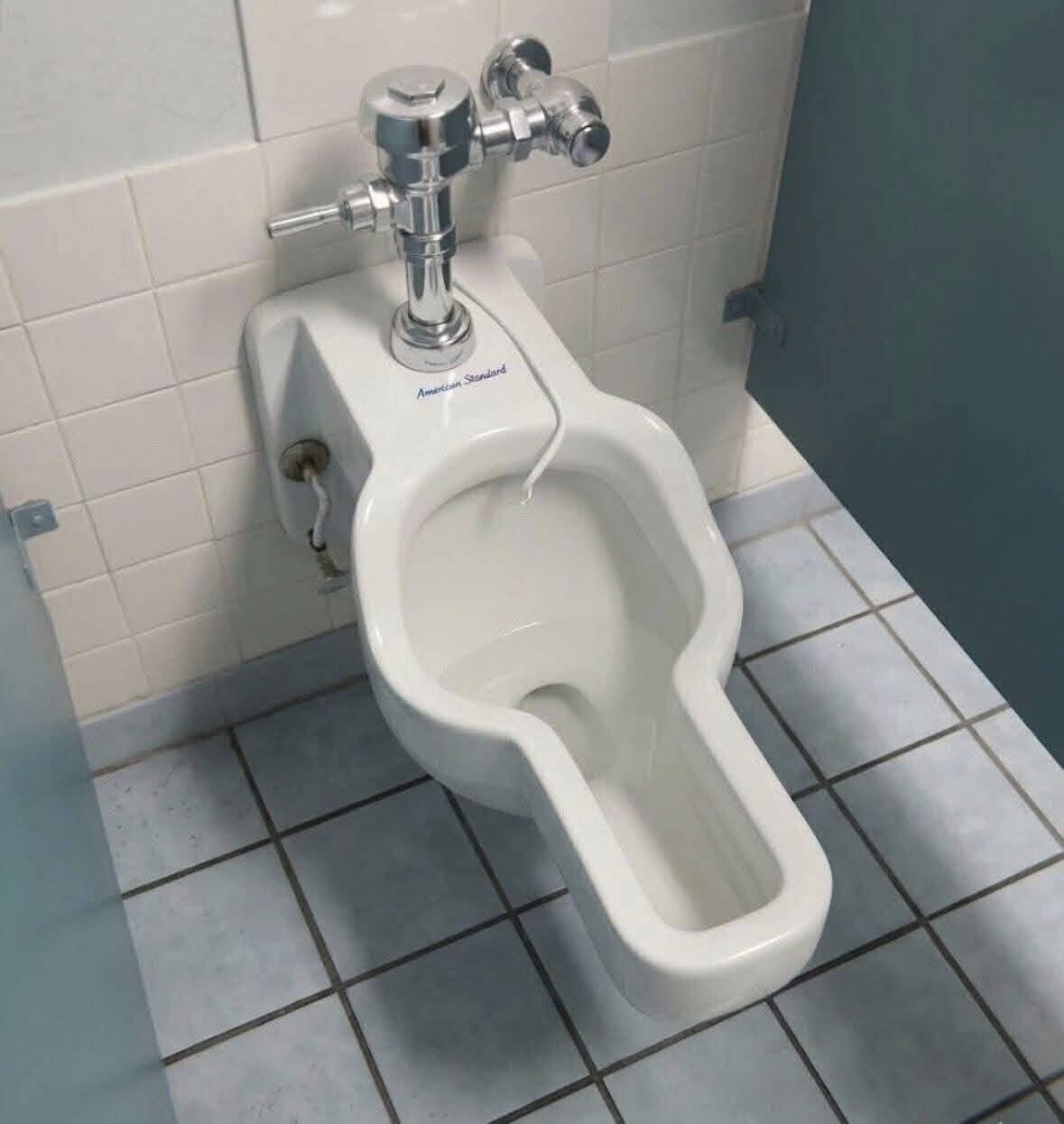
A female urinal is a specially engineered restroom fixture that allows women to urinate while standing or in a semi-squatting position without sitting on a toilet seat.
Unlike traditional toilets, female urinals are designed around female anatomy and are shaped to minimize splash-back while maximizing comfort and hygiene.
Although designs vary between manufacturers, most include:
- A wider basin
- Ergonomic contours
- Splash guards
- Touchless flushing systems
- Easy-to-clean surfaces
- Clear instructions for first-time users
Some versions resemble a shallow wall-mounted basin, while others look like a hybrid between a sink and a traditional urinal.
The goal is simple: provide a faster and more hygienic alternative to conventional toilet stalls while still meeting the needs of female users.
Why Were Female Urinals Developed?
For decades, women have faced longer restroom lines than men in public spaces.
This issue becomes particularly noticeable in:
- Sports stadiums
- Airports
- Concert venues
- Theme parks
- Convention centers
- Festivals
Researchers have long noted that women generally spend more time in restrooms than men due to clothing adjustments, menstrual hygiene needs, caregiving responsibilities, and the fact that traditional toilet stalls require more space and time per user than urinals.
Female urinals were developed as one possible solution.
By reducing usage time and increasing restroom capacity, facilities can potentially serve more people with the same amount of space.
The Hygiene Advantage
One of the strongest arguments in favor of female urinals involves hygiene.
Many people feel uncomfortable sitting on public toilet seats.
As a result, countless users attempt to hover above the seat rather than sitting down fully.
Ironically, health experts have noted that prolonged hovering can place unnecessary strain on pelvic floor muscles and may lead to incomplete bladder emptying.
Female urinals eliminate seat contact entirely.
Potential hygiene benefits include:
- Reduced contact with shared surfaces
- Less reliance on disposable seat covers
- Fewer touch points
- Easier cleaning and maintenance
- Reduced exposure to moisture around toilet seats
Modern units often feature sensor-activated flushing systems that further reduce contact with high-touch surfaces.
Although no restroom fixture is completely germ-free, minimizing contact points remains a recognized strategy for improving public restroom hygiene.
Faster Restrooms and Shorter Lines
Anyone who has stood in a lengthy restroom line during a concert or sporting event understands the frustration.
Female urinals aim to address this problem directly.
Traditional toilet stalls require users to:
- Enter the stall
- Lock the door
- Adjust clothing
- Use the toilet
- Flush
- Unlock the door
- Exit
Female urinals eliminate several of these steps.
As a result, users can often complete the process significantly faster.
Even a modest reduction in usage time can create substantial improvements when thousands of visitors pass through a facility each day.
This increased efficiency is one reason many architects view female urinals as a valuable supplement to traditional restroom stalls.
Water Conservation Benefits
Water conservation has become a major priority for cities, businesses, and public institutions.
Traditional toilets typically use substantially more water per flush than urinals.
Female urinals often consume far less water and, in some cases, may even operate as waterless systems.
The environmental benefits can include:
- Lower water consumption
- Reduced wastewater generation
- Lower utility costs
- Smaller environmental footprint
- Support for green-building initiatives
For large venues serving hundreds of thousands of visitors annually, the cumulative savings can be significant.
This sustainability aspect has attracted attention from organizations pursuing environmentally responsible building practices.
Accessibility and User Comfort
Another benefit involves accessibility.
Some individuals find it difficult to sit down and stand up repeatedly because of:
- Arthritis
- Joint pain
- Mobility limitations
- Temporary injuries
- Certain disabilities
For these users, a standing or semi-standing option may offer greater convenience and comfort.
Female urinals are not intended to replace accessible toilets. Rather, they provide another option within a restroom environment designed to accommodate diverse needs.
The best restroom designs offer choices rather than one-size-fits-all solutions.
A Growing International Trend
While many Americans view female urinals as a novel concept, they have existed in various forms for decades.
Countries that have experimented with female urinals include:
- The Netherlands
- Germany
- Sweden
- Denmark
- France
- The United Kingdom
They are especially common at:
- Outdoor festivals
- Sporting events
- Temporary venues
- Transportation hubs
European music festivals, in particular, helped popularize female urinals as a practical response to extreme restroom congestion.
Over time, improvements in design have made them more comfortable and user-friendly.
Common Concerns and Misconceptions
Are They Difficult to Use?
Most first-time users experience a brief learning curve.
However, clear instructions and thoughtful design generally make adaptation relatively straightforward.
Many facilities include diagrams that demonstrate proper positioning.
Are They Replacing Traditional Toilets?
No.
Female urinals are generally intended to supplement traditional stalls rather than replace them.
Most facilities continue offering conventional toilets for users who prefer them or require them.
Are They Actually Cleaner?
Cleanliness depends heavily on maintenance.
A poorly maintained restroom will never be hygienic regardless of fixture type.
However, reducing surface contact can provide meaningful hygiene advantages when combined with proper cleaning procedures.
Are They Suitable for Everyone?
Not necessarily.
Some individuals may prefer traditional toilets for personal, medical, cultural, or practical reasons.
The goal is flexibility and choice rather than universal adoption.
Why a Space Center Is the Perfect Place
At first, a restroom innovation may seem unrelated to space exploration.
Yet the connection becomes obvious upon closer inspection.
Space programs have always emphasized:
- Efficiency
- Engineering
- Sustainability
- Human-centered design
- Resource conservation
These same principles influence modern restroom design.
Facilities such as the Huntsville Space Center attract large crowds and embrace technological innovation. Installing newer restroom concepts aligns naturally with their broader mission of exploring better solutions for everyday challenges.
In that sense, the restroom becomes another example of how design continues evolving to meet changing needs.
The Future of Public Restrooms
Female urinals represent only one part of a larger transformation occurring in public facilities.
Emerging trends include:
- Touchless fixtures
- Smart occupancy sensors
- Improved ventilation systems
- Water-saving technologies
- Antimicrobial surfaces
- Inclusive restroom layouts
- Automated cleaning systems
The future restroom is increasingly focused on user experience, public health, environmental responsibility, and operational efficiency.
While female urinals may not become universal overnight, they illustrate how even familiar spaces can benefit from thoughtful redesign.
Final Thoughts
Female urinals may look unusual at first, but they are rooted in practical goals rather than novelty.
Supporters point to several potential advantages:
- Improved hygiene
- Reduced waiting times
- Greater water conservation
- Enhanced accessibility
- Better use of space
Like any innovation, acceptance will depend on user comfort, facility needs, and continued improvements in design.
Whether they become a common feature in public buildings or remain a niche solution, they highlight an important reality: innovation doesn’t only happen in laboratories, factories, or space programs.
Sometimes it happens in the most ordinary places imaginable.
Even the restroom.
And occasionally, the future arrives one fixture at a time.
More Handmade Haven
- Your Brain Is Still Young If You Can Spot the Man in a Hat in This Vintage Puzzle
- COVID-19 Vaccines and Long-Term Safety: What We Know in 2026
- Did a Gorilla Save Its Caretaker During a Heart Attack? Examining a Moving but Unverified Viral Story
- Tick-Borne Illnesses: Warning Signs, Safe Tick Removal, and Practical Ways to Protect Your Family