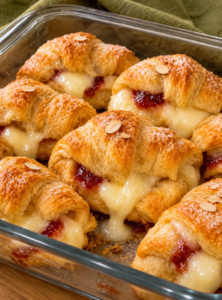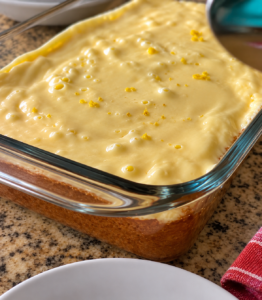
Cinnamon Roll Bread Pudding combines the comforting flavors of freshly baked cinnamon rolls with the soft, custardy texture of traditional bread pudding. Made with buttery bread cubes, brown sugar, cinnamon, and a rich vanilla egg custard, this dessert is baked until golden and finished with a generous drizzle of warm vanilla cream sauce.
Imagine cutting into a warm square of bread pudding and discovering layers of tender cinnamon-flavored bread surrounded by creamy vanilla custard. The golden top provides a slightly crisp contrast to the soft interior, while the warm glaze brings everything together.
This recipe is particularly appealing during the holiday season, when comforting desserts and special breakfasts are always welcome.
It is also a wonderful way to use leftover brioche, challah, sweet bread, or previously baked cinnamon rolls.
With familiar ingredients and a straightforward preparation method, this bread pudding offers all the flavor of a special homemade dessert without requiring complicated baking techniques.
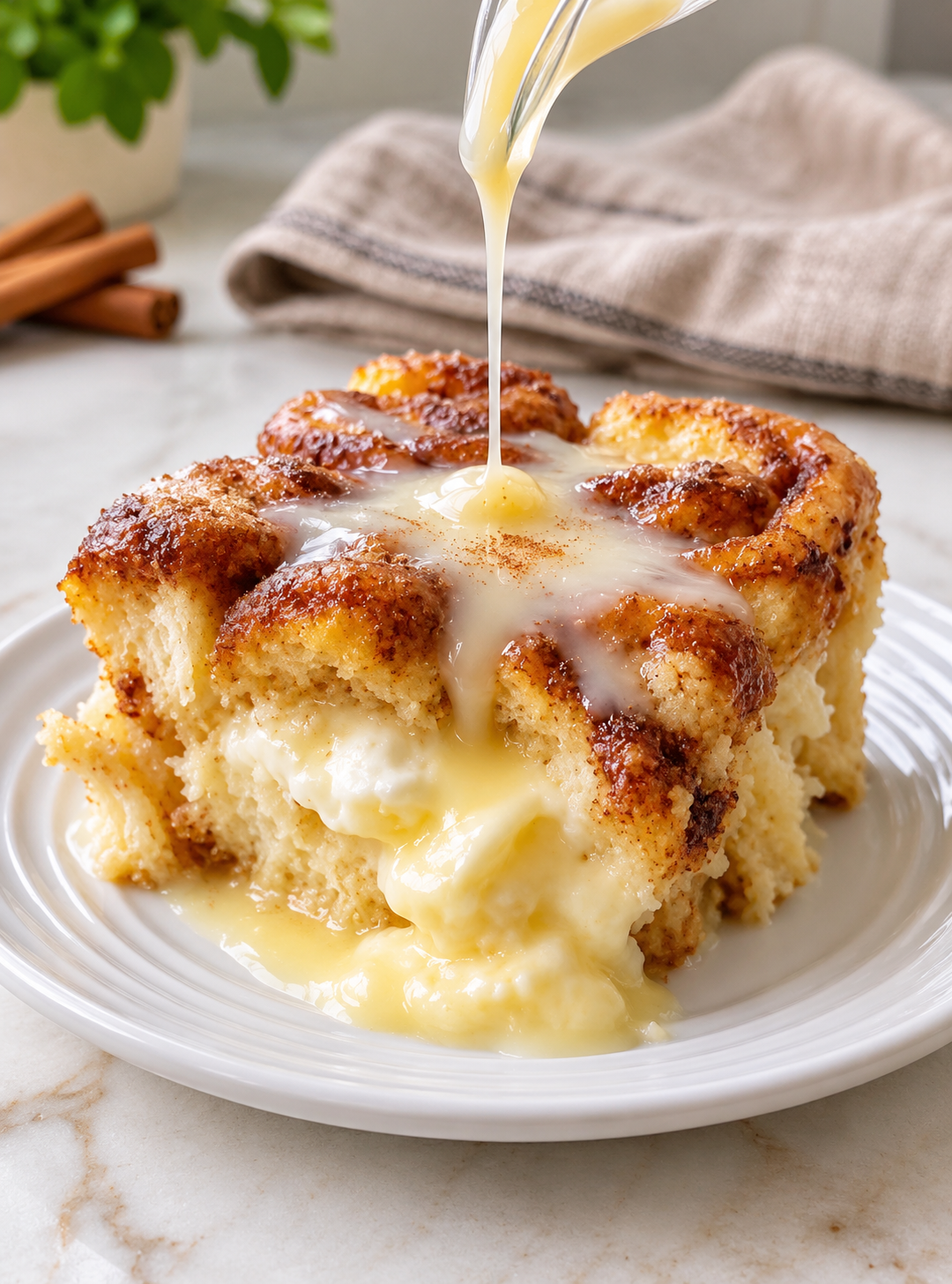
“Cinnamon Roll Bread Pudding”
Ingredients
Equipment
Method
- Preheat the oven to 350°F (175°C). Grease an 8×8-inch or 9×9-inch glass or ceramic baking dish with butter.
- Place the cubed bread in a large mixing bowl. Drizzle with 3 tablespoons melted butter and toss with brown sugar and cinnamon until evenly coated. Fold in optional raisins or pecans. Skip the extra cinnamon sugar if using frosted cinnamon rolls.
- In another bowl, whisk together the eggs, milk, granulated sugar, vanilla extract, and salt until smooth.
- Transfer the cinnamon sugar bread cubes into the prepared baking dish. Pour the vanilla custard evenly over the bread and gently press the cubes down with a spatula. Let soak for 15–20 minutes.
- Bake uncovered for 35–40 minutes until the top is deeply golden brown and the custard is set while remaining soft and moist. The center should reach 160°F (71°C).
- Meanwhile, combine the heavy cream, sugar, and 2 tablespoons unsalted butter in a small saucepan over medium heat. Bring to a gentle simmer and cook for 3–4 minutes, stirring constantly until slightly thickened.
- Remove the cream glaze from the heat and stir in 1 teaspoon vanilla extract.
- Cut the warm bread pudding into squares and transfer to serving plates. Pour the warm vanilla cream glaze generously over each portion. Finish with maple syrup or honey if desired and serve warm.
Notes
Why You Will Love Cinnamon Roll Bread Pudding
The comforting flavors of cinnamon rolls and vanilla custard
Cinnamon rolls are known for their buttery layers, sweet cinnamon filling, and delicious glaze.
This bread pudding captures those familiar flavors using a much simpler preparation method.
Instead of making yeast dough, waiting for it to rise, and shaping individual rolls, you begin with prepared bread or previously baked cinnamon rolls.
The bread is coated in melted butter, brown sugar, and cinnamon before being soaked in a homemade vanilla custard.
During baking, the custard gradually sets around the bread pieces, creating a soft and moist interior.
The exposed bread develops a beautifully golden surface, providing a pleasant contrast to the tender center.
Brown sugar adds a warm caramel-like flavor, while cinnamon gives the dessert its distinctive comforting aroma.
The warm vanilla cream glaze makes each serving particularly indulgent.
Because the sauce is poured over the pudding just before serving, it flows naturally between the bread pieces and adds another layer of sweetness and richness.
An easy dessert for holidays and special breakfasts
One of the biggest advantages of this recipe is its versatility.
Cinnamon Roll Bread Pudding can be served as a warm dessert after dinner, but it also works beautifully as a special breakfast or brunch dish.
It is particularly suitable for Christmas morning, weekend gatherings, and family celebrations.
Much of the preparation involves simply whisking ingredients together and allowing the bread to absorb the custard.
The oven takes care of the remaining cooking while you prepare the vanilla cream sauce.
The finished bread pudding can be served directly from its baking dish or cut into individual squares for a more elegant presentation.
It is also an excellent way to transform day-old bread into something delicious.
Rather than allowing leftover brioche or sweet bread to go to waste, you can give it a completely new texture and flavor.
Optional raisins or chopped pecans allow you to customize the pudding according to your preferences.
Both additions complement the cinnamon and vanilla flavors without requiring any changes to the basic preparation method.
Choosing the Best Ingredients
Selecting bread and preparing the cinnamon sugar coating
Brioche is particularly well suited to this recipe because of its buttery flavor and soft texture.
Its rich interior absorbs the vanilla custard beautifully while maintaining enough structure to create distinct bread pieces throughout the pudding.
Challah is another excellent choice. It has a slightly different texture but works equally well in custard-based desserts.
Sweet loaf bread or day-old pan de sal can also be used.
Bread that is slightly dry often works especially well because it readily absorbs the custard.
Avoid using bread that has developed mold or an unpleasant smell. Day-old bread should simply be slightly firmer than freshly baked bread.
Cut the bread into approximately one-inch cubes.
Keeping the pieces relatively uniform helps the custard distribute evenly throughout the baking dish.
Melted unsalted butter coats the bread and contributes richness to the finished pudding.
Light brown sugar adds sweetness and a gentle molasses flavor.
Ground cinnamon provides the signature flavor associated with cinnamon rolls.
If you prefer to use previously baked cinnamon rolls, cut six to eight rolls into quarters instead of using cubed bread.
Because frosted cinnamon rolls already contain substantial sweetness and cinnamon flavor, you can skip the additional cinnamon sugar coating.
Raisins provide little bursts of sweetness, while chopped pecans add a satisfying nutty crunch.
Both ingredients are entirely optional.
Understanding the vanilla custard and cream glaze
The custard is made with eggs, milk, granulated sugar, vanilla extract, and salt.
Eggs provide the structure that allows the custard to set during baking.
Whole milk creates a creamy texture while keeping the pudding from becoming excessively heavy.
For a richer version, replace half of the whole milk with heavy cream or evaporated milk.
This creates a slightly more indulgent custard.
Granulated sugar sweetens the mixture without overpowering the cinnamon flavor.
Pure vanilla extract provides a warm, aromatic finish that complements the brown sugar and butter.
A small amount of salt helps balance the sweetness of the dessert.
The warm vanilla cream glaze uses heavy cream, sugar, butter, and vanilla extract.
The cream provides a smooth foundation, while the butter contributes richness and a glossy appearance.
As the sauce gently simmers, it thickens slightly and becomes ideal for pouring over warm bread pudding.
Evaporated milk can be substituted for heavy cream if desired.
Sweetened condensed milk is another optional alternative to the granulated sugar in the sauce, although it will produce a slightly different texture and sweetness.
A final drizzle of maple syrup or honey is entirely optional but creates a beautiful finishing touch.
How to Make Perfect Cinnamon Roll Bread Pudding
Preparing and soaking the bread
Begin by preheating your oven to 350°F (175°C).
Grease an eight-by-eight-inch or nine-by-nine-inch glass or ceramic baking dish with butter.
Make sure the baking dish has sufficient depth to hold the bread and custard comfortably. If necessary, use a slightly larger dish rather than overfilling it.
Place the cubed bread in a large mixing bowl.
Drizzle the melted butter evenly over the bread pieces.
Add the packed brown sugar and ground cinnamon.
Gently toss until the bread cubes are evenly coated.
If using raisins or chopped pecans, fold them into the bread mixture at this stage.
Transfer the prepared bread to the greased baking dish.
In a separate bowl, whisk together the eggs, whole milk, granulated sugar, vanilla extract, and salt.
Continue whisking until the mixture is evenly combined and no large streaks of egg remain.
Pour the vanilla custard evenly over the bread.
Using a spatula, gently press the bread cubes into the liquid so that they can absorb the custard.
Avoid compressing them too firmly, since maintaining some spaces between the bread pieces contributes to the pudding’s texture.
Allow the mixture to stand for approximately fifteen to twenty minutes before baking.
This resting period gives the bread time to absorb the custard.
Skipping the soaking stage can result in dry bread pieces on top and excess liquid collecting underneath.
Baking the pudding and preparing the warm glaze
Transfer the baking dish to the preheated oven.
Bake uncovered for approximately thirty-five to forty minutes.
During baking, the exposed bread should develop a golden-brown color while the custard gradually sets.
The pudding may puff slightly as it cooks.
Begin checking for doneness toward the end of the suggested baking period.
The center should remain moist and tender but should not contain visibly liquid, uncooked egg custard.
For an egg-based bread pudding, an internal temperature of 160°F (71°C) is a useful doneness check.
If the top begins browning excessively before the center has set, loosely cover the dish with foil and continue baking.
While the pudding is in the oven, prepare the vanilla cream glaze.
Combine the heavy cream, granulated sugar, and unsalted butter in a small saucepan.
Place the saucepan over medium heat and stir gently until the butter melts and the sugar dissolves.
Bring the mixture to a gentle simmer.
Continue cooking for approximately three to four minutes, stirring constantly until the sauce thickens slightly.
Avoid boiling vigorously, as excessive heat can affect the texture of the cream.
Remove the saucepan from the heat and stir in the vanilla extract.
Once the bread pudding is ready, remove it from the oven and allow it to settle briefly before slicing.
Cut into individual squares and transfer each portion to a serving plate.
Pour the warm vanilla cream glaze generously over the top.
If desired, finish with a light drizzle of maple syrup or honey.
Serving, Storage, and Delicious Variations
The best ways to serve cinnamon roll bread pudding
This dessert is particularly delicious when served warm.
The vanilla cream glaze flows between the soft bread layers, creating a rich and comforting texture.
For an attractive presentation, place an individual square on a simple white dessert plate.
Spoon the warm sauce over the pudding and allow a little to collect around the base.
A drizzle of maple syrup or honey adds a glossy finish and another layer of flavor.
For an especially indulgent dessert, serve the warm pudding alongside a scoop of vanilla ice cream.
The contrast between the cold ice cream and warm cinnamon bread pudding is particularly satisfying.
Whipped cream is another delicious accompaniment.
Fresh berries can provide a refreshing contrast to the richness of the custard and cream glaze.
For a holiday brunch, serve the pudding with fresh fruit, coffee, tea, or other breakfast favorites.
It can also be enjoyed without the cream glaze if you prefer a less indulgent breakfast.
Because the bread pudding already contains cinnamon, sugar, and vanilla, it remains flavorful even without additional toppings.
For family gatherings, serve the entire baking dish at the table and provide the warm vanilla sauce separately.
This allows everyone to customize the amount of glaze on their portion.
Make-ahead tips, storage, and flavor variations
Cinnamon Roll Bread Pudding can be partially prepared ahead of time.
Cube the bread and prepare the cinnamon sugar mixture in advance.
Keep the bread covered until you are ready to assemble the pudding.
The custard can also be whisked together and stored in the refrigerator until needed.
For an overnight breakfast casserole, you can assemble the bread and custard, cover the baking dish, and refrigerate overnight.
The longer soaking period may produce a softer finished texture.
A chilled casserole may require additional baking time. If using a glass dish, follow its manufacturer’s guidance regarding temperature changes.
Refrigerate cooked leftovers within two hours of preparation.
Store the bread pudding and vanilla cream sauce in separate airtight containers for up to three to four days.
Reheat individual portions until they reach an internal temperature of 165°F.
Warm the vanilla sauce gently on the stovetop or in short microwave intervals, stirring until smooth.
If the sauce becomes too thick during refrigeration, add a small splash of milk or cream while reheating.
Several optional variations can help you customize this recipe.
For a nutty version, fold chopped pecans into the bread mixture and sprinkle additional pecans over the top before baking.
For a more pronounced holiday flavor, add a small pinch of nutmeg to the custard.
Chopped apples can introduce a fruity element, although they may add moisture and affect the baking time.
For a chocolate variation, add a small handful of chocolate chips between the bread layers.
You can also replace the vanilla cream glaze with a simple maple syrup drizzle for a lighter finish.
These variations are entirely optional. The original recipe already provides a delicious combination of buttery bread, cinnamon sugar, creamy custard, and warm vanilla sauce.
Ingredients
For the bread pudding base
- 1 loaf (16 ounces or 450 grams) brioche, challah, day-old pan de sal, or sweet loaf bread, cut into 1-inch cubes
- 3 tablespoons unsalted butter, melted
- 1/3 cup (65 grams) packed light brown sugar
- 1 1/2 teaspoons ground cinnamon
- 1/2 cup raisins or chopped pecans, optional
Alternatively, use 6–8 previously baked cinnamon rolls, cut into quarters.
For the vanilla egg custard
- 4 large eggs, at room temperature
- 2 cups (480 milliliters) whole milk, or 1 cup milk and 1 cup heavy cream or evaporated milk
- 1/2 cup (100 grams) granulated sugar
- 2 teaspoons pure vanilla extract
- 1/4 teaspoon salt
For the warm vanilla cream glaze
- 1/2 cup (120 milliliters) heavy cream or evaporated milk
- 1/4 cup (50 grams) granulated sugar, or sweetened condensed milk as an alternative
- 2 tablespoons unsalted butter
- 1 teaspoon vanilla extract
- Maple syrup or honey, for drizzling, optional
Instructions
- Preheat the oven to 350°F (175°C). Grease an 8-by-8-inch or 9-by-9-inch glass or ceramic baking dish with butter.
- Place the cubed bread in a large mixing bowl. Drizzle with 3 tablespoons melted butter.
- Add the packed brown sugar and ground cinnamon. Gently toss until evenly coated. If using frosted cinnamon rolls, skip the additional cinnamon sugar.
- Fold in the optional raisins or chopped pecans.
- In another bowl, whisk together the eggs, whole milk, granulated sugar, vanilla extract, and salt until smooth.
- Transfer the cinnamon sugar bread cubes into the prepared baking dish.
- Pour the vanilla egg custard evenly over the bread. Gently press the cubes down with a spatula so that they absorb the liquid.
- Allow the mixture to soak for 15–20 minutes.
- Bake uncovered for 35–40 minutes until the top is deeply golden and the custard has set while remaining soft and moist.
- Meanwhile, combine the heavy cream, granulated sugar, and 2 tablespoons unsalted butter in a small saucepan over medium heat.
- Bring to a gentle simmer and cook for 3–4 minutes, stirring constantly until slightly thickened.
- Remove the saucepan from the heat and stir in 1 teaspoon vanilla extract.
- Cut the warm bread pudding into squares and transfer individual portions to serving plates.
- Generously spoon the warm vanilla cream glaze over each serving.
- Finish with a drizzle of maple syrup or honey if desired. Serve warm.
Frequently Asked Questions
Can I make cinnamon roll bread pudding using leftover cinnamon rolls?
Yes. Substitute six to eight previously baked cinnamon rolls for the loaf of bread.
Cut the rolls into quarters and soak them in the vanilla egg custard.
If the cinnamon rolls are already frosted, omit the additional brown sugar and cinnamon coating to avoid making the pudding excessively sweet.
Why is my bread pudding soggy in the middle?
The pudding may need additional baking time, or the bread may have been particularly fresh and moist.
Use slightly dry bread when possible and bake until the egg custard has fully set.
The finished center should remain soft and moist but should not contain uncooked liquid custard.
Can I prepare cinnamon roll bread pudding the night before?
Yes. Assemble the bread and custard, cover the baking dish, and refrigerate overnight.
Bake the following morning, allowing additional cooking time if necessary.
Prepare the warm vanilla cream glaze shortly before serving for the best consistency.
Can I make the vanilla cream glaze without heavy cream?
Yes. Evaporated milk can be substituted for heavy cream.
The resulting glaze may be slightly lighter, but it will still provide a delicious creamy vanilla flavor.
Simmer gently until it reaches your preferred consistency.
What is the best bread for cinnamon roll bread pudding?
Brioche is an excellent choice because of its rich, buttery flavor and ability to absorb custard.
Challah, day-old sweet bread, pan de sal, and previously baked cinnamon rolls are also suitable.
Choose bread with enough structure to hold together after soaking.
Conclusion
Cinnamon Roll Bread Pudding is a comforting combination of buttery cinnamon bread, creamy vanilla custard, and a rich homemade vanilla cream glaze.
With its golden top, tender interior, and delicious warm sauce, this dessert captures everything that makes cinnamon rolls so satisfying.
Its straightforward preparation makes it an excellent choice for holiday breakfasts, family gatherings, weekend brunches, and cozy desserts.
Whether you prepare it with brioche, challah, or leftover cinnamon rolls, this recipe offers a wonderful way to transform simple ingredients into something special.
Serve it warm, pour the vanilla cream glaze generously over each portion, and enjoy every soft, buttery, cinnamon-filled bite.