
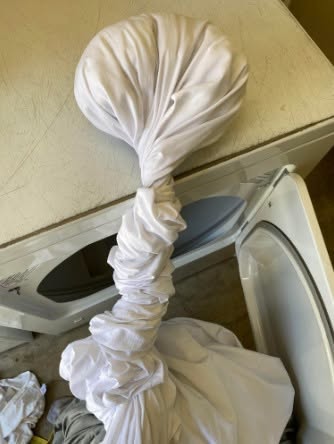
Few household chores are as satisfying as pulling warm, freshly dried sheets from the dryer—until you open the door and discover they’ve somehow twisted themselves into one giant, wrinkled bundle.
One sheet has wrapped around the other.
The pillowcases have disappeared inside the fitted sheet.
The center of the bundle is still damp while the outside feels dry.
If this happens every laundry day, you’re certainly not alone.
Tangled sheets are one of the most common frustrations people experience when drying bedding. Fortunately, it isn’t simply bad luck. The way sheets move inside the dryer follows predictable patterns, and a few small adjustments can dramatically reduce twisting, wrinkling, and uneven drying.
Here’s why sheets become tangled—and what you can do to keep them fluffy, smooth, and easier to fold.
Why Sheets Keep Twisting Together
Large pieces of fabric behave differently from smaller clothing items.
As the dryer rotates, sheets repeatedly lift, fall, and wrap around one another.
Fitted sheets are especially likely to trap other laundry because their elastic edges create a pocket that catches pillowcases, flat sheets, and lightweight items.
Once fabrics begin wrapping together, the rotating drum tightens the bundle with every turn.
The result is a tightly packed ball that prevents warm air from reaching the center, leaving some areas damp while others become overdried.
Start Before the Dryer Even Turns On
One of the easiest ways to prevent tangling begins immediately after removing the laundry from the washing machine.
Instead of transferring everything directly into the dryer, spend a minute separating each item.
Pull the Sheets Apart
If the fitted sheet is wrapped around another item, gently separate them before loading the dryer.
Starting with untangled fabric makes it much less likely that large knots will form later.
Shake Out Each Piece
Hold each sheet by two corners and give it several firm shakes.
This simple step helps unfold twisted fabric, removes wrinkles, and allows air to circulate more easily during drying.
It may feel like an extra chore, but it often saves time later by reducing wrinkles and eliminating the need to untangle damp bedding.
Close Duvet Covers
If you’re washing a duvet cover, zip or button it before placing it in the washer and dryer.
Otherwise, pillowcases, socks, and smaller laundry items often end up trapped inside.
Avoid Overloading the Dryer
One of the biggest causes of tangled sheets is simply putting too much laundry into one load.
When the drum is packed tightly, fabrics can’t tumble freely.
Instead, they continuously rub against each other, increasing the chances of twisting into a tight bundle.
For large bedding items, try filling the dryer only halfway to about two-thirds full.
Leaving extra space allows sheets to separate naturally as they tumble.
Dry Bedding Separately
Although combining sheets with clothing may seem like a time-saving idea, it often creates more problems.
Heavy sheets tend to wrap around lighter garments, trapping them inside.
Drying bedding separately helps improve airflow and allows each item to move more freely.
It can also reduce overall drying time.
Wool Dryer Balls Can Make a Big Difference
One of the simplest tools for preventing tangled sheets is a set of wool dryer balls.
These reusable balls bounce between layers of fabric while the dryer rotates.
Their movement helps:
- Separate sheets.
- Improve airflow.
- Reduce drying time.
- Minimize wrinkles.
- Decrease static electricity.
Unlike disposable dryer sheets, wool dryer balls can typically be reused hundreds of times.
Tennis Balls Can Also Help
If you don’t own wool dryer balls, clean tennis balls can produce a similar effect.
As they bounce around the drum, they help prevent heavy fabrics from sticking tightly together.
Some people prefer using dedicated laundry balls because they’re quieter and specifically designed for dryers, but tennis balls remain a popular alternative.
Add a Dry Towel
Another helpful trick is placing one clean, dry bath towel into the dryer with freshly washed sheets.
The towel absorbs some of the extra moisture early in the drying cycle.
It also increases movement inside the drum, making it harder for sheets to stay wrapped together.
Once the towel becomes damp, it continues tumbling between the sheets, helping separate the fabric.
Pause the Dryer Halfway Through
For oversized bedding, especially king-size sheets or comforters, a quick mid-cycle check can make a noticeable difference.
After about 20 to 30 minutes:
- Pause the dryer.
- Open the door.
- Shake out the sheets.
- Pull apart any sections beginning to twist together.
- Restart the cycle.
Taking less than a minute to do this often prevents one large knot from forming later.
Use the Right Heat Setting
Many people automatically choose high heat because they want laundry finished faster.
However, medium or low heat is often better for sheets.
Lower temperatures:
- Reduce excessive wrinkling.
- Help protect cotton fibers.
- Reduce static cling.
- Extend the lifespan of bedding.
Although drying may take slightly longer, your sheets will often look and feel better afterward.
Why Sheets Become a Giant Ball in the Dryer
If you’ve ever wondered why this happens so consistently, there’s actually a simple explanation.
As the dryer drum rotates, large fabrics lift, fall, and tumble repeatedly. A fitted sheet, with its elastic corners, naturally forms a pocket that catches pillowcases, flat sheets, and even smaller clothing items.
Once another item becomes trapped inside, every rotation of the drum tightens the bundle a little more.
At the same time, damp fabric tends to cling together because of moisture and friction. Since warm air can’t circulate properly through the tightly packed bundle, the outside dries first while the center often remains damp.
This is why you sometimes pull out a huge ball of bedding that’s partially dry and partially still wet.
Don’t Leave Sheets Sitting After the Dryer Stops
Even if your sheets dry perfectly, leaving them inside the dryer for an hour can create another problem: wrinkles.
As hot fabric cools, folds and creases begin to set.
To minimize wrinkles:
- Remove sheets promptly after the cycle ends.
- Give each piece a quick shake.
- Fold them immediately if possible.
- If you can’t fold them right away, drape them over a chair or lay them flat on the bed until you’re ready.
This simple habit can reduce the need for ironing later.
Should You Use Fabric Softener?
Fabric softener is a personal preference, but many laundry experts recommend using it sparingly.
Liquid fabric softeners can leave a thin coating on fabric fibers.
Over time, this buildup may:
- Reduce absorbency.
- Increase residue inside the dryer.
- Make fabrics cling together more easily.
If your goal is softer sheets without buildup, reusable wool dryer balls are often a good alternative.
They soften fabrics naturally through repeated tumbling and can help reduce static electricity.
Extra Tips for Better Laundry Results
Small adjustments to your laundry routine can make a noticeable difference.
Wash Sheets Separately
Avoid mixing bedding with heavy towels or lightweight clothing.
Keeping similar fabrics together allows everything to dry more evenly.
Match Similar Sizes
King-size sheets are more likely to tangle with smaller bedding.
Whenever possible, wash complete bedding sets together rather than mixing different sizes.
Clean the Lint Filter
A clogged lint filter restricts airflow.
Poor airflow increases drying time and allows sheets to remain tangled longer.
Cleaning the filter before every load improves drying efficiency.
Don’t Overdry
Running the dryer longer than necessary can increase wrinkles and unnecessary wear on fabrics.
Use moisture sensors if your dryer has them.
Rotate Bedding Regularly
Owning multiple sheet sets allows each one to rest between washes, reducing wear and extending its lifespan.
Frequently Asked Questions
Do wool dryer balls really work?
Yes.
Many households find that wool dryer balls improve airflow, reduce static, shorten drying time, and help keep large fabrics separated.
Can tennis balls replace dryer balls?
Yes.
Clean tennis balls can produce a similar bouncing effect inside the dryer.
However, some people notice that tennis balls create more noise than wool dryer balls.
Why are the center of my sheets still damp?
Usually because the sheets have wrapped tightly together.
When this happens, warm air can’t circulate into the middle of the bundle.
Separating the sheets before drying and avoiding overloaded loads usually solves the problem.
Is low heat really better?
For most cotton sheets, yes.
Lower temperatures are gentler on fabric fibers, reduce shrinkage, and often produce fewer wrinkles.
Although drying may take slightly longer, your bedding may last longer as well.
Can I untangle sheets without starting another dryer cycle?
Sometimes.
If the sheets are only slightly twisted, simply shaking them vigorously may be enough.
If they’re still damp inside, returning them to the dryer for another 10–15 minutes after separating them is usually the quickest solution.
Build a Better Laundry Routine
Keeping sheets smooth isn’t about one magic trick.
It’s the combination of several small habits:
- Separate sheets before drying.
- Shake each item thoroughly.
- Avoid overloading the drum.
- Use dryer balls if available.
- Dry bedding separately.
- Remove sheets promptly after the cycle finishes.
Each step only takes a few extra seconds, but together they can greatly improve the final result.
Final Thoughts
Tangled sheets are one of the most common laundry frustrations, but they don’t have to be an inevitable part of wash day.
By giving your bedding a little extra attention before it enters the dryer, allowing enough room for fabrics to tumble freely, and using simple tools like wool dryer balls, you can greatly reduce twisting, wrinkles, and uneven drying.
No laundry routine will be perfect every time, especially with oversized comforters and fitted sheets. But adopting a few practical habits can make the process much smoother—and save you from wrestling with a giant ball of warm cotton every week.
Sometimes the simplest household tricks are also the most effective. A quick shake, a little extra space in the dryer, and a few dryer balls may be all it takes to enjoy fresh, fluffy, neatly dried sheets every laundry day.