
When we see danger unfolding in front of us, our first instinct is often to help. Whether it’s breaking up an argument, rescuing an animal, or protecting someone from harm, many people react without stopping to consider the risks.
That instinct comes from compassion—but in situations involving large animals, good intentions alone may not be enough.
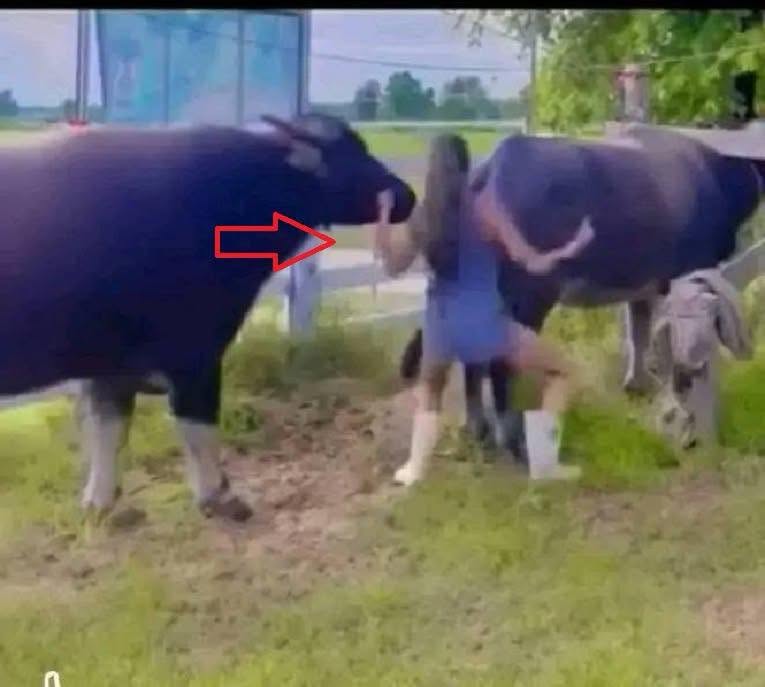
A recent incident involving a young woman who attempted to separate two fighting water buffaloes has become a sobering reminder of just how powerful and unpredictable livestock can be. What began as an effort to stop the confrontation quickly turned into a serious emergency, highlighting the importance of understanding animal behavior and knowing when it is safest to keep your distance.
While the circumstances surrounding the event have attracted attention online, the larger lesson extends far beyond a single incident. Experts say that livestock-related injuries often occur not because animals are naturally aggressive, but because people underestimate their strength or misjudge their behavior.
Understanding these risks can help prevent similar accidents in farms, rural communities, and anywhere people interact with large animals.
A Dangerous Situation Escalated in Seconds
According to reports, two water buffaloes became engaged in an aggressive confrontation.
The young woman reportedly attempted to intervene by moving between the animals in an effort to stop the fight.
Witnesses described a chaotic scene as the buffaloes continued pushing against one another with tremendous force.
Within moments, the animals’ movements became impossible to predict.
As they lunged, turned, and struggled for dominance, the woman was knocked to the ground and seriously injured.
Emergency medical assistance was reportedly required following the incident.
Although the exact details may vary between accounts, animal behavior specialists agree on one important point:
Standing between two fighting large animals is an extremely dangerous situation that should be avoided whenever possible.
Why Water Buffaloes Are So Powerful
Water buffaloes are among the largest domesticated animals in the world.
Depending on age and breed, an adult can weigh anywhere from 1,100 to more than 2,600 pounds (500–1,200 kilograms).
Their massive bodies are supported by powerful muscles developed for pulling heavy loads, working in fields, and moving through muddy terrain.
Even under calm conditions, they possess enormous strength.
During moments of fear, stress, or aggression, that strength increases dramatically.
Unlike humans, animals react primarily through instinct.
When threatened or engaged in conflict, they focus on survival rather than their surroundings.
Anyone standing nearby can unintentionally become part of the danger.
Why Do Water Buffaloes Fight?
Conflict between livestock is not unusual.
Several natural behaviors may trigger aggressive encounters.
Establishing Dominance
Male buffaloes may compete to determine social rank within a herd.
Dominance influences access to food, territory, and breeding opportunities.
Competition for Resources
Limited food, water, or resting areas may increase tension between animals.
Competition can become more intense when resources are scarce.
Protecting Territory
Like many herd animals, buffaloes sometimes defend areas they consider their own.
Another animal entering that space may trigger aggressive behavior.
Stress or Fear
Sudden noises, unfamiliar people, transportation, weather changes, or crowded conditions can increase stress levels.
Animals experiencing stress are generally less predictable.
Protecting Young
Female buffaloes with calves often become especially protective if they believe their offspring are threatened.
This defensive behavior is a normal instinct but can be dangerous for anyone nearby.
Recognizing the Warning Signs
Experienced livestock handlers often recognize changes in an animal’s body language before aggression occurs.
Some common warning signs include:
- Ears pinned backward or held rigidly.
- Lowered head with horns pointing forward.
- Loud snorting or repeated vocalizations.
- Pawing the ground.
- A stiff body posture.
- Rapid turning or pivoting.
- Direct, fixed eye contact.
These behaviors suggest the animal is becoming increasingly agitated.
Creating distance immediately is usually the safest response.
Why Experts Strongly Discourage Direct Intervention
Animal behavior specialists consistently advise against attempting to separate fighting livestock without proper training and equipment.
The reasons are straightforward.
Large animals move quickly.
Their attention is focused on one another.
They are unlikely to notice—or understand—the presence of someone trying to intervene.
As a result, a person may be:
- Knocked down.
- Trampled.
- Struck by horns.
- Kicked by powerful legs.
- Thrown into nearby fences, gates, or equipment.
Even experienced handlers approach these situations cautiously and often rely on specialized techniques rather than physical force.
Good Intentions Don’t Always Prevent Injury
Many livestock accidents happen because people genuinely want to help.
Someone may believe that shouting, pulling on an animal, or standing between two fighting animals will calm the situation.
Unfortunately, aggressive animals are reacting instinctively.
They are not evaluating a person’s intentions.
Instead, they continue responding to perceived threats around them.
Understanding this distinction is one of the most important aspects of livestock safety.
Common Mistakes People Make Around Large Livestock
Many people underestimate the risks posed by farm animals because they see them regularly in fields, agricultural communities, or petting farms. Their calm appearance most of the time can create a false sense of security.
However, even animals that are usually gentle can react unpredictably when frightened, stressed, or engaged in conflict.
Some of the most common mistakes include:
Standing Too Close
When two large animals are confronting each other, every second matters.
Standing nearby leaves very little time to react if one animal suddenly charges or changes direction.
Trying to Separate Fighting Animals Alone
Attempting to pull, push, or physically separate animals that each weigh hundreds of kilograms is extremely dangerous.
Even experienced livestock handlers rarely intervene without assistance, planning, and specialized equipment.
Entering Enclosed Pens
Confined spaces increase the risk of injury because escape routes are limited.
If an animal suddenly charges, fences or walls may prevent a person from moving to safety.
Assuming Familiar Animals Won’t Become Aggressive
Animals that are handled daily can still become defensive when they feel threatened or are competing with another animal.
Familiarity should never replace caution.
Ignoring Early Warning Signs
Many aggressive incidents begin with subtle behavioral changes.
Recognizing these signs early provides an opportunity to move away before the situation escalates.
What Experts Recommend Instead
If you ever encounter fighting livestock, personal safety should always be your first priority.
Professionals recommend the following steps.
Stay Calm
Avoid making sudden movements or loud noises that could increase the animals’ stress.
Take a moment to assess the situation before acting.
Create Distance
Move away from the animals immediately.
If possible, position yourself behind a sturdy fence, vehicle, or other protective barrier.
Distance remains the most effective form of protection.
Contact Someone Experienced
If the animals belong to a farm, notify the owner or an experienced livestock handler.
Veterinarians, animal control officers, and trained farm workers have the knowledge and equipment needed to manage dangerous situations safely.
Keep Others Away
Prevent children, visitors, and pets from approaching the area.
Reducing activity around the animals may also help prevent additional stress.
Allow Professionals to Handle the Situation
Experienced handlers may use gates, panels, temporary barriers, or other specialized techniques to separate animals while minimizing risk to both people and livestock.
These methods require training and should not be attempted without experience.
If Someone Is Injured
Livestock-related injuries should always be taken seriously.
Even if the wounds appear minor, internal injuries may not be immediately obvious.
If someone is hurt:
- Move them to safety if it can be done without creating additional danger.
- Call emergency medical services immediately.
- Apply firm pressure to control serious bleeding.
- Avoid moving someone with a suspected neck, back, or spinal injury unless they remain in immediate danger.
- Keep the injured person warm and monitor their breathing until professional help arrives.
Prompt medical evaluation is important because injuries caused by large animals can involve fractures, internal bleeding, or head trauma.
Frequently Asked Questions
Are water buffaloes naturally aggressive?
No.
Water buffaloes are generally calm when properly managed.
Most aggressive behavior occurs when animals are frightened, competing for dominance, protecting young, or experiencing stress.
Can experienced farmers still be injured?
Yes.
Even individuals with decades of experience can be injured around livestock.
Experience reduces risk but cannot eliminate the unpredictable nature of animal behavior.
Is it safe to touch a water buffalo?
Only under controlled conditions and with permission from an experienced handler.
Never approach unfamiliar animals or those showing signs of stress or aggression.
Can children safely interact with livestock?
Children should always remain under close adult supervision around farm animals.
They should be taught not to run, shout, or approach large animals without guidance.
Can aggressive behavior be prevented?
Although no method is perfect, farmers can reduce conflict by:
- Providing adequate space.
- Maintaining consistent feeding routines.
- Avoiding overcrowding.
- Handling animals calmly.
- Monitoring herd behavior for early signs of tension.
Good livestock management benefits both animals and people.
Respect Is the Foundation of Safety
Incidents involving large animals remind us that strength and size deserve respect.
Animals are not acting out of anger or malice.
They respond to instinct, environmental pressures, and perceived threats.
Understanding this helps us make safer decisions while promoting better animal welfare.
Knowing when to step back, observe from a distance, and seek experienced assistance is often the safest choice for everyone involved.
Final Thoughts
The incident involving the young woman and the fighting water buffaloes serves as a powerful reminder that good intentions do not always prevent accidents.
Large livestock possess tremendous strength and can move with remarkable speed, especially during moments of conflict. Even experienced handlers understand that attempting to physically separate fighting animals carries significant risk.
Whether you live on a farm, work with livestock, or simply visit rural areas from time to time, taking the time to learn basic animal behavior and safety principles can make a meaningful difference.
Respecting an animal’s space, recognizing early warning signs, and knowing when to call for professional assistance are simple steps that help protect both people and animals.
Sometimes, the safest decision is not to intervene directly but to allow trained professionals to manage the situation. By combining awareness, patience, and respect, we can reduce the risk of preventable injuries and promote safer interactions wherever humans and large animals share the same environment.