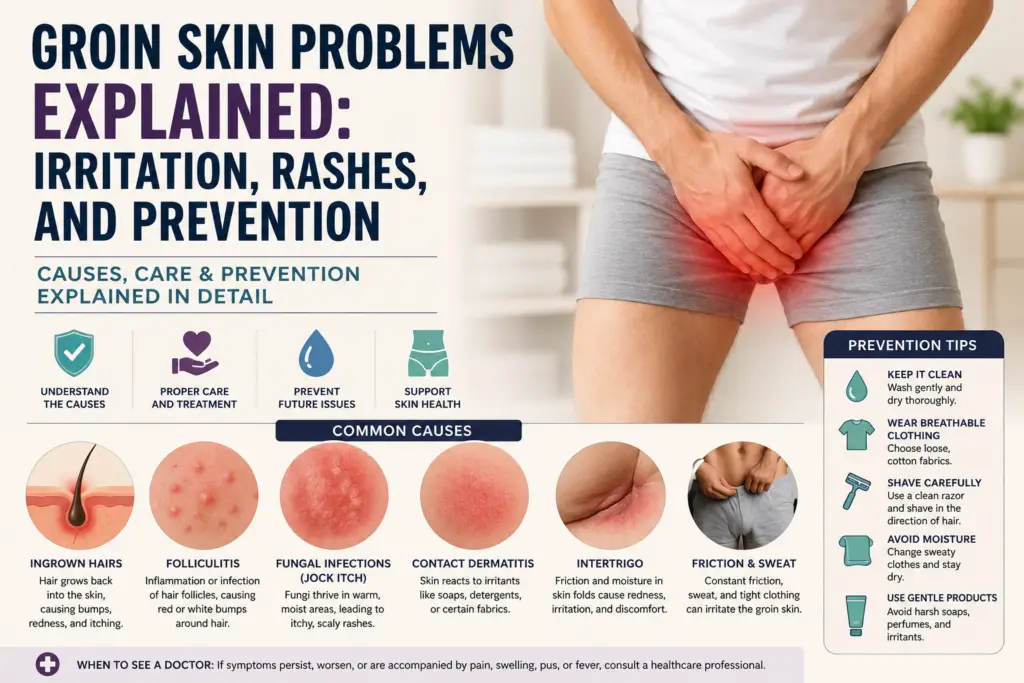
Groin skin irritation is one of the most common yet least discussed health concerns affecting people of all ages. Because the groin is a sensitive area where heat, moisture, friction, and constant movement come together, it is especially vulnerable to a wide range of skin conditions. While many people feel embarrassed discussing these issues, groin irritation is incredibly common and, in most cases, completely manageable with proper care and understanding.
Whether you’re dealing with occasional itching, persistent redness, unexplained bumps, or recurring rashes, understanding the causes behind these symptoms is the first step toward relief. Fortunately, most groin skin problems are not serious and can often be improved through simple lifestyle adjustments, proper hygiene, and timely treatment when necessary.
This comprehensive guide explains why the groin area is so susceptible to irritation, the most common conditions that affect it, practical prevention strategies, and when it may be time to seek professional medical advice.
Why the Groin Area Is So Vulnerable
Unlike many other areas of the body, the groin creates an ideal environment for skin irritation. Several factors work together to increase the likelihood of discomfort and skin problems.
Constant Friction
Every step you take creates movement between skin surfaces. Walking, exercising, climbing stairs, and even sitting for long periods can generate friction. Over time, this friction can damage the skin’s protective barrier and cause irritation.
Excess Moisture
The groin contains numerous sweat glands. Combined with limited airflow, sweat can accumulate quickly, creating a moist environment where irritation and infections thrive.
Heat Retention
Tight clothing, skin folds, and body heat can cause temperatures in the groin area to remain higher than in other parts of the body. Warmth encourages the growth of fungi and bacteria.
Hair Growth and Grooming
Many people shave, wax, or trim hair in the groin region. While grooming is a personal choice, it can increase the risk of ingrown hairs, folliculitis, and skin irritation if not done carefully.
Sensitive Skin
The skin in the groin area is naturally thinner and more sensitive than skin found elsewhere on the body. This makes it more susceptible to reactions from soaps, detergents, fabrics, and personal care products.
Common Symptoms of Groin Skin Problems
While the exact cause may vary, many groin conditions share similar symptoms.
Common signs include:
- Redness
- Itching
- Burning sensations
- Dry or flaky skin
- Raised bumps
- Tenderness
- Swelling
- Discoloration
- Rash formation
- Peeling skin
Because different conditions often produce similar symptoms, proper identification is important for effective treatment.
Ingrown Hairs: A Frequent Cause of Groin Bumps
One of the most common causes of irritation in the groin area is ingrown hair.
What Causes Ingrown Hairs?
Normally, hair grows upward and out of the skin. However, when hair curls back into the skin or becomes trapped beneath the surface, it can create a small inflammatory reaction.
This often occurs after:
- Shaving
- Waxing
- Plucking
- Tight clothing friction
People with curly or coarse hair are particularly prone to developing ingrown hairs.
Symptoms of Ingrown Hairs
Ingrown hairs typically appear as:
- Small red bumps
- Flesh-colored bumps
- Mild swelling
- Tenderness
- Itching
- Visible trapped hairs
Sometimes the bumps resemble acne or small cysts.
How to Manage Ingrown Hairs
Most ingrown hairs improve without aggressive treatment.
Helpful strategies include:
- Applying warm compresses
- Avoiding further shaving until healed
- Wearing loose-fitting clothing
- Using gentle cleansers
- Avoiding squeezing or picking
Picking at ingrown hairs can increase the risk of infection and scarring.
Understanding Folliculitis
Folliculitis is another common source of groin discomfort.
What Is Folliculitis?
Folliculitis occurs when hair follicles become inflamed or infected. It often appears as clusters of small red bumps surrounding hair follicles.
The condition can develop due to:
- Bacterial growth
- Fungal overgrowth
- Shaving
- Excessive sweating
- Friction
- Poor ventilation
Symptoms
People with folliculitis may notice:
- Red bumps
- White-tipped pimples
- Itching
- Burning sensations
- Mild pain
- Crusting
Treatment Options
Mild cases often improve with:
- Gentle cleansing
- Warm compresses
- Avoiding shaving
- Keeping the area dry
- Wearing breathable clothing
Persistent cases may require medical evaluation to determine whether bacterial or fungal treatment is necessary.
Fungal Infections: One of the Most Common Causes of Groin Rashes
A fungal infection of the groin, often called jock itch, is extremely common.
Why Fungal Infections Develop
Fungi thrive in:
- Warm environments
- Moist skin
- Poorly ventilated areas
The groin naturally provides ideal conditions for fungal growth when moisture accumulates.
Risk Factors
Several factors increase risk:
- Excessive sweating
- Tight clothing
- Obesity
- Humid climates
- Sharing towels
- Inadequate drying after bathing
Typical Symptoms
A fungal infection often produces:
- Persistent itching
- Red or darkened patches
- Scaling skin
- Flaking
- Defined rash borders
- Spreading irritation
Managing Fungal Infections
Successful treatment usually includes:
- Antifungal creams
- Keeping skin dry
- Daily hygiene
- Loose cotton underwear
- Changing damp clothes promptly
Many people stop treatment too soon, which can lead to recurrence. Consistency is essential.
Contact Dermatitis: When Skin Reacts to Everyday Products
Sometimes the problem isn’t an infection at all.
What Is Contact Dermatitis?
Contact dermatitis occurs when the skin reacts to a substance that causes irritation or triggers an allergic response.
The groin is especially vulnerable because products remain in close contact with the skin for extended periods.
Common Triggers
Potential irritants include:
- Scented soaps
- Laundry detergents
- Fabric softeners
- Deodorants
- Personal lubricants
- Shaving products
- Synthetic fabrics
Symptoms
Contact dermatitis often causes:
- Redness
- Burning
- Itching
- Dry patches
- Peeling skin
- Small blisters
Finding Relief
The most important step is identifying and eliminating the trigger.
Many people benefit from:
- Fragrance-free products
- Gentle cleansers
- Moisturizers
- Cotton underwear
- Avoiding harsh chemicals
Once the irritant is removed, symptoms often improve significantly.
Intertrigo: Friction Meets Moisture
Intertrigo develops when skin folds repeatedly rub together.
Why It Happens
The condition is especially common in:
- Warm climates
- Individuals who sweat heavily
- People with larger skin folds
- Those who wear tight clothing
Friction damages the skin while trapped moisture prevents healing.
Symptoms
Intertrigo may cause:
- Bright redness
- Burning
- Raw skin
- Tenderness
- Unpleasant odor
- Secondary infections
Prevention and Care
Helpful strategies include:
- Keeping folds dry
- Using moisture-wicking fabrics
- Applying barrier creams
- Improving airflow
- Losing excess weight if recommended
Managing moisture is often the key to controlling symptoms.
The Role of Hygiene in Preventing Groin Irritation
Good hygiene can significantly reduce the risk of many groin conditions.
Daily Care Recommendations
Experts recommend:
- Washing daily with mild cleansers
- Avoiding harsh scrubbing
- Rinsing thoroughly
- Drying completely
- Changing underwear daily
However, excessive washing can also damage the skin barrier.
Balance is important.
Choosing the Right Clothing
What you wear can have a major impact on skin health.
Best Fabric Choices
Breathable materials include:
- Cotton
- Bamboo fabrics
- Moisture-wicking athletic materials
These fabrics allow airflow and help reduce moisture accumulation.
Clothing to Avoid
Certain items may increase irritation:
- Tight underwear
- Tight jeans
- Synthetic fabrics
- Damp workout clothes
Changing out of sweaty clothing as soon as possible can greatly reduce risk.
Grooming Practices That Protect Skin
Hair removal can increase skin sensitivity.
Safe Grooming Tips
To reduce irritation:
- Use sharp, clean razors
- Shave in the direction of hair growth
- Use shaving cream
- Avoid dry shaving
- Replace blades regularly
Some individuals find trimming less irritating than complete hair removal.
Nutrition and Skin Health
Although groin irritation is usually caused by external factors, nutrition supports healthy skin overall.
A balanced diet rich in:
- Fruits
- Vegetables
- Lean proteins
- Healthy fats
- Water
can help maintain a strong skin barrier and support healing.
Emotional Effects of Groin Skin Conditions
Groin irritation doesn’t just affect physical comfort.
Many individuals experience:
- Embarrassment
- Anxiety
- Self-consciousness
- Relationship concerns
- Reduced confidence
It’s important to remember that these conditions are extremely common and do not indicate poor hygiene or personal failure.
Millions of people experience similar issues every year.
When to Seek Medical Attention
While many groin skin conditions improve with self-care, some situations require professional evaluation.
Contact a healthcare provider if:
- Symptoms persist longer than two weeks
- Pain becomes severe
- Swelling increases
- Pus develops
- Fever occurs
- The rash spreads rapidly
- Symptoms repeatedly return
A healthcare professional can determine the exact cause and recommend appropriate treatment.
Long-Term Prevention Strategies
Preventing future irritation often comes down to consistency.
Develop habits such as:
- Wearing breathable clothing
- Keeping skin dry
- Practicing gentle hygiene
- Avoiding unnecessary irritation
- Managing sweat promptly
- Using skin-friendly products
Small daily choices can make a significant difference over time.
Final Thoughts
Groin skin irritation is a common health concern that affects people from all walks of life. Although symptoms such as itching, redness, bumps, and rashes can be frustrating, understanding their causes makes them much easier to manage.
Whether the issue involves ingrown hairs, folliculitis, fungal infections, contact dermatitis, or simple friction-related irritation, early attention and proper care often prevent symptoms from becoming more severe.
The most effective approach combines good hygiene, breathable clothing, careful grooming habits, and prompt treatment when needed. Most importantly, remember that groin skin conditions are common, treatable, and nothing to be embarrassed about.
By understanding how these conditions develop and taking simple preventive steps, you can protect your skin, improve comfort, and maintain better overall health for years to come.