
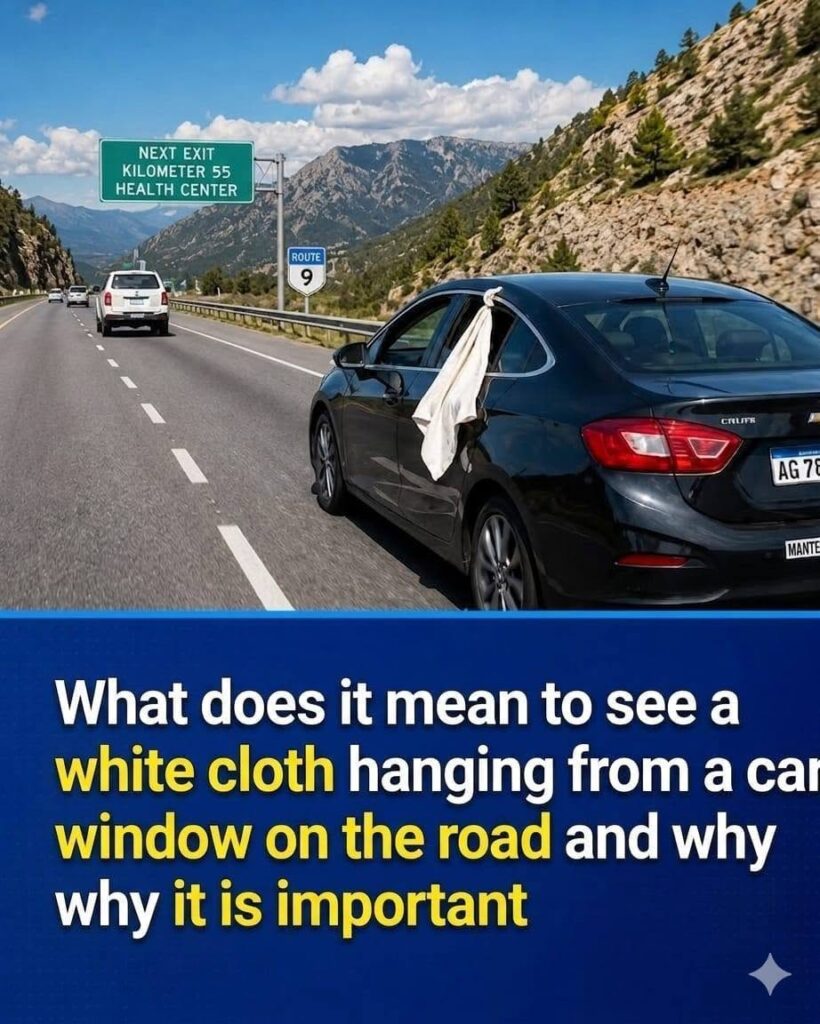
You may have seen a viral warning online claiming that a white cloth in car windows is a secret sign of danger. Some posts say it means criminals are marking vehicles. Others claim it signals a trap, a carjacking setup, or a warning that someone nearby is being targeted.
The truth is much simpler.
In most cases, a white cloth in car windows means nothing scary at all. It usually points to a broken-down car, a forgotten cleaning rag, a mechanic’s reminder, or a simple roadside signal asking for help. Like many viral rumors, this one turns an ordinary object into something frightening.
A white cloth in car windows can catch your attention because it looks unusual. However, unusual does not always mean dangerous. Sometimes it just means someone washed their car, wiped fog off the windshield, marked a repair issue, or tried to signal that their vehicle needed assistance.
Why People Notice a White Cloth in Car Windows
It Looks Out of Place
Most cars do not have cloth hanging from windows, mirrors, or handles, so the sight naturally stands out. When something looks different, people pause and wonder what it means. That reaction is normal.
However, the internet often takes these small mysteries and adds fear. A simple rag becomes a “secret code.” A forgotten towel becomes a “criminal sign.” Before long, thousands of people share the warning without checking whether it is true.
That is how harmless things become scary stories.
Viral Fear Spreads Fast
Fear-based posts spread quickly because people want to protect their friends and family. Someone sees a warning, feels worried, and shares it “just in case.”
Unfortunately, these warnings often create more anxiety than awareness. They make people suspicious of ordinary drivers, neighbors, and strangers who may simply need help.
A white cloth in car windows should not automatically make you panic. Instead, it should make you observe calmly and use common sense.
The Most Common Real Reasons
A Roadside Distress Signal
One of the oldest meanings of a white cloth in car windows is simple: the vehicle may be broken down.
Before cell phones became common, drivers often tied a white cloth to a window, antenna, mirror, or door handle to show passing motorists or police that the car needed help. It was a visible way to say, “This vehicle is disabled.”
Even today, some people still use this signal when their phone dies, they lose service, or they need a tow.
So, if you see a car on the shoulder of a road with a white cloth hanging from it, the most likely meaning is not danger. It is probably a request for assistance.
A Mechanic’s Reminder
A white rag may also serve as a “do not drive” reminder.
For example, someone may place a cloth on a car if:
The battery is dead.
The brakes need work.
The tire is unsafe.
The engine has a problem.
The car is waiting for repairs.
This simple visual cue helps the owner remember not to drive the vehicle until the issue is fixed. It is especially common when more than one person uses the same car.
A Forgotten Cleaning Towel
Sometimes the explanation is even simpler.
Someone washed the car, wiped the windshield, cleaned the mirrors, or dried the windows, then left the towel behind. It may get tucked into a window seal, draped over a mirror, or caught in a door.
Then the driver forgets it and drives away.
No secret message. No hidden meaning. Just everyday forgetfulness.
A Weather Trick
In cold or wet weather, people sometimes use cloths inside their vehicles to wipe fog, condensation, rainwater, or ice. A rag may be left near a window for convenience.
In winter, some drivers may also use a cloth to help with frozen seals or to keep a window slightly cracked. Again, it is practical, not suspicious.
Why the Criminal Signal Myth Is Harmful
It Creates Unnecessary Fear
The biggest problem with viral warnings is that they make people feel unsafe without evidence. A person may see a harmless rag and immediately feel threatened.
Living with constant suspicion can make daily life more stressful. It also makes the world seem more dangerous than it really is.
It Can Stop People From Helping
The distress-signal meaning matters.
If everyone believes a white cloth means danger, fewer people may help stranded drivers. Someone with a broken-down car could be ignored because others assume the worst.
You should never put yourself at risk, but you can still respond safely. For example, you can call roadside assistance, alert highway patrol, or report a stranded vehicle from a safe distance.
It Damages Community Trust
Most people are not setting traps. Most people are just dealing with normal life: car trouble, bad weather, forgotten towels, or repair reminders.
When viral rumors teach people to fear every unusual detail, communities become colder and less trusting.
What You Should Do If You See One
If the Car Is Parked
If the car is in a driveway, parking lot, or repair area, no action is usually needed. The cloth likely has a practical reason.
Just keep walking or driving.
If the Car Is on the Roadside
If a vehicle is pulled over with a white cloth visible, it may be disabled.
Do not stop unless you feel safe. Instead, you can call local non-emergency services or roadside patrol and give the location.
That way, you help without putting yourself in an uncomfortable situation.
If It Is on Your Own Car
Check your vehicle.
You may have forgotten a towel, left a rag after cleaning, or someone may have marked the car because it needs repair. Remove the cloth and inspect the car before driving.
Frequently Asked Questions
Does a white cloth in a car window mean danger?
Usually, no. It most often means the car is broken down, being repaired, recently cleaned, or affected by weather.
Is it a secret criminal code?
There is no reliable evidence that white cloths in car windows are commonly used as criminal signals.
Should I call the police?
Only call if the situation appears unsafe, the vehicle is blocking traffic, someone seems distressed, or the car appears abandoned in a dangerous location.
Should I stop to help?
Only stop if you feel completely safe. Otherwise, call roadside help or local authorities.
Why do people believe the myth?
Because fear spreads quickly online. People share warnings to protect others, even when the claim has not been verified.
Conclusion
A white cloth in car windows may look mysterious, but the real meaning is usually ordinary. It can signal car trouble, mark a repair issue, serve as a forgotten cleaning towel, or help with weather-related problems.
The important lesson is simple: stay aware, but do not panic.
Most of the time, the world is not hiding secret danger signs. Sometimes a white cloth is just a white cloth.