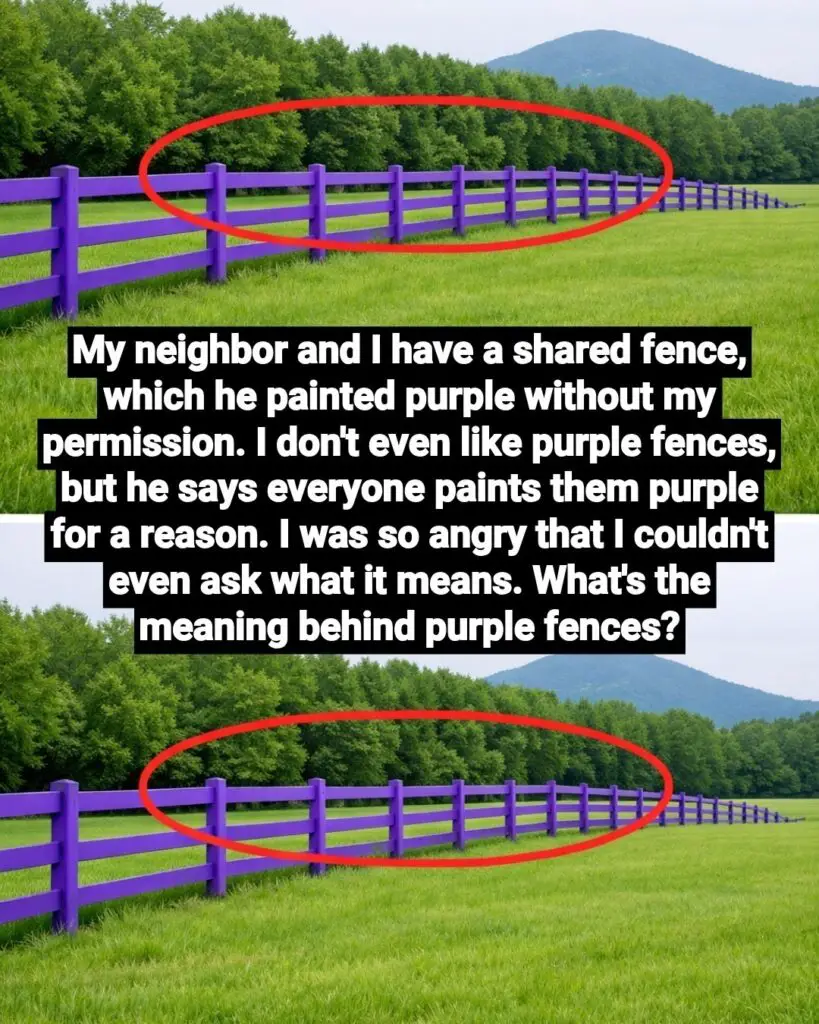
Most people assume a purple-painted fence is simply a personal style choice. However, in many parts of the United States, purple paint on fences, trees, or posts carries a very specific meaning — and it is far more important than decoration.
In several states, especially in rural areas across the South, Midwest, and parts of the West, purple paint serves as an official “No Trespassing” warning. This system is commonly known as the Purple Paint Law.
At first glance, the idea may sound strange. Why purple? Why not use traditional signs? The answer comes down to practicality, visibility, and legal clarity for large rural properties where maintaining hundreds of signs would be difficult and expensive.
Many hikers, hunters, and outdoor travelers have unknowingly crossed private land simply because they did not recognize these purple markings. Learning what they mean can help prevent legal trouble and encourage respectful use of rural spaces.
A man once recalled taking a shortcut through wooded land while hiking in a southern state. Along the tree line, he noticed several bright purple marks painted vertically on fence posts but assumed they were related to forestry work. Later, a local resident explained that the markings legally meant “No Trespassing.” Fortunately, he had not gone far onto the property, but the experience taught him how important these markings can be — especially in rural communities where land boundaries stretch for miles.
What Is the Purple Paint Law?
Purple Paint Serves as a Legal Warning
The Purple Paint Law allows landowners to mark private property boundaries using purple paint instead of traditional signs.
In states recognizing the law, purple markings carry the same legal authority as posted “No Trespassing” signs.
This helps property owners communicate boundaries clearly without constantly replacing damaged or stolen signs.
Purple paint may appear on:
- Fence posts
- Trees
- Rocks
- Gate entrances
- Boundary markers
The markings are usually placed along property lines at regular intervals.
Why the Law Was Created
Large rural properties can stretch across hundreds or even thousands of acres.
Posting signs everywhere becomes difficult because signs may:
- Fade
- Blow away
- Get vandalized
- Become hidden by vegetation
Paint lasts longer and requires less maintenance.
The law was designed to create a simple, durable system that both landowners and visitors could recognize easily.
Why Purple Was Chosen
Purple Stands Out Clearly
Purple was selected because it remains highly visible in natural outdoor environments.
It contrasts well against:
- Green trees
- Brown bark
- Snow
- Grass
- Dirt
Unlike red or yellow, purple is relatively uncommon in nature, making it easier to recognize intentionally.
Purple Avoids Confusion With Utility Colors
Different paint colors already serve specific industrial purposes.
For example:
- Red → electrical lines
- Yellow → gas pipelines
- Orange → communication lines
- Blue → water utilities
- Pink → temporary survey markings
Purple was chosen partly because it avoided confusion with these existing systems.
Over time, it became widely associated with property boundaries in participating states.
How Purple Paint Must Be Applied
States Usually Have Specific Rules
Although laws vary slightly by state, most require purple markings to follow clear standards so they remain recognizable.
Common requirements include:
- Vertical lines
- Specific paint dimensions
- Consistent spacing
- Placement at visible height
For example, many states require markings to be:
- 8 to 12 inches long
- 1 inch wide
- Positioned 3 to 5 feet above ground
These rules help ensure markings cannot be mistaken for accidental paint splashes.
Spacing Rules Help Define Boundaries
Property owners usually place markings at regular intervals.
Depending on the state, paint marks may appear every:
- 100 feet
- 500 feet
- 1,000 feet
Spacing requirements often depend on terrain visibility and local regulations.
The goal is to create a clear visual boundary line.
States That Recognize Purple Paint Laws
The Law Is Not Nationwide
One important detail many people misunderstand is that Purple Paint Laws are state-specific, not federal.
Several states officially recognize purple paint as a legal trespassing notice, including:
- Texas
- Arkansas
- Missouri
- Florida
- Illinois
- Kansas
- North Carolina
- Tennessee
- Pennsylvania
- Maine
Additional states have adopted similar laws over time.
Some States Do Not Recognize Purple Paint
In states without Purple Paint Laws, purple markings may not carry official legal meaning.
For example, some western or coastal states still rely primarily on:
- Posted signs
- Fences
- Gates
- Written notices
Because laws vary, travelers should remain aware of local regulations when hiking, hunting, or exploring unfamiliar areas.
When uncertain, it is safest to treat purple markings respectfully and avoid crossing boundaries without permission.
Why Rural Landowners Use Purple Paint
Protecting Property and Privacy
Many rural landowners rely on Purple Paint Laws to protect:
- Farms
- Ranches
- Livestock
- Timberland
- Hunting property
- Equipment
Trespassing can create serious safety and financial concerns for property owners.
For example, unauthorized visitors may accidentally:
- Damage crops
- Disturb animals
- Leave gates open
- Start fires
- Interfere with hunting activity
Clear property markings help reduce misunderstandings.
Paint Lasts Longer Than Signs
Outdoor signs often deteriorate quickly due to:
- Rain
- Wind
- Snow
- Sun exposure
- Vandalism
Paint offers a simpler long-term solution.
A painted stripe on a tree or fence post may remain visible for years with minimal maintenance.
This makes the system especially practical for remote rural land.
What Happens if Someone Ignores Purple Paint?
Trespassing Laws Still Apply
In states recognizing Purple Paint Laws, ignoring marked boundaries may result in trespassing violations.
Potential consequences can include:
- Fines
- Citations
- Removal from property
- Criminal trespass charges
The severity depends on local laws and circumstances.
Intent Does Not Always Matter
Some people assume they cannot get into trouble if they “did not know” the paint meant no trespassing.
However, legally recognized markings often serve as official notice regardless of personal understanding.
That is why public awareness of these laws matters.
Understanding the meaning of purple paint helps people avoid accidental violations.
Common Situations Where Purple Paint Appears
Hiking and Outdoor Recreation Areas
Outdoor enthusiasts may encounter purple markings while:
- Hiking
- Hunting
- Fishing
- Riding ATVs
- Camping
In wooded areas, paint often appears directly on trees near trails or access roads.
Rural Roads and Fence Lines
Purple-painted fences or posts may also appear along:
- Farm roads
- Ranch entrances
- Pasture boundaries
- Timber property edges
Sometimes entire fence sections become painted purple to improve visibility from a distance.
Common Myths About Purple Fences
Myth: Purple Paint Is Decorative
Although some fences may simply be painted purple for style, repeated boundary markings often indicate legal property notices in certain states.
Myth: Purple Paint Means Dangerous Animals
The paint itself does not necessarily warn about animals. It specifically relates to trespassing laws.
Myth: Purple Paint Applies Everywhere
Purple Paint Laws only apply in states that officially recognize them.
Myth: Only Hunters Need to Know This
Anyone exploring rural property should understand these markings, including hikers and photographers.
Myth: A Fence Alone Is Always Enough
Some landowners use purple paint even when fences already exist to strengthen legal boundary notification.
What You Should Do If You See Purple Paint
Respect the Boundary
The safest response is simple:
- Stop
- Avoid crossing further
- Look for additional signs or gates
Treat the marking as a private property warning.
Ask Permission if Necessary
If access is needed, contact the property owner whenever possible.
Many landowners allow entry for certain activities when permission is requested respectfully.
Teach Children and Outdoor Groups
Families, hikers, and outdoor clubs benefit from understanding Purple Paint Laws before entering unfamiliar rural areas.
Awareness helps prevent misunderstandings and accidental trespassing.
Frequently Asked Questions
What does a purple fence mean?
In many states, purple paint marks legally indicate “No Trespassing” boundaries.
Is the Purple Paint Law federal?
No. It only applies in states that have adopted specific legislation.
Why was purple chosen?
Purple stands out in nature and avoids confusion with utility paint colors.
Can you get fined for ignoring purple paint?
Yes. In states recognizing the law, trespassing penalties may apply.
Does every purple fence mean no trespassing?
Not always. Some fences are simply decorative, but repeated boundary markings should be treated seriously.
Conclusion
A painted purple fence may look unusual at first, but in many parts of the United States, it carries an important legal meaning. Purple paint often serves as a clear “No Trespassing” warning designed to protect private property boundaries without relying solely on signs.
The Purple Paint Law offers landowners a durable and practical way to mark large rural properties while helping visitors recognize restricted areas more easily.
Because the law varies by state, understanding local regulations remains important for anyone who enjoys hiking, hunting, camping, or exploring outdoor spaces.
Sometimes a simple stripe of paint communicates far more than people realize. And knowing what it means can help avoid misunderstandings, legal trouble, and unnecessary conflict between neighbors and property owners.