Few things worry a parent faster than discovering a painful dark spot on a child’s foot overnight. The sudden appearance, unusual color, and tenderness can immediately trigger fears about infections, insect bites, serious injuries, or hidden illnesses.
In many cases, however, the cause is far less dangerous than it appears. One of the most common explanations is a blood blister — a pocket of trapped blood under the skin caused by friction, pressure, or minor trauma. Blood blisters can look dramatic because they often appear dark red, purple, or even black, especially on the thick skin of the foot.
Although they usually heal naturally, it is still important for parents to understand what they are seeing, how to care for it properly, and when medical attention may be necessary.
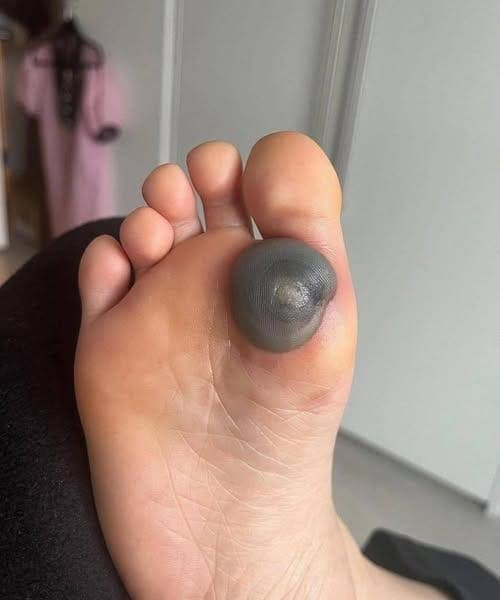
The image of a large dark blister on the foot can feel alarming at first glance. Yet understanding the science behind it often helps replace panic with calm observation and informed care.
One mother shared that her daughter woke up limping after a busy weekend of sports practice and playground activity. When she examined her foot, she noticed a large dark blister near the ball of the foot. At first, she feared it might be an infection or something serious. After visiting a pediatric clinic, she learned it was a blood blister caused by repeated friction from tight athletic shoes. Within two weeks, the blister healed naturally with rest, protection, and proper foot care. Her experience reflects what many families encounter unexpectedly.
What Is a Blood Blister?
A Blood Blister Forms Under Intact Skin
A blood blister develops when tiny blood vessels beneath the skin break, but the top layer of skin remains unbroken.
Instead of bleeding outward, the blood becomes trapped beneath the skin surface.
This creates a raised bubble filled with dark fluid that may appear:
- Red
- Purple
- Maroon
- Black
The dark color often frightens parents, but it usually reflects trapped blood rather than severe injury.
Blood blisters differ from regular blisters because regular blisters contain clear fluid, while blood blisters contain blood from damaged capillaries.
Why the Foot Is a Common Location
Feet experience constant pressure, friction, and impact throughout the day.
Children especially develop blisters because they:
- Run frequently
- Wear tight shoes
- Participate in sports
- Jump and climb often
- Spend long hours active outdoors
The thick skin on the sole of the foot also makes blood blisters appear darker and more pronounced.
Common locations include:
- Toes
- Heels
- Ball of the foot
- Sides of the feet
Even small areas of repeated rubbing can eventually create enough pressure to damage tiny blood vessels beneath the skin.
Common Causes of Blood Blisters in Children
Friction and Pressure
The most common cause of blood blisters is repeated friction or pressure.
Typical triggers include:
- Tight shoes
- New shoes
- Long walks
- Sports cleats
- Running on hard surfaces
- Barefoot activity
Moisture from sweat can increase friction even more.
Children may not notice discomfort immediately, especially during play or sports. By the time the blister forms, the irritation has often been happening for hours.
Minor Injuries and Trauma
Blood blisters may also appear after sudden trauma such as:
- Stepping awkwardly
- Getting the foot pinched
- A heavy object falling on the foot
- Stubbing toes
- Someone stepping on the foot
In these cases, pressure ruptures small blood vessels under the skin while leaving the outer layer intact.
Because the skin remains closed, the trapped blood becomes visible beneath the surface.
Although painful, these injuries are usually mild and heal naturally.
What Blood Blisters Typically Look Like
Appearance Can Seem Dramatic
Blood blisters often alarm parents because of their appearance.
Typical features include:
- Raised bubble-like shape
- Dark red or black color
- Tenderness when touched
- Pressure pain while walking
- Intact skin covering the blister
The surrounding skin may appear slightly swollen or red initially.
Larger blisters can become uncomfortable when located on weight-bearing parts of the foot.
Blood Blisters Usually Stay Localized
Unlike infections, blood blisters usually remain confined to one area.
Signs suggesting a typical uncomplicated blood blister include:
- Stable size
- No spreading redness
- No pus
- No fever
- No warmth spreading outward
If symptoms begin worsening rapidly, medical evaluation becomes more important.
How Blood Blisters Heal
The Body Reabsorbs the Trapped Blood
Most blood blisters heal naturally over one to three weeks.
During healing:
- The trapped blood slowly breaks down
- New skin forms underneath
- The blister gradually flattens
- Color fades from dark purple to brown or yellow
Eventually, the damaged skin dries and peels away naturally.
Healing time depends on:
- Blister size
- Friction level
- Pressure exposure
- Child’s activity level
Protecting the blister from further rubbing helps speed recovery.
Why Doctors Usually Recommend Leaving It Alone
Many parents feel tempted to pop large blisters, but doctors generally advise against this.
The blister covering acts like a natural bandage.
Leaving it intact helps:
- Prevent infection
- Reduce pain
- Protect sensitive tissue
- Promote faster healing
Popping the blister creates an open wound that increases bacterial exposure.
If a blister breaks naturally, gentle wound care becomes important.
Safe Home Care for Blood Blisters
Simple Care Is Often Enough
Most uncomplicated blood blisters can be treated safely at home.
Helpful care steps include:
- Keep the area clean
- Avoid popping the blister
- Reduce pressure on the foot
- Wear loose, comfortable shoes
- Protect the area with soft padding
Cold compresses may help reduce pain and swelling during the first 24 hours.
Children should avoid activities that continue rubbing the area until healing improves.
If the Blister Breaks
If the blister opens on its own:
- Wash hands carefully
- Clean the area gently with mild soap and water
- Pat dry softly
- Apply a thin layer of petroleum jelly or antibiotic ointment
- Cover with a clean non-stick bandage
Bandages should be changed daily or whenever they become wet or dirty.
Harsh products like alcohol or hydrogen peroxide may irritate healing skin and delay recovery.
Signs That Need Medical Attention
Watch for Infection Symptoms
Although most blood blisters heal without complications, infections can occasionally develop.
Parents should contact a doctor if they notice:
- Increasing redness
- Warmth around the blister
- Pus or drainage
- Fever
- Spreading swelling
- Red streaks
- Severe worsening pain
These signs may suggest bacterial infection requiring medical treatment.
When Blisters Need Evaluation
Medical evaluation is also important if:
- The blister is extremely large
- Walking becomes difficult
- No healing occurs after two weeks
- Multiple blisters appear suddenly
- The child has diabetes or immune disorders
- The blister appeared without clear injury
Sometimes other conditions may resemble blood blisters, including:
- Warts
- Cysts
- Infections
- Burns
- Skin conditions
Doctors can help confirm the diagnosis if uncertainty exists.
Preventing Future Blood Blisters
Proper Footwear Matters
One of the best prevention strategies is choosing well-fitting shoes.
Children’s feet grow quickly, and shoes that once fit properly may suddenly become tight.
Helpful shoe tips include:
- Leave room for toes
- Avoid tight seams
- Use supportive athletic shoes
- Replace worn-out footwear
- Break in new shoes gradually
Moisture-wicking socks may also reduce friction during sports and outdoor activities.
Protect High-Friction Areas
Children prone to blisters may benefit from:
- Cushioning pads
- Blister prevention tape
- Moleskin protection
- Anti-friction balms
Parents should also encourage children to speak up if shoes feel uncomfortable before blisters develop.
Early attention to “hot spots” can prevent larger injuries later.
Common Myths About Blood Blisters
Myth: Dark Color Means Severe Injury
The dark appearance comes from trapped blood under intact skin. It does not automatically indicate serious damage.
Myth: Blisters Should Always Be Popped
Leaving the blister intact usually promotes safer and faster healing.
Myth: Blood Blisters Mean Infection
Most blood blisters result from friction or pressure, not infection.
Myth: Children Should Keep Playing Normally
Continued pressure may worsen the blister and delay healing.
Myth: Blood Blisters Leave Permanent Scars
Most heal completely without scarring if left undisturbed.
Helping Children Feel Comfortable
Pain Relief Can Help
Some blood blisters become painful while walking or standing.
Comfort measures include:
- Rest
- Elevation
- Soft socks
- Protective cushioning
- Age-appropriate pain relief if needed
Reducing pressure is one of the most effective ways to improve comfort.
Emotional Reassurance Matters Too
Children may become frightened by how unusual the blister looks.
Calm reassurance helps reduce anxiety.
Parents can explain that:
- The body is healing itself
- The color is normal
- The blister should improve gradually
- It is important not to pick at it
Children often feel calmer when adults remain calm.
Frequently Asked Questions
Should I pop my child’s blood blister?
Doctors usually recommend leaving it intact to protect against infection and support healing.
Why is the blister black?
The dark color comes from trapped blood beneath the skin surface.
How long do blood blisters last?
Most heal within one to three weeks depending on size and friction exposure.
Can my child still walk on it?
Usually yes, but reducing pressure and friction helps healing and decreases pain.
When should I call a doctor?
Seek medical advice if signs of infection appear, pain worsens, or healing does not improve.
Conclusion
Discovering a large painful spot on a child’s foot can feel frightening at first, especially when the blister appears dark or swollen. Fortunately, most blood blisters are harmless injuries caused by friction, pressure, or minor trauma.
Although they often look dramatic, the body usually heals them naturally with time, protection, and gentle care.
Understanding what blood blisters are — and recognizing the difference between normal healing and warning signs — helps parents respond with confidence rather than panic.
Most importantly, children benefit greatly from calm reassurance and thoughtful care while their bodies recover.
Sometimes the scariest-looking injuries are actually among the simplest to heal. And often, a parent’s steady attention becomes the most comforting medicine of all.