Most of us learn how to make a bed from a parent, grandparent, or whoever happened to straighten the linens in our childhood home.
We watch.
We imitate.
And then we spend years assuming we’re doing it correctly.
After all, how complicated can making a bed be?
You pull on the fitted sheet.
You spread out the flat sheet.
You add a comforter or duvet.
You fluff the pillows.
Done.
Or so most people think.
Yet hidden within the seemingly simple task of bed-making is a surprisingly clever trick that professional housekeepers, luxury hotels, and experienced homemakers have known for decades.
It involves putting the top sheet on upside down.
At first glance, that sounds completely wrong.
In reality, it’s exactly right.
And once you understand the reason behind it, you may never make your bed the same way again.
The Bed-Making Trick Most People Never Notice
Imagine you’ve just unfolded a freshly washed top sheet.
You spread it across the mattress with the decorative side facing upward because that’s what feels logical.
After all, shouldn’t the pretty side face up?
Not necessarily.
Professional bed-makers often do the opposite.
They place the finished side of the sheet facing down toward the mattress.
The side with visible seams faces upward.
At first, this appears backward.
However, the reason becomes obvious when you complete the bed.
Once the comforter or duvet is added, the top portion of the sheet is folded back over the blanket.
Suddenly, the decorative side is visible.
The finished edge appears polished and intentional.
The bed instantly looks more elegant.
What seemed upside down was actually planned from the beginning.
Why Hotels Use This Method
Have you ever walked into a hotel room and admired how crisp and inviting the bed looked?
There’s a good chance this technique played a role.
Hotels pay close attention to visual details.
The folded top sheet creates:
- Clean lines
- Layered texture
- A tailored appearance
- A luxurious presentation
The visible fold becomes part of the design.
Rather than exposing the seam side of the sheet, guests see the finished fabric.
It’s a small detail.
Yet small details often create the strongest impressions.
Luxury hospitality relies on dozens of these subtle touches.
The upside-down sheet happens to be one of the easiest to replicate at home.
The Surprising Comfort Benefit
The method isn’t only about appearance.
It can also improve comfort.
When the finished side faces down, the rougher seam side faces upward and away from your skin.
Depending on the sheet material and construction, this may reduce irritation for sensitive sleepers.
The difference is often subtle.
Still, many people find that smooth fabric against the body feels more pleasant than exposed seams.
In this way, the method delivers both aesthetic and practical benefits.
How To Make Your Bed Like a Professional
Fortunately, the process is simple.
Step 1: Secure the Fitted Sheet
Begin with a properly fitted bottom sheet.
Ensure all corners are snug and smooth.
A well-secured fitted sheet creates the foundation for everything else.
Step 2: Place the Top Sheet Correctly
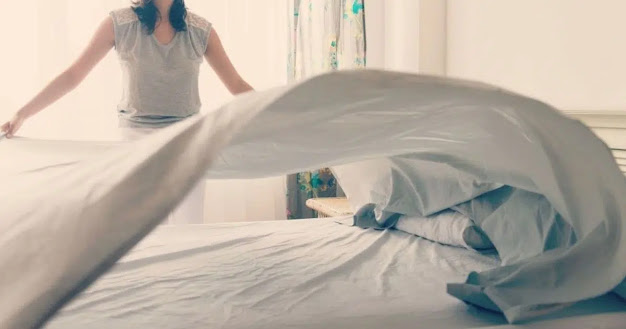
Lay the flat sheet over the mattress.
Position it so:
- The finished side faces downward.
- The seam side faces upward.
- The top edge aligns with the mattress top.
This is the step that feels wrong.
Trust the process.
Step 3: Add Your Comforter or Duvet
Spread the comforter evenly across the bed.
Smooth out wrinkles.
Center it carefully.
Step 4: Create the Fold
Fold the top portion of both layers downward.
This reveals the decorative side of the sheet.
Suddenly the entire bed appears more intentional.
Step 5: Finish With Pillows
Arrange sleeping pillows neatly.
Add decorative pillows if desired.
A throw blanket at the foot of the bed can add warmth and texture.
The result is a bed that looks straight out of a magazine or luxury hotel.
Why We Care So Much About Beds
It may seem strange to spend so much time discussing sheets.
After all, a bed exists primarily for sleeping.
Yet psychologists and interior designers frequently point out that beds serve another purpose.
They influence how we feel about our space.
A made bed can create:
- A sense of order
- Reduced visual clutter
- Greater relaxation
- Improved room aesthetics
- Increased feelings of accomplishment
Many people report that making their bed each morning helps establish a productive mindset for the day.
The habit takes only a few minutes but often changes how an entire room feels.
The Great Top Sheet Debate
Interestingly, not everyone agrees that top sheets should be used at all.
In recent years, a growing number of people have abandoned them entirely.
This has sparked surprisingly passionate debates among bedding enthusiasts.
Why Some People Skip Top Sheets
Several practical reasons explain the trend.
Less Laundry
Without a top sheet, there’s one less item to wash each week.
Fewer Tangles
Some sleepers dislike waking up wrapped in twisted sheets.
Cooler Sleeping
Hot sleepers often prefer fewer layers.
Simplicity
A fitted sheet and duvet feel easier to manage.
Many younger adults have embraced this minimalist approach.
The Argument For Top Sheets
At the same time, top sheet supporters remain equally enthusiastic.
Protection for Bedding
A top sheet acts as a barrier between your body and your comforter.
Body oils, sweat, and skin cells accumulate primarily on the sheet rather than the blanket.
Easier Cleaning
Sheets are far easier to wash than bulky comforters.
Flexible Temperature Control
A top sheet can serve as a lightweight cover during warmer months.
Better Presentation
A folded sheet contributes significantly to a polished, layered appearance.
For many people, the visual benefit alone justifies its use.
How Different Countries Approach Bedding
One reason the debate continues is that bedding traditions vary around the world.
United States
Top sheets remain common.
Many households use:
- Fitted sheet
- Top sheet
- Comforter or quilt
Much of Europe
Top sheets are often skipped.
Instead, people sleep under washable duvet covers.
The duvet cover serves as both blanket and protective layer.
Scandinavia
Minimalist bedding is especially common.
Duvets with removable covers dominate.
Australia
Practices vary widely, with some households using top sheets and others following European-style bedding.
There is no universal standard.
Different cultures simply developed different solutions.
Choosing the Right Sheet Material
If you’re going to use a top sheet, fabric choice matters.
Cotton Percale
Ideal for hot sleepers.
Feels crisp and breathable.
Cotton Sateen
Offers a smoother, silkier feel.
Popular in luxury bedding.
Linen
Naturally breathable and highly durable.
Develops softness over time.
Bamboo-Based Fabrics
Known for softness and moisture management.
Flannel
Excellent for colder climates and winter months.
Each fabric creates a different sleeping experience.
Personal preference matters more than trends.
Caring for Your Sheets Properly
Even the finest sheets eventually wear out.
Good maintenance helps maximize lifespan.
Experts generally recommend:
- Washing every one to two weeks
- Using mild detergent
- Avoiding excessive bleach
- Drying on lower heat settings
- Folding promptly after drying
Regular care keeps sheets softer, cleaner, and more comfortable.
Signs It’s Time for New Sheets
Eventually, replacement becomes necessary.
Watch for:
- Pilling
- Thinning fabric
- Tears
- Persistent stains
- Loss of softness
- Fading
High-quality sheets often last several years with proper care.
Lower-quality options may wear out more quickly.
Why Small Household Tricks Matter
The upside-down sheet method may seem like a tiny detail.
And in many ways, it is.
Yet these small household traditions often endure because they combine practicality with beauty.
A neatly folded sheet doesn’t change the world.
It won’t solve major problems.
But it can make a bedroom feel more inviting.
It can transform an ordinary bed into something that looks intentional and cared for.
And sometimes, those little improvements matter more than we realize.
Final Thoughts
The next time you make your bed, take a closer look at your top sheet.
If you’ve always placed the finished side facing upward, try reversing it.
Lay the decorative side down.
Fold it back over your comforter.
Step back and look at the result.
You may discover that what seemed backward was actually the professional approach all along.
Of course, if you prefer skipping the top sheet entirely, that’s perfectly fine too.
There is no universal rule for bedding.
The best bed is the one that helps you sleep comfortably and wake up refreshed.
Still, it’s fascinating how one simple adjustment—a sheet placed “upside down”—can make a bed look cleaner, more polished, and surprisingly luxurious.
Not bad for a trick that takes exactly zero extra effort.
More Blog
- Drinking Water on an Empty Stomach — What Science Actually Supports (No Hype, Just Facts)
- Waking Up Between 3 and 5 AM? It Might Be Your Soul Trying to Talk to You
- What a “Bleach” Patch on Your Underwear Really Means — And Why It’s Actually a Good Sign
- This Drink May Weaken Your Bones From The Inside — But Everyone Drinks It Anyway