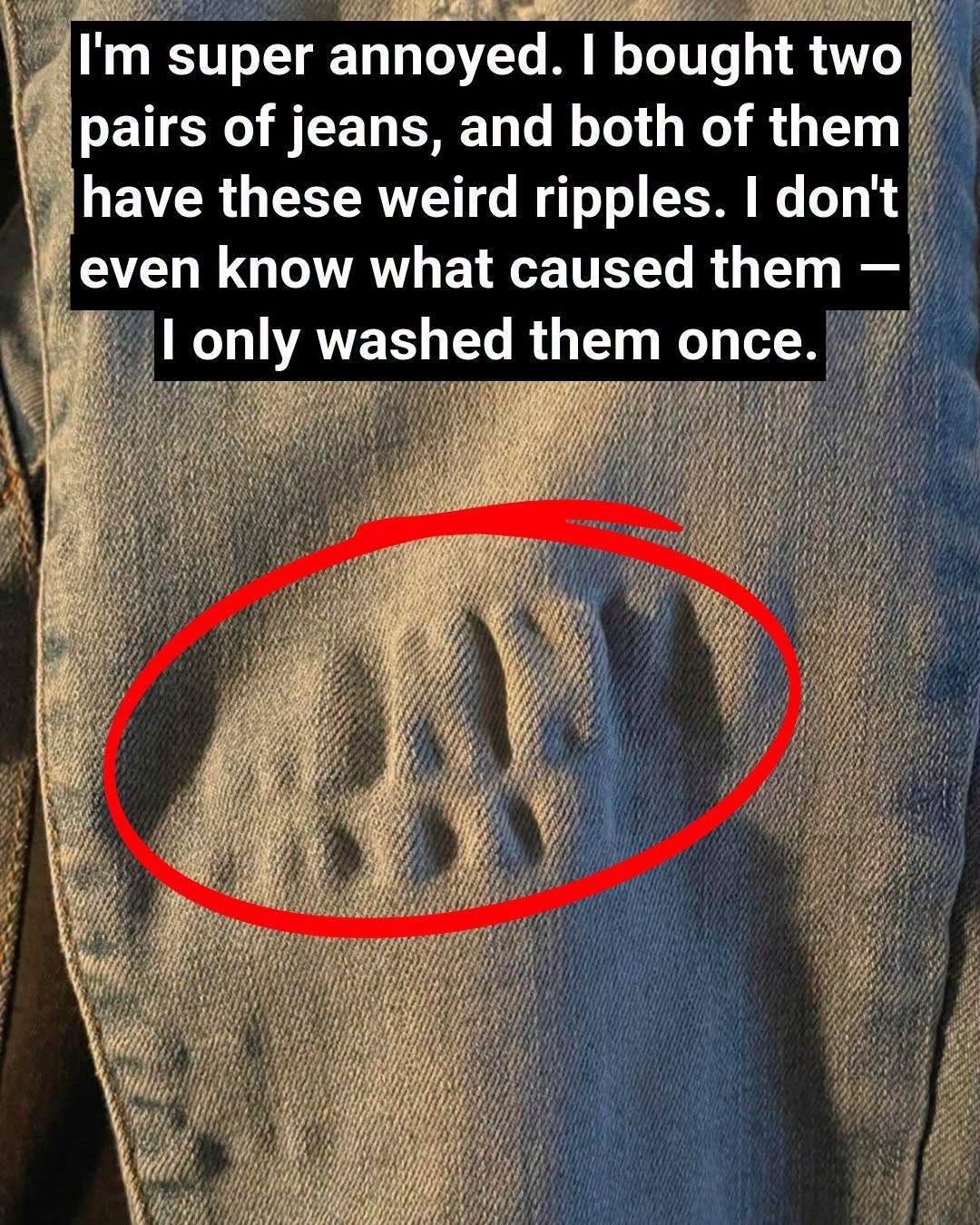
You take your favorite jeans out of the washing machine or dryer and suddenly notice something strange: wavy lines, puckering, ripples, or stubborn creases running across the denim.
They looked perfectly smooth before washing, so what happened?
The good news is that rippled denim is fairly common, particularly with stretch jeans. And in many cases, you can significantly reduce the ripples—or prevent them from appearing in the first place.
Here’s what’s really happening to your jeans.
Why Jeans Develop Ripples After Washing
Denim may look like a simple fabric, but modern jeans can contain several different fibers and layers that react differently to water, movement, and heat.
The exact cause of rippling depends on the jeans, but these are some of the most common explanations.
1. Cotton Naturally Changes During Washing
Traditional denim is primarily made from cotton.
When cotton becomes wet, its fibers absorb moisture and swell. During drying, those fibers contract again.
If different sections of the fabric don’t contract evenly, the denim can temporarily develop wrinkles, puckering, or wavy areas.
New jeans can be particularly noticeable because they may undergo more dimensional change during their first few washes.
2. Stretch Denim Can Pucker
Many modern jeans aren’t 100% cotton.
Check the care label and you may find a combination such as:
- Cotton
- Polyester
- Elastane or spandex
- Other stretch fibers
These fibers don’t necessarily react to heat and moisture in exactly the same way.
When the fabric contracts unevenly, the surface may develop small ripples or puckering. Stretch jeans can therefore behave differently from traditional rigid denim.
3. High Dryer Heat Can Make the Problem Worse
If there’s one laundry habit worth reconsidering, it’s repeatedly exposing jeans—especially stretch denim—to very high dryer temperatures.
Heat can cause cotton to shrink and may gradually affect elastic fibers.
If jeans enter the dryer twisted or heavily wrinkled, drying them at high heat may also make those wrinkles more difficult to remove.
Always check the garment’s care label before choosing a drying temperature.
4. The Washing Machine Can Twist Heavy Denim
Jeans become surprisingly heavy when they’re soaked with water.
During washing and spinning, the legs can become twisted around other clothing or around themselves.
When the jeans emerge tightly twisted and are immediately placed in the dryer, those folds may become much more noticeable.
Overloading the washing machine can make it harder for clothes to move freely and may contribute to excessive wrinkling.
5. Seams Can Shrink Differently
Sometimes you’ll notice rippling specifically around:
- Side seams
- Waistbands
- Pockets
- Zippers
- Hems
These areas contain multiple layers of fabric, stitching, interfacing, or other materials.
Because those components may respond differently to washing and drying, the surrounding denim can become slightly puckered.
6. It Might Be a Manufacturing Issue
If the ripples appear consistently in exactly the same places after every wash, the problem may not be your laundry routine.
Uneven fabric tension during manufacturing, stitching tension, bonded materials, or the construction of stretch denim can sometimes cause permanent puckering.
If a relatively new pair of jeans develops severe ripples despite following the care instructions, it may be worth contacting the manufacturer or retailer.
How to Fix Rippled Jeans
Before giving up on your jeans, try these simple methods.
Method 1: Dampen and Reshape Them
Lightly dampen the rippled area with clean water.
Lay the jeans flat and gently smooth the fabric with your hands. Don’t aggressively stretch the material—particularly if the jeans contain elastane.
Allow them to air-dry while properly shaped.
For mild rippling, this may be enough.
Method 2: Use Steam
Steam can help relax wrinkles in many denim fabrics.
Hang the jeans and carefully use a garment steamer, keeping it moving rather than concentrating heat on one spot.
As the fabric relaxes, gently smooth the rippled sections.
Again, check the care label first.
Method 3: Iron Them Carefully
If the garment label permits ironing, turn the jeans inside out and select an appropriate temperature for the fabric composition.
For stretch denim, avoid unnecessarily high temperatures.
A pressing cloth between the iron and denim can provide additional protection.
Rather than aggressively dragging the iron across the material, gently press the affected areas.
How to Prevent Ripples Next Time
Prevention is usually easier than repeatedly trying to restore heavily wrinkled denim.
Wash Jeans Inside Out
Turning jeans inside out can help protect their outer surface and reduce unnecessary abrasion during washing.
Choose a Suitable Cycle
Use the washing instructions on the garment label as your primary guide.
For many jeans, a cooler wash and an appropriate gentle or normal cycle can help reduce unnecessary stress on the fabric.
Don’t Overload the Machine
Your jeans need room to move.
Stuffing too many heavy garments into one load can encourage twisting and uneven washing.
Untwist Them Before Drying
This tiny step can make a surprisingly noticeable difference.
When the washing cycle finishes, remove your jeans and shake them out thoroughly.
Straighten the legs, smooth obvious wrinkles, and reshape the waistband before drying.
Don’t put a tightly twisted pair directly into the dryer.
Be Careful With High Heat
If the care label permits tumble drying, consider a lower-temperature setting rather than automatically choosing high heat.
Air-drying is another option when recommended for the garment.
Hang the jeans neatly or lay them appropriately so they dry in their natural shape.
Should You Use Fabric Softener?
Fabric softener isn’t necessarily the solution to rippled jeans.
In fact, some denim manufacturers advise limiting or avoiding traditional fabric softeners, particularly with stretch denim.
Always check the care instructions for your specific jeans rather than assuming additional laundry products will fix the problem.
What If the Ripples Won’t Go Away?
If you’ve dampened, steamed, or carefully pressed the jeans and the same ripples continue returning, there may be permanent distortion in the fabric.
This can happen because of:
- Repeated exposure to excessive heat
- Damaged stretch fibers
- Construction or stitching issues
- Uneven shrinkage
- Normal wear over time
At that point, the ripples may be difficult to completely eliminate.
One Easy Routine That Can Help Your Jeans Last Longer
You don’t need an elaborate denim-care ritual.
Try this:
Turn them inside out → follow the care label → avoid overcrowding → remove promptly → shake and reshape → dry using the recommended temperature.
Those few habits can help maintain the shape, color, and appearance of your jeans.
The Bottom Line
Those strange waves in your freshly washed jeans usually aren’t mysterious at all.
They’re often caused by fabric movement, uneven contraction, twisting during washing, heat, or differences between cotton and stretch fibers.
And mild rippling doesn’t necessarily mean your jeans are ruined.
Start by dampening and reshaping them or using gentle steam. Then, for future washes, pay particular attention to one simple step: straighten and smooth your jeans before they dry.
Sometimes a few seconds between the washer and dryer are all it takes to keep your favorite denim looking much better.