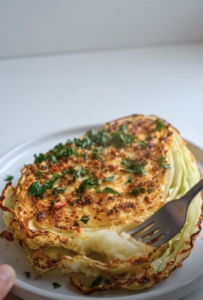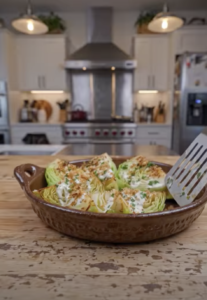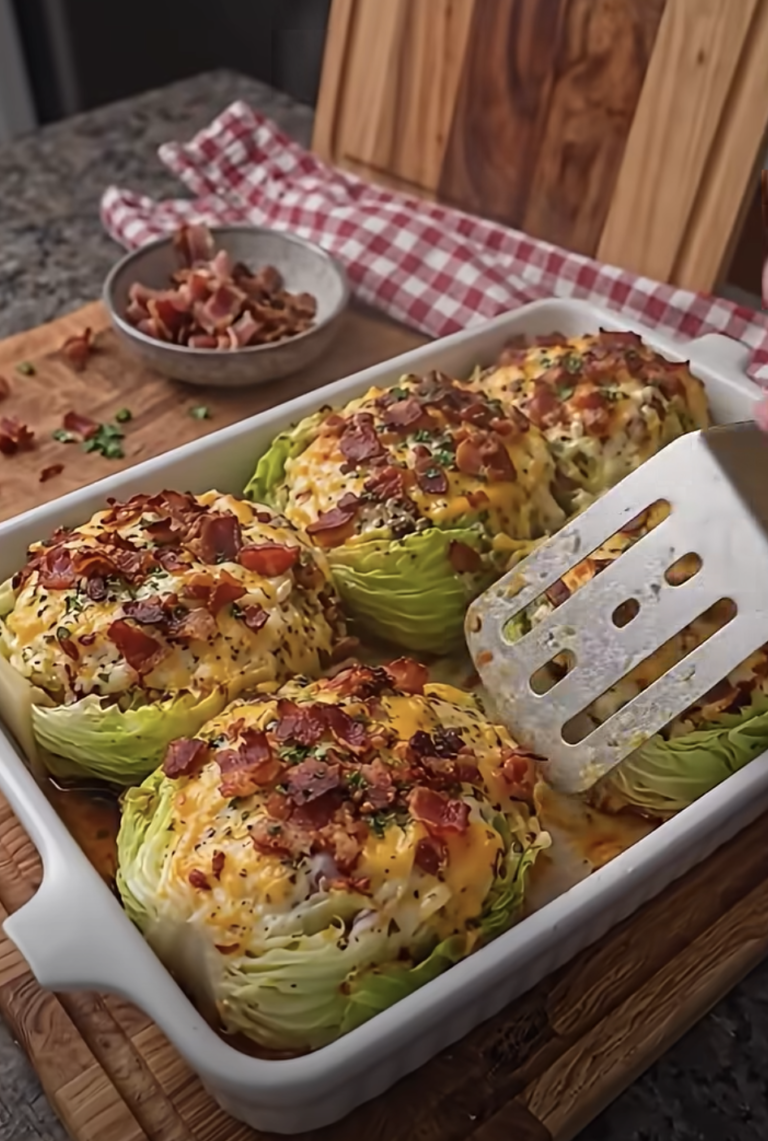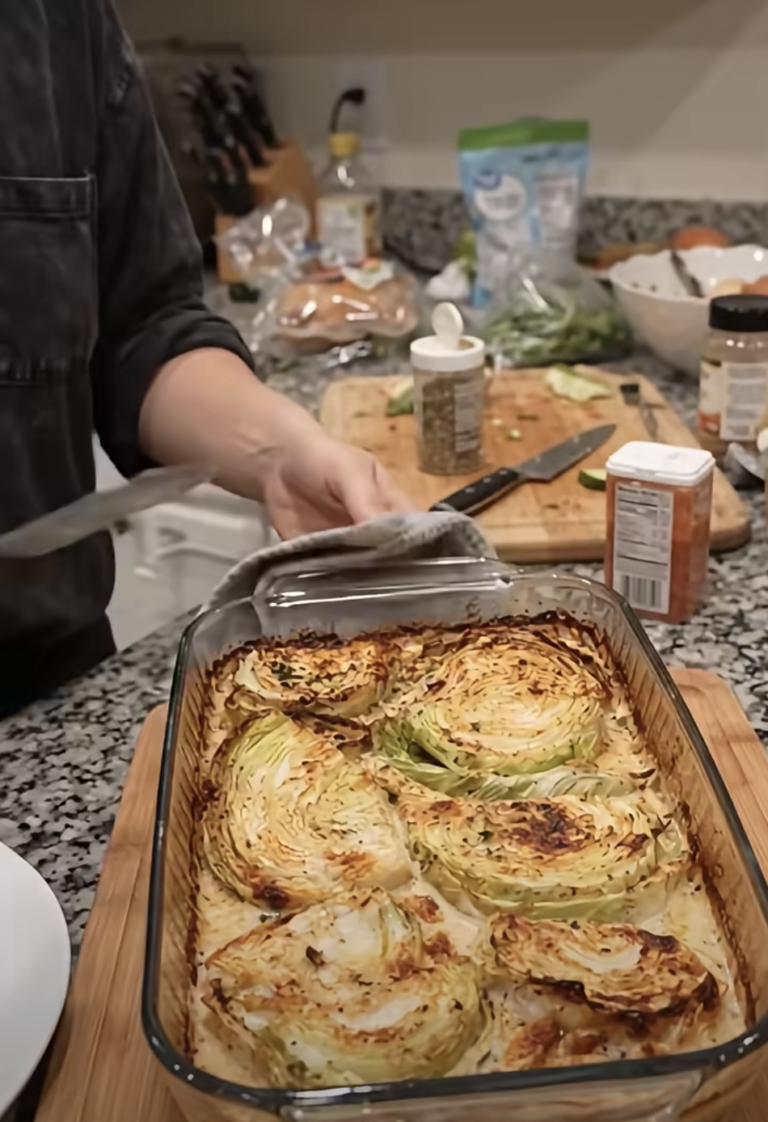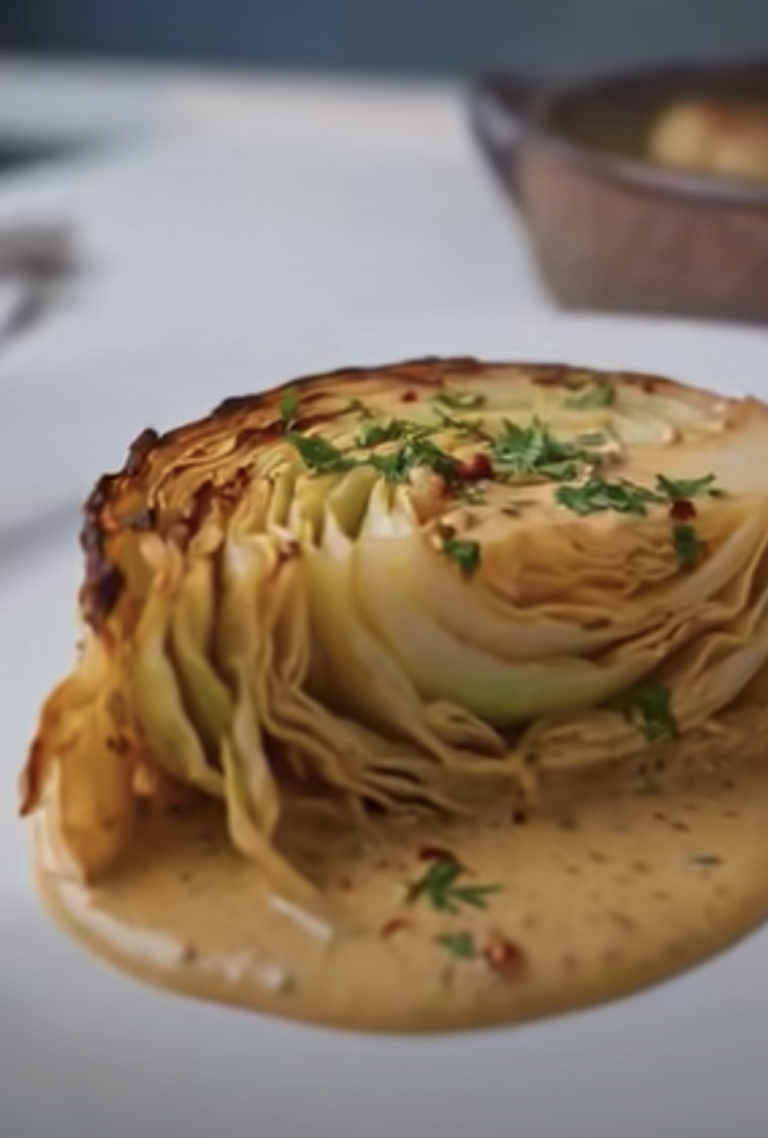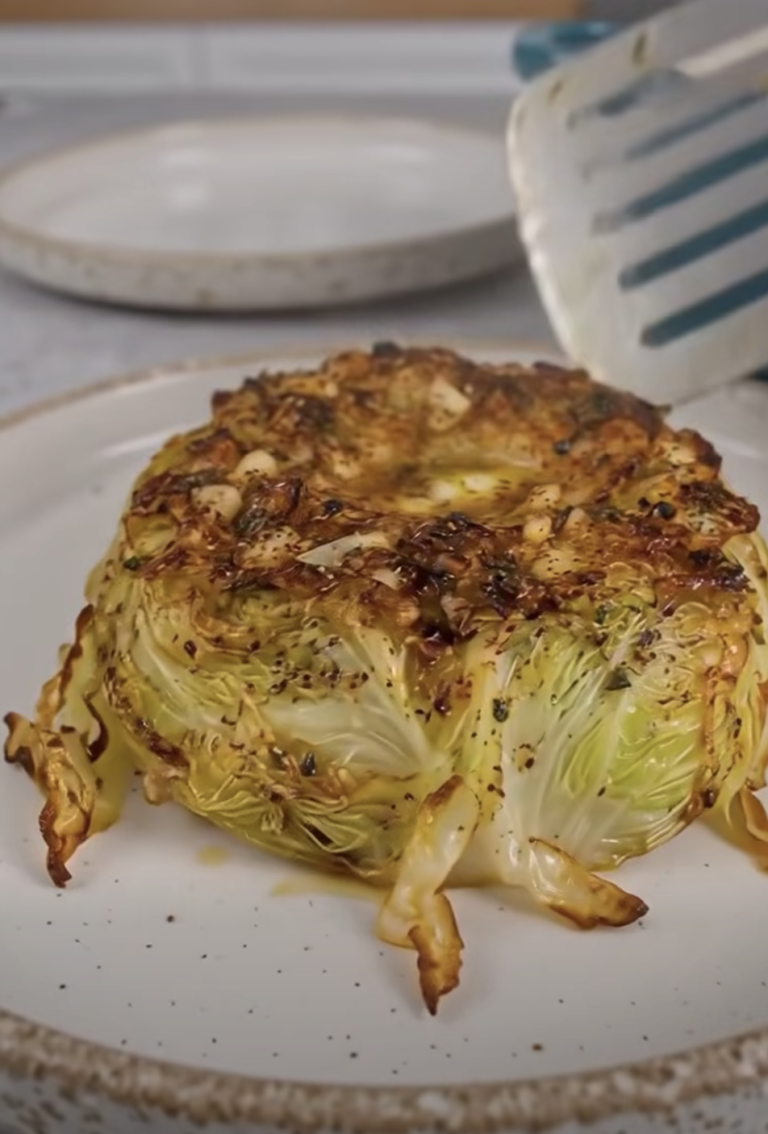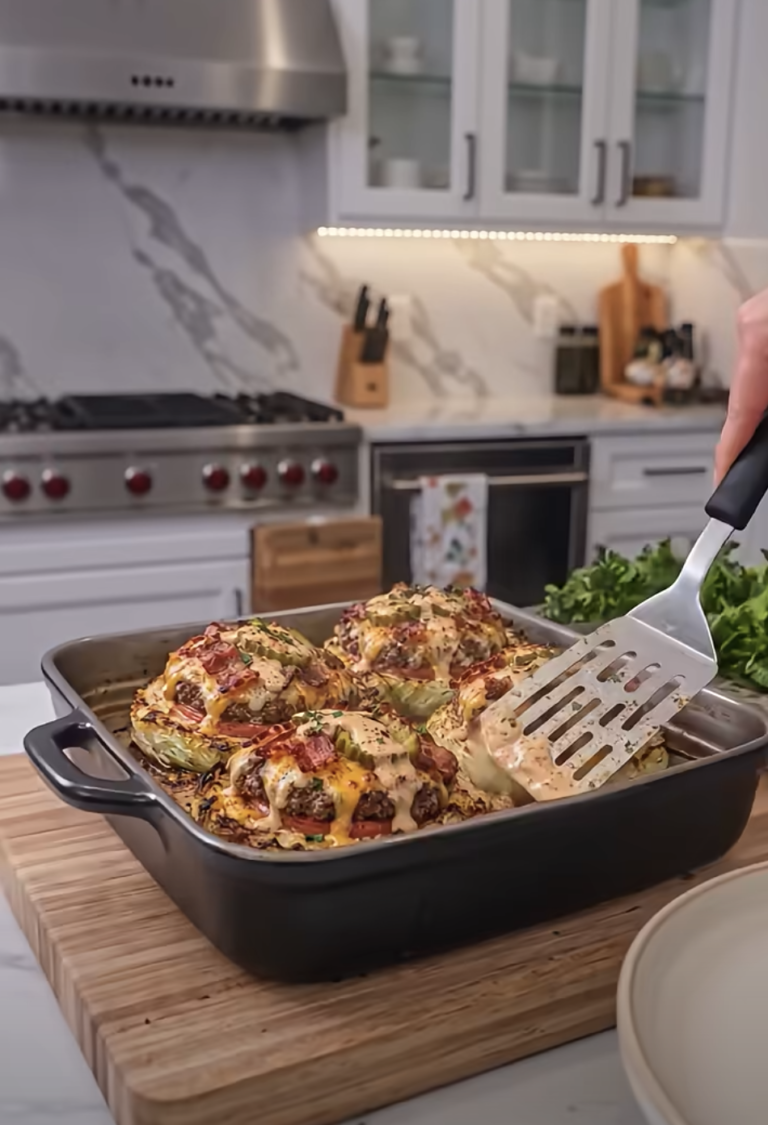
Whole Roasted Cabbage turns a simple head of green cabbage into a beautifully golden, tender, and flavorful vegetable dish. With olive oil, garlic powder, onion powder, salt, and black pepper, this easy oven-roasted recipe creates crisp outer leaves and a naturally sweet, savory interior.
Roasting cabbage whole gives it a wonderful presentation. Instead of chopping the vegetable into small pieces, you keep the head intact and allow the oven to develop its flavor gradually.
As the cabbage roasts, its outer leaves become golden brown, while the inner layers soften and absorb the seasonings.
The result is a delicious combination of crispy edges, tender leaves, and mild sweetness.
Best of all, you only need six simple ingredients and about ten minutes of hands-on preparation.
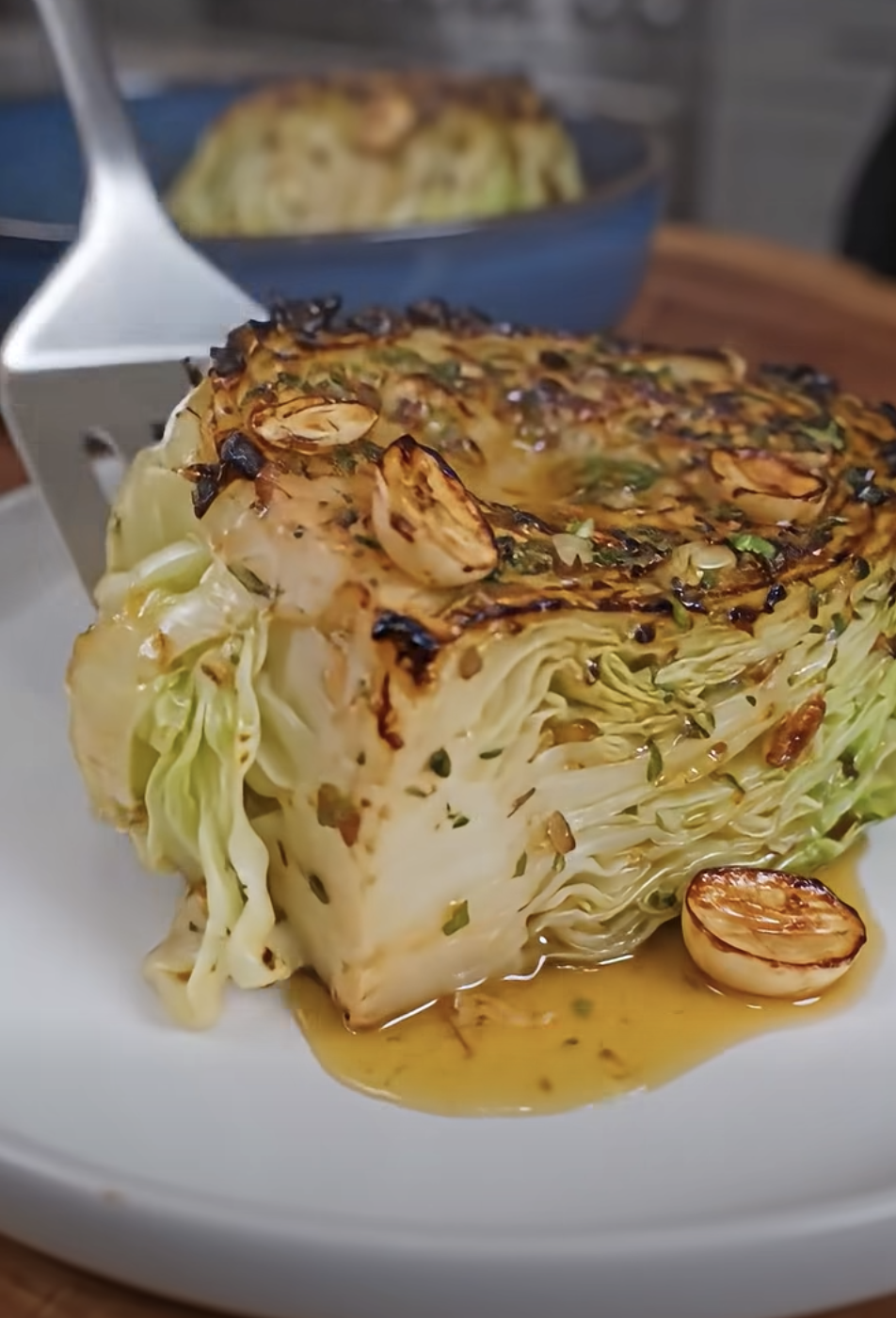
Whole Roasted Cabbage – Easy Oven-Baked Recipe with Crispy Golden Leaves
Equipment
- Rimmed baking sheet or roasting dish
- Sharp kitchen knife
- Cutting board
- Paper towels
- Measuring spoons
- Aluminum foil
- Thin knife or skewer
- Serving platter
Ingredients
- 1 small to medium head green cabbage or Savoy cabbage, approximately 1.5–2 pounds
- 2 tablespoons olive oil
- 1 teaspoon salt
- 0.5 teaspoon freshly ground black pepper
- 1 teaspoon garlic powder
- 1 teaspoon onion powder
- 1 tablespoon fresh lemon juice, optional topping
- 1 tablespoon balsamic glaze, optional topping
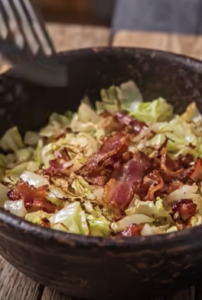
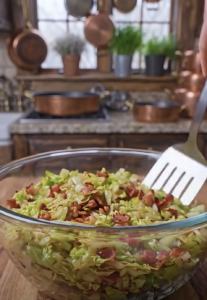
- 2 slices cooked turkey bacon, crumbled, optional topping
Instructions
- Preheat oven to 400°F (200°C). Position an oven rack in the middle and prepare a rimmed baking sheet or roasting dish.
- Remove damaged outer cabbage leaves. Trim the bottom stem to create a flat base, keeping most of the core intact.
- Pat the cabbage dry with paper towels and place it flat-side down on the prepared baking sheet.
- Drizzle olive oil over the cabbage and rub gently across the outer leaves to coat evenly.
- Sprinkle salt, black pepper, garlic powder, and onion powder evenly over the cabbage.
- For a softer center, loosely cover the cabbage with aluminum foil. Roast for approximately 25–30 minutes.
- Remove foil and continue roasting for another 30–45 minutes until outer leaves become golden brown and cabbage begins to soften.
- Insert a thin knife or skewer into the center to check tenderness. Continue roasting in 10–15-minute intervals if needed. Larger heads may require additional time.
- Remove cabbage from oven and rest for approximately 5 minutes. Carefully slice into wedges and trim away any tough core portions.
- Arrange wedges on a serving platter and add optional lemon juice, balsamic glaze, or cooked crumbled turkey bacon if desired. Serve warm.
Notes
Nutrition
This easy roasted cabbage recipe works beautifully as a side dish for chicken, beef, fish, or a vegetarian dinner. You can also serve it with a drizzle of balsamic glaze, fresh lemon juice, or crispy turkey bacon.
Whether you’re preparing a cozy family meal or looking for an impressive vegetable centerpiece, Whole Roasted Cabbage makes a wonderful choice.
I first tried roasting an entire cabbage when I wanted a simple vegetable dish that looked a little more special than the usual sautéed greens. I had a fresh head of cabbage, olive oil, and a few pantry seasonings, so I decided to roast it whole instead of cutting it into wedges. As it cooked, the outer leaves gradually turned golden and crisp, and the kitchen filled with a warm, savory aroma. When I finally sliced into the cabbage, the tender inner layers contrasted beautifully with the browned exterior. A squeeze of lemon brought everything together, and I immediately wanted to make it again.
Why You’ll Love Whole Roasted Cabbage
Whole Roasted Cabbage combines simple preparation with rich roasted flavor. The oven transforms ordinary cabbage into a satisfying vegetable dish with crisp edges, tender layers, and a naturally sweet taste.
Crispy Outer Leaves and a Tender, Sweet Center
One of the best things about Whole Roasted Cabbage is its contrast in textures.
The outer leaves receive direct oven heat and gradually develop golden, roasted edges.
Meanwhile, the inner leaves cook more gently and become tender.
This combination creates a delicious contrast between the lightly crisp exterior and the softer center.
Cabbage naturally contains sugars that develop a sweeter flavor during roasting.
As the vegetable cooks, some of its moisture evaporates, concentrating the flavor.
Olive oil helps the outer leaves brown and adds a pleasant richness.
Garlic powder contributes savory depth.
Onion powder provides a subtle sweetness and aromatic flavor.
Salt enhances the cabbage’s natural taste, while black pepper adds gentle warmth.
Together, these simple seasonings create a balanced, flavorful dish.
Unlike boiled cabbage, which can taste mild and watery, roasted cabbage develops a deeper flavor.
Additionally, keeping the cabbage whole creates an attractive presentation.
You can place the roasted head on a serving platter and cut it into wedges at the table.
This makes the recipe especially appealing for family dinners and holiday meals.
A Budget-Friendly Side Dish with Minimal Ingredients
Another reason to love Whole Roasted Cabbage is its simplicity.
Cabbage is generally affordable, widely available, and easy to store.
You don’t need specialty ingredients or complicated equipment.
Instead, the recipe uses basic pantry seasonings and a little olive oil.
Here are several reasons this dish deserves a place in your regular meal rotation:
- Simple ingredients: Only cabbage, olive oil, and four seasonings.
- Easy preparation: Trim, season, and roast.
- Beautiful presentation: A whole roasted cabbage creates an impressive vegetable centerpiece.
- Naturally vegetarian: The basic recipe contains no meat or dairy.
- Versatile flavor: Serve with lemon, balsamic glaze, herbs, or your favorite sauce.
- Budget-friendly: One cabbage provides several generous servings.
Furthermore, this recipe requires very little active cooking time.
Once you place the cabbage in the oven, you can prepare the rest of your meal.
Because cabbage has a mild flavor, it also pairs well with many different seasonings and sauces.
Choosing the Best Ingredients for Whole Roasted Cabbage
Fresh ingredients make a noticeable difference in Whole Roasted Cabbage. Since the recipe uses a short ingredient list, choosing a good cabbage and balancing the seasonings helps create the best flavor and texture.
Green Cabbage vs. Savoy Cabbage
Green cabbage works especially well for roasting whole.
Its tightly packed leaves help the head maintain its shape during cooking.
Additionally, green cabbage develops a pleasant sweetness as it roasts.
Choose a small to medium head for the most reliable results.
A cabbage weighing approximately 1½–2 pounds usually roasts more evenly than a very large head.
Look for a cabbage that feels firm and heavy for its size.
The leaves should appear fresh and tightly packed.
Avoid heads with extensive browning, soft spots, or damaged outer leaves.
Savoy cabbage also makes an excellent option.
Its crinkled leaves create an attractive appearance and develop delicate crispy edges.
However, Savoy cabbage has a looser structure and may cook somewhat faster.
Therefore, check its tenderness earlier.
Before roasting, remove any damaged outer leaves.
Trim the bottom stem to create a stable base.
However, avoid removing the entire core.
The core helps hold the cabbage together while it roasts.
You can trim away any tough core portions after cooking and slicing.
For the best texture, choose a cabbage that fits comfortably on your baking sheet or in your roasting dish.
Why Olive Oil and Simple Seasonings Work So Well
Olive oil plays an important role in this recipe.
It helps the seasonings adhere to the cabbage and encourages the outer leaves to brown.
Use two tablespoons of olive oil for one small to medium head.
Drizzle the oil over the cabbage, then rub it gently across the outer leaves.
Try to distribute the oil evenly.
Garlic powder adds savory flavor without the risk of fresh garlic burning during the long roasting time.
Onion powder provides a mild sweetness that complements the cabbage.
Salt enhances the natural flavor.
Black pepper adds a little warmth.
Together, these seasonings create a simple but delicious coating.
You can also customize the flavor.
For example, smoked paprika adds a slightly smoky taste.
Crushed red pepper flakes provide gentle heat.
Dried thyme or rosemary adds an herbal note.
However, the basic combination of garlic powder, onion powder, salt, and black pepper works beautifully.
After roasting, a squeeze of lemon juice can brighten the dish.
You can also drizzle balsamic glaze over the sliced wedges for a sweet and tangy finish.
Tips for Making the Best Whole Roasted Cabbage
Although Whole Roasted Cabbage is easy to prepare, a few practical techniques help create tender inner leaves and beautifully browned outer layers.
The most important details involve choosing the right cabbage size, preparing a stable base, and checking the center for tenderness.
How to Roast Cabbage Until Tender Inside
Roasting cabbage whole requires patience because the heat must travel through several tightly packed layers.
For the best results, choose a small to medium cabbage.
A very large head may need considerably more time.
Preheat the oven to 400°F before placing the cabbage inside.
This helps the outer leaves begin roasting immediately.
Next, trim the bottom stem so the cabbage sits securely.
Keep the core mostly intact to prevent the leaves from separating.
Coat the outer leaves with olive oil and seasonings.
Then place the cabbage on a rimmed baking sheet or in a roasting dish.
For a softer center, loosely cover the cabbage with aluminum foil during the first 25–30 minutes.
The foil traps moisture and helps the inner layers soften.
Afterward, remove the foil and continue roasting.
The exposed outer leaves will gradually develop golden edges.
Begin checking the cabbage after approximately 60 minutes.
Insert a thin knife or skewer toward the center.
If the core remains firm, continue roasting in 10–15-minute intervals.
Depending on the cabbage size, the total cooking time may reach 75–90 minutes or longer.
How to Get Crispy Leaves Without Burning Them
The key to crispy roasted cabbage involves balancing moisture and direct oven heat.
First, dry the cabbage after washing.
Excess surface water can slow browning.
Next, rub the olive oil evenly over the outer leaves.
The oil encourages browning and helps prevent excessive dryness.
Avoid using too much oil.
A light, even coating works better than allowing oil to pool around the cabbage.
Another important tip involves oven placement.
Position the baking sheet on the middle rack.
This provides more even heat and reduces the risk of burning the outer leaves.
If the leaves brown too quickly before the center becomes tender, loosely cover the cabbage with foil.
Then continue roasting until the center softens.
For additional browning, remove the foil during the final 10–15 minutes.
However, watch the cabbage closely because thin outer leaves can darken quickly.
Finally, allow the cabbage to rest for approximately five minutes before slicing.
This makes it easier to handle and helps the inner layers settle.
Serving Ideas, Variations, and Storage Tips
Whole Roasted Cabbage works beautifully as a simple vegetable side dish or an attractive centerpiece for a vegetarian meal.
Its savory flavor pairs well with roasted meats, grains, fresh herbs, and tangy sauces.
Delicious Ways to Serve and Customize Roasted Cabbage
Serve Whole Roasted Cabbage alongside roasted chicken, grilled steak, baked fish, or turkey.
The tender cabbage provides a delicious contrast to savory main dishes.
You can also serve it with mashed potatoes or roasted sweet potatoes.
For a vegetarian meal, pair the cabbage with lentils, quinoa, or seasoned rice.
A creamy yogurt sauce or lemon tahini dressing also complements the roasted flavor.
After roasting, slice the cabbage into wedges.
Then spoon any flavorful juices from the baking dish over the portions.
If you want to customize the recipe, try these variations:
- Lemon roasted cabbage: Finish with one tablespoon fresh lemon juice.
- Balsamic cabbage: Drizzle one tablespoon balsamic glaze over the warm wedges.
- Smoky roasted cabbage: Add ½ teaspoon smoked paprika before roasting.
- Spicy cabbage: Sprinkle ¼ teaspoon crushed red pepper flakes over the cabbage.
- Herb-roasted cabbage: Add one teaspoon dried thyme or rosemary.
- Turkey bacon topping: Sprinkle two slices of cooked, crumbled turkey bacon over the finished wedges.
You can also add a little grated Parmesan cheese after roasting.
The cheese melts slightly against the warm cabbage and adds a savory finish.
However, the original recipe tastes delicious without additional toppings.
How to Store, Reheat, and Prepare Ahead
Whole Roasted Cabbage stores well in the refrigerator.
Allow the cooked cabbage to cool slightly, then slice it into manageable portions.
Transfer the wedges to airtight containers.
Refrigerate promptly and enjoy within three to four days.
For the best texture, reheat the cabbage in a 350°F oven.
Place the wedges on a baking sheet and warm for approximately 10–15 minutes, or until thoroughly heated.
You can also reheat individual portions in a skillet over medium-low heat.
Add a small drizzle of olive oil if necessary.
This method can help restore some of the roasted texture.
For food safety, reheat leftovers to 165°F.
Although you can freeze cooked cabbage, freezing may soften the texture considerably.
For the best quality, freeze portions for up to two months.
Thaw overnight in the refrigerator before reheating.
However, fresh roasted cabbage offers the best contrast between tender inner leaves and crispy edges.
If you want to prepare ahead, wash and trim the cabbage the day before.
Store it in the refrigerator, then season and roast shortly before serving.
Ingredients
This Whole Roasted Cabbage recipe makes approximately 4 servings.
For the Roasted Cabbage
- 1 small to medium head green cabbage or Savoy cabbage, approximately 1½–2 pounds
- 2 tablespoons olive oil
- 1 teaspoon salt
- ½ teaspoon freshly ground black pepper
- 1 teaspoon garlic powder
- 1 teaspoon onion powder
Optional Serving Toppings
- 1 tablespoon fresh lemon juice
- 1 tablespoon balsamic glaze
- 2 slices cooked turkey bacon, crumbled
Instructions
1. Preheat the oven. Preheat your oven to 400°F (200°C). Position an oven rack in the middle and prepare a rimmed baking sheet or roasting dish.
2. Prepare the cabbage. Remove any damaged outer leaves. Trim the bottom stem to create a flat base, but keep most of the core intact so the cabbage holds together.
3. Dry the cabbage. Pat the cabbage dry with paper towels. Place it flat-side down on the prepared baking sheet.
4. Coat with olive oil. Drizzle the olive oil over the cabbage. Rub it gently across the outer leaves to create an even coating.
5. Add the seasonings. Sprinkle the salt, black pepper, garlic powder, and onion powder evenly over the cabbage.
6. Begin roasting. Loosely cover the cabbage with aluminum foil for a softer center. Roast for approximately 25–30 minutes.
7. Continue uncovered. Remove the foil and roast for another 30–45 minutes, until the outer leaves become golden brown and the cabbage begins to soften.
8. Check for tenderness. Insert a thin knife or skewer into the center. If the cabbage remains firm, continue roasting in 10–15-minute intervals until tender. Very large heads may require additional time.
9. Rest and slice. Remove the cabbage from the oven and allow it to rest for approximately five minutes. Carefully slice it into wedges, trimming away any tough core portions.
10. Serve warm. Arrange the wedges on a serving platter. Add optional lemon juice, balsamic glaze, or crumbled turkey bacon if desired.
Recipe Overview
| Detail | Time or Amount |
|---|---|
| Prep Time | 10 minutes |
| Cook Time | Approximately 60–90 minutes |
| Total Time | Approximately 1 hour 10 minutes–1 hour 40 minutes |
| Servings | 4 |
| Oven Temperature | 400°F (200°C) |
| Cooking Method | Oven roasting |
| Estimated Calories | Approximately 120 per serving |
Cooking time depends on cabbage size and density. A small head may become tender in about an hour, while a larger head may need 90 minutes or more.
Frequently Asked Questions
1. How long does it take to roast a whole cabbage?
A small to medium cabbage usually needs approximately 60–90 minutes at 400°F. However, larger or tightly packed heads may require more time. Insert a knife into the center to check tenderness. If the core remains firm, continue roasting in 10–15-minute intervals.
2. Should I cover Whole Roasted Cabbage with foil?
You can cover the cabbage during the first 25–30 minutes if you prefer a softer center. The foil helps trap moisture and encourages the inner leaves to soften. Remove the foil afterward to allow the outer leaves to brown and develop crispy edges.
3. Can I use Savoy cabbage instead of green cabbage?
Yes. Savoy cabbage works well because its crinkled leaves become tender and develop delicate roasted edges. However, Savoy cabbage often has a looser structure, so it may cook slightly faster. Begin checking its tenderness earlier.
4. How do I keep the outside from burning before the center cooks?
Choose a small to medium cabbage and roast it on the middle oven rack. If the outer leaves brown too quickly, loosely cover the cabbage with foil and continue cooking. Remove the foil near the end if you want additional browning.
5. Can I make Whole Roasted Cabbage ahead of time?
Yes. You can roast the cabbage ahead of time and refrigerate the sliced wedges for three to four days. Reheat them in a 350°F oven until thoroughly hot. However, the cabbage tastes best shortly after roasting because the outer leaves retain more of their crisp texture.
Conclusion
Whole Roasted Cabbage transforms an affordable, everyday vegetable into a delicious oven-baked side dish with golden outer leaves and a tender, naturally sweet center.
The recipe requires only six simple ingredients and minimal hands-on preparation.
Olive oil helps the cabbage brown, while garlic powder, onion powder, salt, and black pepper create a savory coating.
For the best results, choose a small to medium cabbage, keep most of the core intact, and roast until a knife slides easily through the center.
Additionally, covering the cabbage during the first part of roasting helps soften the inner layers.
Removing the foil afterward allows the outer leaves to develop a flavorful golden finish.
You can serve the cabbage with lemon juice, balsamic glaze, crispy turkey bacon, or your favorite herbs.
Whether you’re planning a weeknight dinner, preparing a holiday meal, or looking for a new way to enjoy vegetables, Whole Roasted Cabbage offers a comforting combination of simple ingredients, delicious flavor, and beautiful presentation.