Snake bites are frightening. In just a few seconds, a calm walk through the garden, woods, farm, or backyard can turn into a serious medical emergency. Fear often makes people panic, and unfortunately, panic leads many people to make dangerous mistakes that can worsen the situation.
The good news is that most snake bites are survivable when the right first-aid steps happen quickly. Knowing what to do in those first few minutes can dramatically improve outcomes and may even save a life.
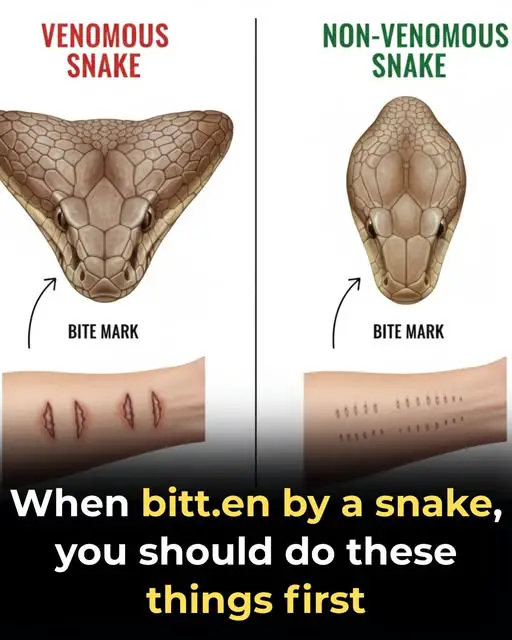
Many viral posts online oversimplify snake bites by claiming venomous snakes always leave two fang marks while non-venomous snakes leave rows of teeth marks. While that sometimes happens, real snake bites are far more complicated. Bite marks alone cannot reliably determine whether a snake is dangerous.
That is why medical experts recommend treating every snake bite seriously until proven otherwise.
Last summer, a family friend stepped near a pile of firewood while cleaning his backyard. He suddenly felt a sharp sting near his ankle and saw a snake disappear into the brush. Thankfully, instead of panicking, he sat down immediately, kept still, and called emergency services. Doctors later confirmed the snake was venomous, but because he stayed calm and followed proper first aid, he recovered fully within days. That experience reminded everyone around him how important knowledge can be during an emergency.
Why Snake Bites Are So Dangerous
Snakes use venom mainly for defense and hunting. Most snakes do not want to attack humans. In fact, they usually try to escape first. Bites commonly happen because:
- A person accidentally steps on a snake
- Someone tries to move or kill it
- A snake feels trapped or threatened
- Hands or feet enter hidden areas unexpectedly
Venom Affects the Body Quickly
Some snake venoms attack:
- The nervous system
- Blood clotting
- Muscles
- Organs
- Breathing functions
Symptoms can appear within minutes or may develop slowly over several hours.
Not Every Bite Injects Venom
Some venomous snakes deliver what doctors call a “dry bite,” meaning little or no venom enters the body. However, there is no safe way to determine that at home. Every bite requires medical attention.
The First Thing You Must Do: Stay Calm
Panic is one of the worst reactions after a snake bite.
Why Staying Calm Matters
Movement and stress increase heart rate and circulation, which may spread venom faster through the body.
Immediately after a bite:
- Sit or lie down
- Stay as still as possible
- Slow your breathing
- Reassure the victim if helping someone else
Avoid Running
Many people instinctively run for help. Unfortunately, running may increase venom movement.
If possible:
- Call for help without moving
- Have someone come to you
- Walk only if absolutely necessary
Call Emergency Services Immediately
Never “wait and see” after a snake bite.
Important Information to Share
When calling emergency services:
- Say clearly: “Snake bite emergency”
- Give your exact location
- Mention symptoms
- Describe the snake only if safe
Do NOT Try to Catch the Snake
This causes many secondary bites every year.
Instead:
- Remember basic details
- Note color or patterns if possible
- Keep a safe distance
A photo can help if safely taken from far away, but never risk another bite.
How to Immobilize the Bite Properly
Keeping the affected area still is critical.
Pressure Immobilization Technique
In countries like Australia, doctors often recommend pressure immobilization bandaging for venomous snake bites.
Steps include:
- Leave the victim still
- Wrap a broad elastic bandage firmly over the bite
- Continue wrapping up the entire limb
- Immobilize the limb using a splint if available
The bandage should feel firm but should not completely stop blood flow.
Keep the Limb Lower Than the Heart
This may help slow venom movement.
Dangerous Snake Bite Myths You Should Ignore
Movies and internet myths have spread many dangerous ideas.
Never Suck Out Venom
This does not remove venom effectively and may introduce bacteria.
Never Cut the Wound
Cutting the bite can:
- Increase bleeding
- Damage tissue
- Cause infection
Do Not Use Ice
Ice may worsen tissue damage and does not stop venom spread.
Avoid Tourniquets
Tourniquets can:
- Cut off circulation
- Damage nerves
- Increase tissue injury
Modern medical guidelines strongly discourage them.
Common Symptoms After a Snake Bite
Symptoms vary depending on:
- Snake species
- Amount of venom
- Bite location
- Victim health
Early Symptoms
Common early signs include:
- Sharp pain
- Swelling
- Redness
- Tingling
- Nausea
Serious Symptoms
More severe symptoms may involve:
- Difficulty breathing
- Blurred vision
- Weakness
- Vomiting
- Heavy sweating
- Bleeding
- Paralysis
- Collapse
Even mild symptoms can become dangerous later.
Why Bite Marks Cannot Reliably Identify Venomous Snakes
The viral image shared online oversimplifies snake identification.
Fang Marks Are Not Always Obvious
Some venomous snakes:
- Leave tiny punctures
- Leave multiple marks
- Cause almost invisible bites
Non-Venomous Bites Can Look Severe
Non-venomous snakes may leave:
- Multiple scratches
- Swelling
- Bleeding
Doctors never rely only on bite appearance.
What Happens at the Hospital
Medical professionals monitor snake bite victims carefully.
Doctors May Perform:
- Blood tests
- Heart monitoring
- Breathing checks
- Swelling evaluations
Antivenom May Be Needed
Antivenom helps neutralize venom effects. It is usually given only when symptoms confirm envenomation.
Most patients recover well with proper treatment.
Children and Snake Bites
Children face higher risk because:
- Their bodies are smaller
- Venom affects them faster
- Panic spreads quickly
What Parents Should Teach
Children should learn:
- Never touch snakes
- Tell adults immediately if they see one
- Avoid tall grass and wood piles
How to Prevent Snake Bites
Prevention remains the best protection.
Outdoor Safety Tips
Wear:
- Boots
- Long pants
- Gloves when gardening
Watch Where You Step
Snakes often hide:
- Under rocks
- In tall grass
- Near water
- In wood piles
Keep Yards Clean
Removing:
- Debris
- Rodent food
- Tall weeds
helps discourage snakes from staying nearby.
What To Carry During Outdoor Activities
If hiking or camping, carry:
- A charged phone
- First-aid kit
- Elastic bandage
- Flashlight
- Water
Preparation matters during emergencies.
Frequently Asked Questions
Can you survive a venomous snake bite?
Yes. Most people survive when treated quickly and correctly.
Should you wash the bite?
No. Doctors may use venom traces for identification.
Can you drive yourself to the hospital?
Only if absolutely necessary. Staying still is safer.
How long do symptoms take to appear?
Symptoms may begin within minutes or take several hours.
Are all snakes aggressive?
No. Most snakes avoid humans whenever possible.
The Most Important Thing to Remember
Snake bites are serious, but panic makes them worse.
The safest response is simple:
- Stay calm
- Keep still
- Call emergency services
- Immobilize the limb
- Avoid dangerous myths
Fast medical care saves lives every day. Knowledge, preparation, and calm decision-making can turn a terrifying situation into a survivable one.
Even in areas where venomous snakes live, most bites happen because people accidentally surprise or approach snakes too closely. Respecting wildlife, staying alert outdoors, and understanding basic first aid can dramatically reduce the danger.
A few calm actions in the first minutes after a bite may make all the difference.
More Home Remedies
- Wrinkled Fingers After Water Exposure: What Your Skin May Be Telling You
- Skin Rash With Breathing Trouble? It Could Be a Life-Threatening Allergic Reaction
- I Thought It Was a Piece of Trash on the Bathroom Floor—Until It Moved
- If You Are Getting White Pimples on Your Lips or Intimate Area, Here’s What They Could Mean