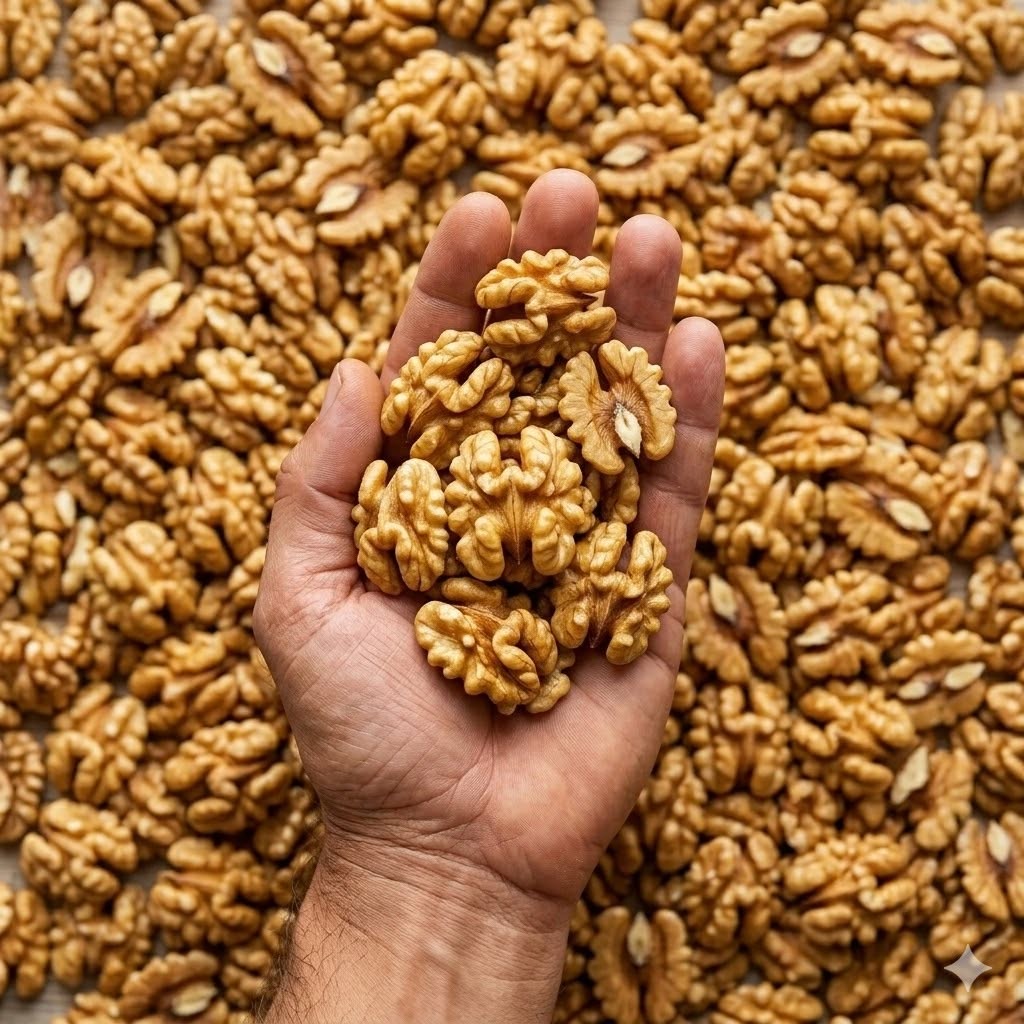
The Power of the Walnut comes from much more than its famous brain-like shape. Walnuts provide unsaturated fats, plant-based omega-3 fatty acids, fiber, protein, minerals, and plant compounds in a small serving.
That nutrient profile has made walnuts the subject of decades of research. Studies have examined their effects on cholesterol, blood-vessel function, gut bacteria, body weight, and cognitive health. The strongest evidence supports cardiovascular benefits, especially improvements in blood lipids when walnuts replace less favorable foods in the diet. Research also suggests interesting effects on the gut microbiome and vascular function. However, some popular claims about walnuts, especially dramatic promises about memory or weight loss, go beyond what clinical trials have actually proved.
A practical serving matters too. You do not need to eat a large bowl every day. One ounce, or about 28 grams, provides approximately 2.57 grams of alpha-linolenic acid, or ALA, according to the National Institutes of Health.
For many adults, roughly 1 ounce of walnuts makes a convenient daily portion. Depending on their size, that works out to around 12 to 14 walnut halves. Larger amounts can also fit into a healthy diet, but walnuts are calorie-dense, so portion size becomes especially important when you add them rather than using them to replace another food.
I started keeping walnuts in the kitchen after realizing how often my afternoon snacks consisted of whatever was easiest to grab. At first, I added a few to oatmeal simply for texture. Soon, I started using them in salads, yogurt, and snacks with fruit. What surprised me was not some dramatic overnight change. Instead, they made ordinary meals more satisfying and replaced foods that offered much less nutritional value. I also learned that the research was more nuanced than the “brain food” headlines suggested. Walnuts have several well-supported benefits, but they work as part of an overall eating pattern rather than as a miracle food.
The Power of the Walnut for Heart and Blood-Vessel Health
Benefit 1: Walnuts Can Improve LDL Cholesterol
One of the strongest findings behind The Power of the Walnut involves cholesterol.
A large body of clinical research has examined what happens when people regularly include walnuts in their diets. A 2018 systematic review and meta-analysis of controlled trials concluded that walnut-enriched diets improved blood lipid profiles without adversely affecting body weight or blood pressure.
More recent analyses have reached similar conclusions.
A 2022 meta-analysis found that walnut intake significantly reduced total cholesterol, LDL cholesterol, and triglycerides across the included trials. The authors reported an average LDL reduction of approximately 5.7 mg/dL, although the response varied between study populations.
A two-year randomized trial in older adults also found favorable effects on LDL cholesterol and LDL particle characteristics among participants assigned to eat walnuts regularly.
Why does this matter?
LDL cholesterol contributes to the development of atherosclerotic plaque when levels remain elevated over time. Therefore, eating patterns that help lower LDL can contribute to cardiovascular risk management.
However, walnuts do not act like cholesterol medication.
Their effects tend to be modest, and they work best as part of a broader heart-conscious diet.
The replacement food matters too.
Adding walnuts on top of an already calorie-rich diet creates a different situation from replacing buttered crackers, processed snacks, or foods high in saturated fat with walnuts.
That substitution may help because most of the fat in walnuts is unsaturated.
The FDA’s current nutrition framework also recognizes nuts and seeds as nutrient-dense foods that can qualify under its updated definition of “healthy.”
Therefore, the most practical approach involves using walnuts to improve the quality of your overall eating pattern rather than viewing them as a treatment by themselves.
Benefit 2: Walnuts May Support Healthy Blood-Vessel Function
Cholesterol represents only one aspect of cardiovascular health.
Your arteries also depend on a healthy endothelium, the thin layer of cells lining blood vessels. One way researchers assess endothelial function involves measuring flow-mediated dilation, or FMD.
Research suggests walnuts may have a favorable effect.
A meta-analysis of clinical trials found that walnut consumption significantly improved flow-mediated dilation. The authors concluded that walnuts may reduce cardiovascular risk partly by supporting endothelial function, although they also called for additional research.
Earlier research similarly found a beneficial effect of nut consumption on endothelial function, with the strongest effect in the analyzed trials appearing for walnuts.
This benefit may relate to several features of walnuts working together.
Walnuts contain unsaturated fatty acids, including ALA, as well as fiber and polyphenol compounds. Therefore, researchers often study the whole food rather than trying to credit one component alone.
The important point is not that a handful of walnuts will suddenly “clean” arteries.
They cannot remove plaque overnight, and they should never replace prescribed cardiovascular treatment.
Instead, evidence suggests that regular walnut consumption can support some cardiovascular risk markers when incorporated into an otherwise balanced diet.
This distinction makes The Power of the Walnut more believable.
The benefit appears gradual and nutritional rather than medicinal.
For an easy habit, sprinkle chopped walnuts over oatmeal, yogurt, or salad. Alternatively, pair a small handful with fruit instead of choosing a snack high in refined carbohydrates or saturated fat.
Those substitutions can improve several parts of the meal at once.
Omega-3 Fats and the Brain: What Walnuts Really Offer
Benefit 3: Walnuts Provide an Exceptional Plant Source of ALA
Among commonly eaten nuts, walnuts stand out because they provide a substantial amount of alpha-linolenic acid.
ALA is an essential omega-3 fatty acid, meaning your body cannot make enough of it and must obtain it from food.
According to the NIH Office of Dietary Supplements, one ounce of English walnuts provides approximately 2.57 grams of ALA.
For comparison, the established adequate intake for ALA is 1.6 grams per day for adult men and 1.1 grams per day for adult women, although individual dietary needs vary.
Therefore, a modest serving of walnuts can provide a meaningful amount of this essential fat.
However, ALA is not the same as the long-chain omega-3 fats EPA and DHA found primarily in seafood.
The body can convert some ALA into EPA and DHA, but that conversion remains limited. The NIH therefore notes that obtaining EPA and DHA directly from foods or supplements represents the practical way to substantially increase those long-chain omega-3 levels.
So, walnuts complement fish rather than replace it nutritionally.
That distinction matters because articles sometimes call walnuts the ultimate source of omega-3 fats without explaining which omega-3 they provide.
The real benefit remains impressive without exaggeration.
Walnuts supply ALA in a convenient whole-food package.
Add them to overnight oats, yogurt, salads, grain bowls, or homemade trail mix. You can also grind them into sauces or use them as a topping for roasted vegetables.
Because ALA remains essential for human nutrition, this nutrient content represents one of the clearest explanations for The Power of the Walnut.
Benefit 4: The Brain-Health Evidence Is Promising but More Nuanced Than Headlines Suggest
Walnuts have become famous as “brain food,” partly because their shape resembles a brain.
Fortunately, researchers have actually tested whether regular walnut consumption improves cognitive performance.
However, the results require careful interpretation.
The Walnuts and Healthy Aging, or WAHA, study followed cognitively healthy older adults for two years. Participants in the walnut group consumed walnuts daily.
Contrary to some popular summaries of the study, the primary analysis did not find an overall improvement in cognition among healthy older adults who ate walnuts compared with the control group.
The researchers did observe encouraging findings in certain subgroups and brain-imaging analyses, but they described those results as inconclusive and recommended further investigation.
That means it would be inaccurate to claim that the trial proved walnuts improve memory, processing speed, and mental flexibility for everyone.
Still, the absence of a dramatic cognitive effect does not make walnuts unhelpful.
They supply ALA, unsaturated fats, and other nutrients within a dietary pattern associated with cardiovascular health. Since vascular health also matters for brain health, walnuts remain a sensible food choice.
A broader 2022 systematic review concluded that evidence for walnut benefits appears strongest for cardiovascular outcomes, while research involving cognition and other areas continues to develop.
Therefore, enjoy walnuts as a nutritious food rather than as a memory supplement.
Eating them regularly may support overall health, but no single food can prevent dementia or guarantee sharper thinking.
This evidence-based perspective makes The Power of the Walnut much more useful than a sensational promise.
The Power of the Walnut for Gut Health and Weight Management
Benefit 5: Walnuts Can Influence the Gut Microbiome
Your digestive system contains a vast community of microorganisms collectively called the gut microbiome.
Researchers increasingly study how different foods influence these microbial populations.
Walnuts appear capable of changing the gut microbiome in measurable ways.
In one randomized controlled trial, healthy adults consumed 43 grams of walnuts daily for eight weeks. Researchers found changes in bacterial populations, including increases in some species associated with butyrate production and other potentially favorable metabolic effects.
Another controlled feeding study found that walnut consumption altered several groups of gut bacteria and reduced concentrations of certain secondary bile acids compared with the control diet.
These findings make gut health one of the most interesting emerging areas behind The Power of the Walnut.
However, researchers have not proved that these microbiome shifts directly prevent specific diseases.
The microbiome remains extraordinarily complex, and scientists still debate which microbial patterns consistently represent optimal health.
Therefore, avoid products or headlines claiming walnuts “reset” or “detox” the gut.
The evidence supports a more modest conclusion: walnuts contain fiber, fats, and plant compounds that gut microbes can interact with, and controlled trials show that regular walnut consumption can change microbial composition.
This effect may complement other gut-supportive foods such as vegetables, fruit, legumes, whole grains, seeds, and fermented foods.
Variety matters.
Instead of relying on walnuts alone, combine them with other plant foods.
For example, add walnuts and berries to oats, sprinkle walnuts onto a lentil salad, or combine them with fruit and yogurt.
That approach exposes gut microbes to a broader range of fibers and plant compounds.
Walnuts Are Calorie-Dense but Do Not Automatically Cause Weight Gain
Walnuts contain a significant amount of fat, so they also contain plenty of calories in a relatively small serving.
That fact sometimes leads people to avoid them when trying to manage weight.
Clinical research does not support the idea that adding reasonable amounts of walnuts inevitably causes weight gain.
A systematic review and meta-analysis examining walnut interventions found no significant adverse effects on body weight, body mass index, fat mass, or waist circumference overall.
A two-year trial in healthy older adults similarly concluded that daily walnut consumption could fit into the diet without adversely affecting body weight.
Research involving weight-loss diets has also shown that walnuts can fit into calorie-restricted eating plans. One randomized intervention found that a walnut-enriched reduced-energy diet supported weight loss comparable with a standard reduced-energy diet.
More recent evidence remains broadly consistent. A 2025 meta-analysis of randomized trials found a very small average reduction in body weight with walnut supplementation but no significant reduction in BMI.
Therefore, calling walnuts a “weight-loss food” would overstate the evidence.
A better conclusion is that walnuts can fit comfortably into weight-management diets when portions remain appropriate.
That distinction matters.
If you add several large handfuls of walnuts to your normal food intake every day, the additional calories can still matter.
Instead, use them as a replacement.
Swap a pastry, candy bar, chips, or other less nutrient-dense snack for a measured portion of walnuts and fruit.
How Many Walnuts Should You Actually Eat?
A Practical Daily Portion
So how much do you need to experience The Power of the Walnut?
There is no medically required daily dose for healthy adults.
However, 1 ounce, or about 28 grams, represents a practical serving commonly used for nuts.
That amount provides approximately 2.57 grams of ALA.
In everyday terms, 1 ounce usually equals roughly 12 to 14 walnut halves, depending on their size.
You do not need to count each piece perfectly.
A small closed handful provides an easy visual estimate.
Some clinical trials have used larger amounts. For example, gut-microbiome research has used approximately 43 grams daily, while the WAHA trial provided walnuts at roughly 15% of total energy intake.
However, research doses do not automatically become nutritional prescriptions.
For most people, a modest serving makes more sense.
The FDA has also long allowed a qualified health claim stating that supportive but not conclusive evidence suggests that eating 1.5 ounces per day of most nuts as part of a diet low in saturated fat and cholesterol may reduce heart-disease risk, provided the nuts do not cause excess calorie intake. Walnuts have been included in FDA discussions of this qualified claim.
Therefore, somewhere around 1 to 1.5 ounces can fit comfortably into many healthy eating patterns.
Your ideal amount depends on your total calorie needs, other foods, appetite, and health goals.
The Best Ways to Eat Walnuts Without Overdoing Them
Portioning walnuts before eating makes moderation easier.
Instead of repeatedly reaching into a large bag, place a measured handful into a small bowl.
Then, combine them with foods that provide complementary nutrients.
Add chopped walnuts to plain yogurt and berries.
Sprinkle them over oatmeal.
Mix them into a salad with leafy greens, fruit, beans, or chicken.
Add a few to whole-grain cereal.
Alternatively, pair walnuts with an apple or pear for a simple snack.
Choose plain walnuts most often.
Sugar-coated walnuts, heavily salted versions, and walnut desserts can still taste enjoyable, but they change the nutritional context.
Storage matters too.
Because walnuts contain a high proportion of unsaturated fats, they can develop unpleasant flavors when stored too long in warm conditions. Keeping them sealed in a cool location, refrigerator, or freezer can help maintain quality.
People with tree-nut allergies must avoid walnuts.
Additionally, anyone following a specialized medical diet should discuss nuts with their healthcare professional when necessary.
For everyone else, think of walnuts as one nutritious option among many.
You do not need them every single day to maintain a healthy diet.
However, if you enjoy them, a small daily serving provides a convenient way to add unsaturated fats, ALA, plant compounds, and texture to meals.
Frequently Asked Questions
How many walnuts should I eat per day?
Around 1 ounce, or approximately 28 grams, makes a practical serving for many adults. That usually equals roughly 12 to 14 walnut halves. One ounce provides about 2.57 grams of ALA omega-3 fat.
Do walnuts really improve memory?
Evidence remains uncertain. The two-year WAHA randomized trial found no overall improvement in cognition among healthy older adults, although exploratory findings suggested that certain higher-risk subgroups might benefit. Researchers concluded that more study is needed.
Can walnuts lower cholesterol?
Clinical trials and meta-analyses indicate that regular walnut consumption can modestly reduce total and LDL cholesterol. However, walnuts should complement rather than replace prescribed cholesterol treatment.
Are walnuts good for gut health?
Randomized trials show that eating walnuts can alter the composition of gut bacteria and influence microbial metabolites. Researchers still need more evidence to determine exactly how these changes translate into long-term disease outcomes.
Will walnuts make me gain weight?
Not necessarily. Controlled trials and meta-analyses generally show that moderate walnut consumption does not cause significant weight gain when incorporated appropriately into the diet. Portions still matter because walnuts are calorie-dense.
Conclusion
The Power of the Walnut comes from a combination of useful nutrients rather than one magical compound.
The strongest clinical evidence supports cardiovascular benefits. Regular walnut consumption can modestly improve LDL cholesterol and other blood-lipid measures, while research also suggests improvements in endothelial function.
Walnuts also stand out as an unusually rich plant source of ALA. One ounce provides approximately 2.57 grams of this essential omega-3 fatty acid.
Gut research provides another promising area. Controlled trials demonstrate that walnuts can change microbial populations and metabolites in the digestive tract, although researchers still need to determine the full clinical significance of those changes.
Meanwhile, walnuts can fit into weight-management plans despite their calorie density. Evidence does not show that reasonable walnut intake automatically leads to weight gain.
The brain-health story requires more restraint. Walnuts contain nutrients that support overall health, but the major two-year randomized cognitive trial did not find an overall cognitive improvement in healthy older adults.
So, you do not need to eat walnuts by the bowlful.
For many people, approximately 1 ounce a day makes a practical amount. Add them to oatmeal, yogurt, salads, vegetables, or fruit, and use them to replace less nutrient-dense foods rather than simply adding extra calories.
That approach captures The Power of the Walnut without turning a nutritious food into a miracle cure.