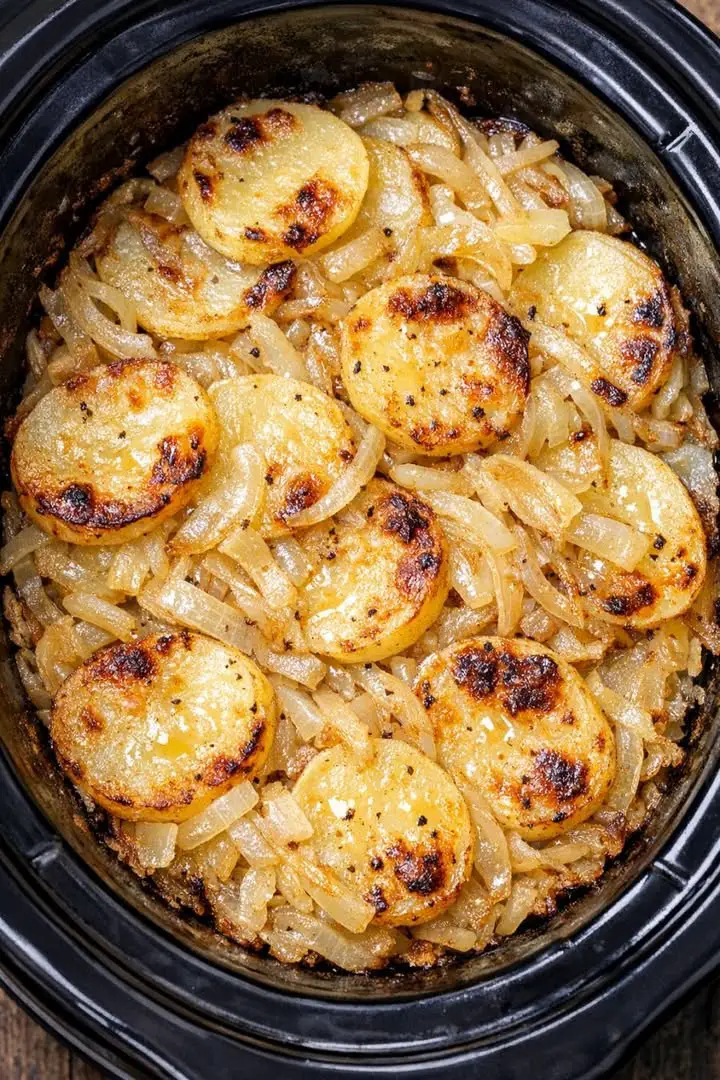
Few dishes feel as comforting and timeless as this Slow Cooker 4-Ingredient Depression Era Potato and Onion Bake. Made with humble pantry staples like potatoes, onions, butter, and flour, this cozy side dish transforms simple ingredients into something rich, buttery, and deeply satisfying.
The magic happens slowly as the onions soften and caramelize while the potatoes turn tender and creamy. Meanwhile, the butter and flour create a silky coating that tastes almost like gravy without needing cream or broth. Best of all, the slow cooker handles most of the work, making this recipe perfect for busy weekdays, relaxed Sundays, or any time you want comforting food without much effort.
This recipe carries generations of family history in every bite. During the Depression, families often relied on affordable staples to stretch meals while still feeding everyone well. My great-aunt prepared this dish nearly every Sunday after church because potatoes and onions were dependable, inexpensive, and filling. The smell drifting from her kitchen always brought people to the table before supper was even ready. Even now, making this slow cooker potato and onion bake feels like keeping a small piece of that tradition alive. It reminds us that simple food made with care often becomes the most memorable kind of comfort.
Ingredients
Equipment
Method
- Grease the inside of the slow cooker with butter.
- Peel and thinly slice the potatoes.
- Thinly slice the onions.
- Mix flour, salt, and pepper together in a small bowl.
- Layer potatoes, onions, flour mixture, and butter in the slow cooker.
- Repeat layers until all ingredients are used.
- Cover and cook on HIGH for 3 1/2 to 4 hours or LOW for 6 to 7 hours.
- Allow the top to brown slightly with the lid slightly ajar for 15 to 20 minutes before serving.
Notes
Why This Potato and Onion Bake Still Works Today
Simple Ingredients Create Big Flavor
One reason this slow cooker potato and onion bake remains popular is because the ingredients are inexpensive yet flavorful. Potatoes become creamy and tender during slow cooking, while onions melt into soft, sweet layers that flavor every bite.
Although the ingredient list stays short, the slow cooker develops deep flavor over time. Butter adds richness while the flour thickens the natural juices into a light sauce that coats the potatoes beautifully.
Because the potatoes cook slowly, the edges develop golden spots that taste almost roasted. At the same time, the onions caramelize gently and add savory sweetness throughout the dish.
Another reason this recipe works so well is its flexibility. Yukon Gold potatoes create a buttery texture, while russet potatoes become soft and fluffy. Both varieties taste delicious, so you can use whichever you already have at home.
A Budget-Friendly Comfort Dish
This recipe became popular during difficult economic times because it could feed several people using affordable pantry staples. Even today, it remains one of the most economical comfort foods you can make.
Since the ingredients are simple, this dish pairs well with many meals. Roast chicken, pork chops, sausage, or meatloaf all work beautifully alongside these buttery potatoes.
The leftovers also stretch nicely into another meal. Reheated potatoes taste wonderful with scrambled eggs or tucked beside a simple salad for lunch the next day.
Additionally, the slow cooker keeps preparation easy. You can layer everything in the morning and let it cook while handling the rest of your day. As a result, dinner feels homemade without requiring constant attention.
How to Make the Best Slow Cooker Potato Bake
Slice the Potatoes Evenly
Even slices matter when making this potato and onion bake. Thin potatoes cook more evenly and absorb flavor better than thick chunks.
Using a mandoline slicer helps keep the potatoes around 1/8 inch thick. However, a sharp knife works perfectly well if you slice carefully and consistently.
The onions should match the potato thickness as closely as possible. This allows both vegetables to soften at the same rate while cooking.
Layering also plays an important role. Overlapping the potatoes slightly creates a sturdy structure while still allowing steam and butter to circulate through the layers.
Sprinkling the flour mixture lightly between layers helps thicken the butter and onion juices into a silky coating. Therefore, every serving tastes rich without needing heavy cream.
Slow Cooking for Tender Potatoes
Cooking this dish slowly allows the flavors to deepen naturally. LOW heat creates especially tender potatoes, although HIGH works well when you need dinner sooner.
Avoid lifting the lid too often during cooking. Each time the lid opens, heat escapes and slows the process significantly.
Toward the end of cooking, slightly opening the lid helps moisture evaporate. As a result, the top layer develops more golden, lightly crisp edges.
Butter dotted throughout the layers melts gradually and creates rich flavor without making the dish greasy. Because the flour absorbs excess moisture, the potatoes stay creamy instead of watery.
Letting the finished dish rest briefly before serving also helps the layers settle together, making it easier to scoop generous portions from the slow cooker.
Delicious Variations and Serving Ideas
Easy Additions for Extra Flavor
Although the original recipe stays beautifully simple, small additions can create different flavor variations while keeping the old-fashioned feel.
A sprinkle of paprika adds gentle smoky flavor and extra color. Black pepper gives the dish more warmth, while garlic powder adds savory depth without overpowering the onions.
For extra richness, some cooks drizzle evaporated milk or whole milk over the layers before cooking. This creates a creamier sauce while still keeping the dish practical and affordable.
Cheese lovers sometimes add shredded cheddar during the final 20 minutes of cooking. While not traditional, it creates a delicious casserole-style finish.
Fresh herbs like parsley or thyme also brighten the potatoes nicely before serving.
Best Dishes to Serve Alongside
This potato and onion bake pairs wonderfully with simple proteins because the potatoes themselves already feel rich and filling.
Roast chicken and pork chops balance the buttery potatoes especially well. Pan-fried sausage or meatloaf also create comforting family-style dinners.
To lighten the plate, serve the potatoes with green beans, steamed broccoli, or a crisp green salad tossed with vinaigrette.
Tangy sides work particularly well because they cut through the richness. Pickles, sauerkraut, or vinegar slaw provide refreshing contrast that complements the buttery flavor beautifully.
Even breakfast meals benefit from these potatoes. Leftovers taste excellent beside eggs or tucked into a breakfast skillet the next morning.
Storage, Reheating, and Helpful Tips
Storing Leftovers Properly
After serving, leftovers should cool slightly before refrigeration. Transfer the potatoes into shallow airtight containers within two hours for best food safety practices.
These potatoes keep well in the refrigerator for up to four days. The flavors often deepen overnight, making leftovers especially delicious.
If freezing, allow the potatoes to cool completely first. However, keep in mind that potatoes may soften slightly after thawing.
Reheating Without Drying Out
To reheat successfully, add a small pat of butter or splash of milk before warming. This helps restore moisture and keeps the potatoes creamy.
Microwaving works well for individual servings. For larger portions, reheating in the oven covered with foil helps maintain texture more evenly.
If you want crispier edges again, uncover the potatoes during the final few minutes of reheating.
One final tip involves seasoning carefully. Potatoes absorb salt as they cook, so tasting before serving ensures the flavor stays balanced. Sometimes just a tiny extra pinch of salt at the table makes the entire dish shine.
Frequently Asked Questions
Can I use red potatoes instead of russet potatoes?
Yes. Red potatoes work well, although they hold their shape more firmly and create a slightly different texture.
Do I need to peel the potatoes?
Peeling creates the most traditional texture, but leaving the skins on works if you prefer a more rustic dish.
Can I add cheese to this recipe?
Absolutely. Cheddar cheese melts beautifully over the top during the last 20 minutes of cooking.
Why are my potatoes watery?
Too much moisture can build up if the lid stays tightly sealed the entire time. Opening the lid slightly near the end helps excess liquid evaporate.
Can I prepare this ahead of time?
Yes. Slice the onions and mix the flour seasoning the night before. Slice the potatoes fresh in the morning to prevent discoloration.
Conclusion
This Slow Cooker 4-Ingredient Depression Era Potato and Onion Bake proves that humble ingredients can create unforgettable comfort food. With buttery potatoes, sweet caramelized onions, and rich slow-cooked flavor, this dish turns pantry basics into something warm and satisfying.
Whether you make it for a Sunday dinner, a holiday side dish, or a simple weeknight meal, this recipe continues the tradition of creating comfort from simplicity. Every spoonful feels hearty, nostalgic, and deeply comforting in the best possible way.