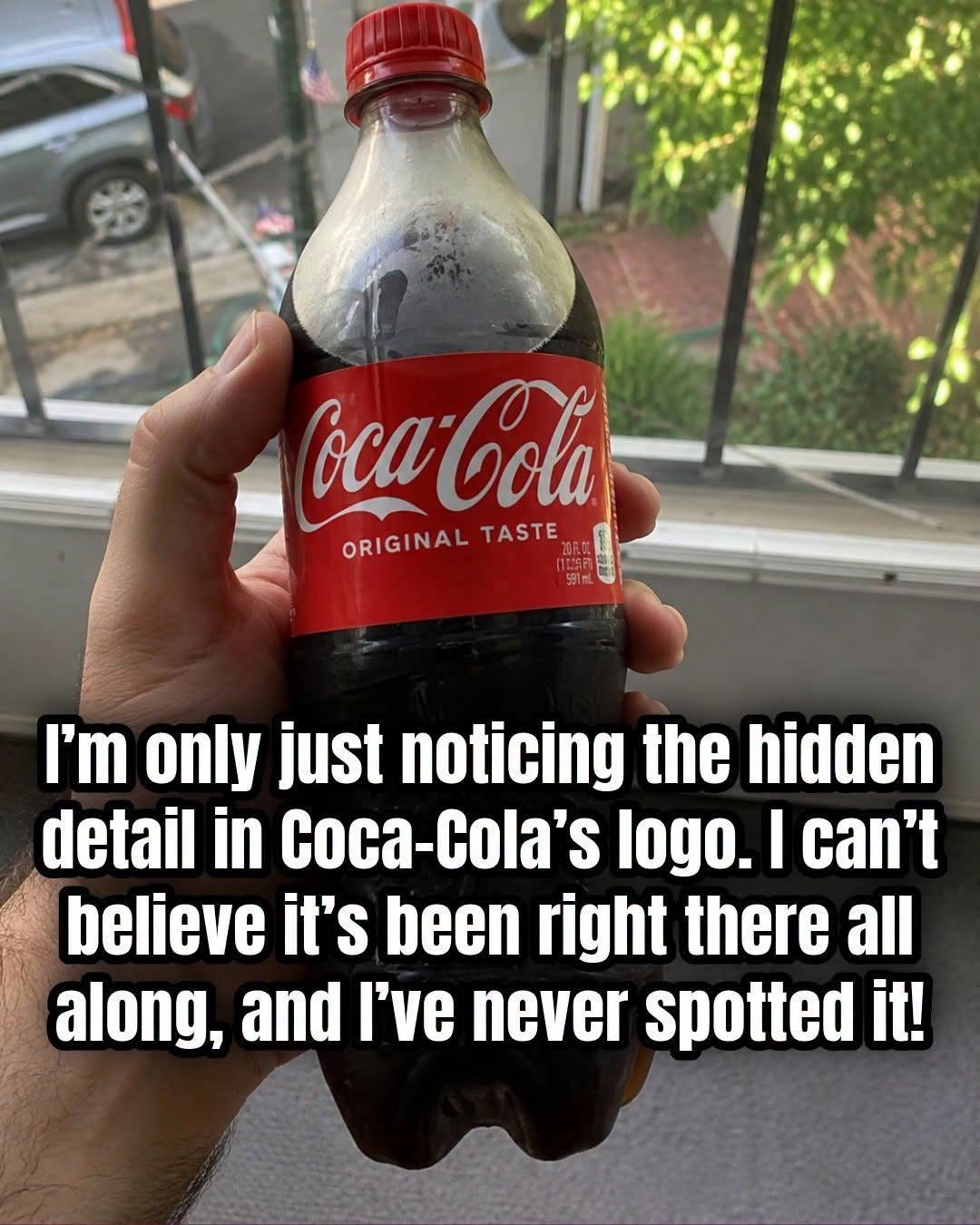
The Coca-Cola logo is one of the most recognizable brand designs in the world. For more than a century, its flowing white script against a bright red background has become instantly familiar across countless countries and cultures. Recently, however, the iconic logo has gained renewed attention for an entirely different reason. Social media users have begun claiming they’ve discovered a “hidden detail” concealed within the famous lettering, sparking widespread curiosity and debate.
While these viral posts encourage viewers to look more closely, the reality behind the claims is far less mysterious. Much of the excitement comes from how our brains naturally search for patterns, even in designs that were never intended to hide secret messages. Understanding the history of the Coca-Cola logo and the psychology behind these interpretations helps separate fascinating internet theories from documented design facts.
Why People Believe They See Hidden Images
The recent viral trend centers around viewers identifying shapes or symbols that they believe are cleverly embedded within the Coca-Cola logo.
The “Hidden Shape” Theory
Many social media users claim they can spot hidden elements inside the flowing script.
Some of the interpretations include:
- A smiling face
- An arrow
- Abstract symbols
- Various shapes formed by the curves of the letters
Once one person points out a particular pattern, others often begin seeing the same thing, even if it wasn’t previously noticeable. These discoveries quickly spread through videos and online discussions, encouraging millions of people to inspect the logo for themselves.
However, there is no official evidence that these perceived shapes were intentionally designed into the logo.
How Our Brains Find Patterns
The reason so many people believe they see hidden images lies in a psychological phenomenon known as pareidolia.
Pareidolia is the tendency for the human brain to recognize familiar patterns where none were intentionally created.
Common examples include:
- Seeing faces in clouds
- Recognizing animals in rock formations
- Finding shapes in tree bark
- Interpreting random objects as meaningful symbols
This natural pattern-recognition ability helps explain why different people often see entirely different images within the same logo. What appears obvious to one viewer may be completely invisible to someone else.
The History Behind the Coca-Cola Logo
While internet theories often suggest hidden meanings, the actual story behind the Coca-Cola logo is well documented and rooted in classic graphic design rather than secret symbolism.
A Design That Has Stood the Test of Time
The Coca-Cola logo was created in 1886 by Frank Mason Robinson, the company’s bookkeeper. He believed that two capital “C” letters would look striking in advertisements and chose to write the brand name using Spencerian script, a popular style of elegant handwriting taught in American schools during the late 19th century.
The flowing script quickly became a defining feature of the brand and has remained remarkably consistent for more than a century.
Although the logo has undergone subtle refinements over the years, its core elements have stayed the same:
- The distinctive cursive lettering
- The red-and-white color scheme
- Smooth, connected letterforms
- A clean, recognizable appearance
Its longevity is often cited as one of the reasons it remains one of the world’s most recognizable logos.
Was There Ever a Hidden Message?
Despite countless online theories, there is no official evidence that the Coca-Cola logo was designed to contain hidden symbols, secret messages, or coded imagery.
Brand historians and design experts generally agree that the logo’s success comes from:
- Elegant typography
- Strong visual identity
- Consistent branding
- Simple, memorable design
Any shapes that people believe they discover are typically the result of personal interpretation rather than intentional design choices.
How Social Media Turns Simple Observations Into Viral Trends
Modern social media platforms can transform a small observation into a worldwide discussion within hours.
Why These Claims Spread So Quickly
When someone posts a video claiming they’ve uncovered a “hidden detail” in a famous logo, curiosity naturally encourages others to take a closer look.
Platforms such as:
- TikTok
- X (formerly Twitter)
- YouTube
reward engaging content, meaning surprising discoveries often receive millions of views regardless of whether they’re supported by evidence.
As more users repeat the claim, many viewers begin accepting it as fact before checking its accuracy.
Separating Fact From Interpretation
When evaluating viral claims about logos or brand designs, it’s helpful to consider a few simple questions:
- Has the company officially confirmed the claim?
- Is there historical documentation supporting the theory?
- Are reputable design historians discussing the same conclusion?
- Could the observation simply be an example of pattern recognition?
In the case of the Coca-Cola logo, the available historical evidence points to a carefully crafted piece of typography rather than a design filled with hidden messages.
Looking beyond eye-catching headlines and examining the original history often provides a much clearer understanding of why an iconic logo became so successful in the first place.
Frequently Asked Questions
Does the Coca-Cola logo actually contain hidden symbols?
There is no official confirmation that the Coca-Cola logo contains hidden symbols or secret messages. While many people believe they can identify shapes within the lettering, these interpretations are generally considered examples of personal perception rather than intentional design.
What is Spencerian script?
Spencerian script is a decorative style of cursive handwriting that became popular in the United States during the 19th century. Known for its elegant loops and flowing strokes, it was widely used for business correspondence and penmanship instruction. The Coca-Cola logo was created using this writing style, which contributes to its distinctive and timeless appearance.
Why do people see hidden images in logos?
This often happens because of pareidolia, a psychological phenomenon in which the brain naturally identifies familiar patterns in random or ambiguous visual information. It’s the same reason people sometimes see faces in clouds, animals in rock formations, or recognizable shapes in everyday objects.
Can social media make false claims seem believable?
Yes. Social media platforms can spread eye-catching content very quickly. As more people share a theory or repeat a claim, it can begin to appear credible even when there is little or no evidence supporting it. Checking reliable sources and understanding the historical background can help separate verified facts from internet speculation.
Why has the Coca-Cola logo remained so successful for so long?
The logo’s enduring popularity comes from its simplicity, consistency, and strong visual identity. Its elegant typography, recognizable color scheme, and decades of consistent branding have made it one of the most iconic corporate logos in the world.
Conclusion
The recent fascination with a supposed “hidden detail” in the Coca-Cola logo demonstrates how easily familiar designs can capture public attention in the age of social media. While creative interpretations are entertaining and encourage people to look more closely at everyday objects, there is no documented evidence that the logo was intentionally designed to conceal secret symbols or messages.
Instead, the logo’s lasting appeal comes from its rich design history, elegant Spencerian script, and consistent visual identity that has remained recognizable for well over a century. The patterns some people believe they see are best explained by pareidolia—the brain’s natural tendency to find meaningful shapes in complex images.
The next time a viral post claims to reveal a hidden secret inside a famous logo, it’s worth taking a closer look—not only at the design itself but also at the history behind it. Often, the real story is just as fascinating as the internet theory, reminding us that great design doesn’t need hidden messages to leave a lasting impression.