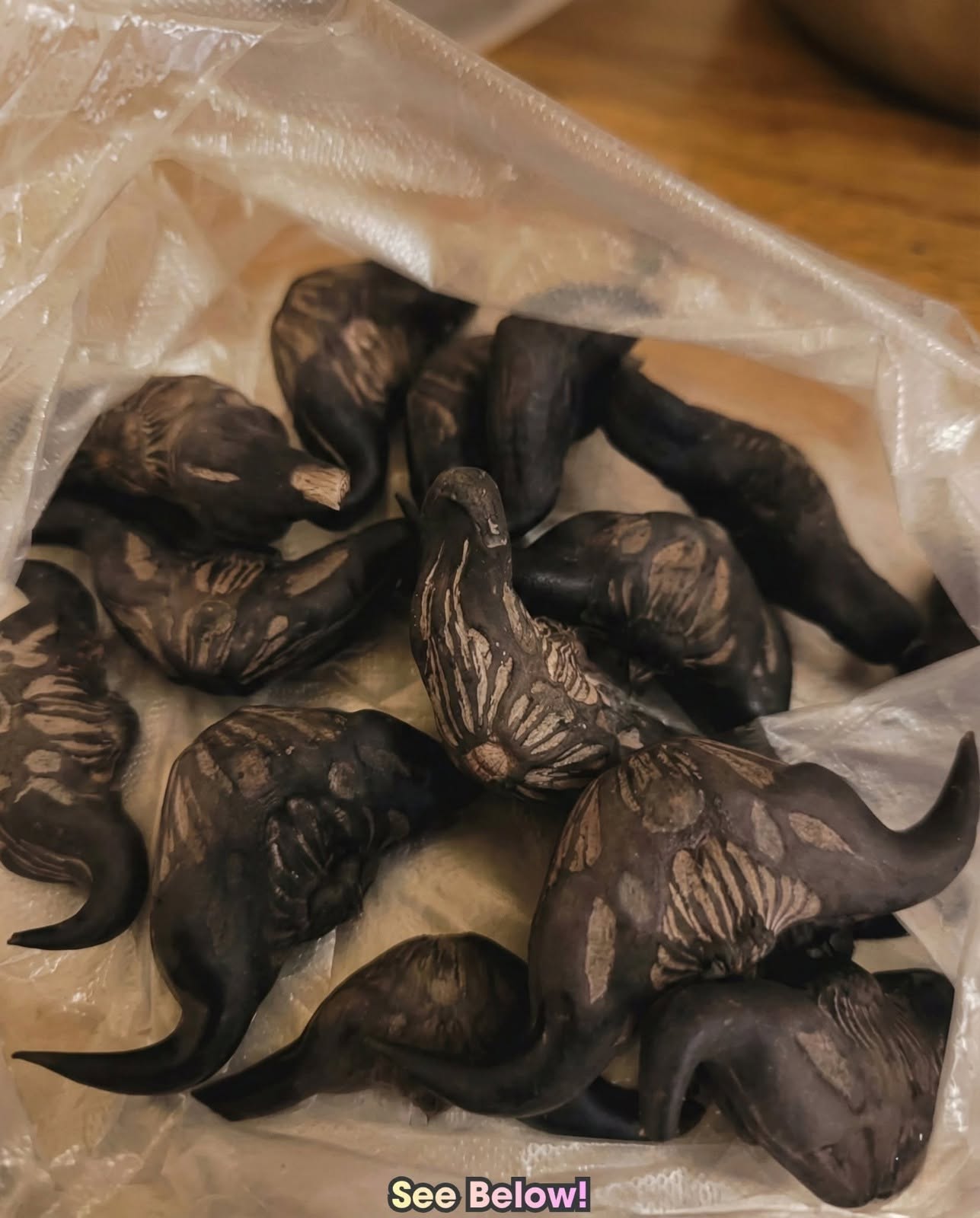
A Curious Gift From Next Door
There’s something special about receiving food from a neighbor.
No fancy packaging.
No marketing.
No instructions.
Just a simple bag handed over with a smile and a casual, “We had extra.”
Most of us have experienced that moment of curiosity. You look inside the bag and immediately begin asking questions.
What is it?
How do you cook it?
Is it sweet or savory?
Have I even seen this before?
Neighborhood food sharing has existed for generations. Gardeners often find themselves with more produce than they can possibly eat. Rather than letting perfectly good food go to waste, they share it with friends, family, and neighbors.
Sometimes it’s zucchini.
Sometimes it’s tomatoes.
Sometimes it’s herbs.
And occasionally, it’s something that looks completely unfamiliar.
That’s exactly what happened here.
The mysterious gift turned out to be one of the most unusual-looking edible plants many people have never heard of: water caltrops.
Mystery Solved: Meet the Water Caltrop
At first glance, water caltrops can look intimidating.
Their dark shells and horn-like spikes make them appear more like strange sea creatures than food.
Yet these unusual pods have been enjoyed for thousands of years across Asia and parts of Europe.
Water caltrops are edible aquatic seeds produced by plants that grow in ponds, lakes, and slow-moving freshwater environments.
They are known by several names, including:
- Water caltrops
- Buffalo nuts
- Devil pods
- Singhara nuts
- Bat nuts
- Water chestnuts (although they are different from Chinese water chestnuts)
Despite their intimidating appearance, they contain a delicious white kernel hidden inside a hard protective shell.
What Exactly Are Water Caltrops?
Water caltrops belong primarily to the genus Trapa.
The two most common species include:
- Trapa natans (European water caltrop)
- Trapa bicornis (Asian water caltrop)
These plants float on the surface of calm freshwater and produce distinctive horned fruits that eventually mature and are harvested for food.
Quick Facts
| Feature | Description |
|---|---|
| Scientific Name | Trapa natans / Trapa bicornis |
| Edible Portion | White kernel inside shell |
| Taste | Mild, sweet, nutty |
| Texture | Starchy and dense |
| Harvest Season | Late summer through autumn |
| Habitat | Ponds, lakes, slow rivers |
| Culinary Use | Snacks, flour, curries, desserts |
Why Do They Have So Many Names?
The unusual appearance of water caltrops has inspired countless names around the world.
Buffalo Nut
The pointed horns resemble buffalo horns.
Devil Pod
The sharp spikes can make the fruit look somewhat menacing.
Singhara
This is the common name used throughout India and neighboring countries.
Bat Nut
Some varieties resemble the wings of a bat.
Water Chestnut
This name causes the most confusion because water caltrops are entirely different from the crunchy Chinese water chestnuts commonly used in stir-fries.
What Do Water Caltrops Taste Like?
Many first-time eaters expect a strong flavor because of the dramatic appearance.
Instead, they discover something surprisingly mild.
The flavor is often described as:
- Slightly sweet
- Mildly nutty
- Earthy
- Similar to chestnuts
- Similar to potatoes
- Slightly reminiscent of fresh water chestnuts
The texture is dense and starchy, making them satisfying and filling.
Roasting enhances their nutty flavor while boiling creates a softer, more potato-like texture.
How to Open Water Caltrops
The biggest challenge isn’t cooking them.
It’s getting inside them.
The outer shell is extremely hard and designed to protect the seed.
Step 1: Boil First
Place the water caltrops in boiling water for 15–20 minutes.
This softens the shell slightly and makes opening easier.
Step 2: Allow Them to Cool
Let them cool enough to handle safely.
Step 3: Crack the Shell
Use:
- A nutcracker
- Kitchen mallet
- Heavy knife
- Hammer (carefully)
Step 4: Remove the Kernel
Inside you’ll find a white kernel that resembles a chestnut.
Step 5: Peel Any Thin Skin
Remove any remaining skin before eating.
Safety Tips
The sharp points can puncture skin.
Always:
- Handle carefully
- Wear gloves if needed
- Keep away from small children
- Avoid stepping on discarded shells
The spines become surprisingly sharp when dry.
Ways to Eat Water Caltrops
One reason water caltrops have remained popular for centuries is their versatility.
Eat Them Raw
Once shelled, the white kernel can be eaten fresh.
This offers the mildest flavor and firmest texture.
Boil Them
Boiling softens the flesh and creates a texture similar to cooked chestnuts or potatoes.
Roast Them
Roasting develops deeper flavors and creates a slightly crisp exterior.
Steam Them
Steaming preserves nutrients while maintaining a pleasant texture.
Grind Them Into Flour
Dried kernels can be milled into flour used for:
- Pancakes
- Flatbreads
- Dumplings
- Desserts
- Soup thickeners
Popular Uses Around the World
China
Water caltrops have been cultivated for over 3,000 years.
They appear in:
- Soups
- Stir-fries
- Desserts
- Festival foods
India
Known as singhara, they hold cultural and religious significance.
They are commonly:
- Ground into flour
- Used during fasting periods
- Added to curries
- Made into sweets
Japan
Japanese cuisine often features boiled or roasted water caltrops as seasonal snacks.
Korea
They appear in traditional teas and desserts.
Easy Recipe: Roasted Water Caltrops
Ingredients
- 2 cups shelled water caltrops
- 1 tablespoon olive oil
- 1 teaspoon sea salt
Instructions
- Preheat oven to 375°F (190°C).
- Toss kernels with oil and salt.
- Spread on a baking sheet.
- Roast for 20–25 minutes.
- Stir once halfway through cooking.
- Cool slightly before serving.
The result is a crunchy, nutty snack that pairs wonderfully with tea.
Easy Recipe: Water Caltrop Pancakes
Ingredients
- 1 cup water caltrop flour
- 1 cup milk or water
- Pinch of salt
- Honey to taste
Instructions
- Mix ingredients into a smooth batter.
- Heat a non-stick skillet.
- Pour small circles of batter.
- Cook until golden on both sides.
- Serve warm with honey or fruit.
Nutritional Benefits
Water caltrops are surprisingly nutritious.
They provide:
Complex Carbohydrates
These provide sustained energy rather than rapid sugar spikes.
Dietary Fiber
Fiber supports digestion and gut health.
Plant-Based Protein
Although not a high-protein food, they contribute useful amounts.
Essential Minerals
Including:
- Potassium
- Magnesium
- Phosphorus
Naturally Gluten-Free
Water caltrop flour serves as an alternative for people avoiding gluten.
Important Environmental Considerations
Although water caltrops are valued as food in many regions, they can also create ecological challenges.
In some areas of North America, certain species have become invasive.
Dense growth can:
- Block sunlight
- Reduce oxygen levels
- Crowd out native plants
- Interfere with recreation
Before harvesting or growing water caltrops, always check local regulations.
Some regions restrict transportation or cultivation.
Frequently Asked Questions
Are water caltrops the same as Chinese water chestnuts?
No.
Chinese water chestnuts are underground tubers. Water caltrops are seeds produced by aquatic plants.
Can they be eaten raw?
Yes. Once the shell is removed, the kernel is edible raw.
What do they taste like?
They have a mild, slightly sweet flavor similar to chestnuts.
Are they healthy?
Yes. They provide carbohydrates, fiber, vitamins, and minerals while remaining naturally low in fat.
Where can I buy them?
Look for them in:
- Asian grocery stores
- Indian markets
- Specialty food retailers
- Farmers markets in regions where they are cultivated
The Beauty of Unexpected Food Gifts
The most interesting foods often arrive without warning.
A neighbor shares an unfamiliar vegetable.
A friend introduces a traditional ingredient from another culture.
A family member brings home something you’ve never seen before.
These moments remind us that food is more than nourishment.
It’s connection.
It’s culture.
It’s generosity.
It’s curiosity.
That mysterious bag of horned pods may have seemed confusing at first, but it opened the door to discovering a food enjoyed for thousands of years across multiple continents.
So if your neighbor ever hands you a bag of water caltrops, don’t be intimidated by their unusual appearance.
Crack them open.
Try them roasted.
Experiment with a new recipe.
And most importantly, thank the neighbor who shared them.
Because sometimes the best culinary discoveries arrive in the simplest way possible—a paper bag, a friendly smile, and the words:
“We had extra.”