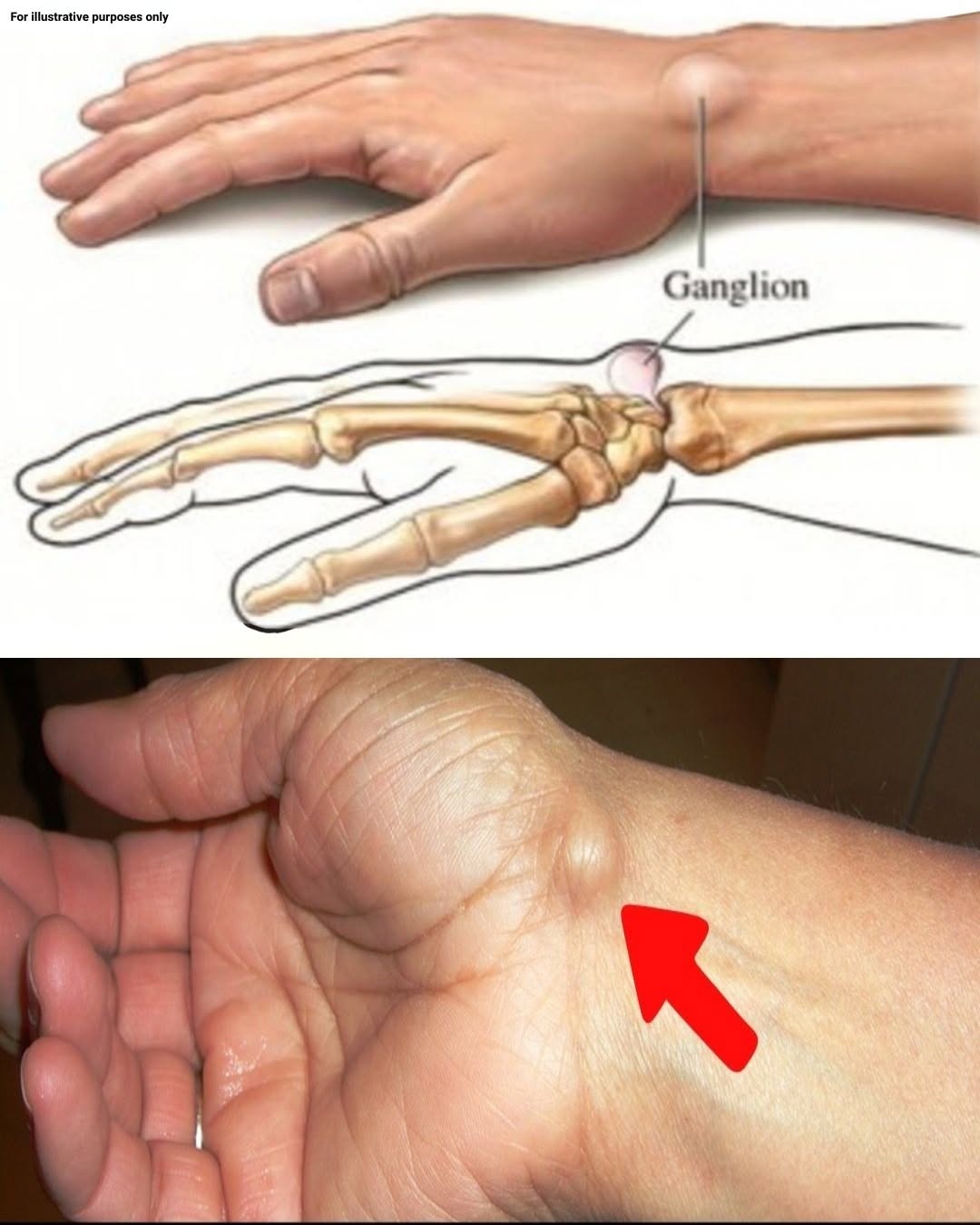
Noticing a Lump on Your Hand can turn an ordinary moment into an anxious one. Perhaps you feel a smooth bump while washing your hands, notice a firm nodule while gripping something, or suddenly realize that one finger looks slightly different from the other.
Then comes the obvious question: what is it?
The reassuring answer is that many hand and wrist masses are benign. Ganglion cysts represent one particularly common cause, while other possibilities include growths associated with tendon sheaths, epidermoid cysts, lipomas, arthritic changes, and lumps related to injuries.
However, appearance and touch alone cannot reliably identify every mass. A lump that grows, becomes painful, interferes with movement, causes numbness, or develops other unusual characteristics deserves professional evaluation.
Cancerous tumors of the hand and wrist can occur, although they are much less common than benign masses. Therefore, the goal should not involve panicking over every bump or assuming that every lump is harmless.
Instead, pay attention to how the lump behaves.
I remember discovering a small bump near my wrist after spending an afternoon carrying boxes. I could not remember seeing it before, so naturally I kept touching it every few minutes. That only made the area feel more noticeable and increased my anxiety. I eventually stopped trying to diagnose it by pressing on it and paid attention to more useful details: whether it grew, whether the skin changed, and whether my hand still moved normally. A clinician later explained that hand lumps can come from several different tissues and often need an examination for proper identification. The experience taught me that observation helps, but repeated poking rarely does.
Common Reasons a Lump Appears on Your Hand
Ganglion Cysts Are a Frequent Explanation
When Noticing a Lump on Your Hand, a ganglion cyst often comes to mind, particularly when the bump sits around the wrist or near a joint.
Ganglion cysts are noncancerous lumps that commonly develop along tendons or joints of the wrists and hands. They may feel round or oval, and they contain a jelly-like fluid. (mayoclinic.org)
Some remain tiny, while others become much more obvious.
Interestingly, the size can fluctuate. Activity may cause a ganglion cyst to enlarge, while rest can sometimes make it smaller.
Many ganglion cysts cause little or no pain. However, a cyst that presses against a nearby nerve can produce pain, tingling, numbness, or weakness. Its location can also interfere with joint movement. (orthoinfo.aaos.org)
Doctors do not always need to treat an uncomplicated ganglion cyst.
Observation may make sense when the diagnosis is clear and the cyst causes no significant problems. When symptoms interfere with daily activities, a clinician may discuss options such as aspiration or surgery.
However, do not try to burst one yourself.
Old-fashioned advice sometimes recommends striking a ganglion cyst with a heavy object. That approach can injure the hand and does not address the possibility that the lump has been incorrectly identified.
Cysts, Lipomas, and Other Benign Growths
Not every soft lump is a ganglion cyst.
An epidermoid cyst can develop beneath the skin when keratin accumulates within a sac. These cysts often grow slowly and may remain painless unless they become inflamed or infected.
Lipomas provide another possibility. A lipoma consists of fatty tissue and typically feels soft or rubbery beneath the skin. Many move somewhat when pressed and grow slowly.
However, lipomas occur less commonly in the hand than in areas with more subcutaneous fat.
Another important benign hand mass arises from the tendon sheath. Giant cell tumor of the tendon sheath can appear as a firm, slowly growing mass, frequently involving the fingers. Despite the intimidating word “tumor,” these lesions are usually benign.
That example demonstrates why Noticing a Lump on Your Hand should not automatically trigger either reassurance or panic.
“Tumor” simply describes abnormal tissue growth. It does not automatically mean cancer.
Likewise, a painless lump does not automatically mean harmless.
Clinicians consider location, consistency, mobility, duration, growth rate, symptoms, and sometimes imaging before deciding what a hand mass most likely represents.
Therefore, avoid trying to identify an unfamiliar lump entirely from online photographs.
Lumps Related to Tendons, Joints, and Injuries
Dupuytren’s Disease Can Cause Firm Nodules
Sometimes Noticing a Lump on Your Hand means feeling a firm nodule in the palm rather than a rounded cyst.
Dupuytren’s contracture can begin with thickened tissue or nodules beneath the skin of the palm. Over time, cords can develop and pull one or more fingers toward the palm. The ring and little fingers often become involved. (mayoclinic.org)
The condition usually progresses gradually.
Early nodules may not prevent normal movement. However, as contracture develops, straightening affected fingers can become increasingly difficult.
Because the progression varies, treatment depends partly on how much the condition interferes with hand function.
Arthritis can also produce hard enlargements around finger joints. Osteoarthritis, for example, can lead to bony changes that create visible or palpable bumps.
Therefore, a hard lump directly associated with a joint may represent something very different from a soft cyst beneath the skin.
A clinician can usually gather valuable information simply by examining where the mass sits and how it moves when you bend or straighten the fingers.
That is one reason location matters so much.
Previous Injuries Can Leave Lumps Behind
Think about what happened before Noticing a Lump on Your Hand.
Did you recently cut your finger?
Did a splinter enter the skin?
Did you experience a puncture wound, fall, or other injury?
Sometimes tissue changes after trauma create a palpable bump. Scar tissue can feel firm, while foreign material beneath the skin can trigger a localized reaction.
An epidermal inclusion cyst can also occur after an injury drives surface skin cells deeper into tissue.
However, do not assume that every lump near an old injury comes from that injury.
Timing provides a clue, not proof.
Additionally, infections can create swelling that initially resembles a lump. Increasing redness, warmth, tenderness, drainage, or rapidly worsening swelling can point toward infection rather than a stable benign mass.
A hand infection can become serious because tendons, joints, and other structures sit within a compact anatomical space.
Therefore, spreading redness, significant pain, fever, pus, or rapidly worsening swelling deserves prompt medical assessment.
Similarly, seek urgent care after a hand injury when severe swelling accompanies loss of movement, major deformity, uncontrolled bleeding, or loss of normal sensation.
When a Hand Lump Should Be Checked
Growth and Functional Changes Matter
When Noticing a Lump on Your Hand, start by asking whether it changes.
A stable, painless bump that a clinician has previously identified as benign presents a different situation from a newly discovered mass that keeps enlarging.
Growth deserves attention.
So does pain that becomes persistent or progressively worse.
Numbness, tingling, weakness, or reduced finger movement can suggest that a mass affects a nearby nerve, tendon, or joint.
Skin changes matter as well.
Pay attention to redness, ulceration, unexplained bleeding, significant discoloration, or drainage.
Additionally, consider how the mass feels. A healthcare professional will often evaluate whether it feels soft or firm, whether it moves relative to surrounding tissues, and whether it appears attached to a tendon, joint, skin structure, or deeper tissue.
However, you do not need to perform aggressive examinations yourself.
Repeatedly squeezing a lump can irritate surrounding tissue without providing a diagnosis.
Instead, take a photograph and note its approximate size. Then compare it over time if your clinician recommends observation.
Could a Hand Lump Be Cancer?
This question understandably creates the most anxiety.
Yes, malignant tumors can occur in the hand. However, benign masses are much more common.
Soft-tissue sarcomas can develop almost anywhere in the body, including the extremities. A concerning soft-tissue mass may enlarge over time and can sometimes remain painless, especially initially. (cancer.gov)
Therefore, lack of pain cannot rule cancer out.
At the same time, finding a lump does not mean you should assume sarcoma.
A clinician can determine whether the mass requires imaging, specialist evaluation, or biopsy.
Depending on its characteristics, ultrasound may help distinguish a fluid-filled cyst from a solid mass. X-rays can provide information about bones and joints, while MRI can characterize certain soft-tissue structures in greater detail.
If tissue diagnosis becomes necessary, clinicians can arrange an appropriate biopsy.
The key lesson when Noticing a Lump on Your Hand remains straightforward: do not diagnose cancer from appearance, but do not ignore persistent unexplained growth either.
What to Do After Finding a New Hand Lump
Observe It Without Constantly Poking It
After Noticing a Lump on Your Hand, resist the urge to press it dozens of times each day.
Instead, collect useful information.
Note when you first noticed it. Estimate its size, or photograph it beside a ruler when practical. Observe whether movement makes it more prominent.
Also, notice whether the lump changes after activity.
Record symptoms such as pain, tingling, numbness, weakness, stiffness, redness, or warmth.
Then consider whether you remember an injury.
These observations can make a medical appointment more productive.
However, never cut open, puncture, squeeze, burn, or attempt to drain an unexplained hand lump at home.
Even when a bump looks exactly like a ganglion cyst in a photograph, you cannot confirm its contents or relationship to surrounding nerves, blood vessels, tendons, and joints without proper assessment.
Furthermore, home puncture creates a route for infection.
If the lump disappears before your appointment, keep any photograph you took. A picture can help explain its previous location and appearance.
What Happens During Medical Evaluation
A clinician usually begins with your history.
Expect questions about when you noticed the mass, whether it has grown, whether it hurts, and whether you experienced an injury.
Next comes the physical examination.
The clinician may feel the mass and ask you to move your fingers or wrist. They may test sensation and strength when symptoms suggest nerve involvement.
A classic ganglion cyst may sometimes receive a diagnosis largely from history and examination. In uncertain cases, imaging can help.
Ultrasound can distinguish many cystic and solid structures. X-rays can identify certain bone or joint abnormalities. MRI may provide more detailed information about soft tissue when needed.
If the mass remains unexplained or has concerning features, referral to a hand specialist or another appropriate clinician may follow.
A biopsy may become necessary for some solid masses.
Importantly, referral does not automatically mean cancer.
Doctors investigate unusual masses because identifying the tissue correctly determines the safest treatment.
For Noticing a Lump on Your Hand, getting a clear diagnosis often provides far more relief than repeatedly searching photographs online.
Frequently Asked Questions
What is the most common lump on the wrist or hand?
Ganglion cysts rank among the most common masses of the hand and wrist. They commonly develop near joints or tendons and may change size over time. (orthoinfo.aaos.org)
Can I pop a ganglion cyst myself?
No. Do not strike, puncture, or attempt to drain an unexplained lump yourself. You could injure surrounding structures, introduce infection, or treat something that was never a ganglion cyst in the first place.
Does a painless lump mean it isn’t cancer?
No. Many benign masses are painless, but some malignant soft-tissue tumors can also begin without pain. Persistent growth or an unexplained changing mass deserves professional evaluation rather than diagnosis based on pain alone.
Why do I have a hard lump in my palm?
Several conditions can produce a firm palm lump. Dupuytren’s disease, for example, can begin with nodules beneath the palm and may eventually create cords that limit finger extension. (mayoclinic.org) A clinician can distinguish it from other causes.
When should I see a doctor about a hand lump?
Arrange an evaluation when a new lump persists, grows, causes pain, limits movement, produces numbness or tingling, or worries you. Seek more urgent care for rapidly worsening swelling, significant redness or warmth, fever, drainage, severe pain, major injury, or loss of normal hand function.
Conclusion
Noticing a Lump on Your Hand can feel frightening, particularly when your thoughts immediately jump to cancer.
Fortunately, many hand and wrist masses are benign.
Ganglion cysts commonly occur around joints and tendons. Other possibilities include epidermoid cysts, lipomas, tendon-sheath tumors, Dupuytren’s nodules, arthritic changes, scar tissue, and injury-related abnormalities.
However, a photograph or simple description cannot reliably distinguish every possibility.
Pay attention to the behavior of the lump instead.
Does it keep growing?
Has it become painful?
Does it interfere with movement?
Do you have numbness or weakness?
Has the skin become red, warm, ulcerated, or otherwise abnormal?
Those details can help determine how quickly you need evaluation.
Most importantly, do not puncture or aggressively manipulate an unexplained mass. Even a seemingly harmless cyst can sit near important tendons, nerves, blood vessels, and joints.
If a lump persists or concerns you, a healthcare professional can examine it and decide whether observation, imaging, treatment, or specialist evaluation makes sense.
Finding a hand lump does not automatically mean something dangerous.
However, knowing what it is provides something much more useful than either panic or guesswork: a clear plan.