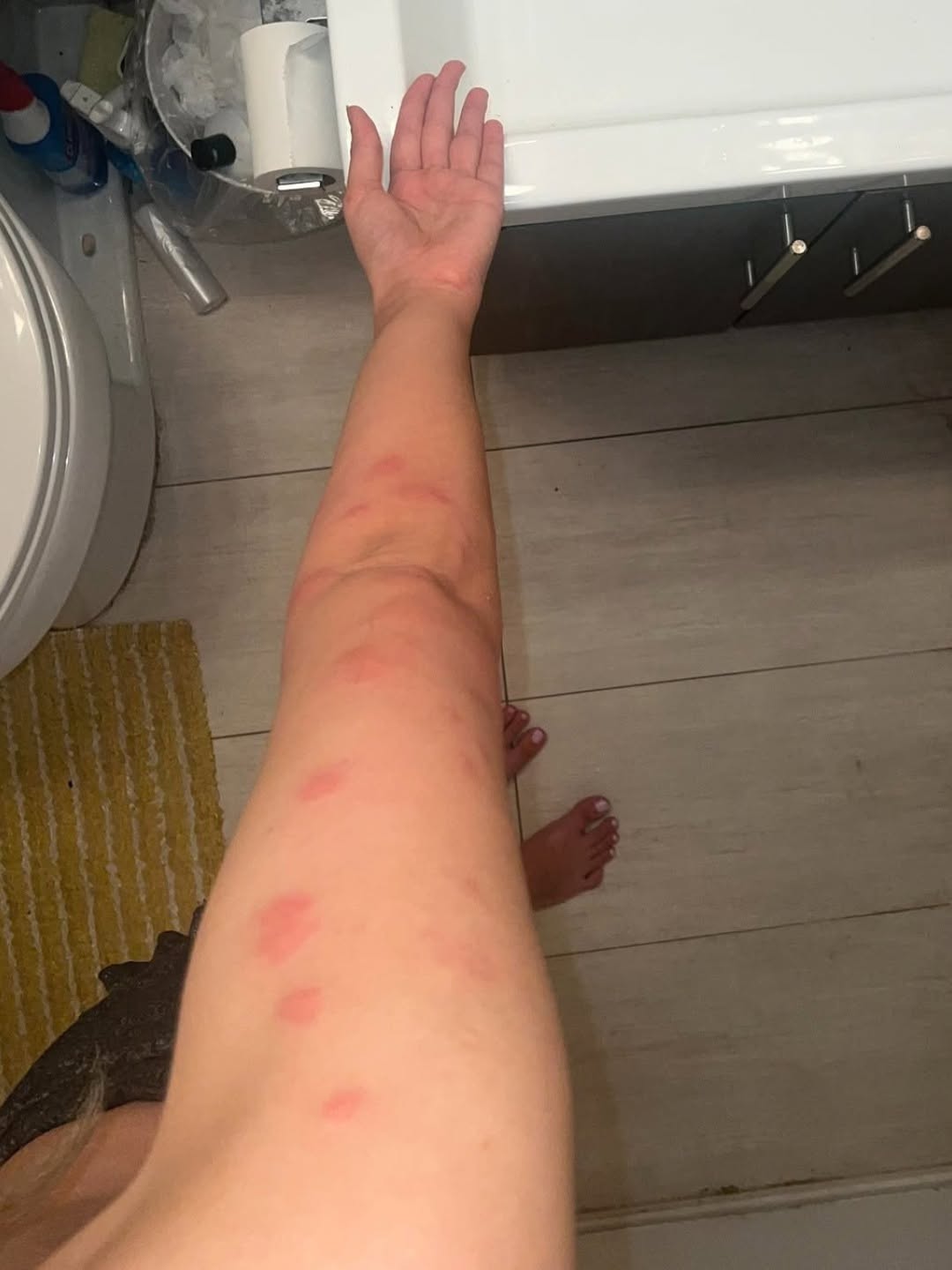
How To Identify 10 Of The Most Common Bug Bites can feel like detective work. You wake up with a red bump, notice an itchy cluster after spending time outside, or suddenly feel a painful sting while gardening. Naturally, you want to know exactly what caused it.
However, skin reactions often overlap. Mosquito, flea, bed bug, and other arthropod bites can all create small red, itchy bumps. In fact, the Environmental Protection Agency specifically warns that skin bites alone provide a poor way to confirm a bed bug infestation because they can resemble mosquito bites, chigger bites, hives, eczema, and other conditions.
Therefore, the best way to identify a likely culprit involves looking beyond the bump itself. Location matters. So does the pattern, timing, recent travel, outdoor exposure, pets, bedding, and whether you actually saw the insect or tick.
Most insect bites cause temporary discomfort and heal without serious problems. However, some insects and ticks can transmit disease, while stings can occasionally trigger severe allergic reactions. MedlinePlus notes that most insect bites and stings are harmless, although some can cause infection, disease, or serious allergic reactions.
I learned how difficult bite identification can be after waking one summer morning with several itchy red bumps around my ankles. My first thought was mosquitoes, but nobody else in the house had similar marks. Then I noticed our dog scratching more than usual. The location and pet exposure pointed toward fleas, and treating the actual flea problem stopped the bites. That experience taught me something useful: the mark on your skin is only half the evidence. Where you were, what you were doing, and what else happened around the same time often provide the strongest clues.
How To Identify 10 Of The Most Common Bug Bites by Pattern and Location
1. Mosquito Bites, 2. Flea Bites, and 3. Bed Bug Bites
When learning How To Identify 10 Of The Most Common Bug Bites, mosquito bites provide a familiar starting point.
1. Mosquito bites
Mosquito bites commonly produce itchy, swollen bumps after a mosquito feeds. CDC identifies itching and swelling as common reactions.
You may notice one bump or several scattered across exposed skin.
The strongest clue often comes from timing. If you spent an evening outdoors, especially near standing water or during mosquito activity, and later developed itchy bumps on exposed arms or legs, mosquitoes become a reasonable possibility.
However, mosquitoes can also spread infections in some regions. CDC notes that mosquitoes can transmit diseases including West Nile virus and, depending on geography and travel, other infections.
Therefore, fever or significant illness following mosquito exposure deserves medical attention.
2. Flea bites
Flea bites typically itch and irritate the skin. CDC notes that flea bites often occur on the lower legs and feet because people may encounter fleas in areas shared with flea-infested animals.
Multiple small bumps may occur rather than one isolated mark.
Pet exposure provides another clue. If a dog or cat suddenly scratches frequently, or you notice flea dirt or adult fleas, the combination strengthens the suspicion.
However, fleas can occasionally transmit infections. CDC lists flea-borne typhus among diseases linked to infected fleas.
3. Bed bug bites
Bed bug bites may appear as small swollen red areas that itch. CDC notes that marks can appear randomly or in a straight line.
Still, the pattern alone cannot prove bed bugs.
EPA emphasizes that bites provide poor evidence because many skin conditions look similar. Instead, inspect your sleeping area for additional signs such as bugs, shed skins, dark droppings, or blood spots.
Bed bugs usually feed while people sleep, so unexplained bites that repeatedly appear after sleeping can raise suspicion.
Still, some people show no skin reaction at all. Therefore, the absence of bites does not rule out an infestation.
4. Tick Bites and 5. Chigger Bites
4. Tick bites
Tick bites differ from many insect bites because you may actually find the tick attached.
The surrounding skin may initially show little more than a small localized reaction. However, the important concern involves diseases that certain ticks can transmit.
CDC notes that Lyme disease can cause fever, headache, fatigue, and an expanding rash called erythema migrans after a bite from an infected blacklegged tick.
The famous “bull’s-eye” appearance receives enormous attention, but not every Lyme rash looks like a perfect target. CDC specifically states that erythema migrans can vary widely in appearance.
Therefore, do not wait for a textbook bull’s-eye if you develop fever, aches, or an expanding rash after tick exposure.
MedlinePlus recommends contacting a healthcare professional if fever, chills, body aches, or rash develop within several weeks after removing a tick.
5. Chigger bites
Chiggers are mites rather than insects. Their bites can cause intensely itchy bumps after exposure to vegetation.
People commonly encounter chiggers while walking through tall grass, brush, or other vegetation.
The itching can become especially noticeable around areas where clothing fits tightly because the mites tend to stop where movement becomes restricted.
Still, not every itchy rash after hiking comes from chiggers.
Regional context also matters. In parts of Asia and the Pacific, infected chiggers can spread scrub typhus, which can cause fever, headache, body aches, rash, enlarged lymph nodes, and sometimes a dark scab-like lesion at the bite site.
Consequently, significant fever after chigger exposure, especially during travel in areas where scrub typhus occurs, deserves prompt medical evaluation.
Painful Bites and Stings That Often Feel Different
6. Bee or Wasp Stings and 7. Fire Ant Stings
How To Identify 10 Of The Most Common Bug Bites becomes somewhat easier when the event hurts immediately.
6. Bee, wasp, hornet, or yellow jacket stings
Unlike many itchy bites, bee and wasp stings commonly cause immediate pain, redness, and swelling.
MedlinePlus lists pain and swelling at the sting site among common symptoms.
A honey bee may leave a stinger in the skin, while wasps and related insects generally do not.
The most important concern involves allergic reactions.
Trouble breathing, facial or mouth swelling, throat tightness, difficulty swallowing, severe weakness, or bluish skin can signal a life-threatening reaction. MedlinePlus advises calling emergency services for these symptoms after an insect sting.
A person with a prescribed epinephrine auto-injector should follow their emergency treatment plan.
Localized swelling alone can sometimes become quite large without representing anaphylaxis. Nevertheless, rapidly worsening symptoms away from the sting site deserve urgent attention.
7. Fire ant stings
Fire ants can produce a distinctive sequence.
CDC’s National Institute for Occupational Safety and Health explains that fire ants bite and sting, producing a burning sensation. Red bumps can form initially and then develop into white fluid-filled pustules within one or two days.
That white pustule can make fire ant stings easier to recognize than many other bites.
People may receive multiple stings quickly if they disturb a mound.
Do not squeeze or intentionally open the pustules. Breaking the skin can increase the risk of infection.
Fire ants can also trigger severe allergic reactions in susceptible individuals, so breathing difficulty, widespread hives, facial swelling, dizziness, or other systemic symptoms require emergency care.
8. Spider Bites and 9. Lice Bites
8. Spider bites
Spider bites receive far more blame than they deserve.
MedlinePlus notes that spiders rarely bite people unless threatened and that most spider bites are harmless. Typical reactions can resemble bee stings, causing redness, swelling, and pain.
That means you cannot confidently diagnose a spider bite merely because a bump has two marks or looks unusual.
Many skin infections and other conditions get mistakenly labeled as spider bites.
However, certain venomous spiders can cause more serious symptoms. CDC lists radiating pain, muscle cramps, blistering or reddish-purple discoloration, sweating, fever, chills, nausea, vomiting, headache, and breathing difficulty among possible symptoms of medically important spider bites.
If you safely saw the spider, a photograph can help identification.
Do not attempt to catch a dangerous spider and risk another bite.
Seek medical help for severe pain, spreading symptoms, muscle cramping, breathing problems, or systemic illness.
9. Lice bites
Lice usually cause itching rather than a dramatic single bite mark.
Head lice live among scalp hairs. CDC states that itching represents the most common symptom and results from an allergic reaction to louse bites. It can take four to six weeks for itching to appear during a first infestation.
Finding live lice or eggs attached to hair provides much stronger evidence than examining individual red bumps.
Body lice create another pattern. CDC notes that body lice can cause intense itching and rash, while long-standing infestations may produce thickened or darkened skin around heavily affected areas such as the waist, groin, and upper thighs.
Pubic lice typically cause itching around coarse hair of the genital region and can sometimes affect other coarse body hair.
Therefore, with lice, focus more on finding the parasite and understanding the distribution than on trying to classify a single skin bump.
The Tenth Culprit and the Biggest Identification Mistakes
10. Scabies Mites and Why They Are Often Mistaken for Bug Bites
Technically, scabies does not come from an insect bite. It comes from tiny mites that burrow into the skin.
However, it deserves a place in How To Identify 10 Of The Most Common Bug Bites because people frequently mistake the rash for mysterious recurring bites.
10. Scabies
CDC identifies intense itching, particularly at night, and a pimple-like itchy rash as classic symptoms. Common locations include between the fingers, around the wrists, elbows, knees, armpits, waist, buttocks, shoulder blades, nipples, and genital area.
That distribution provides an important clue.
Unlike mosquito bites that appear after outdoor exposure or flea bites concentrated around the ankles, scabies tends to create persistent nighttime itching across characteristic body locations.
Other household members may eventually develop symptoms because scabies spreads through prolonged skin-to-skin contact.
Scabies requires specific treatment. Therefore, repeated nighttime itching that continues or spreads deserves professional evaluation rather than endless attempts to kill invisible mosquitoes.
This example highlights one of the biggest limitations in How To Identify 10 Of The Most Common Bug Bites: not everything that looks bitten actually came from a biting insect.
Hives can imitate bites.
Contact dermatitis can create red itchy spots.
Folliculitis can produce inflamed bumps.
Fungal infections, viral rashes, eczema, and bacterial skin infections can also create confusing patterns.
Consequently, persistent or unusual eruptions deserve medical evaluation rather than increasingly elaborate guesses about invisible bugs.
Why “Two Puncture Marks” and “Three Bites in a Row” Are Weak Evidence
Internet identification rules often sound wonderfully specific.
Two puncture marks supposedly mean spider.
Three bites in a row supposedly mean bed bugs.
An ankle bite supposedly means flea.
A target rash supposedly means Lyme disease.
Real skin reactions do not behave that neatly.
CDC notes that bed bug bites can look similar to mosquito or flea bites, while marks may appear random or in lines. EPA goes further and states that bite marks alone provide poor evidence of a bed bug infestation.
Likewise, Lyme disease rashes vary widely rather than always appearing as a perfect bull’s-eye.
Therefore, use patterns as clues rather than proof.
A better identification process asks several questions together.
Where did the reaction occur?
When did it appear?
Were you sleeping, hiking, gardening, traveling, swimming, or spending time with animals?
Did anyone else develop similar symptoms?
Can you see an attached tick, flea, lice, bed bug, or other pest?
Are there environmental signs such as flea-infested pets or evidence in the bed?
Do symptoms stay local, or have fever, weakness, breathing trouble, or other systemic symptoms appeared?
The more pieces that fit, the stronger your working hypothesis becomes.
Still, medical or pest-control professionals may need to confirm difficult cases.
Treating Common Bites and Knowing When to Worry
What You Can Usually Do for Mild Reactions
Most mild bites improve with straightforward care.
Wash the area gently with soap and water.
Then avoid scratching as much as possible.
Scratching damages the skin barrier and can lead to secondary bacterial infection. CDC specifically notes that scratching arthropod bites can erode the skin and increase the risk of infection.
A cool compress may reduce swelling and discomfort.
For mosquito bites, CDC recommends avoiding scratching and notes that over-the-counter anti-itch or antihistamine cream may help relieve itching.
Follow package directions and consider a pharmacist or healthcare professional if you have questions about which products are appropriate for you or a child.
If a tick remains attached, remove it promptly with appropriate tick-removal technique rather than burning it, covering it with chemicals, or waiting for it to fall off.
If you suspect bed bugs, treat the infestation rather than repeatedly treating only the bites. EPA advises confirming the insects whenever possible because bites alone do not identify bed bugs.
For fleas, pets and the home environment may require treatment to break the cycle.
For lice or scabies, use treatments specifically intended for those infestations rather than general insect sprays on the skin.
Finally, remember that improvement matters.
A small itchy bump that gradually fades follows a different course from redness that expands rapidly, pain that intensifies, or a wound that begins draining pus.
Warning Signs That Need Medical or Emergency Care
Knowing How To Identify 10 Of The Most Common Bug Bites becomes most valuable when it helps you recognize when identification matters less than getting help.
Call emergency services for trouble breathing, wheezing, throat tightness, difficulty swallowing, swelling of the face or mouth, severe weakness, or bluish skin after a bite or sting. Those symptoms can signal a severe allergic reaction.
Seek medical evaluation for fever, chills, body aches, or rash after a recent tick bite because several tickborne illnesses can begin with these symptoms.
An expanding rash after possible blacklegged tick exposure also deserves attention because erythema migrans commonly occurs with Lyme disease and does not always form a classic bull’s-eye.
Increasing redness, warmth, swelling, pus, red streaks, or worsening pain can suggest secondary infection.
CDC also warns that rapidly spreading red, warm, swollen skin accompanied by fever and unusually severe pain can occur with serious bacterial infections that require urgent care.
Likewise, seek care for severe spider-bite symptoms such as muscle cramping, spreading pain, breathing problems, vomiting, fever, or major blistering.
For children, older adults, pregnant people, and people with weakened immune systems, contacting a healthcare professional sooner may be appropriate when reactions become significant.
Ultimately, do not let the desire to identify the exact insect delay treatment.
Sometimes the most important answer is not “what bit me?”
It is “does this reaction need medical care?”
Frequently Asked Questions
Can you identify a bug bite just by looking at it?
Usually not with complete certainty. Many bites create similar red, itchy bumps, and several non-bite skin conditions can imitate them. EPA specifically warns that bite appearance alone cannot reliably confirm bed bugs. Location, exposure, timing, symptoms, and evidence of the pest provide stronger clues.
What bug bites usually appear around the ankles?
Flea bites commonly affect the lower legs and feet. CDC specifically recommends protecting those areas because flea bites frequently occur there. However, mosquitoes, mites, and other insects can also bite around the ankles, so location alone does not prove fleas.
What bites commonly appear in a line or cluster?
Bed bug bites may appear randomly or in straight lines, while flea and bed bug bites can both occur in clusters. Still, no particular number or line pattern conclusively identifies the pest.
Does every tick bite cause a bull’s-eye rash?
No. Lyme disease rashes can take several forms, and not everyone with Lyme disease develops an identical target-shaped rash. CDC states that erythema migrans varies widely in appearance. Seek medical advice for an expanding rash or illness after tick exposure.
When should I worry about a bug bite?
Get emergency help for breathing difficulty, swelling of the face or mouth, throat tightness, severe weakness, or other signs of a major allergic reaction. Seek medical care for worsening infection signs, significant illness after a tick or mosquito exposure, severe pain, spreading redness, fever, or other systemic symptoms.
Conclusion
How To Identify 10 Of The Most Common Bug Bites starts with accepting one important limitation: the skin rarely gives you a perfect fingerprint of the insect responsible.
Mosquito bites often itch and swell.
Flea bites frequently affect the feet and lower legs.
Bed bugs may cause clustered or linear itchy bumps, although bites alone cannot confirm an infestation.
Ticks deserve special attention because some species can transmit disease, and Lyme disease rashes do not always look like a textbook bull’s-eye.
Bee and wasp stings usually hurt quickly.
Fire ant stings can develop characteristic white pustules.
Spider bites remain less common than many people assume.
Lice usually cause persistent itching in characteristic hair-bearing areas, while scabies mites often trigger intense nighttime itching in predictable locations such as the finger webs, wrists, waist, and buttocks.
Therefore, think like a detective.
Study the location.
Notice the pattern.
Consider where you have been.
Check pets.
Inspect bedding.
Remember recent outdoor activity and travel.
Most importantly, pay attention to how you feel beyond the skin.
The majority of bites remain minor. Still, trouble breathing, facial or throat swelling, severe weakness, rapidly spreading inflammation, fever after tick exposure, or other significant systemic symptoms deserve prompt medical attention.
Knowing what probably bit you can be helpful.
Knowing when the reaction has become more important than the bug itself can be lifesaving.