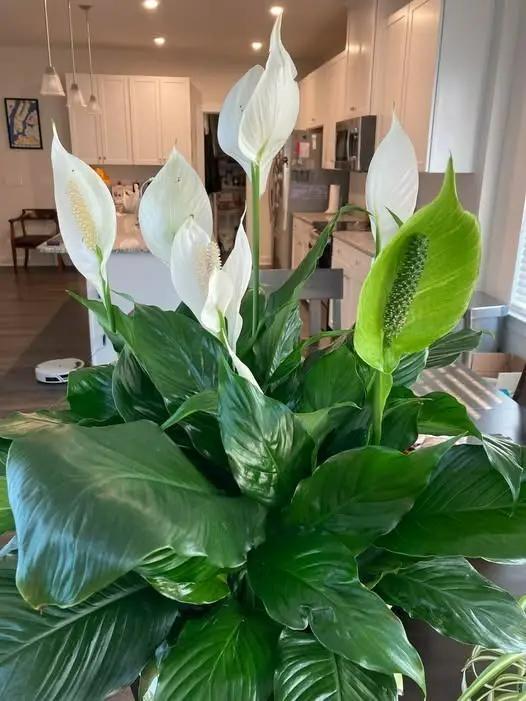
There’s something incredibly satisfying about seeing a peace lily burst into bloom. Those graceful white flowers rising above glossy green leaves can completely transform a room and instantly make a plant look healthy, elegant, and alive. Yet many plant owners eventually run into the same frustrating problem: their peace lily grows beautiful leaves but refuses to flower.
If that sounds familiar, you are definitely not alone.
Peace lilies are often sold as easy-care houseplants because they tolerate indoor conditions well. However, surviving and flowering are two completely different things. A peace lily may stay green for years without producing a single bloom if even one important condition is missing.
I learned this the hard way after bringing home a large peace lily that looked stunning in the store. For months, I watered it carefully and proudly watched new leaves appear. Still, no flowers. I moved it around the house, changed watering schedules, and even wondered if the plant was fake because it never bloomed. Then one small adjustment changed everything. Within weeks, a pale green shoot appeared, followed by a gorgeous white flower that lasted for over a month. That experience taught me that peace lilies are not difficult plants — they simply need the right balance of care.
The good news is that getting your peace lily to bloom more often is completely possible once you understand what the plant actually needs.
Understanding Why Peace Lilies Bloom
Before fixing bloom problems, it helps to understand how peace lilies naturally grow.
Peace lilies are tropical plants native to warm rainforest environments. In nature, they grow beneath larger trees where they receive filtered sunlight, steady warmth, humidity, and consistent moisture.
The famous “flower” is not technically a flower at all. The white leaf-like structure is called a spathe, while the tiny flowers grow on the central spike known as the spadix.
When conditions are favorable, the plant uses extra energy to produce blooms. When conditions are poor, the plant focuses only on survival and leaf production.
Why Peace Lilies Stop Flowering
Several common issues can prevent blooming:
- Not enough light
- Inconsistent watering
- Low humidity
- Lack of nutrients
- Pot problems
- Stress from temperature changes
- Natural dormancy periods
Fortunately, most of these problems are easy to correct.
The Difference Between Healthy and Truly Thriving
Many people assume their peace lily is perfectly healthy because the leaves stay green. However, healthy leaves alone do not mean the plant is thriving enough to flower.
A blooming peace lily usually receives:
- Bright indirect light
- Consistent moisture
- Proper humidity
- Balanced nutrients
- Stable temperatures
Once these conditions improve, flowering often follows naturally.
Tip #1: Give Your Peace Lily More Light
This is by far the most important factor for blooming.
Low Light Keeps Plants Alive — But Not Blooming
Peace lilies are famous for tolerating low light, which makes many people place them in dark corners far from windows.
The plant may survive there for years, but flowering becomes unlikely because blooming requires energy from light.
If your peace lily has beautiful dark green leaves but no flowers, lighting is probably the issue.
The Best Lighting Conditions
Peace lilies bloom best in:
- Bright indirect sunlight
- East-facing windows
- Filtered southern light
- Rooms with steady daylight
Avoid harsh direct afternoon sun because it can scorch leaves.
A simple test works well:
If you can comfortably read a book in the room during the day without turning on lights, your peace lily likely has enough light.
Tip #2: Water Correctly and Consistently
Peace lilies are dramatic plants. When thirsty, they droop quickly, often looking completely wilted. Fortunately, they usually recover fast after watering.
However, repeated stress from underwatering can reduce flowering.
Avoid Letting the Plant Wilt Frequently
Occasional drooping will not kill the plant, but constant cycles of drying out and recovery force the peace lily into survival mode.
Instead:
- Water when the top inch of soil feels dry
- Keep soil lightly moist
- Avoid completely soaked soil
Consistency is the goal.
Watch for Overwatering
Overwatering is actually more dangerous than underwatering because it can cause root rot.
Signs of overwatering include:
- Yellow leaves
- Mushy stems
- Foul-smelling soil
- Fungus gnats
Always make sure the pot has drainage holes.
Tip #3: Increase Humidity Levels
Peace lilies naturally love humid tropical air.
Unfortunately, indoor air — especially during winter — is often too dry for optimal flowering.
Signs Your Plant Needs More Humidity
Low humidity may cause:
- Brown leaf tips
- Crispy edges
- Slower growth
- Fewer blooms
Even healthy-looking plants may flower less in dry air.
Easy Ways to Boost Humidity
Try these simple methods:
- Mist leaves lightly in the morning
- Use a pebble tray with water
- Group plants together
- Run a humidifier nearby
- Place the plant in a bright bathroom
Humidity helps the plant stay vigorous and bloom more consistently.
Tip #4: Feed Your Peace Lily Properly
Flowering requires nutrients.
If your peace lily has lived in the same soil for years without fertilizer, it may simply lack the energy to produce blooms.
Use Balanced Fertilizer Carefully
A balanced houseplant fertilizer works well during active growing seasons.
Good options include:
- 10-10-10
- 20-20-20
- Bloom-support fertilizers with phosphorus
Feed lightly every 4–6 weeks during spring and summer.
Avoid Too Much Fertilizer
Overfeeding creates another common problem:
lots of leaves but no flowers.
Too much nitrogen encourages foliage growth instead of blooming.
Always dilute fertilizer to half strength to avoid burning roots.
Tip #5: Respect the Plant’s Natural Rest Period
Peace lilies naturally slow down during cooler months.
Trying to force nonstop growth year-round can sometimes reduce flowering.
Why Rest Helps Blooming
During fall and winter:
- Growth slows naturally
- Energy stores rebuild
- The plant prepares for future blooms
This rest period is healthy.
How to Support Dormancy
During colder months:
- Reduce watering slightly
- Stop fertilizing
- Keep temperatures moderate
- Continue providing light
Then in spring:
- Increase watering gradually
- Resume feeding
- Provide brighter light
This seasonal shift often triggers flowering.
Tip #6: Repot Only When Necessary
Many plant owners accidentally overpot their peace lilies.
Why Smaller Pots Often Bloom Better
Peace lilies actually prefer being slightly root-bound.
When placed in oversized pots, the plant focuses on root growth instead of flowers.
Signs It’s Time to Repot
Repot only if:
- Roots emerge from drainage holes
- Water runs straight through soil
- Growth slows dramatically
- The plant dries out unusually fast
When repotting:
- Choose a pot only 1–2 inches larger
- Use well-draining soil
- Repot during spring if possible
Tip #7: Remove Old Flowers and Damaged Leaves
Dead flowers continue draining energy from the plant.
Removing them encourages fresh growth.
How to Remove Spent Blooms
Once blooms begin turning green or brown:
- Use clean scissors
- Cut near the base of the stem
- Remove yellow leaves as well
This redirects energy toward healthier growth and future blooms.
Keep the Plant Clean
Dust can block sunlight from reaching leaves.
Wipe leaves occasionally with a damp cloth to keep them healthy and shiny.
Common Peace Lily Problems and Solutions
Brown Leaf Tips
Usually caused by:
- Low humidity
- Chemicals in tap water
- Overfertilizing
Try filtered water and higher humidity.
Yellow Leaves
Often linked to:
- Overwatering
- Poor drainage
- Aging leaves
Check soil moisture carefully.
No Blooms
Most commonly caused by:
- Insufficient light
- Lack of nutrients
- Pot stress
- Immature plant
Increasing indirect light often produces the biggest improvement.
Frequently Asked Questions
How often should peace lilies bloom?
Healthy mature peace lilies may bloom once or twice yearly, sometimes more with ideal care.
Do peace lilies need sunlight?
Yes, but indirect sunlight works best.
Why are my flowers turning green?
Older blooms naturally turn green before fading.
Can peace lilies bloom indoors year-round?
Some may bloom multiple times annually under ideal indoor conditions.
Should I mist my peace lily daily?
Light misting can help humidity, especially in dry climates.
Final Thoughts
Peace lilies reward patience more than perfection.
These elegant plants do not need constant attention or complicated routines. Instead, they thrive when their environment mimics the warm, humid, gently lit conditions of their tropical origins.
Often, a single adjustment — moving the plant closer to a window, improving humidity, or watering more consistently — can completely change how the plant responds.
If your peace lily has not bloomed in a long time, do not give up on it. Healthy green leaves are already a sign that the plant wants to grow. Once you provide the right balance of light, moisture, humidity, and nutrition, flowers often follow naturally.
And when that first white bloom finally appears, it feels less like luck and more like a quiet little victory between you and your plant.