Hard-boiled eggs are one of the simplest foods you can prepare, yet they remain one of the most useful ingredients in any kitchen. Whether you’re meal-prepping for the week, packing healthy lunches, following a weight-loss plan, or simply looking for a quick protein-packed snack, hard-boiled eggs are hard to beat.
They’re affordable, portable, nutritious, and incredibly versatile. You can eat them plain, slice them onto salads, turn them into egg salad, add them to sandwiches, or enjoy them as a convenient breakfast when you’re rushing out the door.
But despite their popularity, one question continues to confuse many home cooks:
How long do hard-boiled eggs actually last in the refrigerator?
Some people believe they should be eaten within just a few days. Others assume they can last indefinitely because they’re cooked. The truth lies somewhere in between.
Understanding proper storage can help you avoid food waste, protect your health, and ensure your eggs stay fresh and delicious for as long as possible.
Let’s break down everything you need to know.
Why Hard-Boiled Eggs Are So Popular
There is a reason nutrition experts frequently recommend keeping hard-boiled eggs on hand.
Unlike many convenience foods, hard-boiled eggs combine simplicity with impressive nutritional value.
A single large egg contains:
- High-quality protein
- Healthy fats
- Vitamin D
- Vitamin B12
- Choline
- Selenium
- Riboflavin
- Essential amino acids
Because they contain both protein and fat, eggs help you stay satisfied longer than many processed snacks.
Many people use them for:
- Meal prep
- Weight management
- Post-workout recovery
- School lunches
- Low-carb diets
- High-protein eating plans
- Quick breakfasts
With so many benefits, it’s no surprise that millions of people boil a dozen eggs at a time to enjoy throughout the week.
The Official Answer: How Long Do Hard-Boiled Eggs Last?
According to food safety experts, properly refrigerated hard-boiled eggs can last:
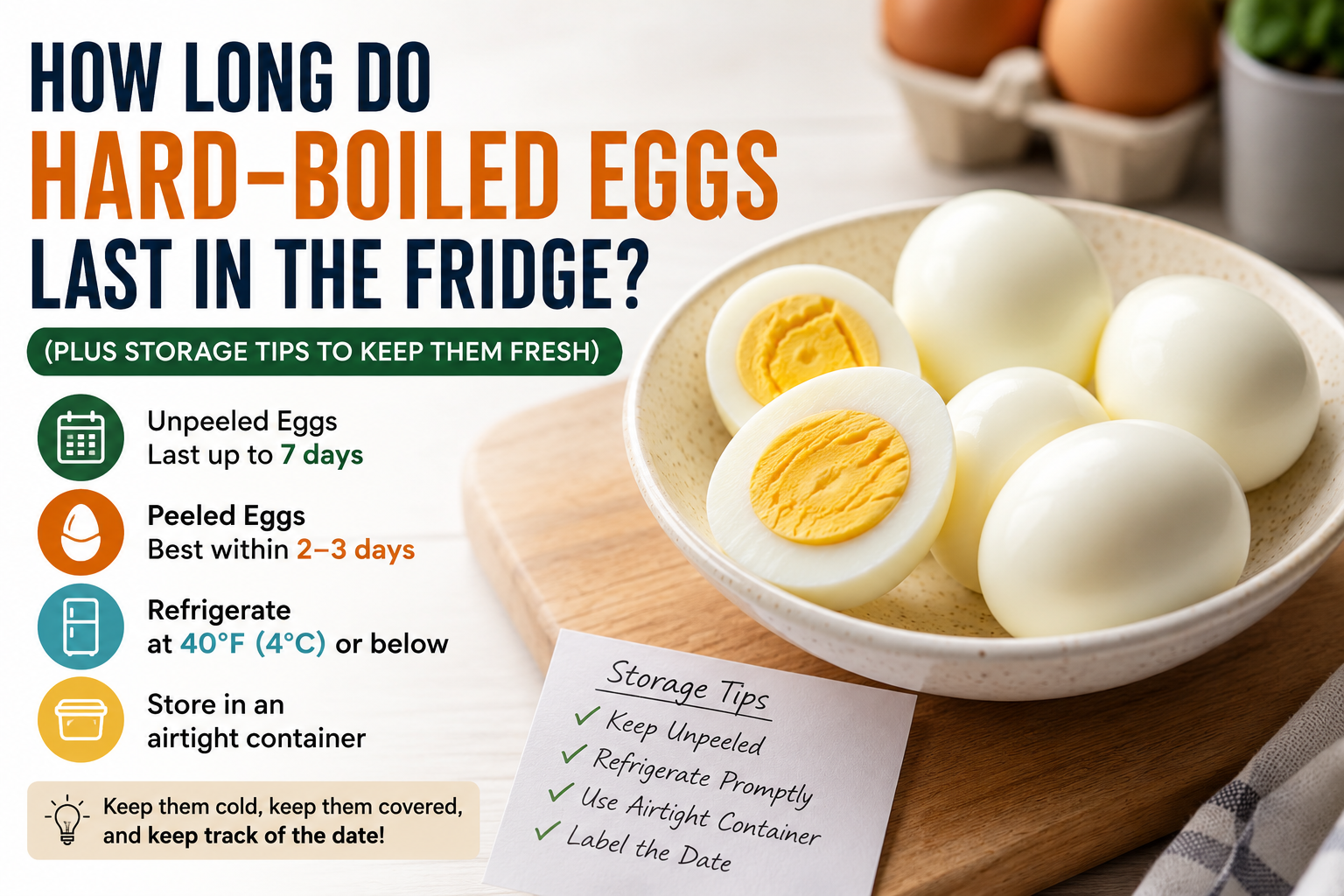
Unpeeled Hard-Boiled Eggs
Up to 7 days in the refrigerator
This applies when:
- Eggs are refrigerated promptly after cooking
- Refrigerator temperature stays at or below 40°F (4°C)
- Eggs remain in their shells
The shell serves as a natural protective barrier, helping reduce moisture loss and limiting exposure to bacteria.
Peeled Hard-Boiled Eggs
Best consumed within 2–3 days
Once the shell is removed, the egg becomes much more vulnerable.
Without that protective outer layer, eggs:
- Dry out faster
- Absorb refrigerator odors
- Become more susceptible to contamination
- Lose freshness more quickly
If you peel your eggs ahead of time, proper storage becomes especially important.
Why the Shell Matters More Than You Think
Many people don’t realize that an eggshell is more than just packaging.
Nature designed it to protect the egg from the outside world.
The shell helps:
Prevent Moisture Loss
Egg whites contain a significant amount of water.
Without a shell, that moisture gradually evaporates, causing the egg to become rubbery and less enjoyable to eat.
Reduce Odor Absorption
Eggs act like tiny sponges.
Peeled eggs can absorb odors from nearby foods such as:
- Onions
- Garlic
- Fish
- Leftovers
- Strong cheeses
Keeping the shell intact helps preserve the egg’s natural flavor.
Limit Bacterial Exposure
While refrigeration slows bacterial growth, the shell adds another layer of protection against contamination.
That’s why food safety experts consistently recommend storing hard-boiled eggs unpeeled whenever possible.
The Best Way to Store Hard-Boiled Eggs
Proper storage can make a huge difference.
Follow these simple guidelines.
1. Cool Them Quickly
After boiling, transfer eggs immediately into an ice-water bath.
Allow them to sit for approximately 10–15 minutes.
This step:
- Stops the cooking process
- Prevents overcooked yolks
- Improves texture
- Makes peeling easier
Most importantly, it helps bring eggs out of the temperature danger zone more quickly.
2. Refrigerate Promptly
Never leave cooked eggs sitting out for extended periods.
The USDA recommends refrigerating cooked eggs within two hours.
If room temperatures exceed 90°F (32°C), refrigerate within one hour.
3. Use Airtight Containers
Store eggs in:
- Glass containers
- Plastic food-storage containers
- Heavy-duty zip-top bags
A sealed container prevents moisture loss and protects eggs from absorbing odors.
4. Label the Date
One of the easiest habits for meal prep success is writing the cooking date on the container.
This removes all guesswork later.
Instead of wondering whether the eggs are five days old or ten days old, you’ll know exactly when they were prepared.
5. Store Them on Interior Shelves
Avoid placing eggs in the refrigerator door.
The door experiences constant temperature fluctuations every time it’s opened.
Interior shelves remain consistently colder and help preserve freshness longer.
Signs Your Hard-Boiled Eggs Have Gone Bad
Even when stored properly, eggs eventually spoil.
Fortunately, spoiled eggs usually provide obvious warning signs.
Strong Sulfur Smell
Fresh hard-boiled eggs have a mild scent.
If an egg smells rotten, sour, or unusually sulfurous, discard it immediately.
Slimy Texture
A slippery or slimy surface often indicates bacterial growth.
Do not eat eggs that feel sticky or slimy.
Unusual Color Changes
While a green ring around the yolk is harmless, unusual colors elsewhere are not.
Discard eggs if you notice:
- Pink spots
- Black discoloration
- Mold growth
- Strange patches
Strange Taste
If something tastes off, don’t continue eating it.
When in doubt, throw it out.
Is the Green Ring Around the Yolk Dangerous?
Many people panic when they cut open a hard-boiled egg and discover a green-gray ring around the yolk.
Fortunately, this is completely harmless.
The ring develops when:
- Eggs are cooked too long
- Eggs cool too slowly
The discoloration results from a natural reaction between sulfur in the egg white and iron in the yolk.
While it may affect appearance slightly, it does not indicate spoilage.
Common Mistakes That Reduce Freshness
Many people unknowingly shorten the life of their hard-boiled eggs.
Here are some common mistakes to avoid.
Leaving Eggs Out Too Long
Cooked eggs should never remain at room temperature for extended periods.
Bacteria multiply rapidly between 40°F and 140°F.
Peeling Too Early
Unless absolutely necessary, keep shells intact until ready to eat.
Storing Near Strong-Smelling Foods
Even unpeeled eggs can absorb odors over time.
Keep them away from pungent foods whenever possible.
Forgetting the Date
Without labeling, it’s easy to lose track of freshness.
A simple date label eliminates uncertainty.
Nutrition Benefits of Hard-Boiled Eggs
Hard-boiled eggs are often called nature’s multivitamin.
Each large egg contains approximately:
- Calories: 70–80
- Protein: 6–7 grams
- Fat: 5 grams
- Carbohydrates: Less than 1 gram
They also provide:
Protein
Protein supports:
- Muscle maintenance
- Recovery
- Satiety
- Healthy metabolism
Choline
Choline plays an important role in:
- Brain function
- Memory
- Nervous system health
Many people don’t get enough choline in their diets.
Eggs are one of the richest dietary sources.
Vitamin D
Vitamin D supports:
- Bone health
- Immune function
- Calcium absorption
Selenium
This powerful antioxidant helps protect cells from oxidative stress.
Are Hard-Boiled Eggs Good for Weight Loss?
Absolutely.
Hard-boiled eggs are frequently included in weight-loss plans because they help people feel full.
Protein takes longer to digest than simple carbohydrates.
As a result, eggs may:
- Reduce hunger
- Decrease snacking
- Improve meal satisfaction
- Support calorie control
Many people find that eating eggs for breakfast helps reduce cravings throughout the day.
Meal Prep Ideas Using Hard-Boiled Eggs
If you have a batch ready in the refrigerator, there are countless ways to enjoy them.
Protein Snack
Sprinkle with:
- Sea salt
- Black pepper
- Paprika
- Everything bagel seasoning
Salad Booster
Add sliced eggs to:
- Garden salads
- Caesar salads
- Cobb salads
Egg Salad
Combine eggs with:
- Greek yogurt
- Mustard
- Celery
- Herbs
Breakfast Plate
Pair with:
- Fruit
- Whole-grain toast
- Avocado
Lunch Box Addition
Hard-boiled eggs travel well and require no reheating.
Frequently Asked Questions
Can I Freeze Hard-Boiled Eggs?
Not recommended.
The whites become rubbery and unpleasant after thawing.
Can I Reboil Eggs That Were Left Out?
No.
Reboiling does not reliably eliminate all food-safety risks.
Should Hard-Boiled Eggs Be Refrigerated?
Yes.
Always refrigerate cooked eggs promptly.
Are Hard-Boiled Eggs Safe for Kids?
Absolutely.
They’re an excellent source of protein and nutrients for children.
Can I Eat a 10-Day-Old Hard-Boiled Egg?
Food safety experts recommend discarding hard-boiled eggs after seven days.
It’s not worth the risk.
Pro Tips for Perfect Hard-Boiled Eggs Every Time
Use Slightly Older Eggs
Fresh eggs are harder to peel.
Eggs that are 7–14 days old typically peel much more easily.
Don’t Overcook
Overcooking causes:
- Dry yolks
- Rubbery whites
- Green rings
Use an Ice Bath
This simple step dramatically improves peeling results.
Peel Under Running Water
Water helps separate the membrane from the egg white for cleaner peeling.
The Bottom Line
Hard-boiled eggs remain one of the healthiest, most affordable, and most convenient foods you can keep in your refrigerator.
When stored properly, unpeeled hard-boiled eggs stay fresh for up to seven days, making them ideal for meal prep, healthy snacks, and quick meals throughout the week.
The key is simple:
Keep them cold.
Keep them covered.
Keep track of the date.
Follow those three rules, and you’ll always have a nutritious, protein-packed option ready whenever hunger strikes.
A few minutes spent boiling eggs today can save time, money, and stress all week long—and that’s one reason hard-boiled eggs continue to be a favorite in kitchens everywhere.