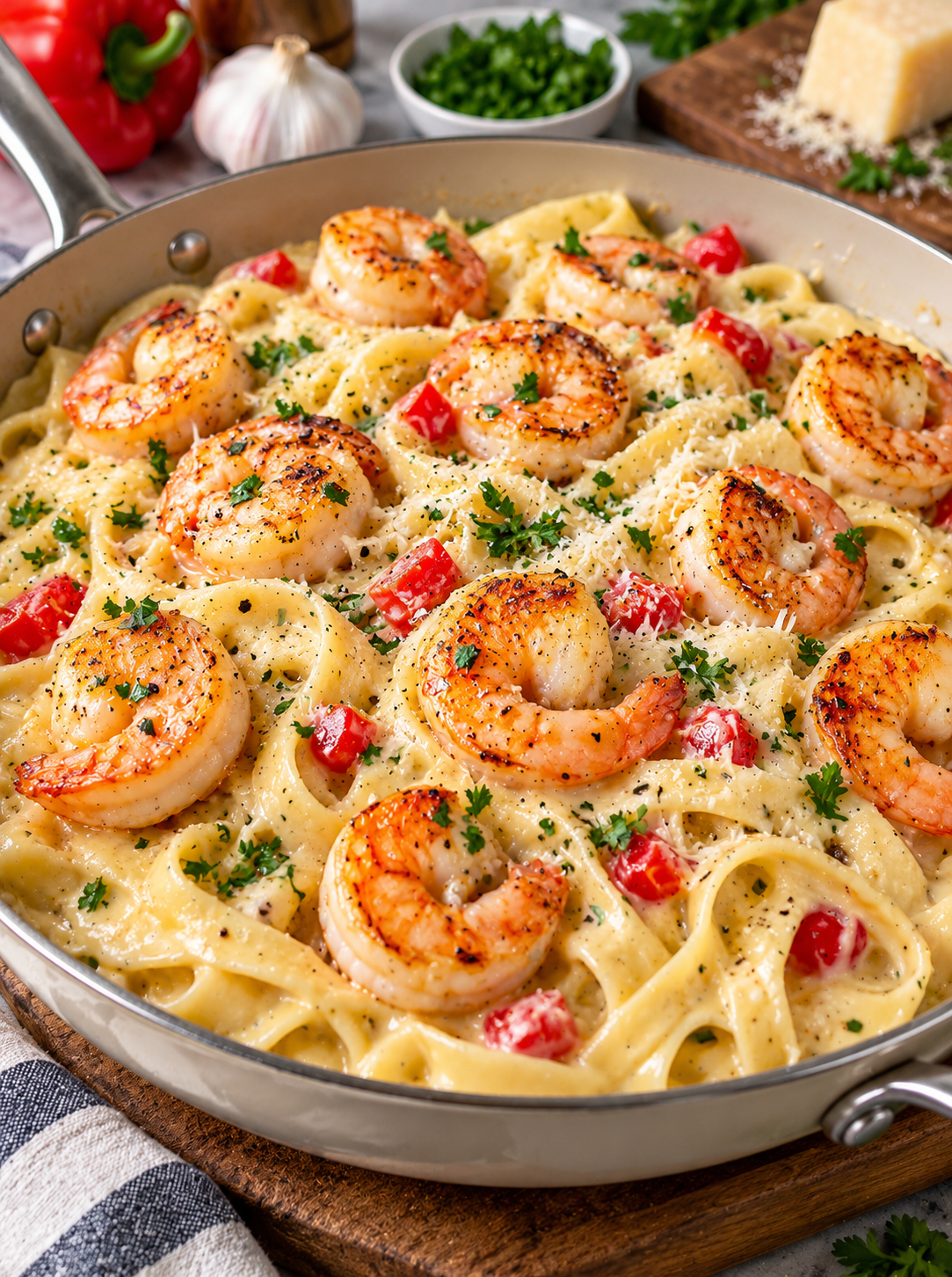
Garlic Shrimp Pasta brings together tender shrimp, plenty of fresh garlic, buttery olive oil, lemon, and perfectly cooked pasta in one simple dinner. It tastes rich enough for a special occasion, yet you can make it on an ordinary weeknight in about 30 minutes.
The beauty of Garlic Shrimp Pasta comes from its simplicity. You do not need a long ingredient list or complicated cooking techniques. Instead, you cook the pasta, quickly sauté seasoned shrimp, build a garlicky butter sauce in the same skillet, and toss everything together with a splash of reserved pasta water.
Fresh lemon keeps the sauce bright, while parsley adds color and freshness. Parmesan works beautifully as an optional finishing touch. Meanwhile, red pepper flakes can bring a gentle kick if you enjoy a little heat.
I first made a version of this dinner on a night when I wanted something that felt special but had almost no patience for a complicated recipe. I had shrimp in the freezer, spaghetti in the pantry, and a few cloves of garlic on the counter. Once the butter and garlic hit the skillet, everyone started asking what smelled so good. The pasta came together faster than expected, yet it looked and tasted like something that had taken much longer. Since then, Garlic Shrimp Pasta has become one of those dependable meals I turn to whenever dinner needs to feel impressive without creating a sink full of dishes.
Why Garlic Shrimp Pasta Works So Well
Simple Ingredients Build Big Flavor
Garlic Shrimp Pasta proves that a short ingredient list can still create plenty of flavor.
Start with one pound of large shrimp. Peeled and deveined shrimp save preparation time, although you can remove the shells yourself if needed. Large shrimp work especially well because they stay juicy and give the finished pasta a satisfying texture.
For the pasta, spaghetti or linguine makes an excellent choice. Long noodles catch the buttery garlic sauce and give you plenty of surface area for the seasonings to cling to. However, fettuccine, angel hair, or even short pasta can also work.
Garlic forms the heart of the dish. Freshly minced cloves bring much more aroma than garlic powder alone. Butter adds richness, while olive oil helps the garlic cook gently without burning too quickly.
Lemon juice brings balance. Without that acidity, the butter and shrimp can taste heavier. Therefore, a fresh squeeze of lemon brightens the entire skillet.
Parsley adds freshness at the end, while Parmesan can create a slightly richer finish. Red pepper flakes remain optional, but they add a pleasant contrast to the buttery sauce.
Salt and black pepper season both the pasta and the shrimp.
Because Garlic Shrimp Pasta uses familiar ingredients, you can keep most of them on hand. Frozen shrimp, dried pasta, butter, olive oil, and garlic make this meal especially useful for nights when you need dinner without another grocery run.
Ingredients
Equipment
Method
- Bring a large pot of well-salted water to a boil. Cook the pasta until al dente according to the package directions.
- Before draining the pasta, reserve at least 1 cup of the starchy cooking water. Drain the pasta and set it aside.
- Pat the shrimp dry and season with salt, black pepper, and red pepper flakes if using.
- Heat the olive oil and 1 tablespoon of butter in a large skillet over medium-high heat.
- Add the shrimp in a single layer and cook for about 1 to 2 minutes per side, until pink and opaque. Transfer the shrimp to a plate.
- Reduce the heat to medium-low. Add the remaining butter and minced garlic. Cook for 30 to 60 seconds, stirring constantly, until fragrant.
- Add the lemon juice and about 1/3 cup reserved pasta water. Stir until the butter, olive oil, and starchy water combine.
- Add the drained pasta and toss thoroughly. Add additional pasta water a tablespoon at a time if the noodles look dry.
- Return the shrimp to the skillet and add the chopped parsley and optional lemon zest. Toss gently until everything is evenly coated and heated through.
- Remove from the heat. Add Parmesan if desired and serve immediately with fresh lemon wedges.
Notes
Shrimp and Pasta Cook Quickly
Speed makes Garlic Shrimp Pasta particularly convenient.
Pasta generally needs only about 8 to 12 minutes, depending on the shape and brand. Shrimp cook even faster.
Once a hot skillet reaches the right temperature, large shrimp usually need only a couple of minutes per side. They turn pink, become opaque, and curl slightly when ready.
Because shrimp cook so quickly, preparation matters.
Have the garlic minced, lemon cut, parsley chopped, and butter measured before the shrimp enter the skillet. That way, you can move smoothly from one step to the next without overcooking anything.
While the pasta boils, season the shrimp with salt, pepper, and a small amount of red pepper flakes if desired.
Then sauté the shrimp in olive oil and a little butter.
Once they turn opaque, transfer them briefly to a plate.
Next, lower the heat and add the remaining butter and garlic to the skillet.
The garlic needs only 30 to 60 seconds. Stir constantly so it becomes fragrant without turning dark.
Afterward, add lemon juice and reserved pasta water. The starchy water helps the butter and oil coat the noodles more evenly.
Finally, return the shrimp to the pan and toss everything with the cooked pasta.
That efficient sequence allows Garlic Shrimp Pasta to reach the table in roughly 30 minutes.
How to Make Tender Shrimp and a Silky Garlic Sauce
Avoid Overcooking the Shrimp
Shrimp can go from tender to rubbery quickly, so timing becomes one of the most important parts of Garlic Shrimp Pasta.
First, pat the shrimp dry with paper towels.
Removing excess moisture helps them sauté rather than steam.
Then season them lightly with salt and black pepper.
Heat olive oil and one tablespoon of butter in a large skillet over medium-high heat. Once the butter melts and the pan feels hot, arrange the shrimp in a single layer.
Avoid crowding them.
If your skillet runs small, cook the shrimp in two batches.
Let the first side cook for about 1 to 2 minutes. Then flip the shrimp and cook the other side until they look pink and opaque.
Remove them from the skillet immediately.
You will return them to the sauce near the end, so they do not need extra time in the pan.
The shape of the shrimp can also give you a clue.
A gently curved C shape usually signals that the shrimp have cooked through. If they curl tightly into small circles, they may have cooked longer than necessary.
Still, visual signs can vary. Cook shrimp until the flesh becomes opaque and reaches a safe internal temperature.
By removing the shrimp before building the sauce, you gain more control.
The garlic can cook gently, the sauce can come together, and the pasta can absorb flavor without leaving the shrimp sitting over heat the entire time.
That small step makes Garlic Shrimp Pasta noticeably more tender.
Use Pasta Water to Bring the Sauce Together
The best Garlic Shrimp Pasta does not need a heavy cream sauce.
Instead, butter, olive oil, garlic, lemon, and pasta water create a light coating that clings to every strand.
Before draining the pasta, reserve about one cup of the cooking water.
You may not use all of it, but having extra gives you flexibility.
After you remove the shrimp from the skillet, reduce the heat to medium-low.
Add the remaining butter.
Then add the minced garlic.
Stir for about 30 to 60 seconds until the kitchen smells intensely garlicky.
Do not let the garlic brown too much. Dark garlic can taste bitter.
Next, add about 1/3 cup of reserved pasta water and the fresh lemon juice.
Stir everything together.
The starch in the pasta water helps the butter and olive oil form a smoother coating.
Add the drained pasta directly to the skillet and toss it thoroughly.
If the noodles look dry, add a little more pasta water.
Continue tossing rather than pouring in too much at once.
Then return the shrimp to the skillet.
Add chopped parsley and toss gently until everything becomes evenly coated.
If you use Parmesan, remove the skillet from direct heat before adding it. That approach helps the cheese melt smoothly instead of clumping.
The finished Garlic Shrimp Pasta should look glossy rather than soupy.
Easy Ways to Customize Garlic Shrimp Pasta
Add Heat, Creaminess, or Vegetables
Garlic Shrimp Pasta adapts easily to whatever you have in the refrigerator.
For extra heat, add 1/4 to 1/2 teaspoon of red pepper flakes when the garlic goes into the pan.
The flakes bloom in the warm butter and oil, which spreads their flavor through the sauce.
If you prefer a creamier pasta, stir in about 1/3 cup of heavy cream after the garlic becomes fragrant. Let the cream simmer gently for a minute or two before adding the pasta.
Spinach also works beautifully.
Add two or three handfuls after the garlic and stir just until the leaves wilt.
Cherry tomatoes offer another easy variation. Halve them and sauté them for several minutes before adding the garlic. Their juices create an especially bright sauce when mixed with lemon.
Broccoli can turn Garlic Shrimp Pasta into a more substantial meal. Steam or blanch the florets separately, then add them with the pasta.
You can also add asparagus, zucchini, peas, or mushrooms.
However, avoid adding so many vegetables that the garlic shrimp flavor disappears.
The original recipe succeeds because each ingredient remains easy to taste.
If you want more lemon flavor, add a little finely grated lemon zest at the end. Zest gives you citrus aroma without adding extra acidity.
For deeper garlic flavor, use six cloves instead of four.
These variations keep the basic cooking method intact, so you can change the dish without making it more complicated.
Choose the Right Pasta and Finishing Touches
Spaghetti and linguine remain the easiest choices for Garlic Shrimp Pasta because long noodles work so well with a light butter sauce.
Still, you have options.
Angel hair makes the meal even faster, although the thin noodles can become soft quickly.
Fettuccine creates a slightly heartier texture.
Short pasta such as penne, rotini, or bow ties also works when you want something easier to serve.
Whichever shape you choose, cook it until al dente.
The pasta should feel tender while still retaining a slight bite.
Because it spends another minute or two in the skillet, draining it slightly early prevents overcooking.
Fresh parsley makes the classic garnish.
Chop it just before serving so it stays bright.
Parmesan offers another popular finishing touch. Sprinkle a small amount over individual portions rather than overwhelming the shrimp.
A few fresh lemon wedges on the side allow everyone to adjust the acidity.
For extra richness, drizzle a tiny amount of good olive oil over each bowl immediately before serving.
Black pepper also makes an excellent final addition.
For presentation, twist a portion of pasta into a shallow bowl and arrange several shrimp on top. Then scatter parsley and Parmesan over the noodles.
That simple presentation makes Garlic Shrimp Pasta look restaurant-worthy even though the entire dinner took less than half an hour.
Serving, Storing, and Reheating Garlic Shrimp Pasta
What to Serve With Garlic Shrimp Pasta
Garlic Shrimp Pasta already gives you protein and pasta in one dish, so side dishes can stay simple.
A crisp green salad makes an excellent choice.
Use lettuce, cucumber, tomatoes, and a light vinaigrette. The acidity and fresh vegetables contrast nicely with the buttery pasta.
Garlic bread also works well, especially if you enjoy soaking up any sauce left in the bowl.
However, because the pasta already contains plenty of garlic, plain crusty bread with olive oil can create a more balanced option.
Roasted vegetables offer another easy pairing.
Try broccoli, asparagus, zucchini, or green beans.
You can roast the vegetables while the pasta water heats, which keeps the entire meal within the same general cooking time.
For a lighter plate, serve smaller portions of Garlic Shrimp Pasta with a larger salad.
For a more substantial dinner, add bread and roasted vegetables.
The dish also works well for casual entertaining.
You can prepare the ingredients before guests arrive, then cook the entire meal shortly before serving. Because shrimp and pasta move quickly, you do not need to spend the evening in the kitchen.
Freshness matters most.
Garlic Shrimp Pasta tastes best immediately after tossing because the sauce stays glossy and the shrimp remain tender.
Therefore, have your side dishes ready before you finish the pasta.
How to Store and Reheat Leftovers
Although Garlic Shrimp Pasta tastes best fresh, you can store leftovers.
Transfer cooled pasta and shrimp to an airtight container and refrigerate promptly.
For the best quality, enjoy the leftovers within about two days.
The refrigerator will cause the butter sauce to firm up, so the pasta may look drier the next day.
That is easy to fix.
Place a serving in a skillet over low heat.
Add one or two tablespoons of water or broth.
Then toss gently until the pasta warms through.
Avoid high heat.
Shrimp that already cooked once can become tough if you aggressively reheat them.
You can also warm individual servings in the microwave.
Add a small splash of water, loosely cover the dish, and use short heating intervals. Stir between intervals so the shrimp do not spend too long under direct heat.
A fresh squeeze of lemon can revive the flavors after reheating.
You can also add more parsley or Parmesan before serving.
Freezing finished Garlic Shrimp Pasta is possible, but it does not give you the best texture. Pasta can soften after thawing, while reheated shrimp can become firm.
Therefore, refrigeration works better for leftovers.
If you want to prepare ahead, clean and season the shrimp, mince the garlic, chop the parsley, and measure the ingredients. Then cook everything fresh when you are ready to eat.
Frequently Asked Questions
Can I use frozen shrimp for Garlic Shrimp Pasta?
Yes. Frozen shrimp work very well. Thaw them completely, drain away excess liquid, and pat them dry before seasoning and cooking.
What pasta works best with Garlic Shrimp Pasta?
Spaghetti and linguine work especially well because the long strands catch the garlic butter sauce. However, fettuccine, angel hair, penne, and other pasta shapes also work.
Can I make Garlic Shrimp Pasta creamy?
Yes. Add about 1/3 cup of heavy cream after sautéing the garlic. Simmer briefly, then add the pasta water, lemon, pasta, and shrimp.
Why did my shrimp become rubbery?
You probably cooked them too long. Shrimp need only a few minutes. Remove them from the skillet once they turn opaque, then return them briefly at the end.
Can I add vegetables?
Absolutely. Spinach, cherry tomatoes, broccoli, asparagus, peas, mushrooms, and zucchini all pair well with Garlic Shrimp Pasta.
Conclusion
Garlic Shrimp Pasta delivers everything you want from an easy weeknight dinner.
It comes together quickly.
It uses straightforward ingredients.
And most importantly, it tastes rich, fresh, buttery, garlicky, and satisfying without relying on a heavy sauce.
Start by cooking the pasta just until al dente.
Meanwhile, sauté the seasoned shrimp quickly so they stay tender.
Remove them from the skillet, then build the sauce with butter, olive oil, fresh garlic, lemon juice, and reserved pasta water.
Finally, toss the pasta through the sauce and return the shrimp to the pan.
Parsley adds freshness, while Parmesan, lemon zest, or red pepper flakes let you personalize the final flavor.
Because Garlic Shrimp Pasta takes roughly 30 minutes, it works just as well for a busy Wednesday as it does for a relaxed weekend dinner.
You can serve it with salad, roasted vegetables, or crusty bread.
You can also add spinach, tomatoes, broccoli, or cream when you want something different.
Still, the basic version remains hard to beat.
Shrimp, garlic, butter, lemon, and pasta simply belong together.
Keep a bag of shrimp in the freezer and pasta in the pantry, and you will always have the beginnings of a dinner that feels far more special than the effort required.