Garlic Herb Roasted Beef Tenderloin is an elegant homemade dinner featuring beautifully seared beef coated in a rich butter mixture made with fresh garlic, rosemary, and thyme.
With its flavorful crust and wonderfully tender interior, this roasted beef tenderloin makes an impressive centerpiece for holiday dinners, family celebrations, and special occasions.
Imagine placing a freshly roasted beef tenderloin on a wooden cutting board, surrounded by fragrant herbs and delicious pan juices. Each thick slice reveals the tender interior beneath the deeply browned garlic herb crust.
Although beef tenderloin may look like a complicated restaurant-style dish, preparing it at home is surprisingly straightforward.
The combination of careful searing, oven roasting, and a proper resting period helps create a delicious roast with plenty of flavor.
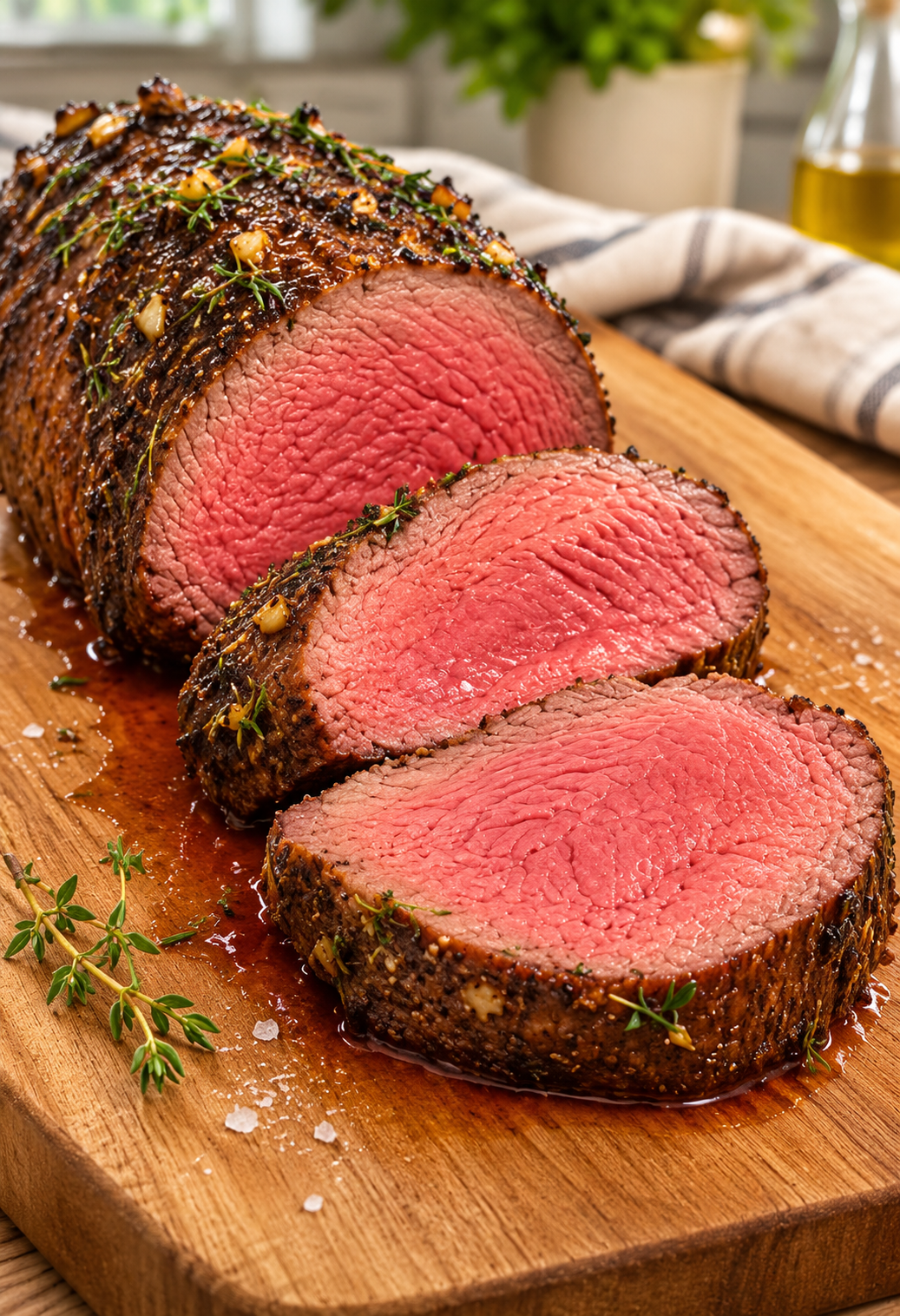
Garlic Herb Roasted Beef Tenderloin – Juicy, Tender, and Perfect for Special Occasions
Ingredients
Equipment
Method
- Remove the beef tenderloin from the refrigerator 30–45 minutes before cooking. Preheat the oven to 425°F (220°C).
- Pat the beef tenderloin dry with paper towels and season generously on all sides with kosher salt and freshly cracked black pepper.
- In a small mixing bowl, combine the softened butter, minced garlic, chopped rosemary, fresh thyme leaves, and optional Dijon mustard until a thick herb butter forms.
- Heat the olive oil in a large oven-safe skillet over medium-high heat.
- Sear the beef tenderloin for approximately 2–3 minutes per side, including the ends, until a deeply browned crust forms.
- Remove the skillet from the stovetop and spread the garlic herb butter evenly over the top and sides of the roast. Add extra rosemary and thyme sprigs if desired.
- Transfer the skillet to the preheated oven and roast for approximately 20–28 minutes, depending on thickness. For food safety, use a meat thermometer to ensure the beef reaches at least 145°F (63°C), followed by a minimum 3-minute rest.
- Transfer the roast to a cutting board, loosely tent with aluminum foil, and allow it to rest for approximately 15 minutes.
- Remove the butcher’s twine, slice the tenderloin into thick medallions, and spoon the pan juices over the beef before serving warm.
Notes
Why You Will Love This Garlic Herb Roasted Beef Tenderloin
Incredibly Tender and Flavorful Beef
Beef tenderloin is prized for its naturally tender texture.
Unlike cuts that require several hours of slow cooking to soften their connective tissue, tenderloin can be prepared relatively quickly.
The mild flavor of the beef pairs beautifully with fresh garlic, rosemary, thyme, and butter.
Searing the roast before transferring it to the oven creates a deeply browned exterior through the Maillard reaction, adding savory flavor and an attractive appearance.
The garlic herb butter contributes richness and fragrance as it melts over the meat.
Allowing the finished roast to rest before slicing helps reduce the amount of juice lost when cutting.
The result is a satisfying combination of tender beef, flavorful herbs, and a delicious golden brown crust.
An Impressive Holiday Dinner
Roasted beef tenderloin is particularly suitable for Christmas dinner, New Year’s Eve celebrations, birthdays, anniversaries, and other special gatherings.
Its elegant appearance makes it a wonderful centerpiece for a festive dinner table.
The recipe serves approximately six to eight people, making it convenient for sharing with family and friends.
Despite its impressive presentation, the ingredient list remains relatively simple.
You do not need a complicated marinade or specialized cooking equipment.
A large oven-safe skillet, a reliable meat thermometer, and a few familiar ingredients are enough to prepare this beautiful roast.
Understanding the Ingredients
Choosing the Best Beef Tenderloin
A center-cut beef tenderloin roast weighing approximately three pounds is recommended for this recipe.
The center-cut portion generally has a more uniform thickness, which helps promote even cooking.
Ask your butcher to trim away excess silver skin and tie the roast with kitchen twine if necessary.
Tying the tenderloin helps maintain a consistent shape during cooking.
Before seasoning, pat the surface of the beef dry using paper towels.
Removing excess surface moisture encourages better browning during the searing process.
Kosher salt and freshly cracked black pepper provide the foundation of the seasoning.
Season the entire roast evenly, including both ends.
Olive oil or another suitable high-heat cooking oil helps create the flavorful seared exterior.
Garlic, Rosemary, Thyme, and Butter
The homemade garlic herb butter is one of the highlights of this recipe.
Softened unsalted butter provides a rich foundation for the fresh herbs and garlic.
Six cloves of minced garlic contribute plenty of savory flavor.
Fresh rosemary introduces a distinctive aromatic character that pairs beautifully with roasted beef.
Fresh thyme provides a complementary earthy flavor.
Finely chopping the rosemary helps distribute it evenly throughout the butter.
Dijon mustard is an optional addition that provides a gentle tang and helps the herb mixture adhere to the roast.
Combine the ingredients until they form a thick, spreadable paste.
The butter should be softened rather than melted, making it easier to distribute across the seared beef.
Tips for Making Perfect Garlic Herb Beef Tenderloin
Prepare and Sear the Roast
Remove the beef tenderloin from the refrigerator approximately thirty to forty-five minutes before cooking.
This gives the exterior time to lose some of its refrigerator chill.
Preheat your oven to 425°F.
Pat the roast dry and season generously with kosher salt and freshly cracked black pepper.
Heat the olive oil in a large oven-safe skillet over medium-high heat.
Once the oil is hot, carefully place the tenderloin inside the skillet.
Allow each surface to brown for approximately two to three minutes before turning.
Use sturdy kitchen tongs to rotate the roast and sear its ends.
Avoid moving the meat unnecessarily while it browns.
A properly developed crust adds depth of flavor to the finished dish.
Once the roast is browned on all sides, remove the skillet from the stovetop.
Spread the prepared garlic herb butter evenly over the top and sides of the beef.
If desired, scatter a few additional sprigs of fresh rosemary and thyme around the roast.
Roast and Monitor the Internal Temperature
Transfer the oven-safe skillet to the preheated oven.
Roast the beef for approximately twenty to twenty-eight minutes.
The exact roasting time will depend on the thickness of the tenderloin, the starting temperature of the meat, and the performance of your oven.
A meat thermometer is the most reliable way to determine doneness.
Insert the thermometer into the thickest part of the roast.
The supplied recipe describes the following culinary doneness temperatures:
- Rare: 125–130°F
- Medium-rare: 135°F
- Medium: 145°F
These are culinary doneness references rather than equivalent food-safety recommendations.
For food safety, USDA guidance recommends cooking whole cuts of beef to at least 145°F (63°C), followed by a minimum three-minute rest.
Lower temperatures produce a pinker interior but fall below that recommendation.
Avoid relying exclusively on the estimated cooking time, particularly when preparing a roast of a different size.
Allow the Beef to Rest Before Slicing
Once the beef reaches the desired safe internal temperature, carefully transfer it to a wooden cutting board.
Loosely tent the roast with aluminum foil.
Allow it to rest for approximately fifteen minutes before slicing.
During the resting period, the internal temperature may continue to rise slightly because of residual heat.
Resting also helps the meat retain more of its natural juices when sliced.
Remove any butcher’s twine before cutting.
Use a sharp carving knife to slice the tenderloin into thick individual medallions.
Spoon the delicious pan juices over each portion immediately before serving.
Serving Ideas and Delicious Variations
What to Serve With Roasted Beef Tenderloin
Garlic Herb Roasted Beef Tenderloin pairs beautifully with a variety of classic side dishes.
Creamy mashed potatoes are an excellent choice because they absorb the flavorful pan juices.
Roasted baby potatoes provide a delicious alternative with golden, crispy edges.
For a vegetable accompaniment, serve roasted asparagus, green beans, carrots, or Brussels sprouts.
A fresh green salad with a light vinaigrette provides a refreshing contrast to the rich butter and beef.
Homemade dinner rolls are also delicious for enjoying the remaining pan juices.
For an elegant holiday presentation, arrange the sliced tenderloin on a large serving platter and garnish with fresh rosemary and thyme sprigs.
Serve generous individual portions with your favorite side dishes.
Prepare a Quick Homemade Pan Jus
While the roast rests, you can prepare a simple pan sauce using the flavorful browned bits remaining in the skillet.
For the optional pan jus, use:
- 1/2 cup beef broth
- 1/4 cup red wine
Place the skillet over medium heat.
Add the beef broth and red wine, then gently scrape the browned bits from the bottom of the skillet.
Allow the mixture to simmer for approximately three to four minutes, until slightly reduced.
Taste and adjust the seasoning if necessary.
For an alcohol-free version, replace the red wine with additional beef broth and a small splash of balsamic vinegar.
Spoon the finished pan jus over the sliced beef immediately before serving.
Using Other Cuts of Beef
Center-cut tenderloin is recommended for the most naturally tender result.
However, eye of round or top sirloin roast can be used as alternatives.
These cuts have a different texture and generally benefit from a lower roasting temperature.
After searing, roast at approximately 325°F (160°C) for forty-five to sixty minutes, adjusting the timing according to the size and thickness of the roast.
Use a meat thermometer to determine when the beef has reached the appropriate internal temperature.
Slice these alternative cuts thinly against the grain for the best eating experience.
Storage and Reheating
Allow leftover roasted beef to cool briefly before transferring it to an airtight container.
Refrigerate within two hours of cooking.
Stored properly, leftover beef can be refrigerated for up to three to four days.
Keep the remaining pan juices with the meat to help preserve its moisture.
Leftover beef tenderloin can be used in sandwiches, salads, wraps, and other homemade meals.
For reheating, place the beef in a covered oven-safe dish with a small splash of broth.
Reheat leftovers to 165°F.
Keep in mind that reheating may change the original pink color and doneness of the beef.
For longer storage, freeze individual portions in freezer-safe containers.
Thaw overnight in the refrigerator before using.
Ingredients
Yield: 6–8 servings
Preparation time: 15 minutes
Tempering time: 30–45 minutes
Estimated cooking time: 30–35 minutes
Resting time: 15 minutes
Total time: Approximately 1 hour 30 minutes to 1 hour 50 minutes, depending on preparation and cooking.
- 1.3–1.5 kg (3 pounds) center-cut beef tenderloin roast, trimmed and tied
- 1 tablespoon kosher salt
- 2 teaspoons freshly cracked black pepper
- 2 tablespoons olive oil or neutral high-heat cooking oil
- 45 g (3 tablespoons) unsalted butter, softened
- 6 cloves garlic, finely minced
- 1 tablespoon fresh rosemary leaves, finely chopped
- 1 tablespoon fresh thyme leaves
- 1 tablespoon Dijon mustard, optional
Optional garnishes:
- Fresh rosemary sprigs
- Fresh thyme sprigs
Instructions
- Remove the beef tenderloin from the refrigerator approximately 30–45 minutes before cooking.
- Preheat your oven to 425°F (220°C).
- Pat the beef tenderloin dry using paper towels.
- Season all sides of the roast with kosher salt and freshly cracked black pepper.
- In a small mixing bowl, combine the softened unsalted butter, minced garlic, chopped rosemary, fresh thyme leaves, and optional Dijon mustard.
- Mix until a thick, spreadable garlic herb butter forms.
- Heat the olive oil in a large oven-safe skillet over medium-high heat.
- Carefully place the seasoned beef tenderloin into the hot skillet.
- Sear for approximately 2–3 minutes per side, including the ends, until a deeply browned crust forms.
- Remove the skillet from the stovetop.
- Spread the prepared garlic herb butter evenly across the top and sides of the seared roast.
- Add a few additional rosemary and thyme sprigs if desired.
- Transfer the skillet to the preheated oven.
- Roast for approximately 20–28 minutes, depending on the thickness of the meat.
- Use a meat thermometer inserted into the thickest part of the roast. For food safety, cook to at least 145°F (63°C), followed by a minimum three-minute rest.
- Transfer the cooked tenderloin to a cutting board.
- Loosely tent the roast with aluminum foil and allow it to rest for approximately 15 minutes.
- Remove the butcher’s twine.
- Slice the tenderloin into thick individual medallions.
- Spoon the flavorful pan juices over the beef and serve warm.
Frequently Asked Questions
Why Should I Sear Beef Tenderloin Before Roasting?
Searing creates a deeply browned exterior and develops additional savory flavor.
It also gives the finished roast its attractive restaurant-style appearance.
Can I Use Dried Herbs Instead of Fresh Herbs?
Yes.
Use approximately one teaspoon of dried rosemary and one teaspoon of dried thyme in place of the tablespoons of fresh herbs.
Fresh herbs are recommended for their brighter flavor and attractive appearance.
How Do I Know When Beef Tenderloin Is Done?
Use a reliable meat thermometer inserted into the thickest part of the roast.
The recommended minimum safe internal temperature for whole cuts of beef is 145°F, followed by a three-minute rest.
Cooking time alone is not a reliable indicator of doneness.
Can I Prepare the Garlic Herb Butter Ahead of Time?
Absolutely.
Prepare the butter mixture and refrigerate it in a covered container.
Allow it to soften before spreading it over the seared tenderloin.
Why Is My Beef Tenderloin Dry?
Overcooking can cause beef tenderloin to become dry because it is a relatively lean cut.
Monitor its internal temperature carefully and allow it to rest before slicing.
Can I Roast Beef Tenderloin Without a Cast-Iron Skillet?
Yes.
An oven-safe stainless steel skillet also works well.
Alternatively, sear the roast in a regular skillet and transfer it to a suitable roasting pan before placing it in the oven.
Conclusion
Garlic Herb Roasted Beef Tenderloin is an elegant and delicious homemade dinner that combines naturally tender beef with a fragrant garlic rosemary thyme butter.
The combination of careful searing, oven roasting, and proper resting creates a flavorful roast with a beautifully browned exterior and tender interior.
Serve it with creamy mashed potatoes, roasted vegetables, and homemade pan jus for a memorable holiday dinner.
With familiar ingredients and straightforward preparation, this roasted beef tenderloin is a wonderful addition to any collection of special-occasion dinner recipes.
More The Kitchen Notebook
- Cheesy Shrimp & Crab Crescent Ring – Flaky, Creamy, and Loaded With Seafood
- Garlic Butter Bacon-Wrapped Scallops – Crispy, Juicy, and Delicious
- Crispy Bacon Cheeseburger Tortilla Cups – The Ultimate Bite-Sized Burger Appetizer
- Oven-Baked Pork Belly Burnt Ends – Sticky, Smoky, and Melt-in-Your-Mouth Tender