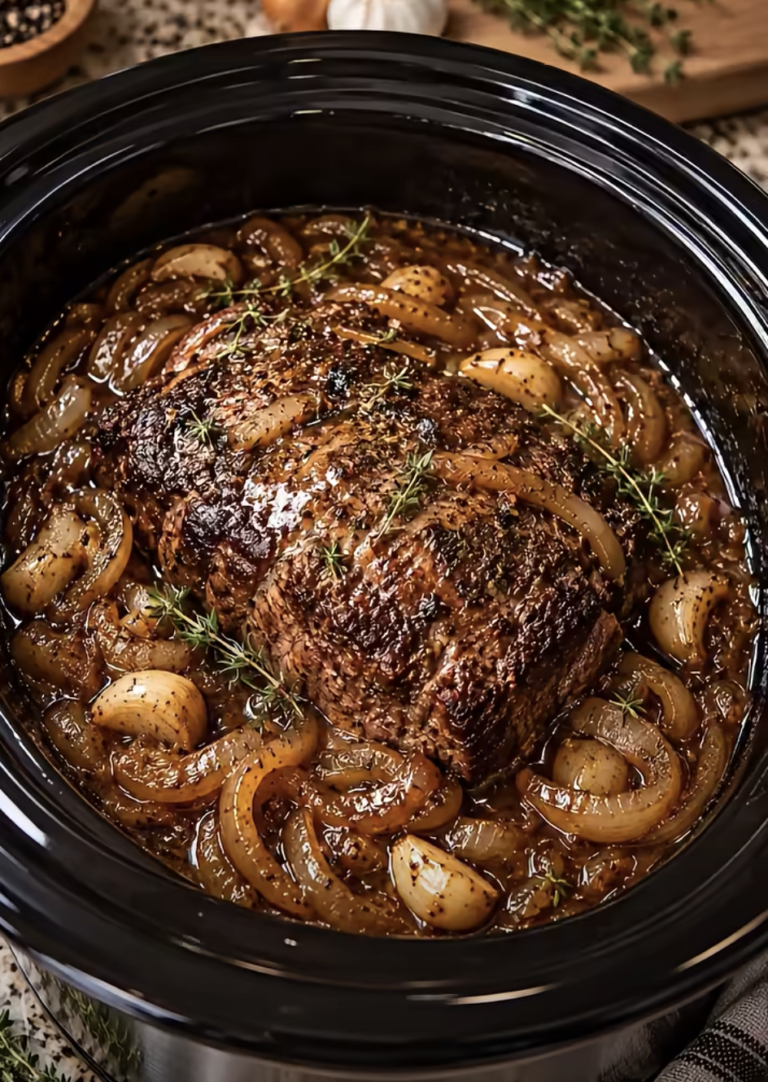
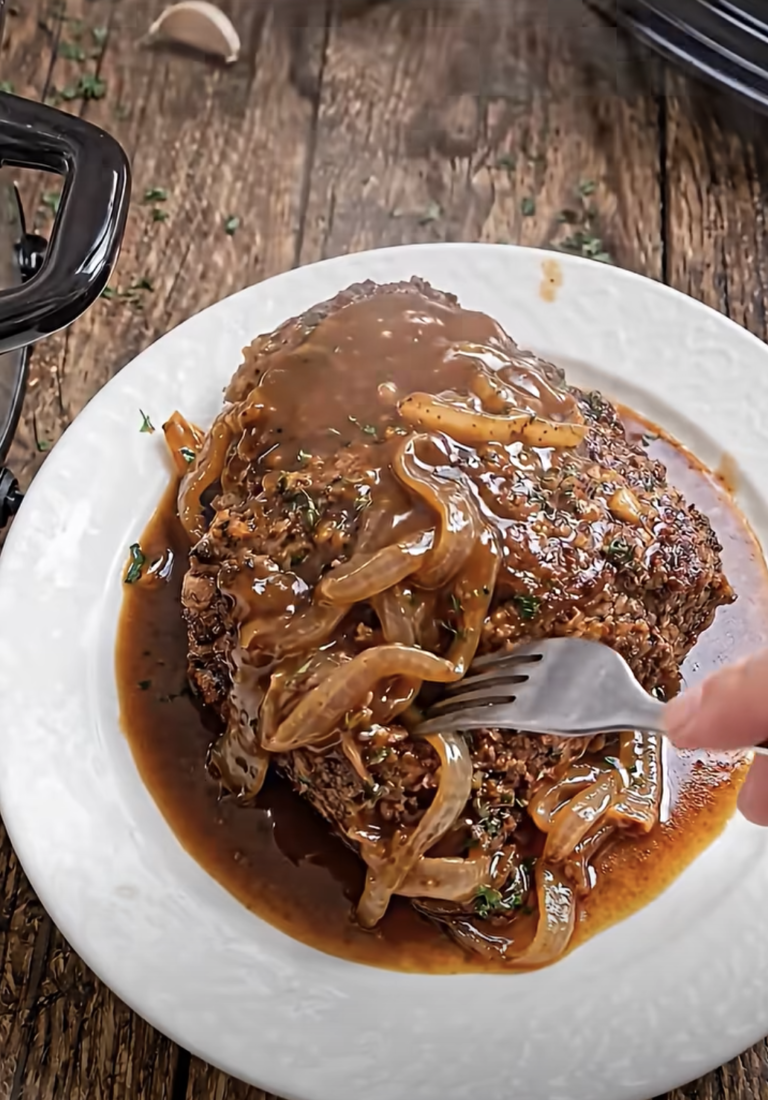
Garlic Herb Prime Rib Roast makes a beautiful centerpiece for holidays, celebrations, and memorable Sunday dinners. A generous bone-in prime rib gets coated with fresh rosemary, thyme, parsley, garlic, Dijon mustard, and olive oil before roasting until the outside develops a deeply browned herb crust.
The contrast makes this roast special. The exterior tastes savory and intensely seasoned, while the thick center stays tender and juicy. Meanwhile, beef broth in the roasting pan catches flavorful drippings that you can spoon over the sliced meat at the table.
A good Garlic Herb Prime Rib Roast also rewards patience. Dry the beef thoroughly, season every surface, use a reliable meat thermometer, and give the finished roast plenty of time to rest before carving. For food safety, USDA guidance recommends cooking whole beef roasts to at least 145°F and resting them for at least three minutes before carving or eating.
I used to think prime rib needed complicated techniques because it looks so impressive when it reaches the table. However, I eventually found that careful seasoning and temperature control matter much more than complicated preparation. The fresh herb paste does most of the flavor work, while the initial high oven temperature creates the crust everyone notices first. The hardest part is actually waiting after the roast leaves the oven. That resting period makes carving much easier, though, so I use those minutes to finish the side dishes and get everything onto the table. Once those thick slices hit the platter with their garlic-herb crust, the meal already feels like a celebration.
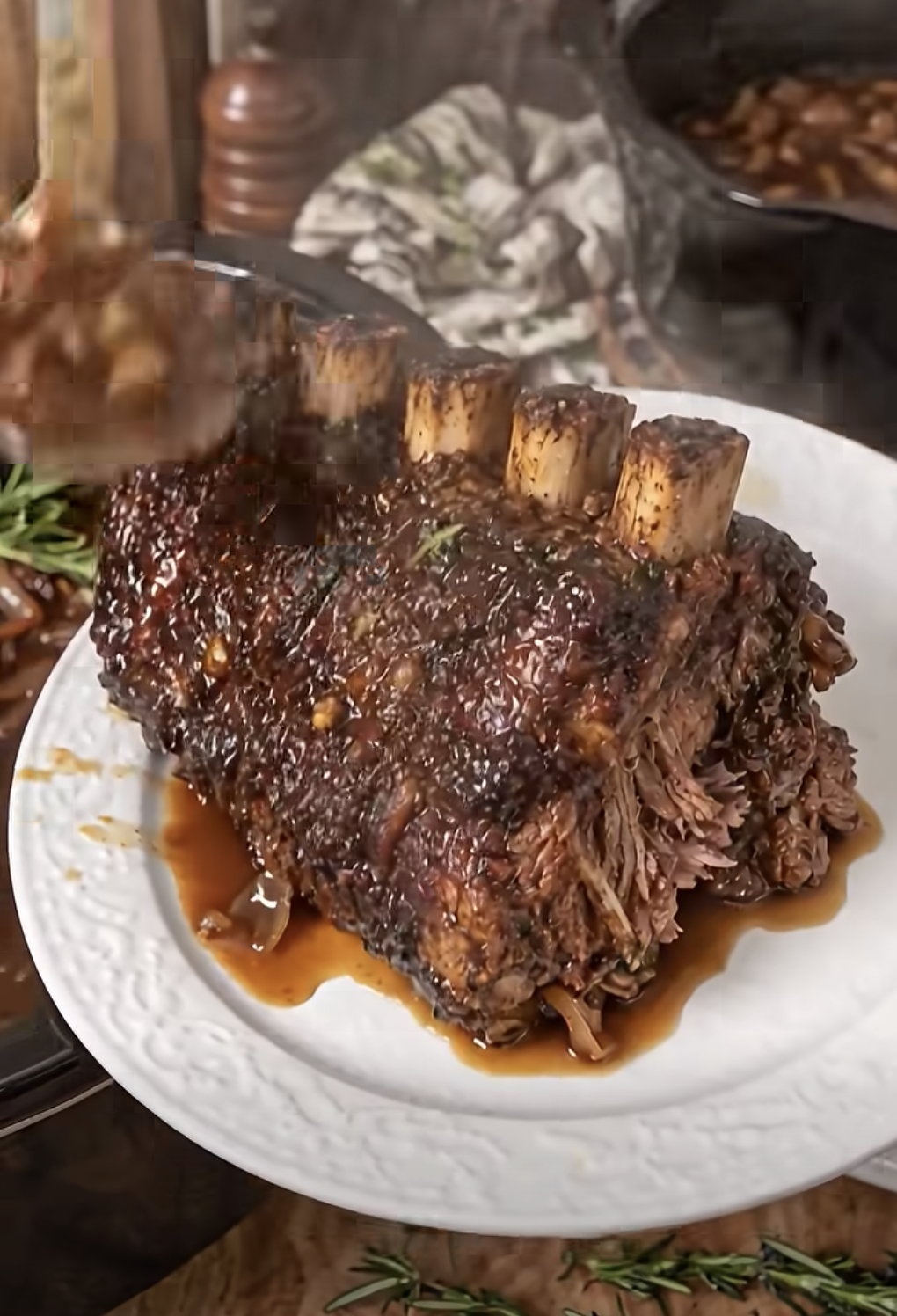
Garlic Herb Prime Rib Roast: Spectacular Holiday Dinner
Ingredients
Equipment
Method
- Remove the prime rib from the refrigerator while preparing the ingredients and preheating the oven. Pat the roast thoroughly dry with paper towels.
- Preheat the oven to 450°F. Mix the garlic, olive oil, rosemary, thyme, parsley, kosher salt, black pepper, onion powder, and Dijon mustard into a thick paste.
- Rub the garlic herb paste generously over every exposed surface of the prime rib.
- Place the roast fat-side up in a roasting pan and pour the beef broth into the bottom of the pan.
- Roast at 450°F for 20 minutes to develop a deeply browned exterior.
- Reduce the oven temperature to 325°F and continue roasting, checking the internal temperature in the thickest part with a food thermometer without touching bone.
- For USDA food-safety guidance, cook the whole beef roast to a minimum internal temperature of 145°F.
- Transfer the roast to a cutting board, loosely tent with foil, and allow it to rest for 20 to 30 minutes.
- Remove the rib bones if necessary and carve the rested roast across the grain into thick slices.
- Serve the prime rib warm with the pan juices and optional horseradish sauce.
Notes
Preparing the Prime Rib for Roasting
Bring the Roast Out Before Cooking
Start Garlic Herb Prime Rib Roast with a 5- to 6-pound bone-in prime rib roast.
Take the beef from the refrigerator while you prepare the remaining ingredients and preheat the oven. Pat every surface thoroughly dry with paper towels.
A dry exterior helps the herb mixture adhere to the meat. More importantly, it encourages better browning when the roast enters the hot oven.
Place the roast fat-side up in a sturdy roasting pan.
If the bones remain attached, they naturally elevate part of the beef from the bottom of the pan.
Before seasoning, check the size and shape of your roast so you know where to insert the meat thermometer later. You want to measure the temperature in the thickest meaty portion without touching bone.
Make the Garlic Herb Paste
Add 6 minced garlic cloves to a small bowl.
Next, add 3 tablespoons olive oil, 2 tablespoons chopped fresh rosemary, 2 tablespoons fresh thyme leaves, and 1 tablespoon chopped fresh parsley.
Stir in 2 teaspoons kosher salt, 1½ teaspoons freshly ground black pepper, and 1 teaspoon onion powder.
Finally, add 1 teaspoon Dijon mustard.
Mix everything until you have a thick, fragrant paste.
Rub the mixture generously over the entire exposed surface of the roast.
Take time to work it across the top, sides, and ends.
The Dijon helps bind the seasoning mixture while adding subtle tanginess. Meanwhile, rosemary and thyme provide the classic herbal character that complements rich beef.
Creating a Beautiful Garlic Herb Crust
Start With High Oven Heat
Preheat the oven to 450°F.
Pour 1 cup beef broth into the bottom of the roasting pan, keeping the herb-coated surface of the meat above the liquid.
Place the Garlic Herb Prime Rib Roast in the hot oven with the fat side facing upward.
Roast at 450°F for 20 minutes.
This initial burst of heat encourages rapid browning on the outside and helps create the flavorful crust that makes prime rib so appealing.
Avoid repeatedly opening the oven door during this stage.
Meanwhile, keep an eye on the pan liquid. The broth will mingle with the beef drippings as the roast cooks, creating flavorful juices for serving.
Reduce the Heat for Gentle Roasting
After the first 20 minutes, reduce the oven temperature to 325°F.
Continue roasting until the center reaches your chosen endpoint.
Cooking time can vary significantly according to the exact weight, thickness, starting temperature, oven accuracy, and shape of the roast. Therefore, a meat thermometer gives you much more useful information than the clock.
Insert the thermometer into the thickest portion without touching the bone.
For home food safety, USDA recommends that whole beef roasts reach a minimum internal temperature of 145°F, followed by at least a three-minute rest.
This recommendation differs from traditional rare and medium-rare prime rib temperatures, which fall below that minimum. If food safety is your priority, use 145°F as the minimum endpoint rather than relying on appearance, color, or texture alone. USDA specifically notes that those visual indicators cannot reliably establish food safety.
Resting and Carving the Prime Rib
Give the Roast Time to Rest
Transfer the finished Garlic Herb Prime Rib Roast to a large cutting board.
Loosely tent it with aluminum foil.
Then allow it to rest for approximately 20 to 30 minutes before carving.
Although the USDA minimum rest for whole beef roasts is three minutes after reaching 145°F, the longer rest here serves an additional practical purpose. It gives a large prime rib time to settle before slicing.
Meanwhile, use the resting period to finish potatoes, vegetables, bread, or sauce.
You can also work with the flavorful liquid remaining in the roasting pan.
Skim excessive surface fat if desired, then reserve the savory pan juices for serving.
Carve Thick, Generous Slices
After resting, transfer the Garlic Herb Prime Rib Roast to a stable carving surface.
If necessary, cut the roast away from the rib bones first. Then slice the meat across the grain into generous portions.
Use a long, sharp carving knife rather than sawing aggressively through the meat.
Arrange the slices on a warmed platter.
Next, spoon a little of the reserved pan juice over the beef or serve it separately so everyone can add as much as desired.
The finished slices should showcase the dark garlic-herb exterior and tender interior.
Fresh rosemary or parsley can add a simple decorative touch to the platter, although the roast already makes a striking centerpiece without elaborate garnishes.
Serving a Memorable Prime Rib Dinner
Choose Classic Side Dishes
Garlic Herb Prime Rib Roast pairs naturally with traditional steakhouse-style sides.
Creamy mashed potatoes make an excellent choice because they catch the savory pan juices. Roasted potatoes also work particularly well when you want additional texture.
For vegetables, try roasted carrots, green beans, asparagus, Brussels sprouts, or creamed spinach.
Crusty bread or soft dinner rolls can round out the table.
Horseradish sauce also provides a sharp, creamy contrast to the richness of prime rib.
Because the roast itself carries plenty of garlic, rosemary, thyme, and black pepper, simple side dishes often work best.
Make the Presentation Special
Transfer the carved Garlic Herb Prime Rib Roast to the center of a large serving platter.
Arrange the rib bones alongside the sliced meat if desired.
Then garnish lightly with fresh herbs.
Rather than pouring all the pan juices over the platter, serve some in a small pitcher or gravy boat. That allows guests to control the amount they add.
Carve only what you expect to serve immediately. Keeping the remaining roast intact can help preserve its moisture.
Most importantly, use a food thermometer rather than judging doneness by the color of the meat. USDA identifies a thermometer as the reliable way to verify that meat has reached its recommended safe temperature.
Ingredients
- 1 bone-in prime rib roast, 5–6 pounds
- 6 cloves garlic, minced
- 3 tablespoons olive oil
- 2 tablespoons fresh rosemary, chopped
- 2 tablespoons fresh thyme leaves
- 1 tablespoon fresh parsley, chopped
- 2 teaspoons kosher salt
- 1½ teaspoons freshly ground black pepper
- 1 teaspoon onion powder
- 1 teaspoon Dijon mustard
- 1 cup beef broth
Instructions
- Remove the prime rib from the refrigerator while preparing the ingredients and preheating the oven. Pat the roast thoroughly dry with paper towels.
- Preheat the oven to 450°F. Combine the garlic, olive oil, rosemary, thyme, parsley, kosher salt, black pepper, onion powder, and Dijon mustard into a thick paste.
- Rub the garlic herb mixture generously over every exposed surface of the prime rib.
- Place the roast fat-side up in a roasting pan. Pour the beef broth into the bottom of the pan.
- Roast at 450°F for 20 minutes to begin developing the browned garlic-herb crust.
- Reduce the oven temperature to 325°F and continue roasting. Insert a meat thermometer into the thickest part without touching bone.
- For USDA food-safety guidance, cook the beef roast to a minimum internal temperature of 145°F.
- Transfer the roast to a cutting board, loosely tent with foil, and rest for 20 to 30 minutes.
- Remove the rib bones if needed, then carve the roast across the grain into thick slices.
- Serve warm with the reserved pan juices and, if desired, horseradish sauce.
Frequently Asked Questions
What temperature should Garlic Herb Prime Rib Roast reach?
USDA recommends cooking whole beef roasts to a minimum internal temperature of 145°F as measured with a food thermometer, followed by a rest of at least three minutes. Traditional rare or medium-rare temperatures fall below that USDA minimum recommendation.
Where should I insert the meat thermometer?
Insert the thermometer into the thickest meaty portion of the roast. Avoid touching the bone because that can interfere with an accurate reading of the meat itself.
Why start prime rib at 450°F?
The initial high heat promotes exterior browning. After 20 minutes, reducing the oven to 325°F allows the large roast to continue cooking more gently.
How long should Garlic Herb Prime Rib Roast rest?
This recipe calls for 20 to 30 minutes before carving. USDA requires at least a three-minute rest after a whole beef roast reaches its recommended minimum 145°F temperature.
What should I serve with garlic herb prime rib?
Mashed or roasted potatoes, green beans, asparagus, Brussels sprouts, creamed spinach, dinner rolls, and horseradish sauce all complement the rich beef and savory herb crust.
Conclusion
Garlic Herb Prime Rib Roast creates an impressive centerpiece without requiring an overly complicated preparation.
Fresh garlic, rosemary, thyme, parsley, Dijon mustard, and olive oil form a savory crust around the beef. Meanwhile, the initial high-temperature roasting stage encourages beautiful browning before gentler heat finishes the center.
A meat thermometer plays the most important role when deciding when the roast has finished cooking. For food safety, USDA recommends a minimum internal temperature of 145°F for whole beef roasts, followed by at least three minutes of resting.
After cooking, give your Garlic Herb Prime Rib Roast a generous 20- to 30-minute rest before carving. Then slice it across the grain and serve it with the flavorful pan juices.
Add mashed potatoes, roasted vegetables, crusty bread, or horseradish sauce, and you have a satisfying special-occasion meal with a beautifully browned exterior and plenty of fresh garlic-herb flavor.