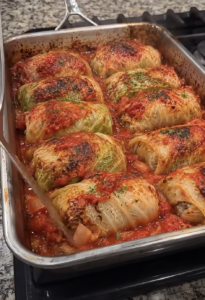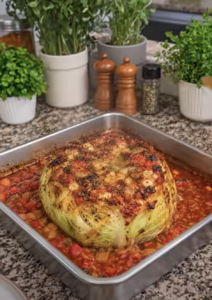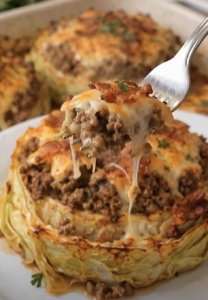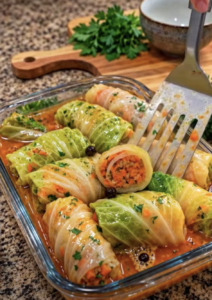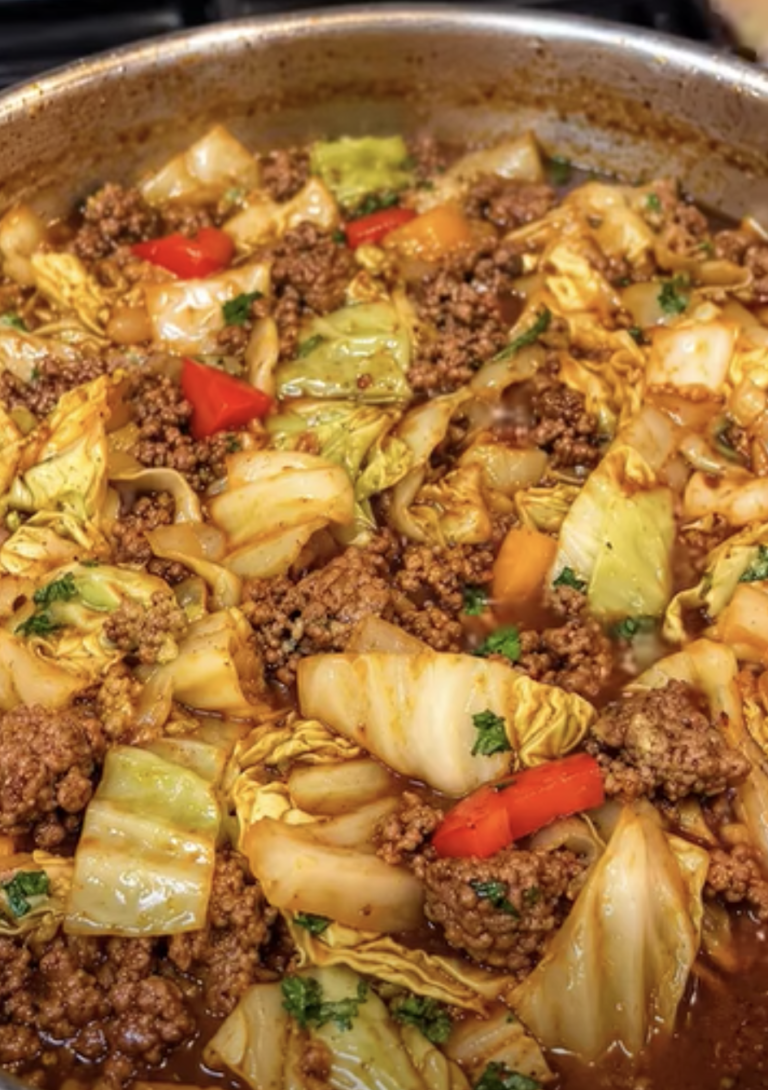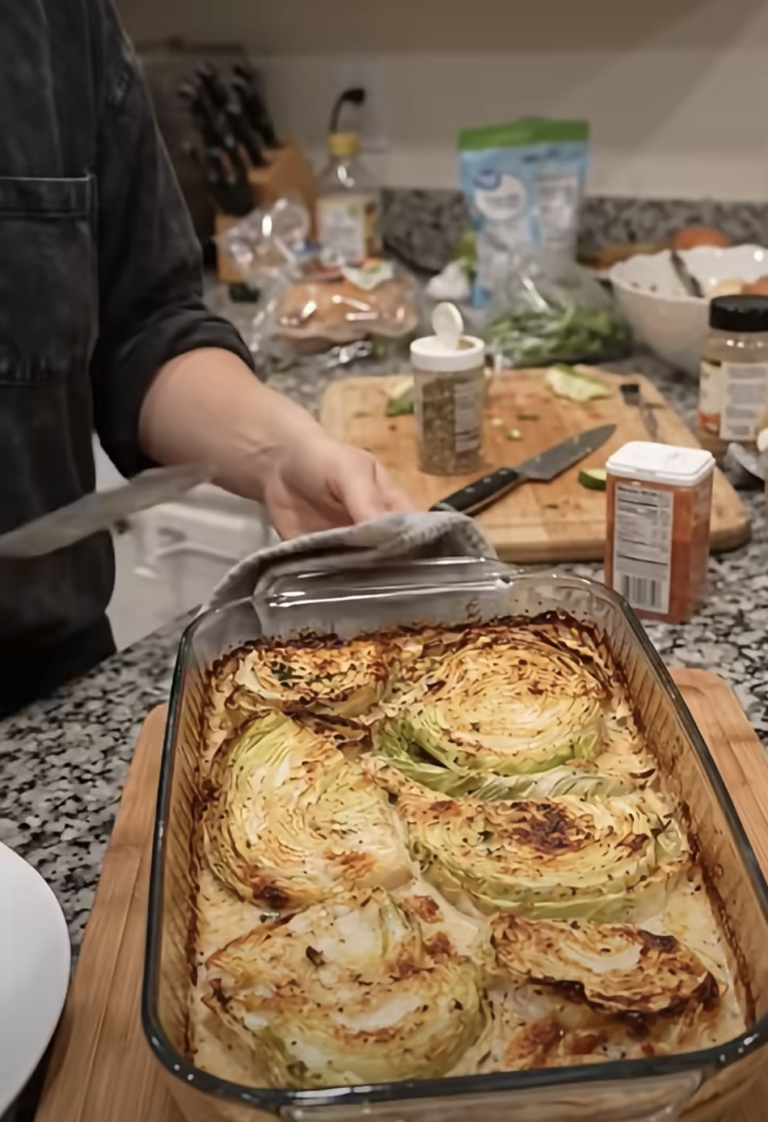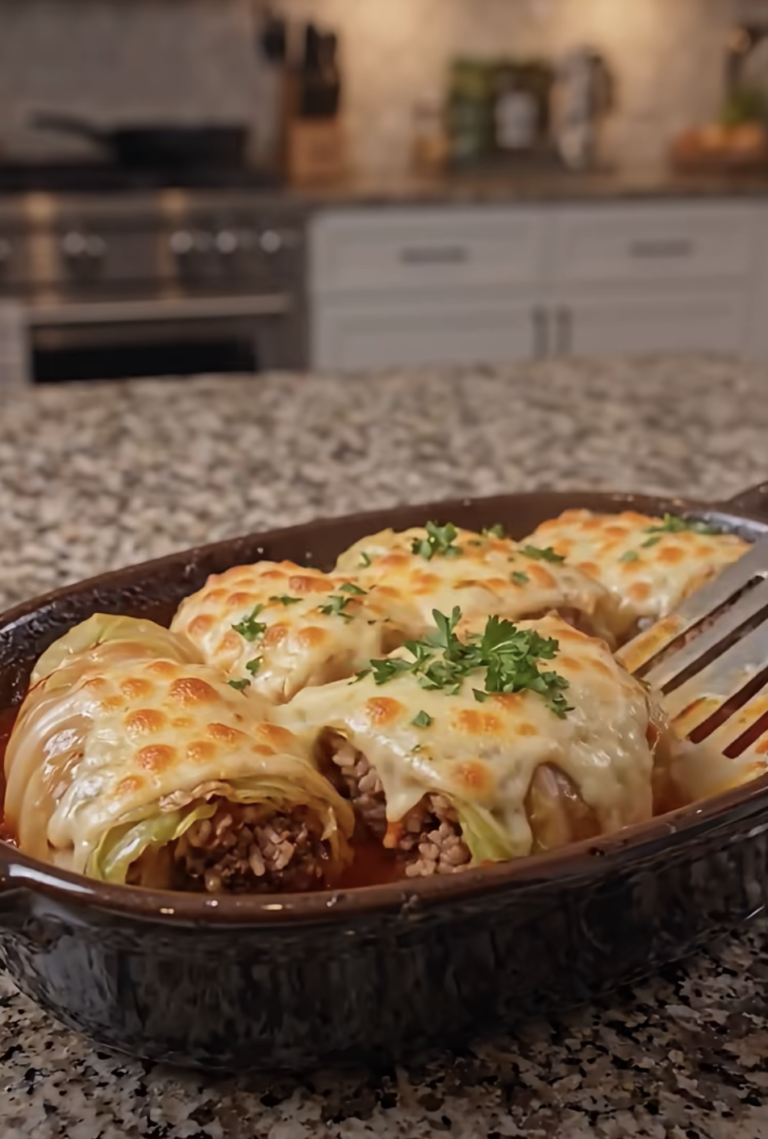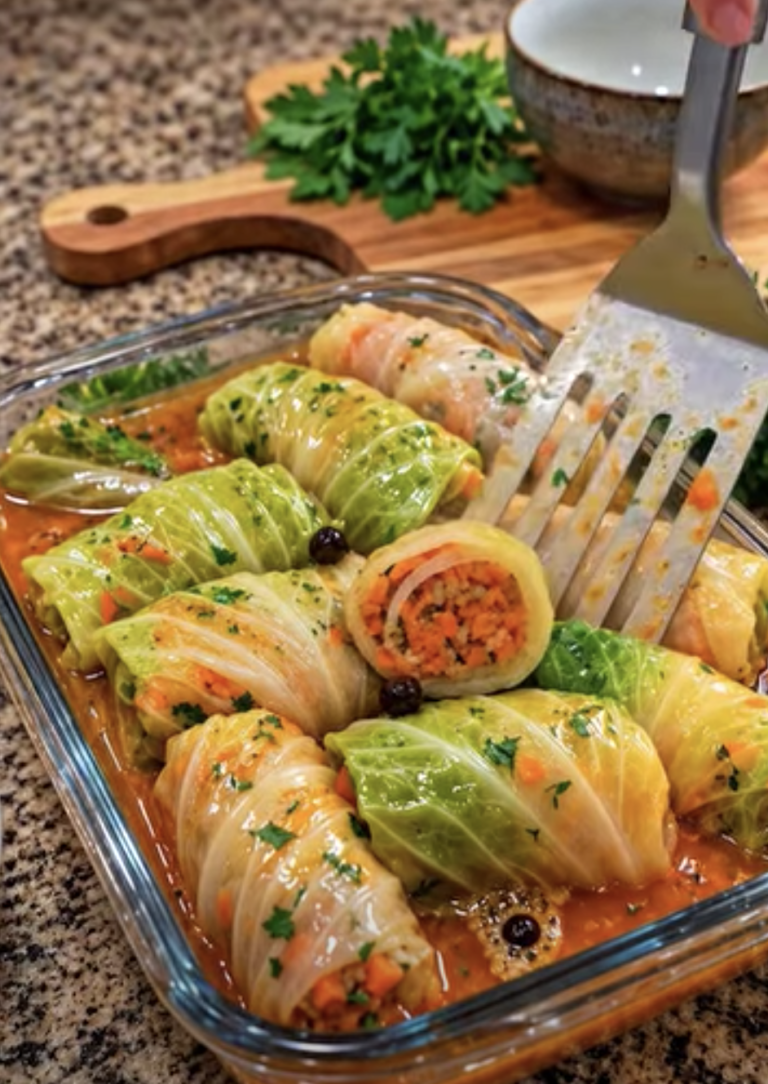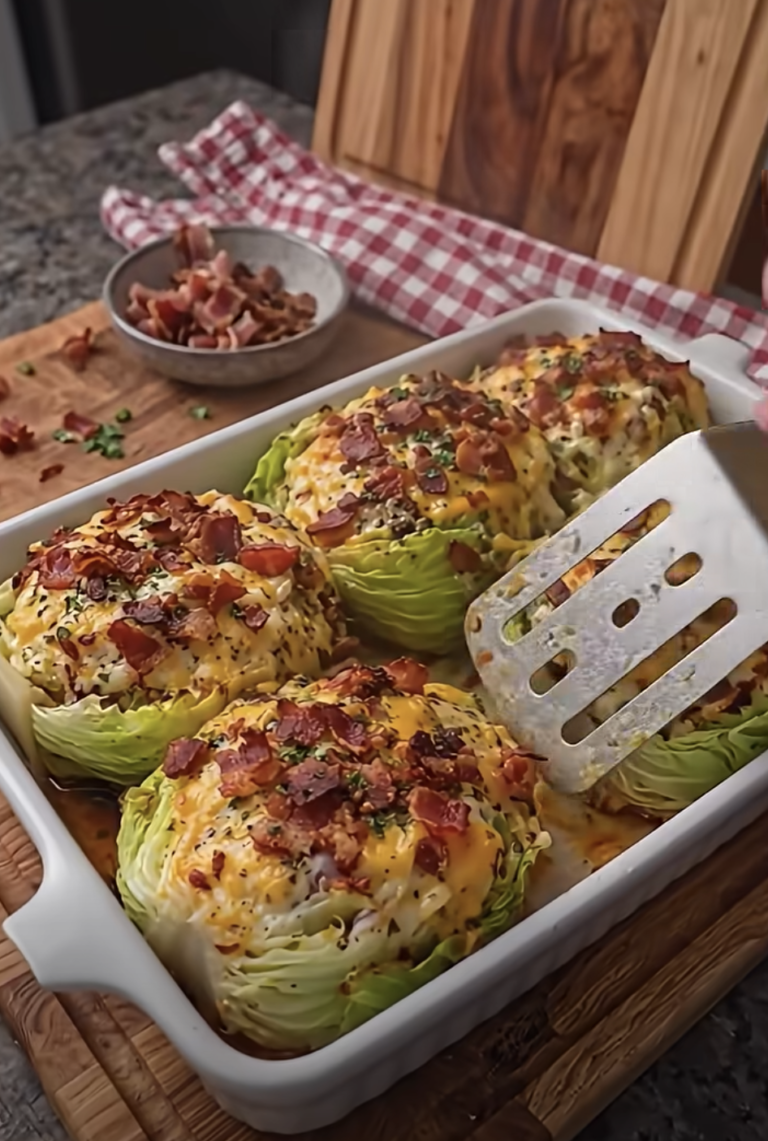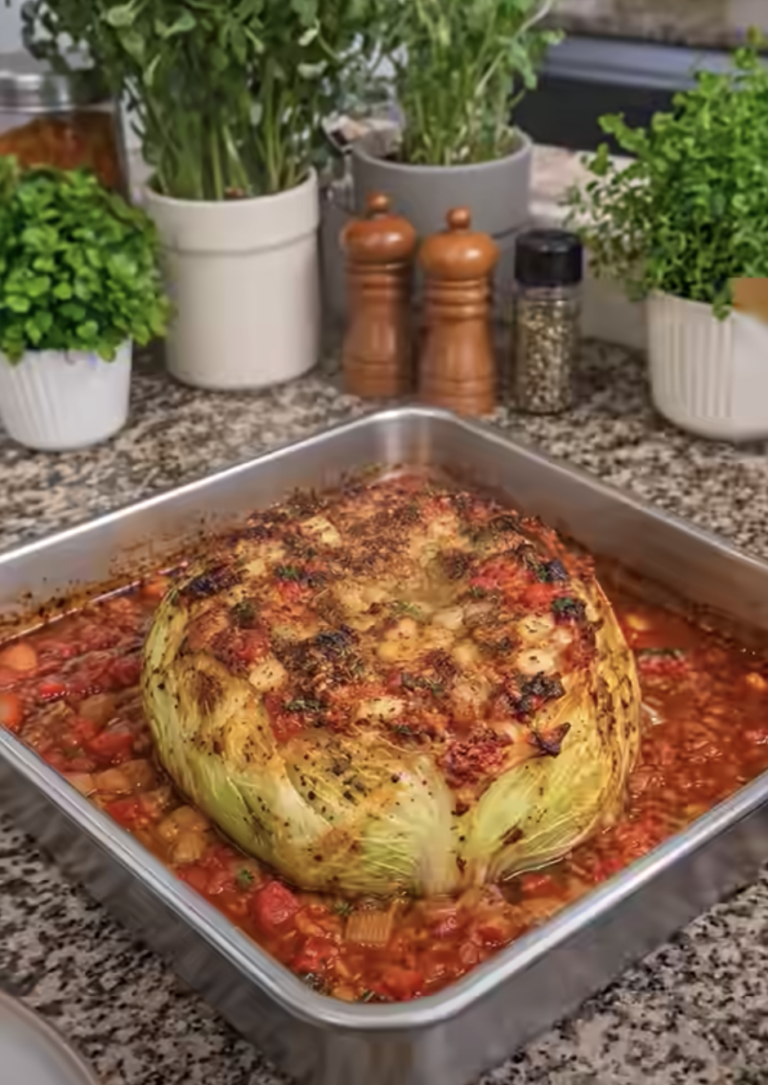
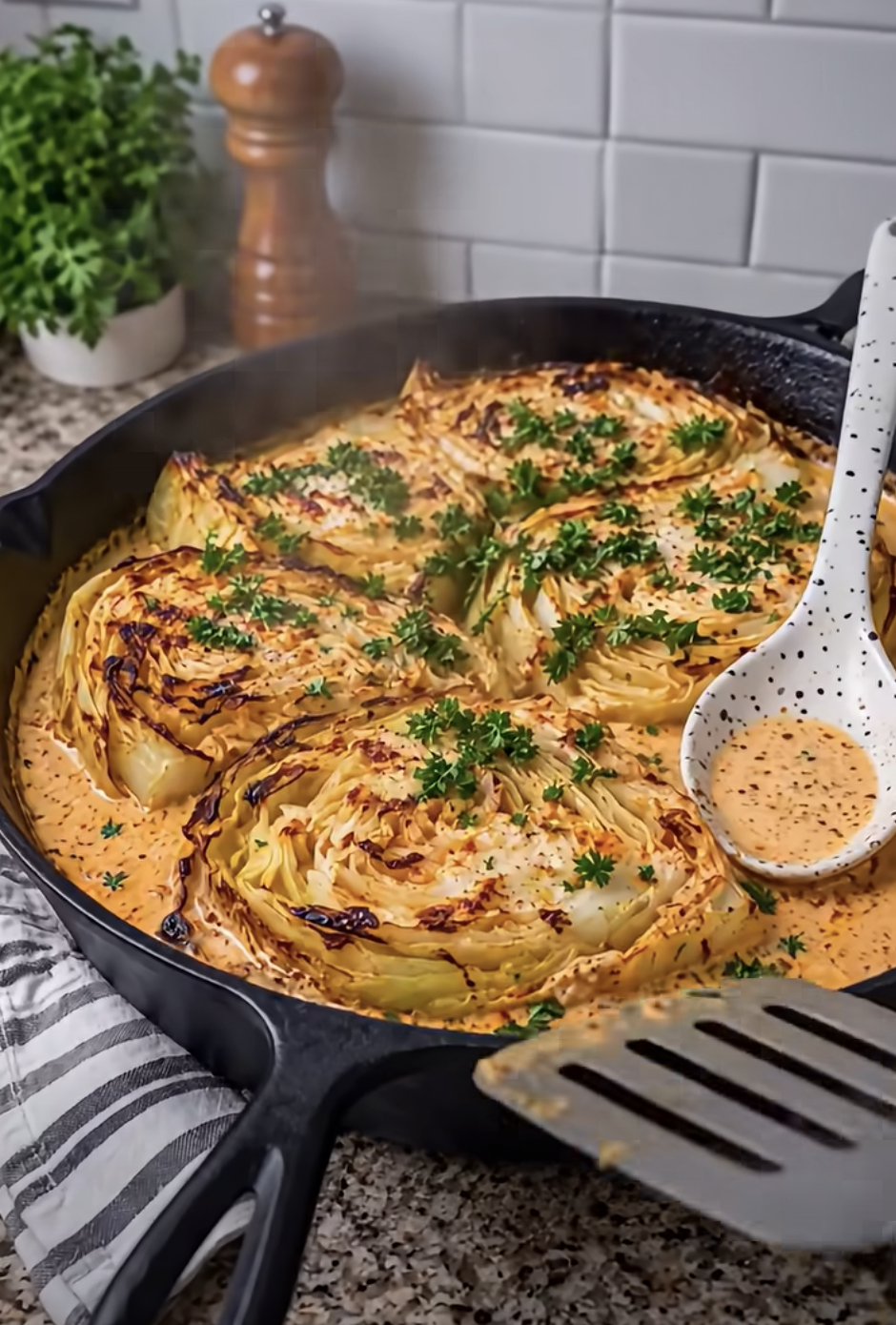
Garlic Butter Melting Cabbage transforms an ordinary head of green cabbage into a rich, buttery, melt-in-your-mouth side dish. Thick cabbage wedges develop beautiful golden edges in a hot skillet before they finish roasting in a flavorful garlic butter sauce. The result combines caramelized edges, tender centers, and savory pan juices that make every bite irresistible.
This Garlic Butter Melting Cabbage recipe uses simple ingredients like fresh garlic, butter, olive oil, shallots, and vegetable broth. A little Dijon mustard, lemon juice, and aromatic herbs add depth without overpowering the naturally sweet cabbage.
Ingredients
Equipment
Method
- Preheat the oven to 400°F (200°C). Remove damaged outer leaves from the cabbage, rinse thoroughly, and pat dry.
- Cut the cabbage in half through the core, then cut each half into four wedges. Keep part of the core attached to each wedge to hold the leaves together.
- Drizzle the cabbage wedges with olive oil. Season both sides with salt, black pepper, smoked paprika, dried thyme, and onion powder.
- Heat a large oven-safe skillet or Dutch oven over medium-high heat. Melt 1 tablespoon of butter. Sear the cabbage wedges for 3–4 minutes per side until golden brown, working in batches if necessary. Transfer to a plate.
- Reduce the heat to medium. Add the remaining 2 tablespoons of butter and minced shallot. Cook for 2–3 minutes. Add minced garlic and optional red pepper flakes and cook for another 30 seconds, stirring constantly.
- Pour in the vegetable or chicken broth and scrape up the browned bits from the skillet. Stir in lemon juice, Dijon mustard, and optional Worcestershire sauce.
- Return the seared cabbage wedges to the skillet with their cut sides facing upward. Spoon the garlic butter sauce over the wedges and add optional fresh thyme leaves.
- Cover the skillet tightly with an oven-safe lid or aluminum foil. Transfer to the preheated oven and roast for 25 minutes.
- Carefully uncover the skillet and spoon the pan juices over the cabbage. Return to the oven uncovered and roast for another 15–20 minutes until the edges are golden and the centers are fork-tender. Add a splash of broth if the sauce becomes too dry.
- Remove from the oven and rest for 5 minutes. Stir chopped parsley into the sauce, adjust the seasoning, and spoon the sauce over the cabbage. Garnish with optional Parmesan, additional parsley, black pepper, and lemon wedges. Serve warm.
Notes
Even better, you don’t need complicated cooking skills. A quick sear builds flavor, while the oven handles most of the remaining work.
I started making this style of cabbage when I wanted a different vegetable side dish for a Sunday dinner. I had a whole cabbage in the refrigerator, but I didn’t feel like preparing another bowl of coleslaw. Instead, I cut it into thick wedges, browned the sides in butter, and added garlic and broth before roasting. The kitchen smelled wonderful as the edges turned golden. When I finally served the cabbage, everyone reached for another wedge. I especially loved how the garlic butter sauce soaked into the tender leaves. Since then, this comforting vegetable dish has become a favorite for cozy dinners and holiday meals.
If you enjoy roasted vegetables with rich flavor and soft, satisfying texture, this recipe deserves a place on your dinner table.
Why You’ll Love This Garlic Butter Melting Cabbage Recipe
Crispy Golden Edges and Melt-in-Your-Mouth Centers
The magic of Garlic Butter Melting Cabbage comes from combining two cooking methods: searing and slow oven roasting.
First, a hot skillet creates golden, caramelized surfaces on the cabbage wedges. This step develops a slightly sweet, savory flavor that makes the finished dish especially delicious.
Next, the cabbage roasts with broth and garlic butter under a tight-fitting lid or foil.
The covered cooking environment traps moisture, allowing the thick cabbage wedges to soften gradually.
As a result, the inner leaves become incredibly tender while the outer layers absorb the seasoned cooking liquid.
Finally, uncovering the skillet during the last part of roasting encourages the edges to brown further.
This final step creates a wonderful contrast between the golden exterior and the soft, buttery center.
Unlike boiled cabbage, which can taste mild and watery, this recipe develops deeper flavor through browning and roasting.
The garlic butter sauce adds another delicious dimension.
Fresh garlic provides aromatic richness, while shallots contribute a subtle sweetness. Meanwhile, Dijon mustard and lemon juice balance the butter with a gentle tang.
Smoked paprika adds warmth and a hint of smoky flavor.
Together, these ingredients create a comforting vegetable side dish that tastes far more impressive than its simple ingredient list suggests.
A Budget-Friendly Side Dish for Everyday and Holiday Meals
Another reason to love Garlic Butter Melting Cabbage is its affordability.
Green cabbage typically costs less than many other fresh vegetables, yet one medium head can provide several generous servings.
Because the recipe uses pantry staples, you may already have most of the ingredients at home.
Butter, garlic, olive oil, dried thyme, black pepper, and broth create the foundation of the dish.
Additionally, you can adjust the seasonings to suit your family’s preferences.
For example, omit the red pepper flakes if you prefer mild flavors. Alternatively, add a little extra garlic for a more pronounced savory taste.
This recipe also works well for different occasions.
Serve it with roasted chicken on a busy weeknight, pair it with beef for a comforting Sunday dinner, or include it among your holiday side dishes.
The beautiful golden wedges create an inviting presentation without requiring complicated garnishes.
Furthermore, the recipe offers a delicious way to enjoy more vegetables.
Cabbage provides dietary fiber, vitamin C, and vitamin K. Although the butter adds richness, the dish still centers on a hearty vegetable.
For a vegetarian version, simply choose vegetable broth and omit the optional Worcestershire sauce unless you use a vegetarian variety.
Choosing the Best Ingredients for Garlic Butter Melting Cabbage
How to Select and Cut the Perfect Cabbage
Choosing the right cabbage helps ensure that Garlic Butter Melting Cabbage develops the ideal texture.
Start with a medium head of green cabbage.
Look for tightly packed leaves, a firm texture, and a fresh appearance. The cabbage should feel heavy for its size.
Avoid heads with extensive brown spots, soft patches, or wilted outer leaves.
Green cabbage works especially well because its sturdy leaves hold together during searing and roasting.
Savoy cabbage offers a possible alternative, but its more delicate leaves may cook faster and create a softer final texture.
Once you select your cabbage, remove any damaged outer leaves.
Rinse the cabbage thoroughly under cool running water, then pat it dry.
Next, place it on a stable cutting board.
Cut the cabbage in half directly through the core. Then, cut each half into four evenly sized wedges.
You should have eight wedges in total.
Most importantly, keep a small portion of the core attached to each wedge.
The core helps hold the layers together during cooking, making the wedges easier to flip and serve.
If you remove the entire core before cooking, the leaves may separate in the skillet.
Aim for wedges of similar thickness so they roast evenly.
After cutting, dry any excess moisture from the exposed surfaces.
This step helps the cabbage develop better browning when it touches the hot skillet.
The Ingredients That Make the Garlic Butter Sauce Irresistible
The sauce gives Garlic Butter Melting Cabbage its signature rich flavor.
Unsalted butter creates the foundation.
Using unsalted butter allows you to control the seasoning, especially when your broth already contains sodium.
Fresh garlic adds bold, savory aroma. For the best results, mince the cloves finely so they distribute evenly throughout the sauce.
Shallots provide a delicate onion flavor that complements the garlic without overpowering it.
Olive oil helps coat the cabbage before searing and contributes additional richness.
Next, broth supplies the moisture that softens the cabbage during roasting.
Vegetable broth works beautifully for a meat-free version, while chicken broth creates a slightly different savory profile.
Fresh lemon juice brightens the sauce and balances the richness of the butter.
Dijon mustard adds a gentle tang and helps bring the flavors together.
For extra depth, you can include a small amount of Worcestershire sauce.
However, traditional Worcestershire sauce often contains anchovies, so choose a vegetarian version if necessary.
Dried thyme, smoked paprika, onion powder, and black pepper create a warm, aromatic seasoning blend.
A pinch of red pepper flakes adds optional heat.
Finally, fresh parsley brings color and freshness to the finished dish.
For an extra savory finish, sprinkle a little grated Parmesan cheese over the warm cabbage before serving.
How to Make Perfect Garlic Butter Melting Cabbage Every Time
Searing the Cabbage for Maximum Flavor
The first important step in preparing Garlic Butter Melting Cabbage involves browning the cabbage before it enters the oven.
Preheat your oven to 400°F (200°C).
Meanwhile, arrange the prepared cabbage wedges on a large plate or baking sheet.
Drizzle both sides with olive oil, then season with salt, black pepper, smoked paprika, dried thyme, and onion powder.
Gently rub the seasonings over the cabbage so they coat the exposed surfaces.
Next, heat a large oven-safe skillet or Dutch oven over medium-high heat.
Add one tablespoon of butter and let it melt.
Once the butter begins to foam, carefully place the cabbage wedges in the skillet.
Avoid overcrowding the pan.
If your skillet cannot hold all eight wedges comfortably, sear them in batches.
Cook each side for approximately 3–4 minutes, or until the surface develops a golden-brown color.
You want visible caramelization without burning the cabbage.
Use kitchen tongs or a wide spatula to turn each wedge carefully.
Because the cabbage still contains its core, the leaves should remain mostly intact.
After searing, transfer the wedges to a plate.
Don’t worry if they still feel firm at this stage.
The oven will finish softening the cabbage while the broth and butter create a rich, flavorful sauce.
Roasting Until Tender and Perfectly Caramelized
After searing, the next stage transforms the cabbage into tender Garlic Butter Melting Cabbage.
Reduce the skillet heat to medium and add the remaining butter.
Stir in the minced shallot and cook until softened, about 2–3 minutes.
Next, add the garlic and stir for approximately 30 seconds.
Keep the garlic moving because it can burn quickly.
If you enjoy a little heat, add the optional red pepper flakes.
Then, pour in the broth and gently scrape the browned bits from the bottom of the skillet.
These browned bits add delicious flavor to the sauce.
Stir in the lemon juice, Dijon mustard, and optional Worcestershire sauce.
Return the cabbage wedges to the skillet and spoon some sauce over each piece.
Add the optional fresh thyme leaves.
Cover the skillet tightly with an oven-safe lid or aluminum foil.
Roast for 25 minutes.
Then, carefully remove the lid and spoon the cooking juices over the cabbage.
Return the skillet to the oven uncovered for another 15–20 minutes.
During this stage, the edges develop additional color while the centers become very tender.
Check the cabbage with a fork or the tip of a knife.
The thickest part should feel soft and offer little resistance.
If the sauce reduces too quickly, add a small splash of warm broth.
Finally, remove the skillet from the oven and let the cabbage rest for 5 minutes before serving.
Serving, Variations, and Storage Tips for Garlic Butter Melting Cabbage
Delicious Serving Ideas and Easy Flavor Variations
Garlic Butter Melting Cabbage pairs beautifully with a wide range of main dishes.
Its rich garlic butter sauce makes it especially delicious alongside roasted meats.
Serve the cabbage with oven-roasted chicken, grilled steak, slow-cooked beef, or baked turkey.
For seafood dinners, pair it with baked salmon, grilled shrimp, or lemon-garlic fish.
The buttery sauce complements these proteins without requiring an additional side sauce.
You can also serve the cabbage alongside mashed potatoes, roasted baby potatoes, or creamy polenta.
These starchy sides absorb the flavorful garlic butter pan juices.
For a vegetarian meal, combine the cabbage with white beans, lentils, or roasted chickpeas.
If you enjoy extra richness, finish each wedge with a small sprinkle of Parmesan cheese.
Alternatively, add a pinch of smoked paprika or extra freshly cracked black pepper.
For a brighter flavor, squeeze fresh lemon juice over the cabbage just before serving.
You can also experiment with different herbs.
Rosemary creates a stronger, woodsy flavor, while fresh thyme provides a delicate earthy note.
For a slightly spicy version, increase the red pepper flakes or add a pinch of cayenne pepper.
If you prefer a lighter sauce, reduce the butter slightly and use additional broth.
However, keep enough fat in the recipe to encourage browning and provide the signature buttery finish.
Make-Ahead Preparation, Refrigeration, and Reheating
Although Garlic Butter Melting Cabbage tastes best fresh from the oven, you can prepare several components ahead of time.
For example, cut the cabbage into wedges a day in advance.
Store the wedges in an airtight container or covered tray in the refrigerator.
You can also mince the garlic, chop the shallot, and measure the dry seasonings beforehand.
When you’re ready to cook, simply sear the cabbage and prepare the sauce.
If you want to prepare the entire dish ahead, roast the cabbage until tender, then cool and refrigerate it promptly.
Store leftovers in an airtight container at 40°F or below for up to 3–4 days.
Keep some of the cooking liquid with the cabbage to prevent it from drying out.
For reheating, arrange the wedges in an oven-safe dish and spoon the leftover sauce over them.
Cover with foil and warm in a 350°F oven until heated thoroughly to 165°F.
Alternatively, reheat individual portions in a covered skillet over medium-low heat with a splash of broth.
Avoid excessive stirring because the tender leaves can break apart.
Freezing is possible, but the cabbage may become noticeably softer after thawing.
Therefore, refrigeration offers the best option for preserving the texture.
For the most enjoyable leftovers, reheat gently and finish with a little fresh parsley or lemon juice.
Ingredients
Servings: 8 | Prep time: 15 minutes | Cook time: 55–65 minutes | Rest time: 5 minutes | Total time: approximately 75–85 minutes
For the cabbage:
- 1 medium green cabbage, cut into 8 wedges
- 2 tablespoons olive oil
- 3 tablespoons unsalted butter, divided
- 1 shallot, minced
- 4 cloves garlic, minced
- ½ teaspoon salt
- ½ teaspoon freshly ground black pepper
- ½ teaspoon smoked paprika
- ½ teaspoon dried thyme
- ½ teaspoon onion powder
- ¼ teaspoon red pepper flakes (optional)
For the garlic butter sauce:
- 1 cup vegetable or chicken broth
- 1 tablespoon fresh lemon juice
- 1 teaspoon Dijon mustard
- 1 teaspoon Worcestershire sauce (optional)
- 1 tablespoon fresh parsley, chopped
- 1 tablespoon fresh thyme leaves (optional)
For garnish:
- 2 tablespoons grated Parmesan cheese (optional)
- 1 tablespoon fresh parsley, chopped
- ¼ teaspoon freshly ground black pepper
- 1 lemon, cut into wedges
Instructions
1. Preheat the oven. Set your oven to 400°F (200°C). Remove any damaged cabbage leaves, rinse the cabbage, and pat it dry.
2. Cut the cabbage. Slice the cabbage in half through the core. Cut each half into four wedges, creating eight pieces. Keep part of the core attached to each wedge.
3. Season the wedges. Drizzle both sides with olive oil. Sprinkle with salt, black pepper, smoked paprika, dried thyme, and onion powder. Rub gently to distribute the seasonings.
4. Sear the cabbage. Heat a large oven-safe skillet or Dutch oven over medium-high heat. Melt 1 tablespoon of butter. Sear the cabbage wedges for 3–4 minutes per side until golden brown. Work in batches if necessary, then transfer the wedges to a plate.
5. Cook the aromatics. Reduce the heat to medium. Add the remaining 2 tablespoons of butter and the minced shallot. Cook for 2–3 minutes. Add the garlic and optional red pepper flakes, stirring for another 30 seconds.
6. Prepare the garlic butter sauce. Pour in the broth and scrape up the browned bits. Stir in the lemon juice, Dijon mustard, and optional Worcestershire sauce.
7. Arrange the cabbage. Return the seared cabbage wedges to the skillet, cut sides facing upward. Spoon the sauce over each wedge and sprinkle with optional fresh thyme leaves.
8. Roast covered. Cover the skillet tightly with an oven-safe lid or aluminum foil. Transfer it to the oven and roast for 25 minutes.
9. Finish roasting uncovered. Remove the lid carefully and spoon the pan juices over the cabbage. Roast uncovered for another 15–20 minutes, until the edges turn golden and the centers become fork-tender. Add a splash of broth if the pan becomes too dry.
10. Garnish and serve. Let the cabbage rest for 5 minutes. Taste and adjust the seasoning. Spoon the garlic butter sauce over the wedges, then garnish with parsley, optional Parmesan, freshly ground black pepper, and lemon wedges. Serve warm.
Frequently Asked Questions
1. What is Garlic Butter Melting Cabbage?
Garlic Butter Melting Cabbage is a roasted cabbage dish that combines seared cabbage wedges with a rich garlic butter and broth sauce. The cabbage cooks covered to become tender, then roasts uncovered to develop golden edges. This cooking method creates soft centers and a deeply savory flavor.
2. Can I make Garlic Butter Melting Cabbage without an oven-safe skillet?
Yes. You can sear the cabbage in a regular skillet, then transfer the wedges to a deep baking dish. Prepare the garlic butter sauce in the same skillet and pour it over the cabbage. Cover the baking dish tightly with foil and follow the same roasting directions.
3. How do I keep cabbage wedges from falling apart?
Keep a small portion of the core attached to each wedge when cutting the cabbage. The core holds the leaves together during searing and roasting. Additionally, use a wide spatula or kitchen tongs and turn the wedges gently. Avoid excessive stirring once the cabbage becomes tender.
4. Can I make Garlic Butter Melting Cabbage vegan?
Absolutely. Replace the butter with a plant-based butter alternative and use vegetable broth. Skip the Parmesan cheese or choose a vegan alternative. Also, omit traditional Worcestershire sauce or use a vegan variety. These substitutions create a flavorful plant-based version.
5. How do I know when the cabbage is fully cooked?
The cabbage should have golden-brown edges and very tender centers. Insert a fork or the tip of a knife into the thickest section. If it slides in easily, the cabbage is ready. If the wedges still feel firm, continue roasting for another 5–10 minutes and check again.
Conclusion
Garlic Butter Melting Cabbage turns a simple, affordable vegetable into a comforting and flavorful side dish.
The combination of golden seared edges, tender roasted centers, and rich garlic butter sauce creates a delicious contrast of textures.
Fresh garlic, shallots, Dijon mustard, lemon juice, and herbs add layers of savory flavor without requiring complicated preparation.
Whether you serve it with roasted chicken, grilled beef, baked fish, or mashed potatoes, this recipe brings warmth and richness to your dinner table.
For the best results, keep the cabbage wedges intact, sear them until golden, and roast them with enough broth to become wonderfully tender.
Finish with fresh parsley, optional Parmesan, and a squeeze of lemon.
Once you try Garlic Butter Melting Cabbage, you may find yourself reaching for cabbage more often when planning easy family dinners and holiday side dishes.