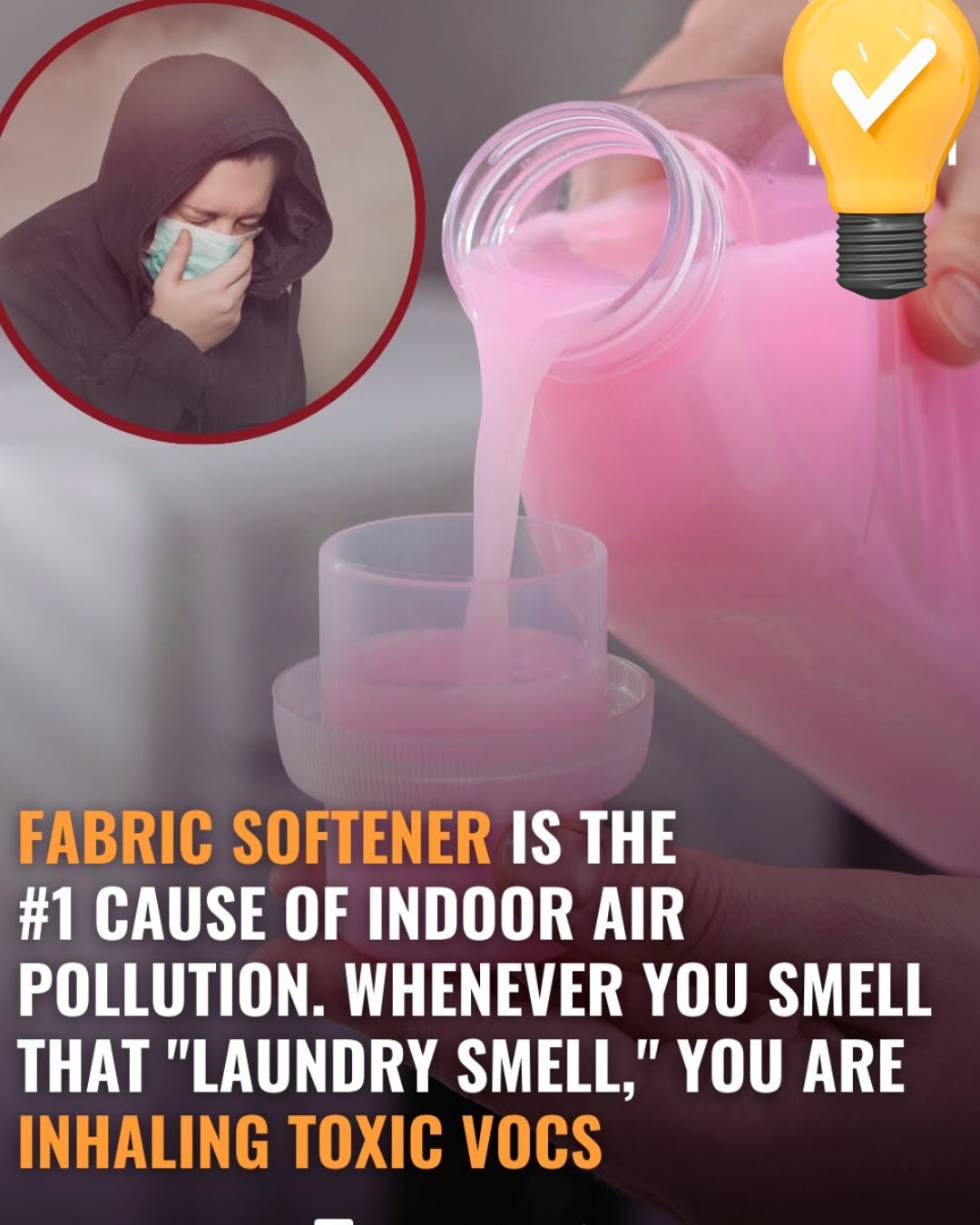
Fabric Softener Is the #1 Cause of Indoor Air Pollution is a dramatic claim that has circulated online, often alongside warnings about the familiar scent of freshly washed clothes. Fabric softeners and dryer sheets can release fragrance chemicals and volatile organic compounds into the air. However, available scientific evidence does not establish fabric softener as the number-one source of indoor air pollution.
That distinction matters.
Indoor air contains pollutants from many sources, including cooking, tobacco smoke, fuel-burning appliances, cleaning products, paints, building materials, furnishings, air fresheners, pesticides, and fragranced consumer products. The U.S. Environmental Protection Agency specifically notes that thousands of household products can emit volatile organic compounds, or VOCs.
Therefore, fabric softener deserves reasonable scrutiny, particularly for people who react strongly to fragrances. Still, claims that every laundry scent represents a dangerous toxic exposure—or that fabric softener has been proven to cause cancer, hormone disruption, or most indoor air pollution—go well beyond what current research can support.
I once associated the smell of freshly dried laundry with a perfectly clean house. A relative always used heavily scented dryer sheets, and every towel came out smelling floral for days. However, one family member regularly complained of headaches whenever several loads ran back-to-back. We eventually tried fragrance-free laundry products, not because we believed the old products were poisonous, but simply to see whether it helped. The difference made me realize how differently people can respond to scented products. Since then, I have treated fragrance as optional rather than essential to cleanliness. That small change also made it easier to separate sensible exposure reduction from frightening claims that lack solid evidence.
What Fabric Softener Actually Releases Into Indoor Air
Fragrance Products Can Emit Volatile Organic Compounds
Fabric Softener Is the #1 Cause of Indoor Air Pollution is not an established scientific ranking. Nevertheless, fragranced laundry products can contribute chemicals to indoor and outdoor air.
VOCs are chemicals that evaporate relatively easily at room temperature. The EPA explains that VOCs come from many solids and liquids used around the home. Depending on the chemical and concentration, some can contribute to short- or long-term health effects.
Laundry products fall within a much larger category of fragranced consumer products that can emit VOCs.
One published study examined emissions from 37 common consumer products, including laundry products, cleaners, personal-care products, and air fresheners. Researchers detected a range of volatile chemicals in product emissions. Importantly, products promoted with terms such as “green” or “organic” could also emit VOCs.
However, detecting a chemical does not automatically mean exposure reaches a dangerous level.
Modern analytical equipment can identify chemicals at extremely low concentrations. Therefore, a laboratory finding that a laundry product emits a particular compound does not by itself establish that normal household use will cause disease.
Risk depends on several factors, including the specific chemical, concentration, duration of exposure, ventilation, frequency of use, and individual susceptibility.
Additionally, not all VOCs share the same toxicity. The EPA specifically warns that total VOC measurements can be misleading because individual volatile compounds vary considerably in their potential health effects. A lower total VOC level does not automatically make one product safer than another.
Consequently, broad statements such as “VOCs are toxic” oversimplify a complicated subject.
Dryer Use Can Spread Laundry Fragrance Beyond the Machine
Liquid fabric softeners typically enter the rinse cycle, while dryer sheets release softening and fragrance ingredients during heated drying.
Heat can encourage volatile fragrance chemicals to enter the air. Some compounds may remain on fabrics, while others can leave through dryer exhaust or circulate around the laundry area.
That does not make the dryer uniquely dangerous. Instead, it provides one pathway through which household fragrance products can affect air composition.
Researchers have studied fragranced consumer products partly because scented chemicals can also interact with other substances already present indoors. For example, the EPA notes that chemicals in pine- or citrus-scented products can react with ozone and contribute to secondary pollutants, including particles and formaldehyde under some conditions.
Again, concentration matters.
A detectable reaction in indoor-air chemistry does not establish that every household using a fragranced product experiences a medically significant exposure.
Ventilation also makes a substantial difference.
A properly vented clothes dryer sends most exhaust outdoors. Meanwhile, opening windows, running ventilation systems, and maintaining airflow can reduce concentrations of many indoor pollutants.
The EPA generally recommends adequate ventilation when using household products that release VOCs.
Therefore, someone who wants to reduce laundry-related fragrance exposure can often make meaningful changes without treating the laundry room as a toxic environment.
Using less product, choosing fragrance-free options, improving ventilation, and skipping unnecessary scent boosters can all reduce exposure.
What Research Says About Fabric Softener and Health
Fragrance Can Trigger Symptoms in Sensitive People
Fabric Softener Is the #1 Cause of Indoor Air Pollution may be an unsupported claim, but fragrance sensitivity represents a real concern for some people.
Fragranced products can trigger headaches, eye or throat irritation, nausea, coughing, or breathing discomfort in susceptible individuals. People with asthma, migraine, fragrance sensitivity, or certain respiratory conditions may notice symptoms more readily.
A review discussing indoor air quality and chemical intolerance noted that fragranced consumer products—including fabric softeners—are commonly reported triggers among individuals who identify as chemically sensitive.
However, self-reported symptoms do not prove that every fragranced laundry product causes disease in the general population.
Asthma provides a good example of why careful wording matters.
A systematic review examined domestic VOC exposure and asthma or allergy. Researchers found substantial variation among studies and an overall lack of high-quality evidence. Some studies suggested increased risks, while others found no association. The authors described the available evidence as inconsistent and called for stronger prospective research.
Therefore, it would be inaccurate to say research proves that fabric softener causes asthma.
Still, someone who notices coughing, wheezing, headaches, or other recurring symptoms when exposed to strong laundry fragrances has a practical reason to reduce or eliminate that exposure.
The goal does not need to involve proving a universal toxic effect. If removing a scented product improves comfort, switching to an unscented alternative can make sense.
Claims About Cancer and Hormone Disruption Need Much More Context
Online warnings frequently say that fabric softeners release chemicals “linked to cancer” or “linked to hormone disruption.”
Those phrases can be misleading because a chemical association does not automatically describe the risk created by a finished household product.
A substance may demonstrate toxicity at a particular laboratory dose, industrial exposure, or animal-study concentration while presenting a very different risk at normal household exposure levels.
Likewise, the presence of a chemical classified as hazardous under certain circumstances does not establish that using a dryer sheet will cause cancer.
Scientists assess risk by considering both hazard and exposure.
Hazard describes whether something can cause harm under some conditions. Exposure describes how much of it actually reaches a person and for how long.
For example, sunlight can cause skin cancer, yet the risk associated with a few minutes outdoors differs enormously from repeated intense ultraviolet exposure over many years. Chemical risk works similarly: dose and exposure matter.
The EPA also cautions against assuming that all VOCs carry equal health significance. Some volatile compounds have substantially greater toxicity than others.
Therefore, statements that describe “VOCs” as one uniformly dangerous substance misrepresent the science.
Current evidence does not justify telling consumers that normal fabric-softener use has been proven to cause cancer.
At the same time, consumers who prefer to reduce unnecessary fragrance exposure can do so easily. Fragrance has no role in whether detergent actually removes soil from clothes. It primarily changes scent.
Consequently, choosing fragrance-free products can reduce one source of indoor chemical emissions without sacrificing the basic purpose of laundry.
Is Fabric Softener Really the Biggest Indoor Air Polluter?
There Is No Credible Number-One Ranking
Fabric Softener Is the #1 Cause of Indoor Air Pollution does not match the way major public-health authorities describe indoor air quality.
The EPA identifies numerous important sources of indoor pollutants. These include combustion appliances, tobacco smoke, building materials, furnishings, cleaning supplies, pesticides, solvents, personal-care products, and other household chemicals.
Different homes also have very different dominant pollution sources.
In one household, tobacco smoke may create the greatest problem. In another, an improperly vented gas appliance may produce dangerous combustion pollutants. Elsewhere, wildfire smoke, mold, renovation materials, cooking emissions, or radon may dominate indoor air concerns.
Therefore, assigning fabric softener a universal number-one ranking has little scientific meaning.
Some indoor pollutants also carry well-established serious risks.
Carbon monoxide from faulty combustion equipment can become acutely dangerous. Radon represents a significant long-term lung-cancer risk. Fine particulate matter from smoke and combustion can affect cardiovascular and respiratory health.
Compared with those established hazards, evidence surrounding ordinary household exposure to fabric-softener fragrance remains much less definitive.
That does not mean laundry products contribute nothing to air pollution.
Instead, they belong within a broad category of consumer-product emissions that may add to the chemical mixture inside homes.
This more measured description better reflects current evidence.
Consumers do not need to choose between believing fabric softener is completely harmless and believing it represents the leading source of indoor pollution.
A product can contribute to exposure without becoming the dominant environmental health threat in every home.
Indoor Air Quality Depends on the Whole Household
Improving indoor air quality works best when you focus on major sources rather than a single trendy culprit.
First, control combustion hazards.
Maintain furnaces, water heaters, fireplaces, and other fuel-burning equipment properly. Use functioning exhaust ventilation where appropriate. Additionally, every home with fuel-burning equipment should have properly placed carbon monoxide alarms.
Second, reduce smoke exposure.
Tobacco smoke and wildfire smoke can contribute large quantities of fine particles and other pollutants.
Third, ventilate when cooking.
Gas and electric cooking can generate particulate matter, while gas appliances can also produce nitrogen dioxide and other combustion pollutants.
Fourth, manage moisture.
Excess humidity can encourage mold growth, which creates a separate indoor air-quality problem.
Finally, reduce unnecessary chemical emissions where practical.
That final category can include strong cleaning sprays, air fresheners, fragrance plug-ins, scented candles, fabric softeners, dryer sheets, scent beads, and other heavily fragranced products.
The EPA notes that consumer products can contribute to indoor particulate matter through direct emissions and chemical reactions in the air.
Therefore, cutting back on fragrance can form one part of a broader indoor-air strategy.
However, switching dryer sheets while ignoring a malfunctioning gas heater would miss a much more urgent hazard.
Context matters more than dramatic rankings.
How to Reduce Laundry Fragrance Exposure Without Fear
Fragrance-Free Laundry Can Be Very Simple
You do not need fabric softener to get clean clothes.
Detergent performs the primary cleaning function by helping water lift oils, dirt, and other residues from fabrics. Fabric softener changes texture, reduces static, and often adds fragrance.
Therefore, skipping it remains one of the easiest ways to reduce scented-product exposure.
If softness matters, start by adjusting the way you wash and dry clothes.
Avoid using too much detergent. Excess detergent can remain trapped in fabrics and make towels or clothing feel stiff.
Additionally, avoid over-drying laundry. Long drying cycles can leave certain materials rougher and create more static.
Dryer balls can physically separate garments as they tumble. Consequently, they may reduce drying time and soften some fabrics without adding fragrance.
Air drying works for many garments as well.
If static creates a problem, removing clothes while they remain slightly damp can help. Synthetic fabrics generate more static than many natural fibers, so separating fabric types can also make a difference.
Fragrance-free laundry products provide another straightforward option. When shopping, distinguish between “unscented” and “fragrance-free” when labels provide that information. An unscented product may sometimes contain ingredients designed to mask odors, while fragrance-free formulations generally aim to omit added fragrance.
However, labels and formulations vary, so reviewing ingredient information remains useful.
You do not need to throw away every scented product immediately.
Instead, use your own household circumstances.
If nobody experiences symptoms and you enjoy a light fragrance, reducing the amount may provide a reasonable middle ground. If someone develops headaches, coughing, asthma symptoms, or skin irritation around scented laundry, removing fragrance offers a simple experiment.
Better Ventilation Can Reduce Many Indoor Pollutants
Ventilation offers benefits far beyond laundry.
The EPA recommends increasing fresh-air ventilation when using household products that can release VOCs.
Therefore, keep dryer exhaust systems properly connected and vented outdoors where local building requirements call for it.
Clean lint filters after each load, and maintain dryer ducts because clogged ventilation creates both efficiency and safety problems.
Additionally, avoid deliberately spreading laundry fragrance through the home.
Some people place dryer sheets inside heating vents, drawers, closets, cars, or air-conditioning returns to create continuous scent. That practice can increase unnecessary fragrance exposure because it uses a laundry product as a room air freshener.
Likewise, combining scented detergent, scent beads, liquid fabric softener, dryer sheets, and fabric spray creates multiple layers of fragrance.
If your goal involves reducing exposure, simplifying the routine usually works better than searching for an elaborate “detox” product.
Use detergent in the appropriate amount, skip optional fragrance products, ventilate the laundry area, and maintain the dryer correctly.
Those steps cost little and avoid exaggerated claims.
Most importantly, indoor air quality should not become another source of constant anxiety.
Household air contains many substances because normal life involves cooking, furniture, building materials, cleaning, personal-care products, outdoor pollution, and human activity.
Reducing unnecessary exposure makes sense. Expecting a completely chemical-free indoor environment does not.
Frequently Asked Questions
Is fabric softener really the number-one cause of indoor air pollution?
No credible scientific authority has established fabric softener as the universal number-one cause of indoor air pollution. The EPA identifies many potential indoor pollution sources, including combustion, smoke, building materials, cleaning products, pesticides, furnishings, and numerous consumer products.
Do dryer sheets release VOCs?
Fragranced laundry products can emit volatile organic compounds. Studies of consumer-product emissions have detected VOCs from laundry and other fragranced products. However, detection alone does not establish that ordinary use creates a dangerous exposure level.
Can fabric-softener fragrance trigger asthma or headaches?
Fragrances can trigger symptoms in some susceptible people, including headaches, irritation, or breathing symptoms. However, research linking domestic VOC exposure broadly to asthma development or worsening has produced inconsistent evidence.
Does fabric softener cause cancer?
Current evidence does not establish that normal household use of fabric softener causes cancer. Claims based only on detecting a potentially hazardous chemical can ignore actual exposure level, dose, and duration. Risk assessment requires much more information than simply determining whether a chemical is present.
What is the easiest alternative to scented fabric softener?
Simply skip the fabric softener and use an appropriate amount of detergent. You can also try dryer balls, avoid over-drying, separate synthetic garments, or choose fragrance-free laundry products. Good dryer ventilation can further reduce indoor exposure to laundry-related emissions.
Conclusion
Fabric Softener Is the #1 Cause of Indoor Air Pollution makes an attention-grabbing headline, but current evidence does not support that sweeping claim.
Fabric softeners, dryer sheets, and other fragranced laundry products can release VOCs. Therefore, they can contribute to the mixture of chemicals present in household air.
However, the EPA identifies numerous indoor pollution sources, and the importance of each source varies from one home to another. Combustion appliances, smoke, cooking, building materials, paints, cleaners, pesticides, air fresheners, furnishings, and many other products can all affect indoor air quality.
The health evidence also requires nuance.
Some people experience headaches, respiratory irritation, or other symptoms when exposed to fragrances. Reducing fragrance exposure can therefore make practical sense, especially in households with sensitive individuals.
On the other hand, claims that fabric softeners have been proven to cause cancer, hormone disruption, or most indoor air pollution overstate what research currently demonstrates.
Fortunately, reducing laundry fragrance exposure does not require dramatic changes.
Use detergent appropriately, skip optional fabric softener, consider fragrance-free products, avoid excessive scent boosters, maintain dryer ventilation, and keep good airflow throughout the home.
Those choices reduce unnecessary emissions without turning ordinary laundry into a source of fear.
Indoor air quality deserves attention. However, the most useful advice comes from evidence, proportion, and practical source reduction rather than alarming claims that identify one household product as the cause of everything.